With the release of the new Pelican Protector 2.0 Series and the YETI GoBox system with the KOR Insert, I decided to pit them against each other to see which gear case can take a beating and come out on top. And what better way to do it than to stuff them full of glass and roll them down a hill?
We get to conduct a rugged real-world test, and I get to let out my pent-up aggression—it’s a win-win! Both are new models, and the YETI is a brand-new product entirely, so let’s see how they hold up. Scroll to the bottom to see the full specs.

Pelican Protector Series
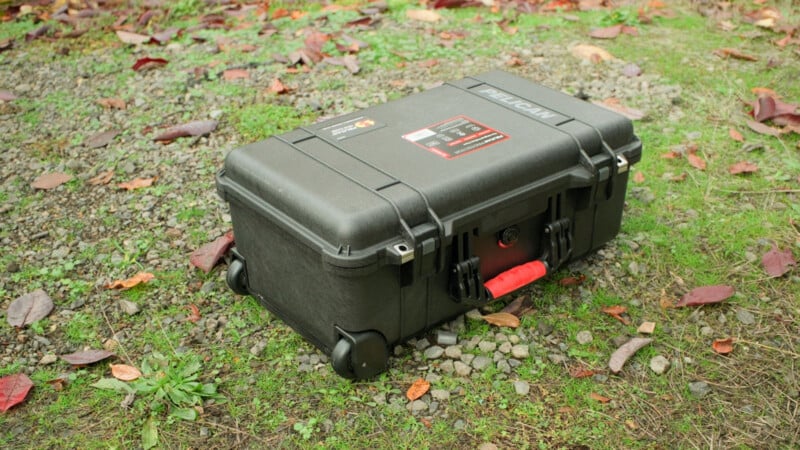
Pelican is the industry standard for transporting gear, and most of you have probably used one. This is the brand-new updated version of a case you already know, the 1510, now part of their Protector Series. There are a few improvements, though a lot of it looks very similar, if not the same, as the cases I already own.
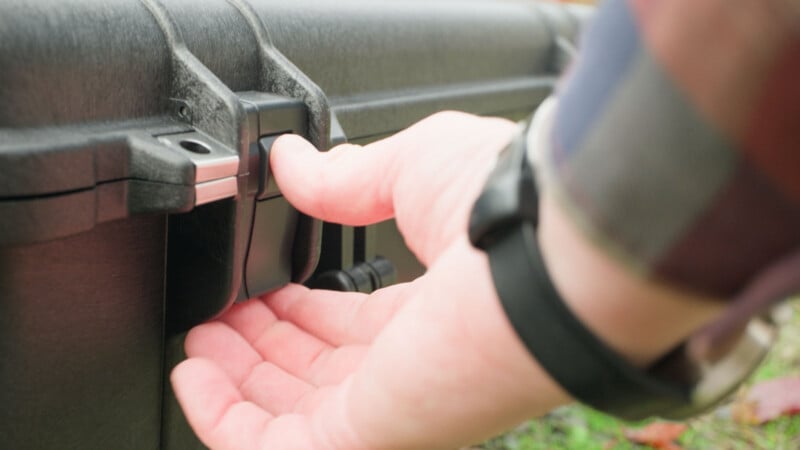
The one solid improvement is the latches. They’re similar to what I have on my Pelican Air, and I’m glad they’re bringing this to the Protector Series at this size. Alongside the latch, there’s now a button that helps secure it. I’ve had this happen several times: I check a case onto a plane and it comes down the belt with a latch open, or worse, two latches open. The extra button keeps the latch from popping up on its own and requires an intentional force applied by a thumb to release the latch, which is a great addition.
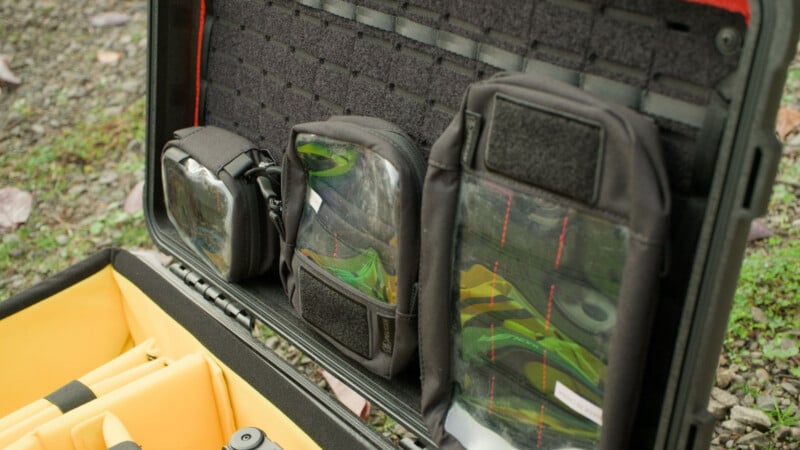
Inside, the Pelican has a new lid organizer system compared to the classic Pelican foam. All the pouches are removable and you can shift them around, which is awesome. It also includes a light you can aim, dim, and change colors on, embedded right in the case, so you’re not fiddling with a headlamp every time you work in the dark.
Full specifications:
- Pelican Protector 1510
- Exterior: 22 x 13.81 x 9″ (55.9 x 35.1 x 22.9 cm)
- Interior: 19.75 x 11.0 x 7.6″ (50.2 x 27.9 x 19.3 cm)
- Interior Volume: 27.18 L
- Weight: 11.99 lbs (5.44 kg) (14.4 lbs with features shown)
- Body Material: Polypropylene
- Retail Price: $269.95 USD ($592.80 with all features shown)
YETI GoBox
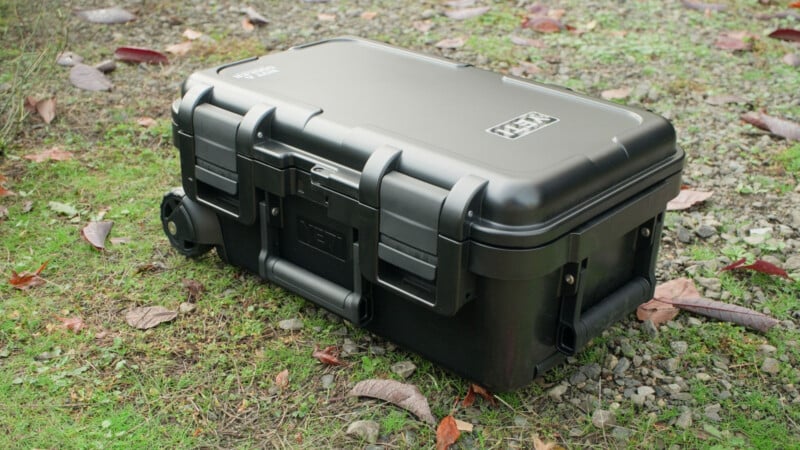
You probably know YETI for coolers and backpacks, maybe not for cases. This is their contender to the Pelican 1510, and it’s similarly sized, so it’s clear they’re trying to get some skin in the gear cases game.
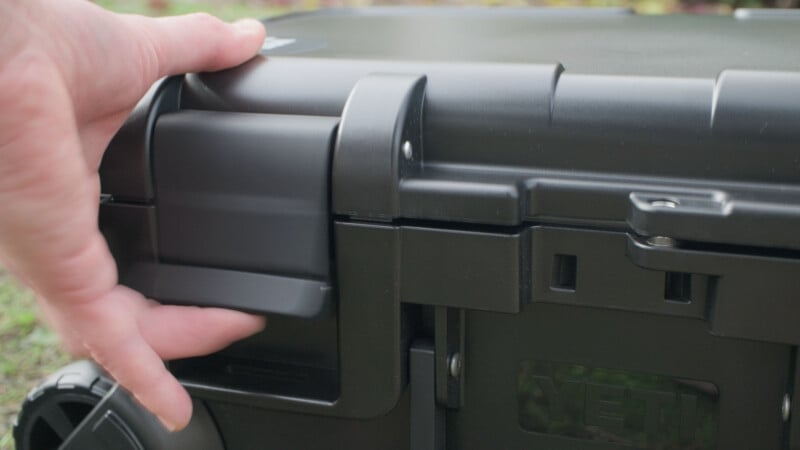
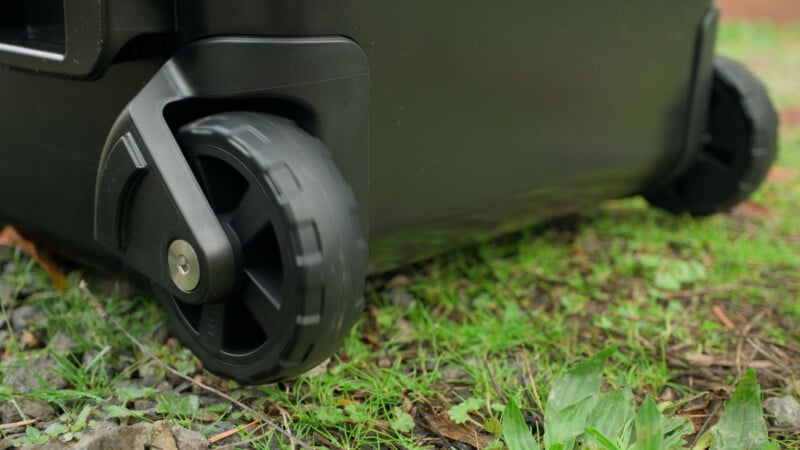
The design does indeed borrow a lot of familiar elements. There’s a top handle for rolling and wheels that are genuinely very smooth, with much less friction than the Pelican wheels. The latches are nice and big and require a two-part process, which is great for checked transport, and it has rubber seals for water resistance.
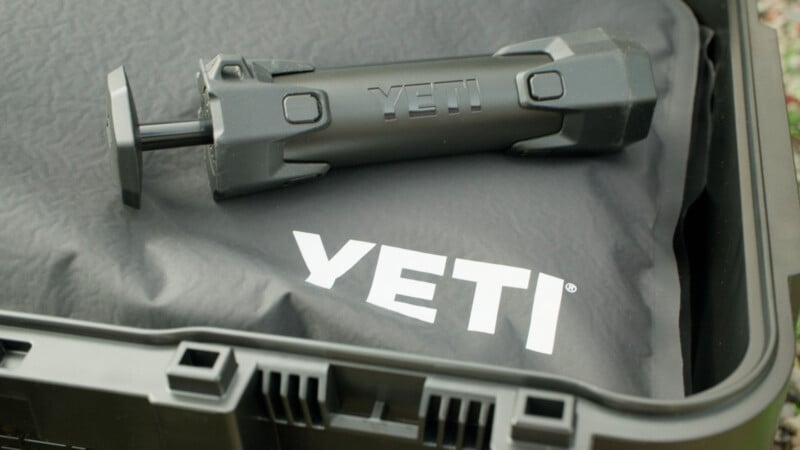
The one thing YETI offers that’s different is its packing system, which they call the KOR Insert. It comes with a pump, and the pump sucks the air out of these molds. You place your fragile items in between, close it up, and vacuum it down. The mold becomes rigid, forms around the object, and keeps it from wiggling. It’s ideal for transporting large, fragile items, though less useful for a bunch of small, different things like an assortment of camera accessories.
Aside from the packing system, the YETI looks durable but has more moving parts than the Pelican, which creates more potential for wear and tear, and eventually repair. The material is different too—the Pelican comes matte and feels like it can take a lot of scratches and bumps, while the YETI looks like it’ll scuff a bit more easily. Only one way to find out.
Full Specifications:
- YETI Loadout GoBox 28
- Exterior: 22 x 14 x 9″ (55.9 x 35.6 x 22.9 cm)
- Interior: 20 x 11.8 x 8.3″ (50.8 x 33.0 x 21.1 cm)
- Interior Volume: 29.04 L
- Weight: 13.50 lbs (17 lbs with KOR Insert)
- Body Material: PC-ASA Polymer Alloy
- Retail Price: $350.00 USD ($600.00 with KOR Insert)
Weight and Handles
The starting weight of each case is worth flagging. The Pelican’s foam is super light, and everything comes in light. The YETI feels considerably heavier. If I’m packing heavy lenses, that starting weight becomes a problem for checking, since the limit on a lot of these is around 50 pounds or 22 kilograms.
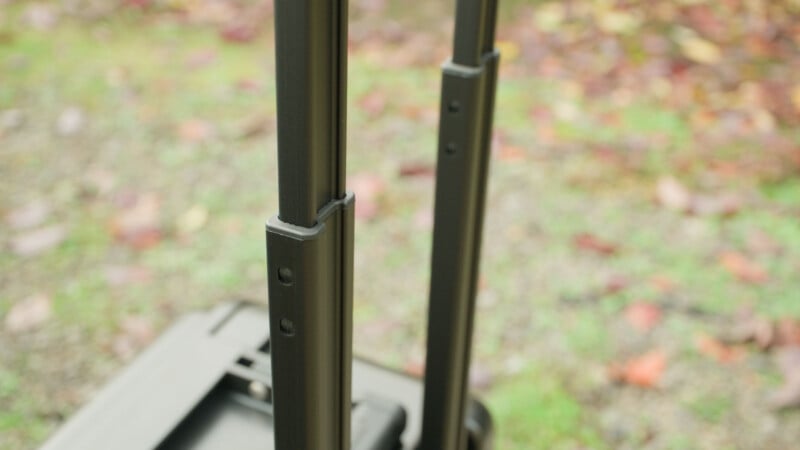
The rolling handles differ too. The Pelican’s is all plastic, included at this size for a while now, and there’s no reason to change it. Minimal moving parts, one solid piece that can bend and take stress and hold up. The YETI uses what you’d see on a regular rolling suitcase: a button and aluminum rods that extend all the way up. Very smooth, but a lot more moving parts, and those are exactly the pieces that bend and break on suitcases. I can see having to replace that well before any plastic part on the Pelican.
The Stress Test

To replicate how our luggage and airline agents treat delicate gear, I packed both with glass and went looking for a hill. For the record, the Pelican was loaded with six glass pieces while the YETI had four, and they feel about the same weight, which tells you plenty about the weight difference already.
First up, the Pelican down the hill. After the tumble, it still looked fresh and clean, no scratches I could see, and stickers still on. Inside, one of the flimsiest pieces survived, but the mason jar, which was supposed to be the tougher one, was busted. One out of six isn’t bad.
The YETI GoBox also fared well with the tumble, and all four pieces came out intact.
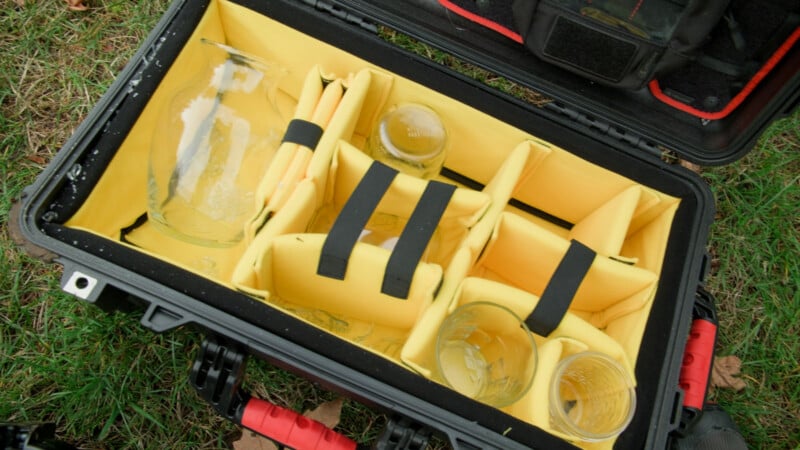
For a more real-world approach, I tossed both down a flight of stairs, as we are likely to see these things take more hard surface impacts. The Pelican held up well with all five of its remaining glasses surviving. The YETI came through mostly fine, but one piece was busted this time — the fragile stemmed glass. The KOR Insert maintained its shape.
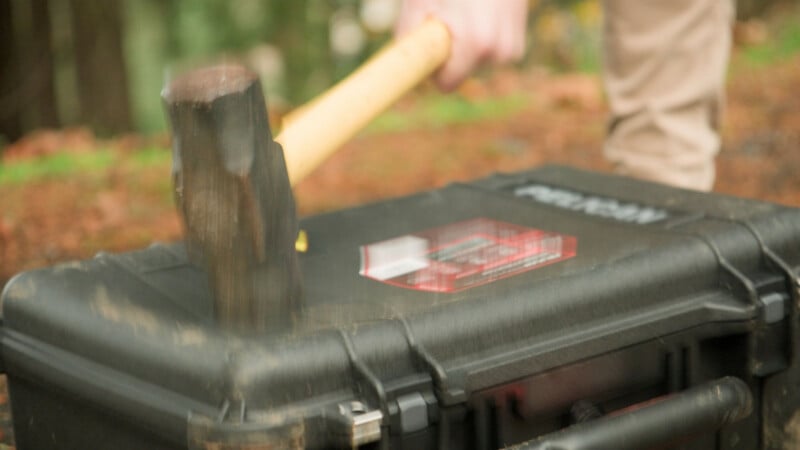
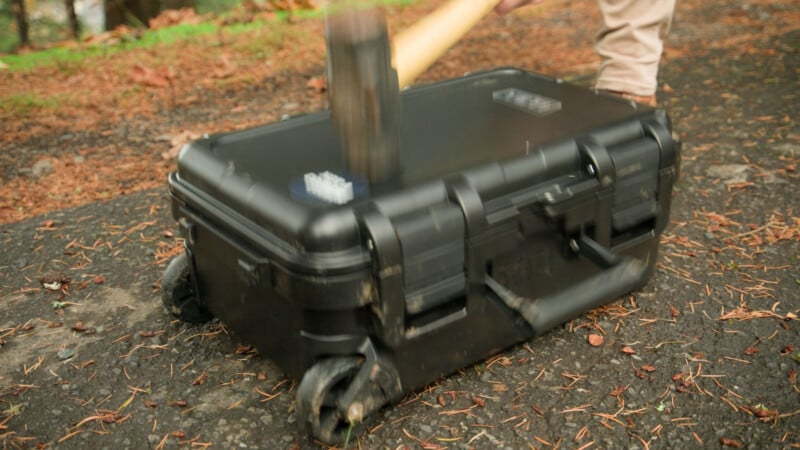
As a bonus, I wanted to see how each handled a single heavy impact at one point, so I took a sledgehammer to them, which was perhaps the most surprising test result. Both cases bounced the hammer back like a trampoline, with no dent or scratch at the point of impact. They passed the smash test with flying colors.

The Verdict
Both cases size up well, and you can fit a lot in either. Pelican is the clear winner for small lenses, accessories, and the bags and pouches, though it can still take a large gear item with the right laser-cut or custom foam insert.
The YETI with KOR Insert is less suited for small items, but the insert does allow for large items with intricate or unusual forms, and can be reused and reshaped for any items that can fit inside of it. Pelican slightly outperforms YETI in terms of ruggedness and repair simplicity, but both stood up to our beatings pretty well. Hopefully, this gives you enough info to choose the right case for you.
Affiliate Disclosure PetaPixel articles may include affiliate links; we may earn a commission if you buy through one.