Pearla Revela Edits RAW Photos and Videos With a Single Set of Tools
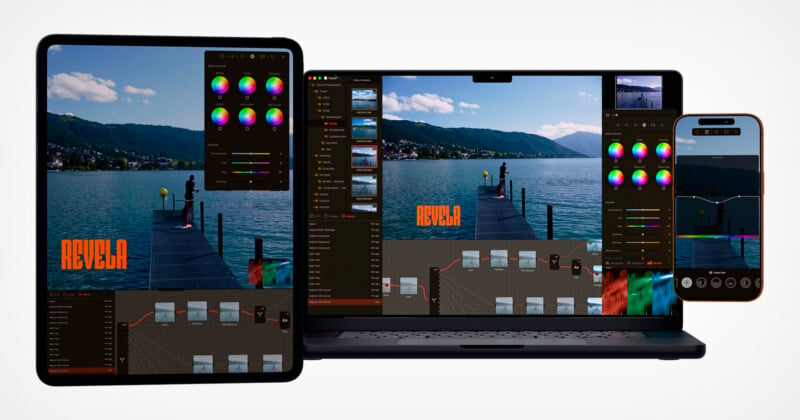
Swiss developer Pearla Mostra, formerly known as House of Mars, has launched Pearla Revela, its new post-production workspace designed for Mac, iPad, and iPhone. The RAW processor includes cataloging, non-destructive node-graph editing, search tools, compositing, export tools, and more.
Pearla Reveal has been in the works for two years and, as the developer says, is an entirely original application, built from the ground up. It is “not an AI clone of an existing editor,” Pearla Mostra is quick to point out. It aims to separate itself from existing editors by emphasizing preservation to the nth degree.
Pearla Mostra founder Guy Cassidy says the app took two years to make, largely because the company built it natively without copying other work.
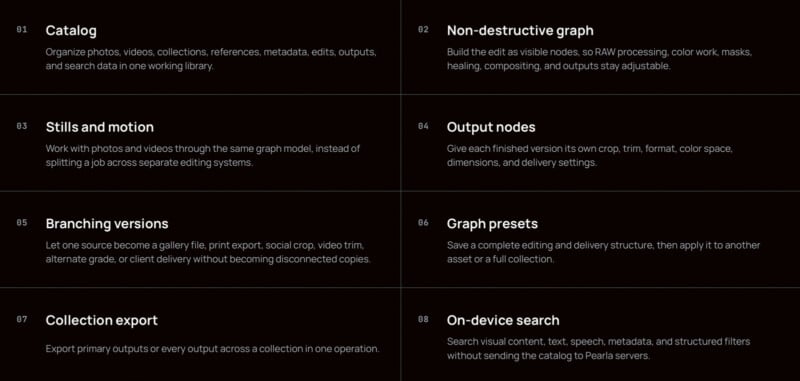
“Every established editor splits a job across a catalog, a photo editor and a video application. Revela treats the source, the edit and every finished version as one structure. If it already exists, we don’t build it,” Cassidy says.
“The source stays whole, the edit stays readable, and every finished version stays tied to the decisions behind it,” Pearla Mostra explains.
What this ultimately means is that one single source file can be edited and adjusted, with every change fully visible as a node on a canvas, and then delivered in many different formats.
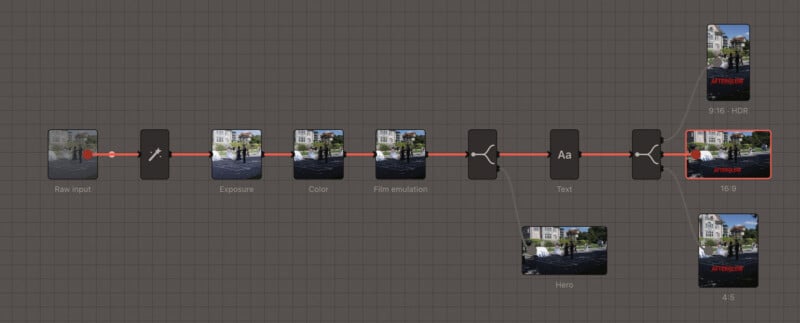
“A print, a social post, a video trim or an alternate grade branches from the same source, each with its own crop, format and color space, so the finish is part of the edit rather than a separate export after it,” Pearla Mostra explains.
“A graph preset saves that whole structure, adjustments, masks, outputs, formats, trims and color spaces, and applies it to one asset or a whole collection. Collection export then produces the primary output or every output across hundreds of files in one operation,” the company continues.
Users can edit photos and videos on the same graph, using the same nodes and tools for both stills and motion pictures. Like DaVinci Resolve 21, which added photo editing with its node-based editor, Pearla Mostra wants creators, especially hybrid ones, to use the same workflow for every format and deliverable.
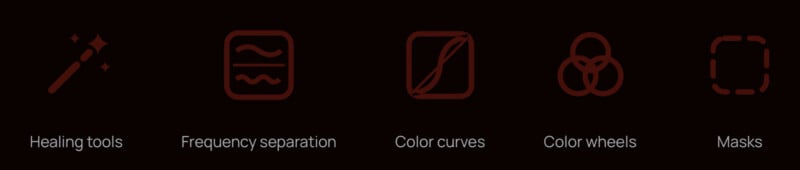
Tools like healing, frequency separation, curves, color wheels, and masks work the same on videos as they do on photos. Frequency separation runs in video with automatic tracking, by the way. Retouching can happen in the project’s wider color space or a specific, narrower deliverable color space, too.
Pearla Revela also includes the company’s robust film simulation technologies, including precise grain and halation tools. Grain is modeled at negative and print stages and is exposure-aware.
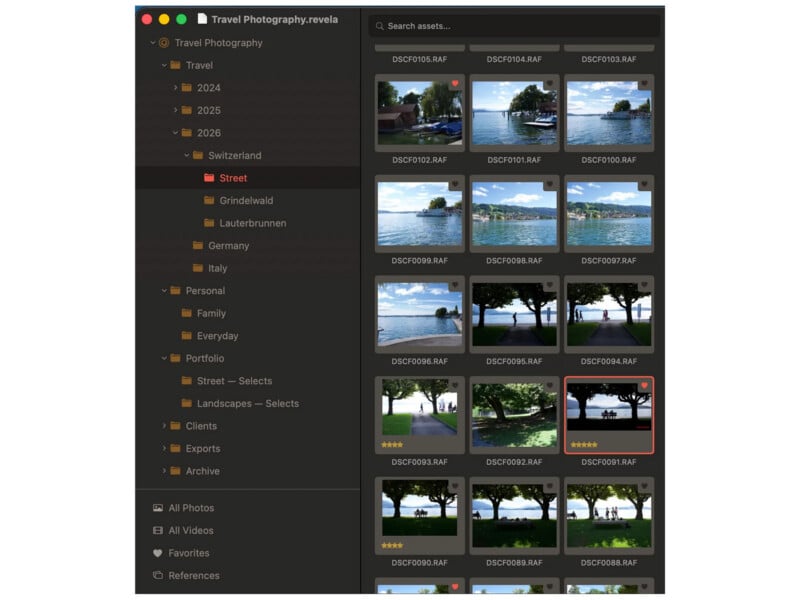
A Revela catalog includes the assets, grades, outputs, metadata, notes, references, selects, tags, and ratings in a single place, and these can be synced across devices using a repository on existing cloud storage platforms, like iCloud Drive. PearlaRAW files shot in the company’s camera app, Verana, are fully supported, of course, and can be synced as well.
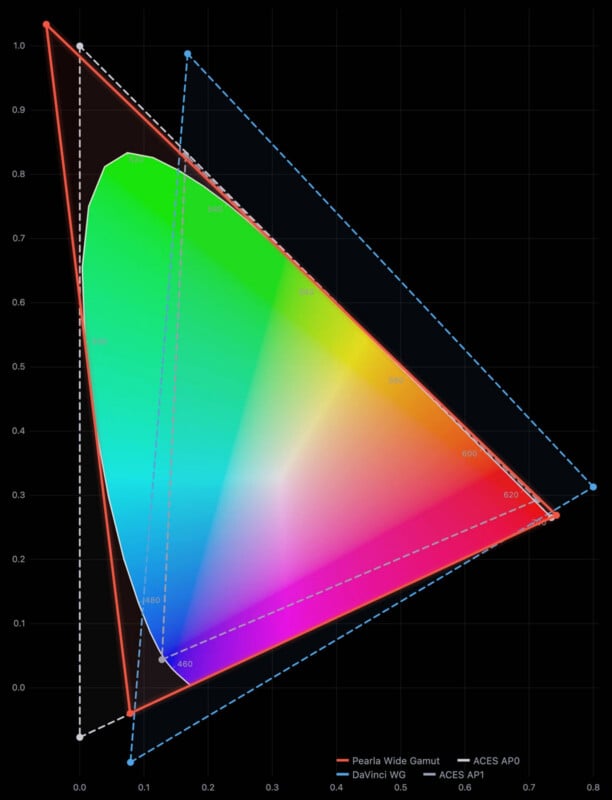
Each Pearla app, including Revela, is built on the company’s Pearla Wide Gamut color space engine, which has been engineered around human vision. The post-processor converts RAW stills and RAW video from sensor-level data into this color space and supports log video from 800 cameras across 19 manufacturers. It also supports SDR and HDR processing pipelines. A full list of supported cameras and RAW files is available here.
Pearla Revela is a very different type of photo and video editing app, so it may have a bit of a learning curve. Pearla Mostra is fully aware of this and has started creating detailed tutorials.
Pearla Revela for macOS is available now. It requires an Apple Silicon-powered Mac running macOS 26.1 or later. A perpetual license is $349. There’s also an annual subscription, which includes access to all versions of Revela, for $89.99 per year. Either license runs on two Macs. A seven-day free trial is also available.
Pearla Revela for iPad and iPhone is coming later this year. Revela Lite is already part of Pearla Verana for iPhone. Pearla Cloud, built to support collaborative workflows, is also coming later this year.
Image creditsPearla Mostra
Affiliate Disclosure PetaPixel articles may include affiliate links; we may earn a commission if you buy through one.


