Nikon Disqualifies Winner of Small World in Motion Competition for Using AI
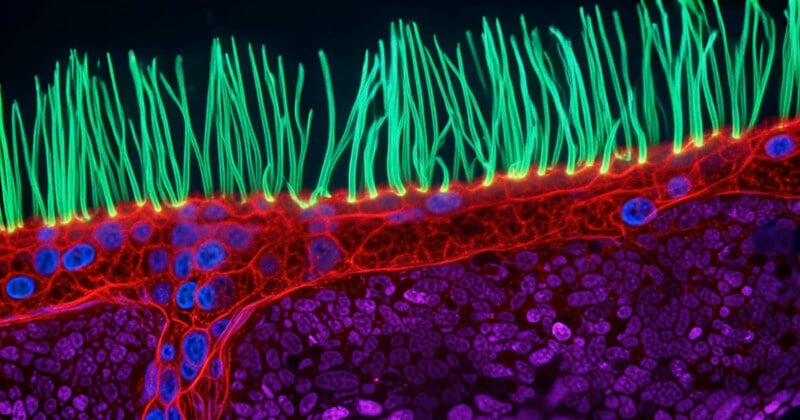
The winner of the Nikon Small World in Motion competition has been disqualified after Nikon determined that the winning video broke its rules regarding artificial intelligence.
PetaPixel reported last week that Nikon was “re-reviewing” Dr Ning Xu’s winning video after concerns were raised by the scientific community.
The Nikon Small World in Motion is an abstract competition that celebrates the beauty, complexity, and artistry of the microscopic world. It offers researchers a chance to showcase their lab work and make it engaging for the public.
“After thoroughly re-evaluating the video and supporting materials and consulting with members of our judging panel, Nikon has determined that the winning video did not comply with the competition rules regarding generative AI. Nikon has adjusted the competition rankings to reflect this decision,” a Nikon spokesperson tells PetaPixel.
“This decision is based solely on the submitted video’s eligibility under the rules outlined for this competition. It should not be interpreted as a judgment of the entrant’s professional reputation, scientific contributions, or intent.”
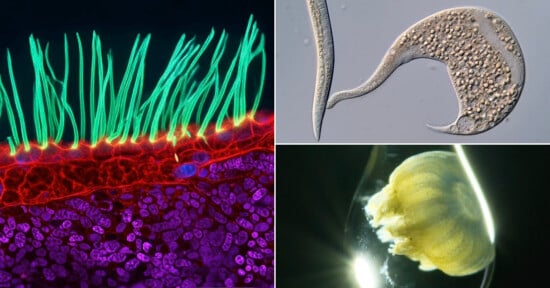
After Dr Xu’s disqualification, it means that Nguyen Nam Nhat is now the winner for his video of a tiny roundworm and a single-celled Dileptus. The awards have been updated accordingly on the Nikon Small World website.
Nikon notes that “advances in imaging and artificial intelligence continue to evolve rapidly, creating new challenges for organizations across many fields. This event has shown the need for Nikon Small World and Nikon Small World in Motion to revisit rules and evaluation procedures for future competition entries.”
Dr Xu, an optical engineering researcher at the National University of Singapore, initially admitted to using AI in post-processing but denied breaking the rules of the competition, which clearly state that “AI-generated videos are not permitted.”
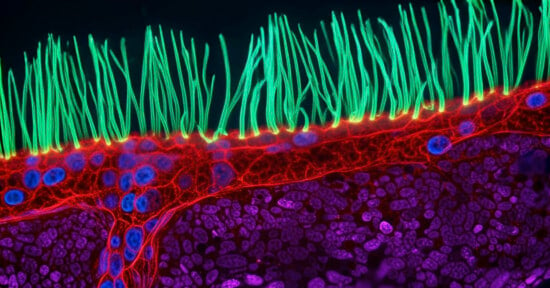
Dr Xu’s video, above, is supposed to show the movement of cilia, which are hair-like structures that line part of the lungs. Dr Xu said the tissue was taken from a child who has a rare genetic disorder called primary ciliary dyskinesia that causes chronic lung, sinus, and ear infections.
But Edward Phelps, an associate professor at Florida University, said on LinkedIn that there are many serious problems with this video.
Phelps pointed out that “purple structures pop in and out of existence” and “green cilia also appear from nowhere and do not match the known size.”
Other scientists said the issue could have been resolved if Dr Xu had shared the RAW grayscale video.
“The Nikon Small World and Nikon Small World in Motion competitions celebrate excellence in imaging, both scientific and artistic in nature,” Nikon adds.
“We value the integrity of each image and video selected to appear in our winning galleries, and remain committed to upholding the standards of excellence that have defined this competition.”
Affiliate Disclosure PetaPixel articles may include affiliate links; we may earn a commission if you buy through one.