NASA Releases Artemis II Crew’s Handwritten Notes of Moon Meteors
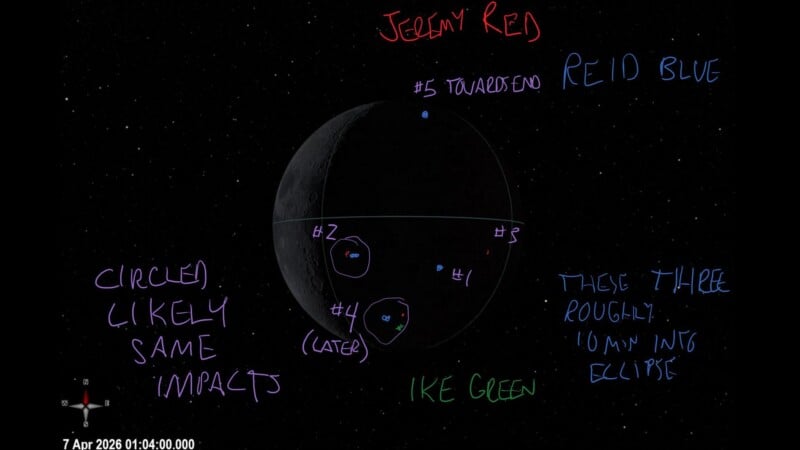
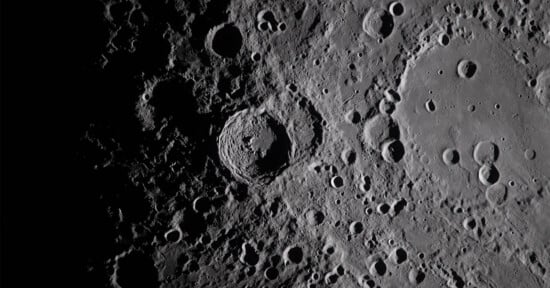
NASA has released an image of the dark side of the Moon complete with handwritten annotations made by the Artemis II crew who were observing it at the time.
The fascinating behind-the-scenes image shows notes from NASA astronauts Reid Wiseman (in blue) and Victor “Ike” Glover (in green) and Canadian Space Agency (CSA) astronaut Jeremy Hansen (in red).
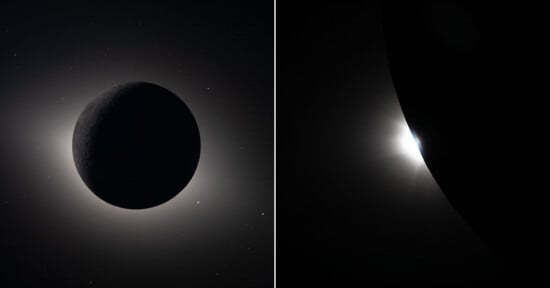
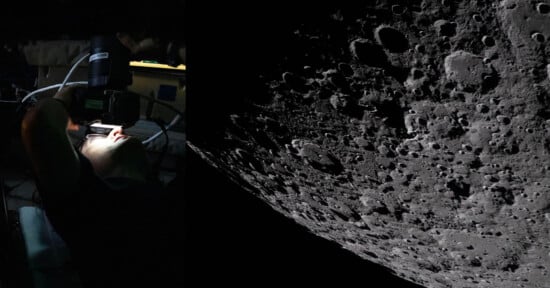
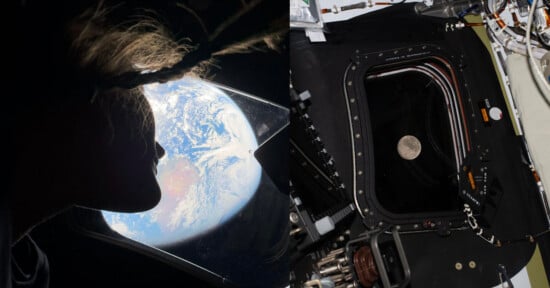
Their notes highlight the location on the Moon where they saw impact flashes. Their observations were taken as the Moon was eclipsing the Sun. Overall, the astronauts reported seeing five extremely faint “pinprick” bursts of light from their view aboard the Orion spacecraft, which was 46,000 miles away from the Moon at the time. These flashes are sparked by rocky fragments hitting the Moon.
As part of the mission science plan, lunar scientists asked the Artemis II crew to watch for tiny flashes sparked by rocky fragments hitting the Moon. Even so, some scientists were astonished when astronauts reported seeing five extremely faint “pinprick” bursts of light from 46,000 miles away. After ruling out other sources — cosmic rays or reflections from the spacecraft — the science team confirmed the sightings.
Apollo astronauts saw similar flashes from lunar orbit, but the Artemis crew likely caught the faintest ever seen with the unaided eye. From the brightness of the flashes, scientists estimated that incoming rocks were each no more than a couple of inches wide. Despite their size, they were traveling thousands of miles per hour, producing just enough light upon impact to be visible. The nearly hour-long total solar eclipse that the crew experienced while passing by the Moon’s far side created ideal dark conditions for spotting such subtle bursts.
With no atmosphere to slow or burn up incoming debris, projectiles slam freely into the lunar surface. The crew’s direct observations of this process on the Moon’s far side provided a rare dataset that will help us understand how often these small impacts occur, which is essential for assessing long-term risks to future lunar habitats and infrastructure.
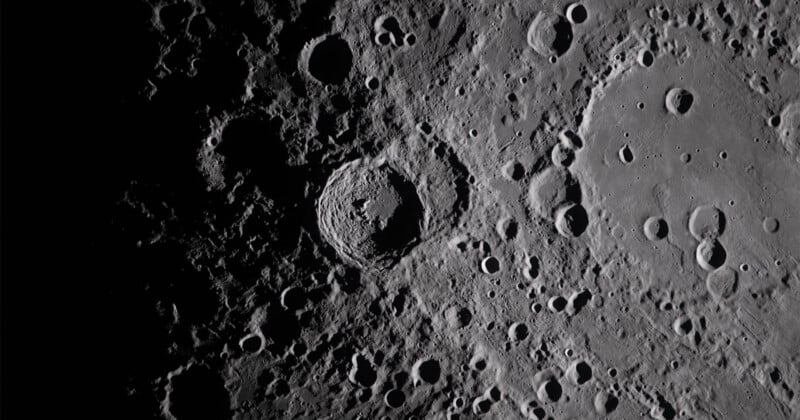
“Their quick decisions about observation targets and which images to capture, along with their perceptions of color and dynamic changes, and discussions about the science of the lunar surface and its surroundings complement decades of data from Apollo astronauts and robotic explorers and deepen our understanding of the Moon as NASA prepares for long-term exploration of the lunar surface,” NASA says.
The annotated picture is part of the full lunar science dataset from the crew’s historic journey in April this year that the space agency has made available to the global science community and the public for further study.
Image creditsNASA
Affiliate Disclosure PetaPixel articles may include affiliate links; we may earn a commission if you buy through one.