
Early Print of Dorthea Lange’s Migrant Mother Valued at $150K
The Sotheby’s print and photographic auction for October started today and two prints jumped out as particularly interesting — and not just because of their extremely high values.
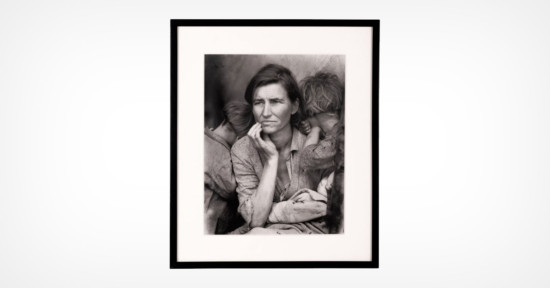
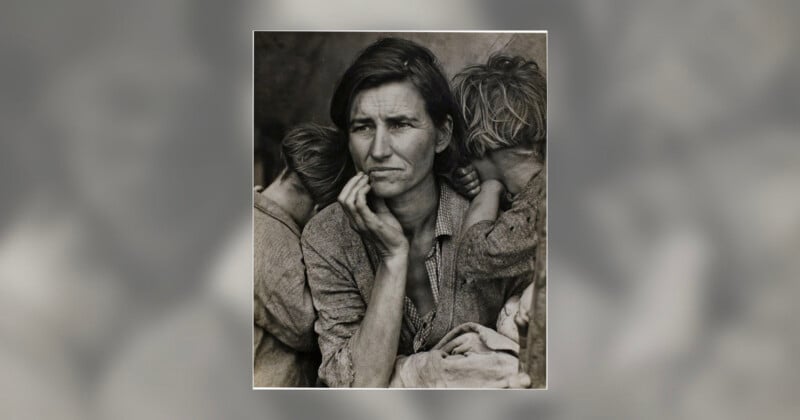
The print auction is taking place online and the highlight is an “exceptionally early” print of Dorothea Lange’s Migrant Mother, easily one of the most well-known photos ever taken and arguably one of the top two most famous photos of a human being ever made, next to Steve McCurry’s Afghan Girl.
“Lange made the photograph in March 1936 while documenting migrant farm workers in California for the Resettlement Administration. The image of Florence Owens Thompson and her children would soon become an enduring symbol of hardship during the Great Depression, but the photograph on offer captures the image at a particularly early moment in its history,” Sotheby’s explains. “Executed in 1936 and likely printed between 1936 and 1937, the work is appearing at auction for the first time.”
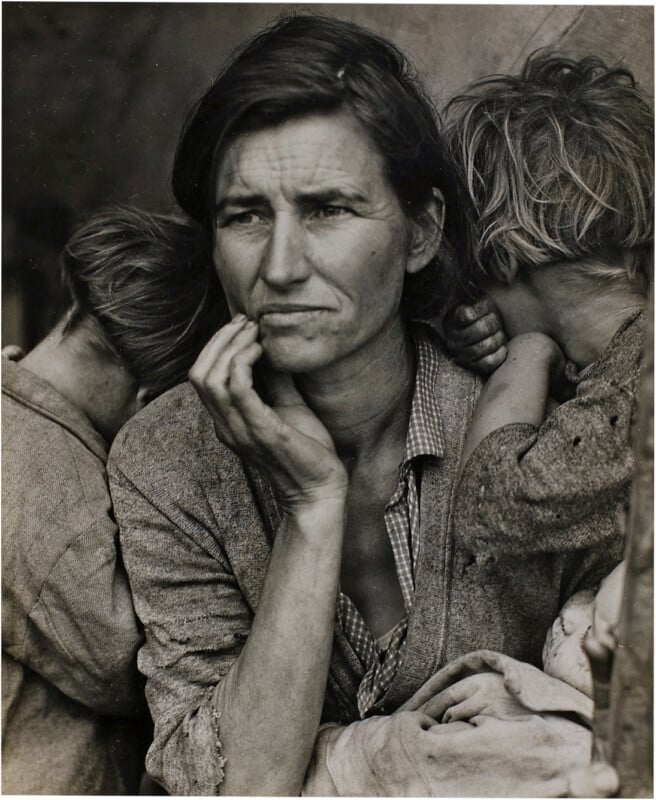
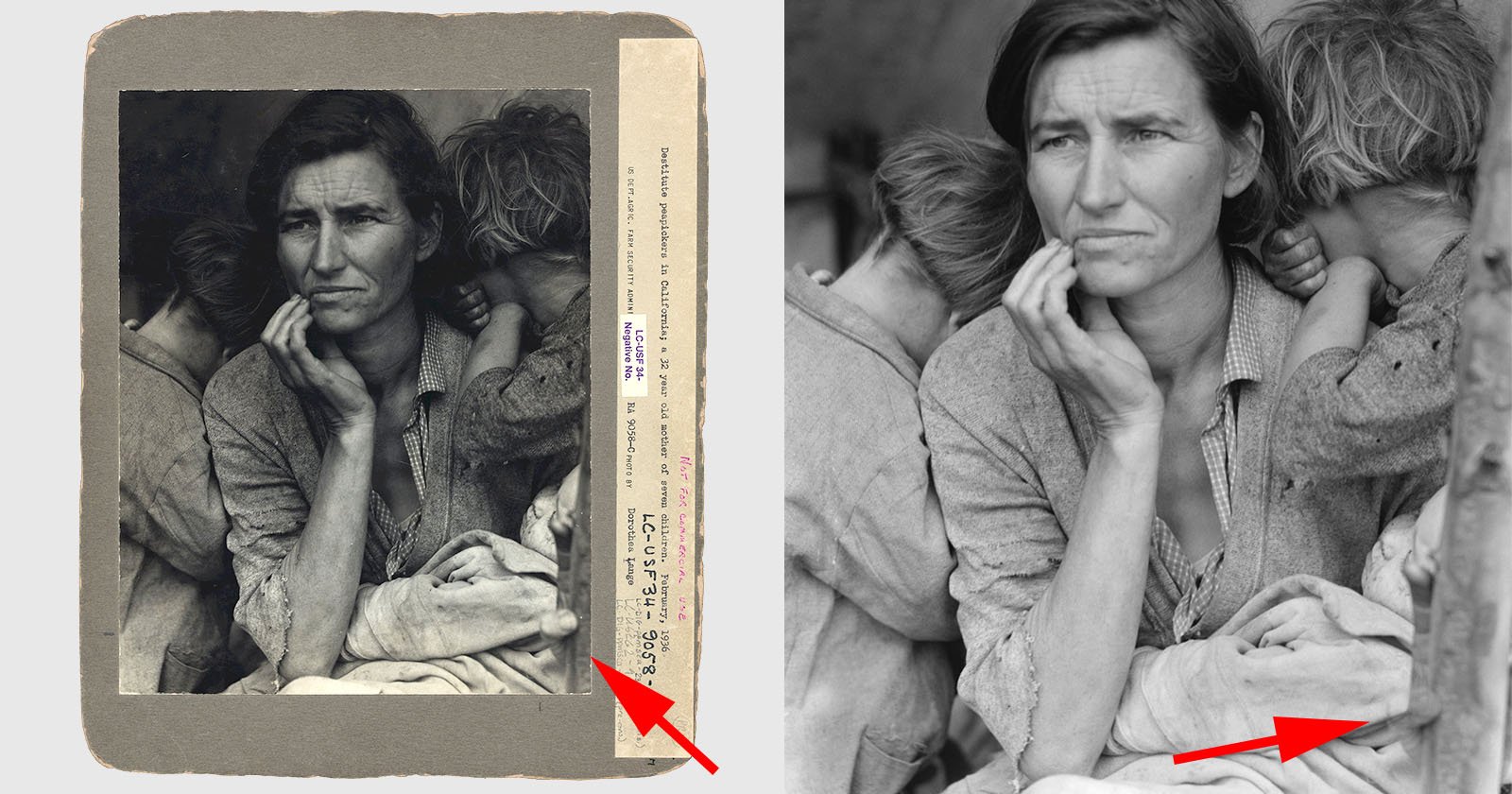
What makes this print special is not only how early on it was made, but also its retention of the Resettlment Administration’s credit stamp as well as Thompson’s thumb visible in the lower right corner, which Sotheby’s notes is a distinctive detail that was subsequently removed from later printings.
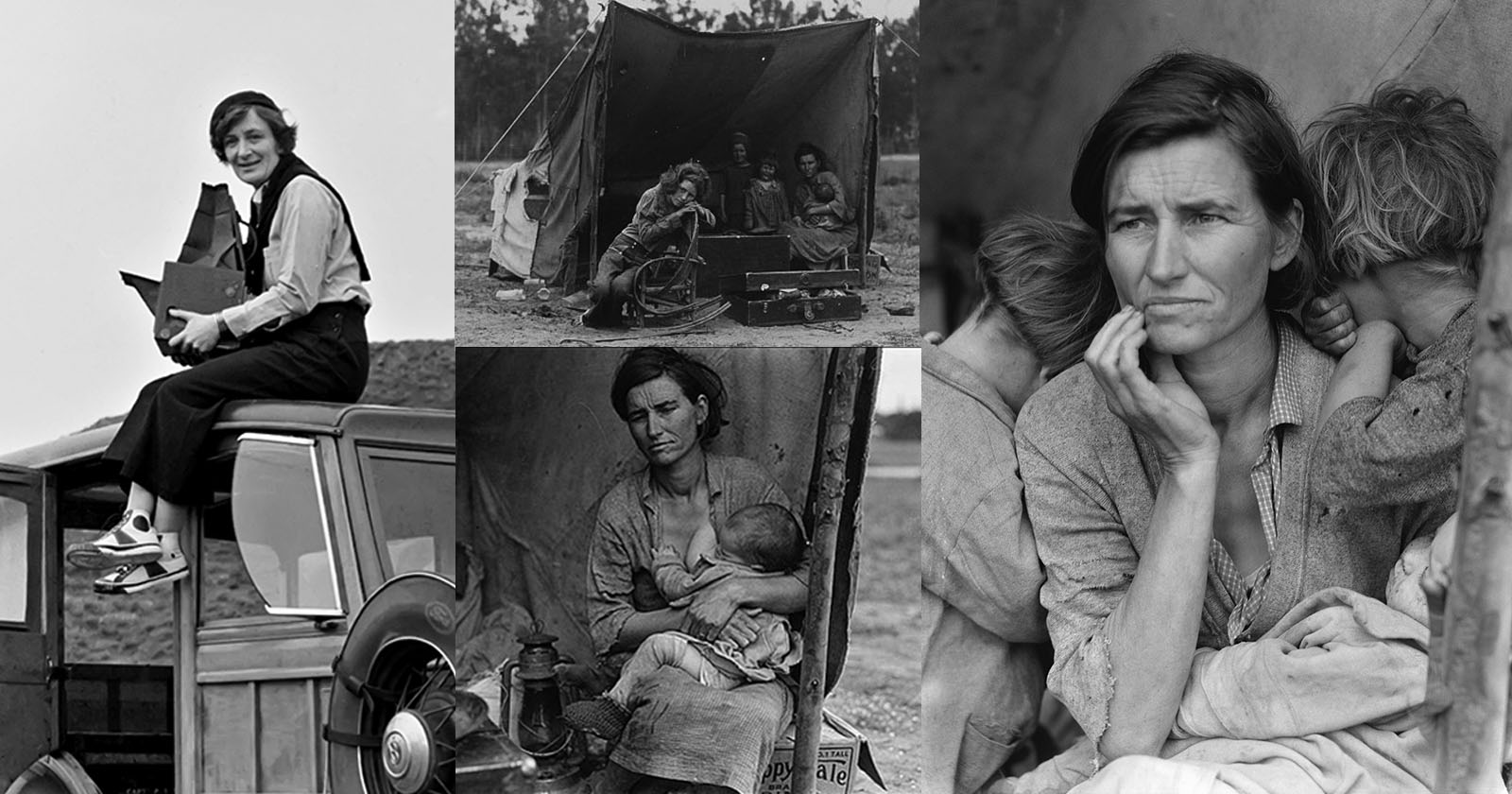
The photograph was made at a pivotal moment in American history. Although the worst years of the Great Depression had passed, unemployment remained widespread and thousands of migrant laborers continued to travel in search of seasonal work. Lange had spent nearly a month on the road documenting these conditions on behalf of the Resettlement Administration, the federal agency created in 1935 that would later become the Farm Security Administration. On her return to Berkeley in March 1936, she passed a sign directing travelers to a camp of stranded pea pickers near Nipomo. She later recalled continuing down the road before feeling compelled to turn back. Following that instinct, she entered the camp and made a series of negatives depicting Florence Owens Thompson and her children. Working with her 4 x 5-inch Graflex camera, Lange produced a sequence of increasingly intimate compositions that culminated in the now-iconic image of Thompson, her weathered face marked by worry while her children turn away from the camera and lean into her shoulders.
Within days, Lange’s photographs of Florence Owens Thompson were published in the San Francisco News as part of a series of articles describing the desperate circumstances facing migrant workers in California. While it wasn’t included in the first article on March 10, the following day Lange’s Migrant Mother illustrated ‘What Does the “New Deal” Mean to This Mother and Her Child?’, bringing national attention to conditions that had previously remained largely invisible outside the agricultural communities of the West. Although neither Lange nor her editors could have anticipated the photograph’s future significance, the image has assumed a life beyond its original journalistic purpose.
The Migrant Mother print is expected to sell for between $100,000 and $150,000.
The other print of note is Hiroshi Sugimoto’s Radio City Music Hall, New York City, which is part of his series of single long exposure photos of an entire movie compressed into a single shot.
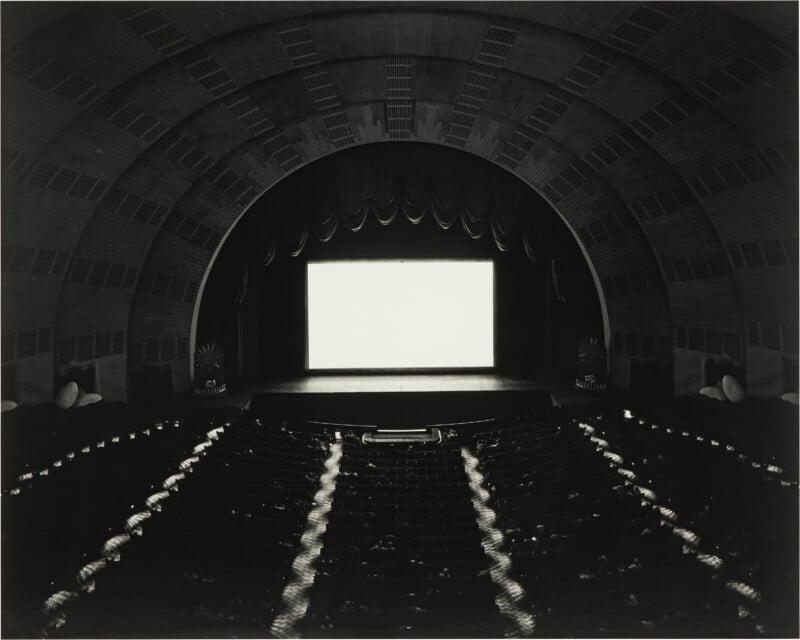
Sugimoto’s Radio City Music Hall, New York, is one of the most compelling portraits of the famous Art Deco venue ever made. Radio City’s vast interior, rendered in remarkable detail by the accumulated light of the projection, becomes the true subject of the photograph. During the long exposure, the audience disappears, leaving behind only the residual evidence of its presence in the illumination that fills the space. The staggered rows of seating and glowing aisle lights buzz with a rhythmic pattern of converging waves, activating the picture’s perspective structure and drawing the eye toward the luminous screen.
This is one of the most iconic photos from Sugimoto’s Theaters series and is especially valued due to its rarity: this is print number one of a series of just five, is quite large (47 by 58 3/4 inches) and it has never been offered for auction before.
The full October Prints and Photographs auction is filled with a number of remarkable images beyond these and can be seen on Sotheby’s website.
Image creditsSotheby’s New York
Affiliate Disclosure PetaPixel articles may include affiliate links; we may earn a commission if you buy through one.