Snapdragon’s New Camera Pipeline Has More Pixels and More Questions
Qualcomm thinks it has something big in its 6th-generation Snapdragon mobile device processors that we’ll see in phone cameras in the coming months and years. The Snapdragon 8 Elite Extreme Gen 6 and Snapdragon 8 Elite Gen 6 were headliners at the company’s annual Snapdragon Summit 2026 in Maui, both built on a 2-nanometer process and promising imaging performance that pushes what phones can deliver.
DisclosureQualcomm paid for PetaPixel’s travel and accommodations to Snapdragon Summit and, of course, provided time to speak to PetaPixel for this interview. Qualcomm was not provided questions ahead of the interview and had no editorial control over the final article or video.
AI certainly has a role to play in that, even pixel by pixel, but an imaging pipeline has other moving parts that may be too much for some phone manufacturers to handle.
In a one-on-one interview, and on the stage at the Summit, Judd Heape, Qualcomm’s VP of Product Management for Multimedia, walks through pixel-level scene understanding, doubled bit depth, a new hardware noise-reduction block sitting in front of the image sensor, and a fresh entry into the fight over what counts as a “real” photo.

What ‘Intelligent Pixel Control’ Actually Means
The headline feature is what Qualcomm calls Intelligent Pixel Control: the camera system’s ability to recognize what it’s looking at, pixel by pixel, and treat different elements of a scene differently.
“It understands faces, hair, sky, grass, fabric, and it can tune each one of those areas separately,” says Heape in a one-on-one interview. “In a shirt, you might want a little bit more texture. In a face, you might want more smoothing, that sort of thing.”

Subject tracking gets a boost from the new chips by tracking individual people as they move in and out of frame without losing focus across the whole session. That way, it recognizes a person who steps out of the shot and re-enters, treating them the same way as before.
However, Qualcomm doesn’t control that granularity, and neither does the user. That falls on the OEM, which is given the “engine” and can tune it however it prefers. On the obvious risk that skin smoothing might become too processed in such a scenario, Heape says phone makers will have to determine the guardrails, given that some expose the setting to users while others don’t.
“You could say for adults over 50, smooth it more. People under 50, don’t smooth anything. It would be possible for the OEM to give that control to the user,” he says.
Notably, Intelligent Pixel Control is universal across the new lineup. Qualcomm has confirmed the standard Snapdragon 8 Elite Gen 6 includes Intelligent Pixel Control, Elite Color Engine and Motion Intelligence for image and video processing, meaning the core segmentation engine Heape describes does trickle down to the non-Extreme Gen 6 chip — a departure from how some past imaging features were usually only reserved for the top tier.

The Extra 16 Bits That are Nowhere to be Found
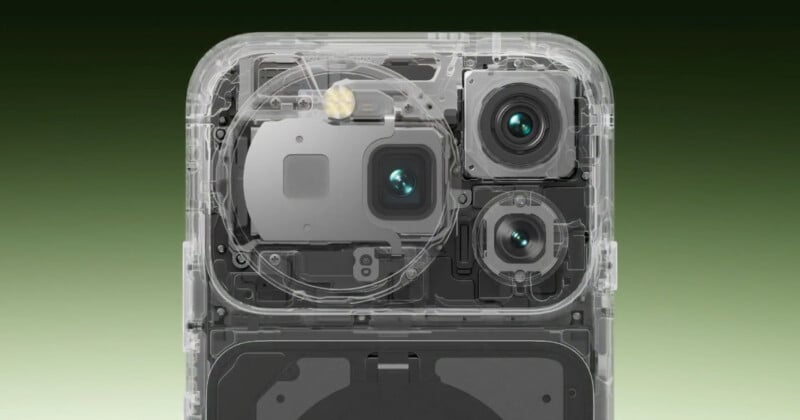
The scene-recognition data comes from doubling the bit depth Qualcomm’s image signal processor works with, from 8 to 16 bits. Heape confirms that won’t lead to larger file sizes, even though every pixel from the sensor gets an additional 16 bits of metadata, generated not by the ISP but by the chip’s NPU (neural processing unit), to describe what that pixel actually is: sky, grass, skin, fabric. The ISP itself, as Heape puts it, handles exposure and white balance, while the NPU supplies the context layer on top of it.
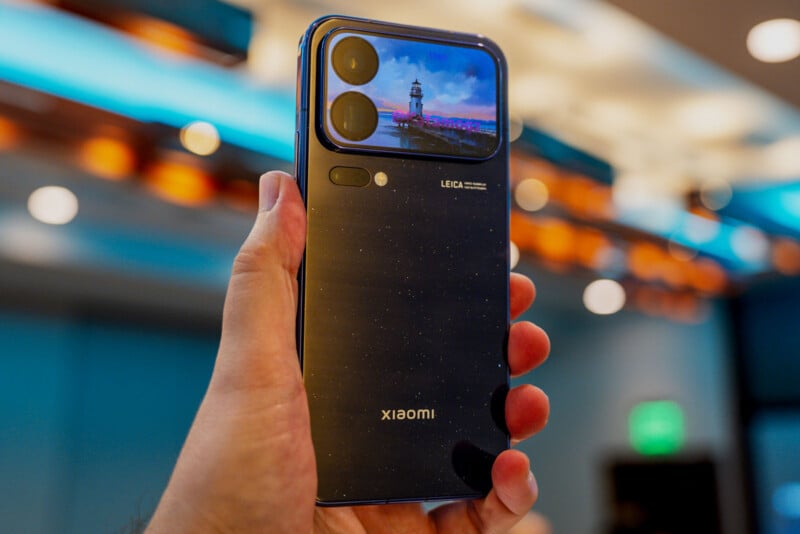
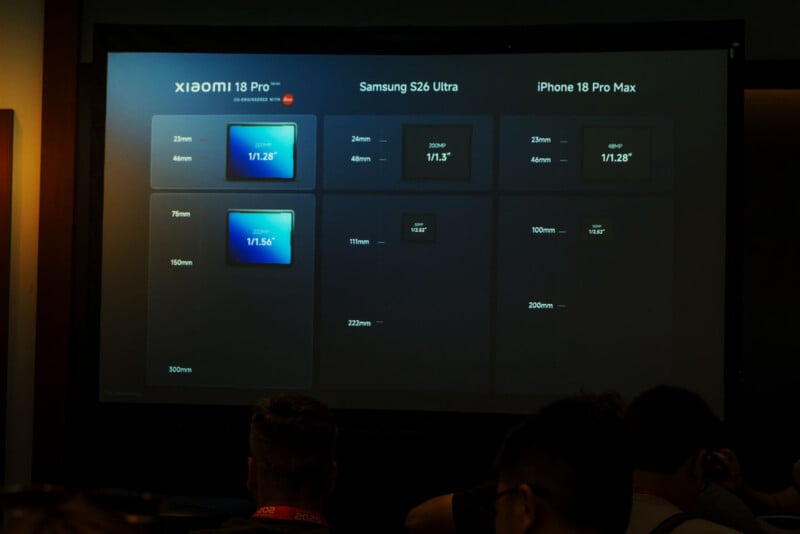
That NPU-to-ISP handoff runs on more dedicated hardware, considering this generation’s segmentation and color tools run through a purpose-built Element Accelerator rather than borrowing spare NPU cycles. That’s meaningfully different from earlier Snapdragon chips, where similar scene-detection work shared silicon with other AI tasks. Thus far, the Xiaomi 18 Series is the only set of devices that have launched with the new chips and ISP — albeit only in China for now.
Heape touched on this exact handoff the following day after the interview on a panel, describing an early pipeline stage that introduces noise reduction “to clean up the image right at the very beginning”. OEMs can also configure it differently, routing an image out of the ISP entirely, processing it on the NPU or CPU, and feeding it back into the pipeline partway through. Even with all this, Heape explicitly says it won’t mean larger file sizes because the additional bits don’t make it into the saved image.
“The image can actually leave the ISP, be processed, come back, and then go through the rest of the pipeline,” he says. “Those 16 bits don’t actually get into the file. So when we save the JPEG, we’re not saving information about who it was, or how old they were, or that sort of thing. It’s still just the image in the end.”
But if the extra data is designed to make the photo better, and it disappears before the file is written, how can the result look improved? Heape says the pipeline applies the influence in real time the moment a user captures the photo or video, rather than data it stores afterward.
“The NPU flags a region as grass, and the ISP says, ‘Oh, okay, this is green grass. I’m going to increase texture, and I’m going to maybe tweak the green up just slightly,’” he explains. “It does that immediately and then saves it as a JPEG.” In other words, the intelligence plays a transient role: it shapes the pixel and then vanishes, leaving no record in the file of what happened in the background when producing it.
That segmentation will apparently also apply to night shots that look artificially brightened rather than natural. Heape acknowledges the industry’s track record on that, agreeing that low-light shots have often ended up as “an amplification of what the light was” that “sometimes looks unnatural.” His pitch for the Gen 6 chips is that segmentation lets the pipeline treat a dark face differently from a dark background, thereby boosting exposure and correcting white balance on a person’s face “without making the rest of the scene look weird,” so as not to apply one blanket adjustment across the whole frame.
An Editing Tool the User Can’t Touch Yet
Alongside pixel control, Qualcomm’s new Elite Color Engine will handle cinematic color grading and real-time 3D LUTs directly on-chip. Moving away from simple hue-and-saturation sliders found in most photo apps, it uses a 3D LUT to shift one specific color range in an image without disturbing the others, like nudging greens toward yellow, for instance, without touching skin tones or sky.
Heape distinguished it from other segmentation-based tools by confirming it doesn’t use masking or any kind of segmentation.
“It’s just the way that you map the whole color gamut,” he says.
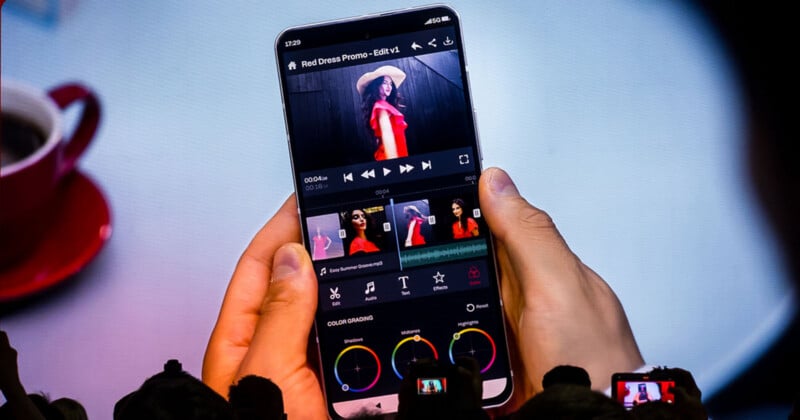
In addition, Motion Intelligence aims to reduce blur and stutter when shooting handheld on a phone. It’s designed to pair with Color Engine, where one smooths how a shot looks frame to frame, while the other smooths how it’s graded.
It’s not clear that Color Engine and Motion Intelligence have a role to play in post-production on the phone. As of now, there is no way to do so because it’s set up to apply immediately when the ISP is running, so it remains a one-time, real-time operation once a user presses the shutter. That could eventually change, as Heape says Qualcomm is actively looking to let images run back through the ISP at a user’s request to make adjustments.
‘The Most Dynamic Range of any Mobile ISP in the World’
As certain brands add larger image sensors with more cameras, Heape says Qualcomm is expanding zero-shutter-lag support from three 48-megapixel image sensors to three 64-megapixel sensors. This likely opens the door for higher megapixel counts on both flagship and mid-range phones down the line. Since Qualcomm’s ISP still carries the 20-bit dynamic range processing introduced in 2025, it now works as a triple 20-bit, AI-powered setup across the new Spectra ISP. Heape calls it “the most dynamic range of any mobile ISP in the world.”

The key distinction is that the two new chips don’t do all this the same way. Only the Snapdragon 8 Elite Extreme Gen 6 gets the top imaging pipeline. The standard Gen 6 gets the newer agentic-AI and ISP hardware but not the same elaborate video and imaging feature set Extreme does. It also remains to be seen who will actually support 8K at 60fps. Either way, this makes the chipset an important spec for anyone who wants a more advanced ISP.

Shutter lag also remains a challenge with certain devices or situations more than others, and Heape didn’t dispute assertions that it’s a mixed bag for many. He says the pipeline constantly fills a circular buffer from the moment the camera app opens, so that pressing the shutter can retrieve a frame captured slightly before the button was actually touched. But whether a given phone benefits from that at all is an OEM decision. “Whether OEMs choose to use it, maybe for power reasons, they can adjust the depth of the buffer,” he says.
There may be a device coming soon to showcase that. Motorola will release its Signature 27 flagship as one of the first smartphones using the Extreme Gen 6, potentially including these features. The company has not yet released full specs or confirmed details as of this report.

Square Sensors
How might the new chip’s increased resolution interact with a square image sensor if a manufacturer wants it to let users shoot in portrait or landscape without physically reorienting anything? Heape was quick to separate two numbers that are easy to conflate. “The triple 64-megapixel layout and pipeline covers still images, not video.
What actually governs video, he explains, is the ISP’s raw throughput, meaning megapixels processed per second, a figure Qualcomm has been improving for years independent of any single sensor’s resolution. That’s what makes square sensors viable in the first place because the pipeline isn’t locked to a fixed orientation, letting a phone rotate framing on the fly without asking the hardware to do anything new.

“If you want to shoot 8K, if you want to shoot 4K, if you want to shoot 4K landscape, if you want to shoot 4K portrait, the ISP can handle it,” Heape says. “There’s really no limit in the hardware, so square sensors coming out, and being able to rotate on the fly is totally supported.”
All told, it can handle three simultaneous 4K live video streams at 30fps from three different cameras. A fourth is technically possible, but not live: “A fourth would be possible if you were processing offline. You would dump that to memory and then process that on the side offline. But it’s technically possible. The ISP hardware is capable of doing three of them (as live, simultaneous streams),” he says.
RAW Shooters Get a New Option — But Only on New Phones
Qualcomm has something for photographers who shoot in RAW and want full control in post: a new hardware block that moves temporal noise reduction earlier in the pipeline, at the Bayer level, before the image is converted to YUV. The new block lets users get a noise-reduced RAW file straight out of the pipeline before further processing, something Heape argues produces better fidelity because it happens closer to the sensor.
Qualcomm has a mouthful of a name for it: Bayer Massive Multi-Frame Noise Reduction with AI. The “multi-frame” label confirms the block leans on the same multi-shot compositing approach Heape describes for ordinary photo noise reduction, just moved earlier in the pipeline and applied directly to raw sensor data rather than to a finished image. That also means it’s exclusive to Gen 6 hardware and can’t be retrofitted to existing phones. Heape says some OEMs may already be attempting software-based workarounds with the same idea, but without dedicated hardware.
C2PA vs. Apple Reference Image
While Qualcomm utilizes C2PA for image provenance to establish a timeline for a photo’s authenticity, Heape praises Apple’s decision to sign images in hardware at both the sensor and the chip level. Where they differ, however, is where the work actually happens. Apple uses the cloud while C2PA is an on-device system. Heape notes that one of the biggest differentiators is that, while Apple Reference always concludes a photo’s iPhone origins, he feels a JPEG going through Apple’s servers is not the same artifact as the one the sensor originally captured, and that any later dispute over authenticity should be adjudicated against something that never left the device.
There is a caveat to this in that Qualcomm’s alternative runs on licensed technology from a partner, Truepic. Qualcomm’s C2PA implementation is built on Truepic’s media library, which allows signing and reading digital content aligned with the Coalition for Content Provenance and Authenticity, as part of a five-year collaboration between Truepic and Qualcomm. It runs locally and on-device, but also integrates a third-party cryptographic library.

Additionally, C2PA provenance has been entirely elective so far. And manufacturers have to choose whether to adopt it or not. It’s not clear whether the Gen 6 chips signal broader acceptance from phone makers as an industry standard over Apple’s walled garden approach. It can only spread as wide as individual OEMs decide to make it.
“You’re going to look at a JPEG versus a JPEG that was modified later. I believe it should all be on device,” says Heape. “I believe you should be doing all of your provenance attestation, all of the signing, should be on device. The image should be saved on device. And if there’s ever a controversy or you want to go back and compare, was it AI edited? Is it the original image? I think all that should be done locally.
“So, that’s what C2PA gives you. Not only does it give you the effect to do everything locally. We can have the full history of the image provenance. We can say it was captured at this location at this date by this handset. It was then processed by the Qualcomm ISP. Maybe it was processed by some sort of neural algorithm, and then you got the JPEG. And then if you open Photoshop later, edit the image, that goes into the attestation list. You have this entire log of all of these changes that were made, signed, and all of the thumbnail images that happened. And that’s all a part of C2PA. To my knowledge, that’s not what iPhone is doing.”
Apple Reference always traces an iPhone photo back to an original Apple retains. Heape reframes the risk: “You could just delete the metadata. If you take the metadata away, then you shouldn’t trust the image at all. But C2PA is also encrypted, so you can’t just go and hack the metadata and say person X didn’t modify the image or program Y didn’t modify the image. If you did that, you would have broken the key. And that’s the difference here,” he says.
Whether any of this reaches ordinary users is, by Heape’s own admission, still an open question, predicting that rising deepfake awareness will eventually push people to check an image’s attestation data the way they might currently check a source link. This would mean tapping what he describes as a “C2PA teardrop” icon on a platform like Instagram, assuming that (and any other) platform chooses to support and surface it.
Where Qualcomm Draws Its Own Line on AI
Closing the interview, Heape was asked to define where he personally draws the line between acceptable AI enhancement and manipulation serious enough to warrant a flag in an image’s history, a question he admitted the industry hasn’t settled.
“Everyone will have a different opinion,” he says.

For his part, he believes AI used to improve image quality should be considered trustworthy. In contrast, AI used to remove elements from a scene or change day to night constitutes “a bigger modification” that should be recorded regardless. He was more direct about the malicious end of that spectrum, name-checking two specific fraud scenarios: “I don’t want people changing license plates. I don’t want people faking accident footage for an insurance claim,” he adds.
Taken together, Qualcomm’s Snapdragon Summit highlights a pipeline built with substantially more headroom than any one phone is likely to use (for now) — in resolution, in dynamic range, in simultaneous video streams — with OEMs being the arbiters over just how much of this technical buffet ends up in the hands of their users. Plus, there’s a provenance system built to prove what’s ultimately real, which is also a decision left to the players in the field.