
Report Shows That Despite Some Shifts, Film Prices Remain Stable
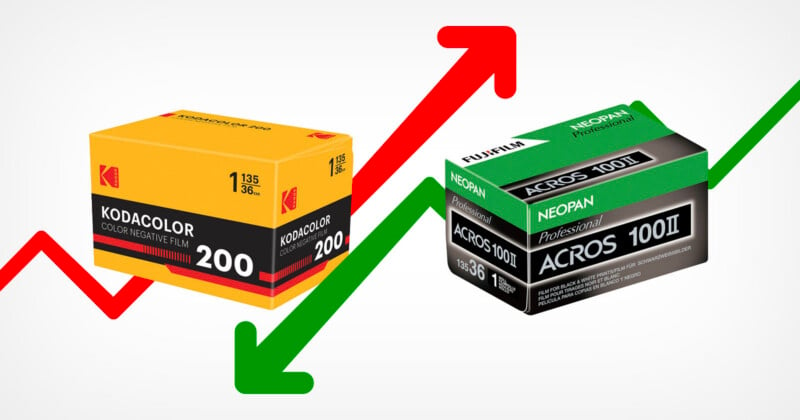
Analog Cafe has published a new film price report that looks at the cost of different film stocks around the world and compares them to previous marks.
The report looked at prices across 37 tracked film products available at a range of retailers (specifically, Analog Cafe says its data comes from averaging prices from 13 major stores) around the world and found that, on average, film increased in price by 2.5%.
“A healthy annual inflation rate is around 3%. No inflation or negative inflation may actually cause wages to stagnate or decline — we don’t want that any more than we want rates higher than 3%. The above 2.5% inflation number is just for the last six months, but the price of film in the six months before stayed the same; that is, in general, film prices are stable in 2026. They are on par with or lower than a healthy inflation rate.” Analog Cafe writes.
“This is why a look at film prices in the 1990s may feel as if we had it easy then, but the reality is that our wages were also lower. So a roll of Kodak Gold 100 (24exp.) that sold for $4.60 back then would be valued at $11.40 today, once inflation is accounted for. But the same class of film with 12 more frames — Kodak Gold 200, 36exp. — averages $10.34 in 2026, which is a significantly better deal.”
Looking at the United States, where inflation hit 4% in 2025, Analog Cafe points out that film is therefore one of the most stable and best-priced goods on the market, which goes against the general belief that film photography is getting more expensive.

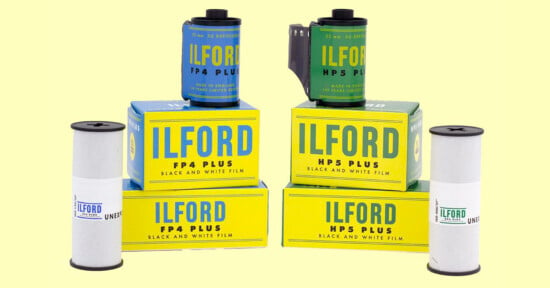
In any study, there are outliers, and some films have jumped in price through 2026. For example, Analog Cafe reports that Kodak Kodacolor 200 jumped in price by 10.5%, Ilford XP2 Super 400 is 10.4% more expensive, and Ilford FP4 Plus 125 is 9.2% more expensive than it was at the start of the year. Ilford FP4 Plus 125, Kentmere Pan 200, Lomography Lomochrome Metropolis, and Ilford HP5 Plus 400 all also increased in price.
But on the flipside, Kodak Ektapan (also known as T-Max) 400 fell in price by 4.9%, Ilford Delta Professional 3200 dropped 3.5%, and Kodak UltraMax 400 is 2.6% cheaper. Fujifilm Neopan Acros 100, Lomography Lomochrome Purple, and Harman Phoenix 200 also all fell in price.
Analog Cafe’s full Film Price Watch report goes into more detail, but the takeaway is that film is, generally, not getting substantially more expensive over time — at least not yet.
Affiliate Disclosure PetaPixel articles may include affiliate links; we may earn a commission if you buy through one.