This is What Radiation Looks Like to an Old Phone Camera
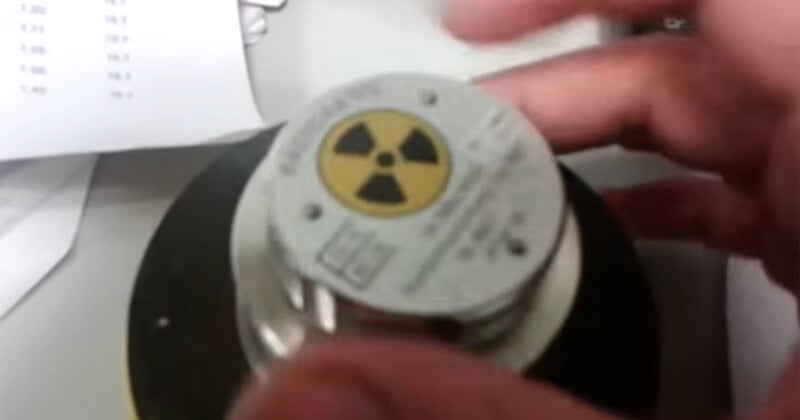
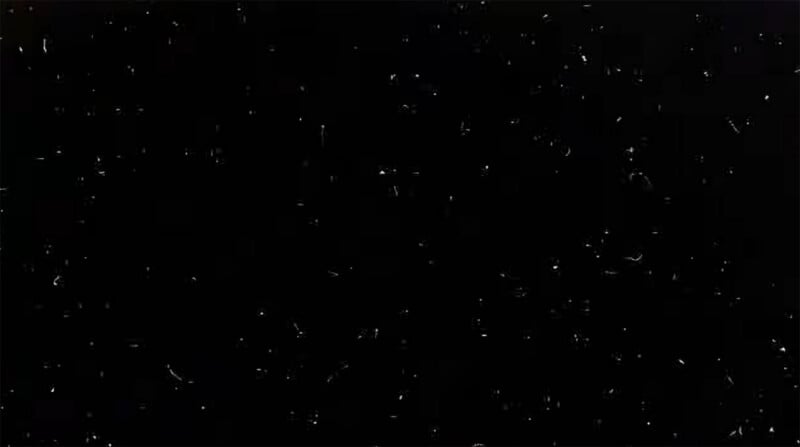
Want to see what radiation can look like on camera? This short 1-minute video reveals what happens when an old cell phone with a CCD camera is pointed at a source of beta radiation.
The cameraman first removes the sealed radioactive check source, sets it on the desk, and brings the lens of the camera directly face down over the exposed center of the radioactive disc.
In the creation of a digital photograph, photons enter cameras through the lens and hit the sensor’s pixels, which knock electrons free and create photoelectrons. These electrons are trapped in pixel buckets, and the accumulated electrical charge in each of the buckets is measured, amplified, and converted into the brightness of color of that pixel in the overall digital photo.
In this experiment, on the other hand, it’s not photons striking the camera sensor but high-speed, high-energy electrons, and these electrons are capable of knocking large numbers of electrons free in the areas they hit the sensor. This large number of freed electrons is then interpreted by the camera as being incredibly bright spots of light.
App developers have taken advantage of this exact principle to create smartphone apps that offer radiation detection, and they have been found to be quite accurate in their readings. Back in 2014, Australian scientists tested these apps on an Apple iPhone 4S and a Samsung Galaxy S2 at a government instrument calibration facility, and they were impressed with the results.
“These results show that the devices can accurately determine the dose rate which a person is exposed to and that the phone is sensitive enough to detect radiation at levels which are significant in a radiological event,” the ANSTO scientists write. “[…] the app is very useful in determining the dose rate to a person, with no anomalous results.”
Affiliate Disclosure PetaPixel articles may include affiliate links; we may earn a commission if you buy through one.