
How It Was Shot: The Triangle Shadow of Mount Hood
Towering 11,249 feet above sea level, Mount Hood is the tallest mountain in the state of Oregon. The mountain is so large that on a clear day, it can be visible from over 100 miles away. Climbing Mount Hood is a considered a rite of passage by many outdoor enthusiasts in the Pacific Northwest and every year more than 10,000 people attempt to reach the summit. Those who make it to the top are treated to spectacular views of the surrounding valleys and several other peaks in the Cascade Range.
There are dozens of different climbing routes on Mount Hood, but the South Side/Old Chute route is the most popular. This route begins at Timberline Lodge and ascends about 5,250 feet in 3.6 miles. Most groups start in the middle of the night and complete the climb in 8-10 hours round trip. Late spring/early summer is the best time of the year for this climb because the snow and ice are in good shape and the weather is usually stable.
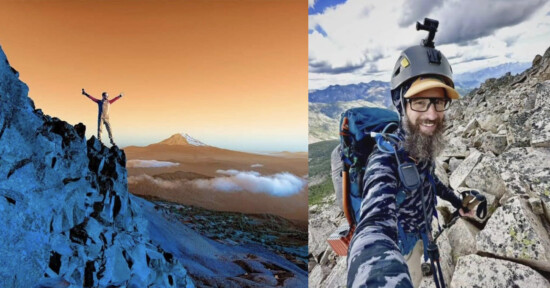
A few years ago, I joined a team of climbers attempting an early summer ascent of the South Side/Old Chute route. While preparing for the climb, there was a lingering question I needed to answer. Should I bring my photo gear or leave it? I was the only photographer in the group and the thought of hauling heavy DSLR gear up the mountain was not appealing. After some contemplation, I decided to bring 1 camera body, 1 lens and a lightweight tripod, just in case the light was good at the summit. This ended up being a very good decision!
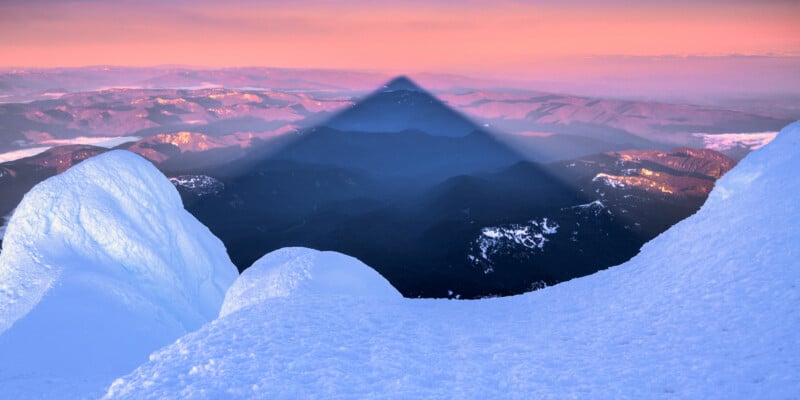
On the night of the climb, with visions of standing on the summit in our heads, we set off into the dark just after midnight. The wind was absolutely ripping at Timberline with 40-50mph gusts pushing the wind chill well below freezing. The climbing was challenging, but we pressed on since the forecast called for decreasing winds as we moved higher up the mountain. We were relieved when the wind finally calmed down above 9,000 feet. Everything was going great, but at about 10,750 feet I really started to feel the extra weight of the camera gear. In the last push to the summit, my quads felt as though they were on fire. Luckily, I was able to power through the pain and arrived at the summit at 5:30 a.m., just after sunrise. The light was incredible in every direction, but the shadow of the mountain was mesmerizing. I had never seen a shadow like this before and I was captivated by the angular lines and sheer size of it. Between reaching the summit and seeing this unique scene, I was overcome with emotion and yelled out, “Oh my! This is amazing!” loudly enough to startle my climbing partners. I’ll never forget this experience and it serves as a good reminder of why you should always bring your camera gear!
Composition
I was drawn to the triangle shape of the mountain shadow, but finding a way to arrange the elements of the scene in a cohesive manner proved to be a challenge. High-altitude causes shortness of breath, an elevated heart rate and light-headedness, compounding the difficulty of capturing this photo. Compositions were limited on the summit and the rapidly shrinking shadow forced me to work quickly and intuitively. After evaluating a few options, I liked the simplicity and balance of this composition, which combined the rime ice on the summit and the mountain shadow.
Technical
Nikon D7000, Nikon 12-24mm f/4 at 19mm, tripod. 1/6 sec at f/16, ISO 100. I processed the RAW file in Lightroom Classic; Photoshop was used to finalize the colors and contrast. My goal with post-processing was to intensify the shadow to make it the main subject of the photo. I did this by increasing the midtone contrast using luminosity masks and levels adjustments. I also focused on keeping the shadow areas cool and highlight areas warm. These adjustments help lead the eye through the scene and showcase the striking contrast between the shadow and the brightly lit landscape surrounding it.
Final Thoughts
Climbing Mount Hood with my photo gear was one of the most difficult things I’ve ever done. I feel fortunate to have been able to climb with a great team of skilled mountaineers. Although it was a ton of work, I’m glad I brought my gear along. Having the opportunity to create this special mountain photo made it all worthwhile!
Note: Climbing Mount Hood involves technical alpine mountaineering; crampons/ice axes are mandatory. A Mount Hood Climbing Permit is required to travel above 9,500 feet on the mountain. If you are feeling inspired to climb Mount Hood but don’t know where to start, consider joining a guided group. They can teach you the skills needed to reach the summit and safely make it back down.
This article comes courtesy of ELEMENTS Magazine. The ELEMENTS is the monthly magazine dedicated to elegant landscape photography, insightful editorials and fluid, clean design. Inside you will find an exclusive and in-depth articles and imagery by the best landscape photographers in the world such as Charles Cramer, Christopher Burkett, Hans Strand, Rachael Talibart, Christian Fletcher, Charlie Waite, and Steven Friedman, to name a few. Use the PETAPIXEL10 code for a 10% discount off the annual subscription.
Affiliate Disclosure PetaPixel articles may include affiliate links; we may earn a commission if you buy through one.