What Really Happens Inside a BAFTA Awards Portrait Studio?
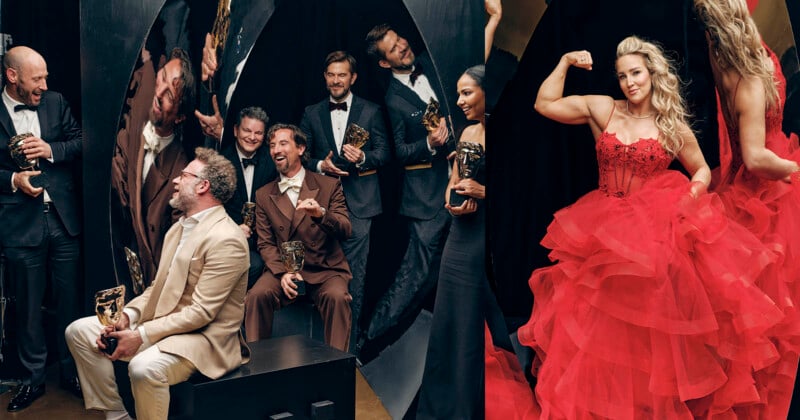
Few photographers ever get to work inside the portrait room of a major awards ceremony. Most will only ever see the finished images: the winner holding the award, the controlled lighting, the polished expression, the clean composition.
That is not what happens.
This year, I (@SaneSeven) and my partner and creative director, Marius Seven, created the portrait studio for the BAFTA TV Awards inside the Royal Festival Hall, London, UK. It was one of those assignments where the final images may look calm, but behind the curtain, everything is moving at the speed of live television.
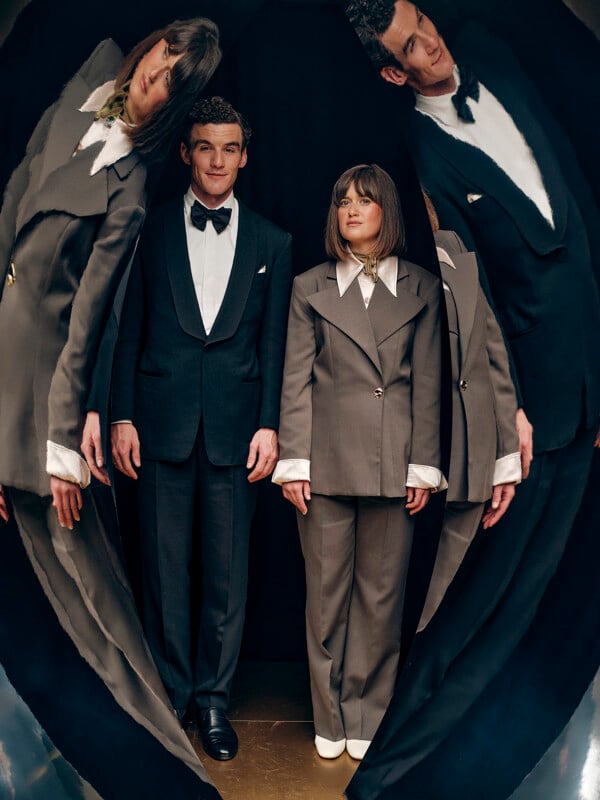
There are only a handful of events where this kind of portrait room exists at this level: BAFTA, BIFA, the Oscars, the Golden Globes, major film festivals, and major award shows. They are strange places to work because they sit somewhere between editorial portraiture, live event coverage, red carpet, celebrity handling, and high-pressure sport.
You are not really running a normal shoot. You are building a machine that has to produce a portrait under almost impossible conditions.
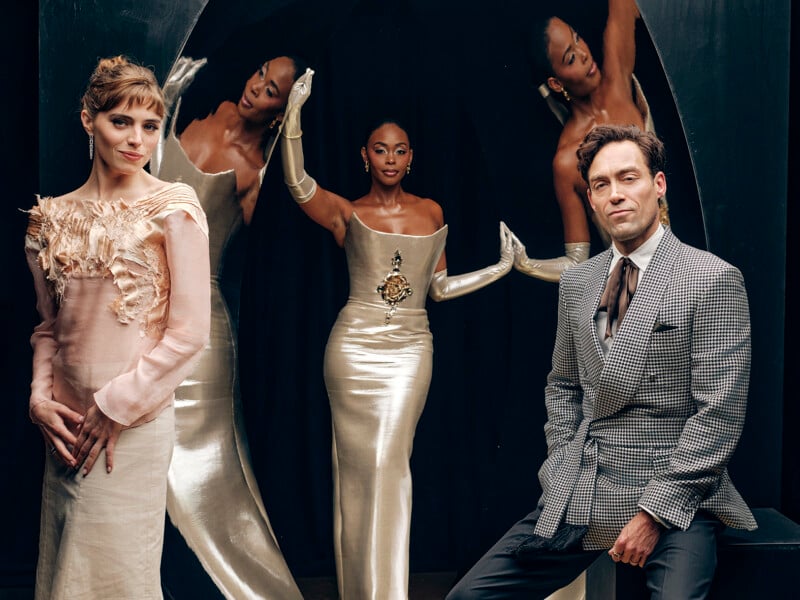
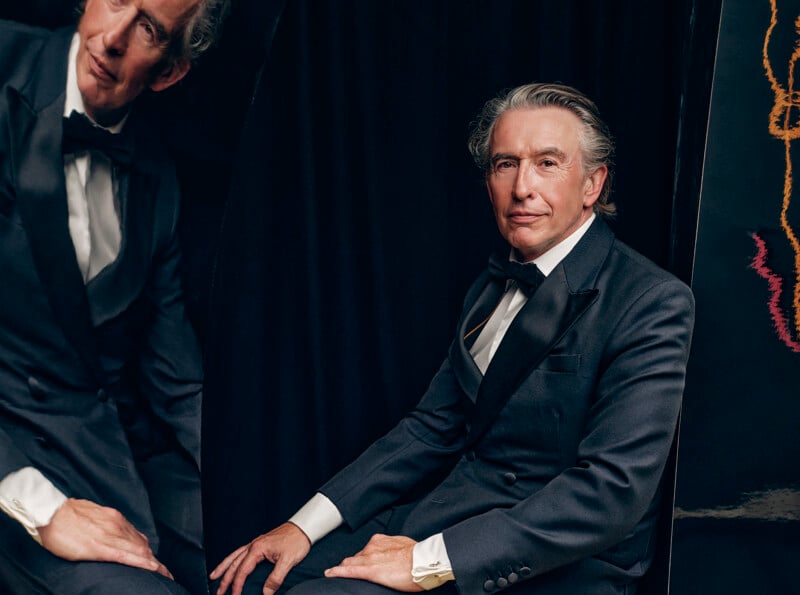
The first thing photographers might be surprised by is how little time you actually have.
With some people, you may have less than a minute. Sometimes more. Sometimes much less. The subject walks in, usually with a publicist, a BAFTA team member, possibly another photographer or video crew waiting behind you, and the next person is already on their way. One moment, you have Stephen Graham roaring with the leading actor BAFTA in his hand, the next, Seth Rogen comes with the cast and production team from The Studio series. Straight after, Awkwafina or Adam Scott turns up unexpectedly. You don’t know who the next sitter is. You don’t know what idea will survive the next meeting.
There is often somebody counting down.
“Thirty seconds.”
“Ten seconds.”
“Last shot.”
You cannot ask them to relax for a few minutes. You cannot slowly build rapport. You cannot spend five minutes adjusting a light. You cannot discover the picture gradually.
You have to know what you want before they arrive. And then you have to be ready to abandon that idea instantly.
That is the real skill of these rooms. It is not just lighting. It is not just being good with famous people. It is the ability to make a decision fast enough that the person in front of you feels they are in safe hands.
Because that is the second thing photographers should know: even very famous people still need direction.
A winner may walk in carrying a BAFTA, but they are also walking in after one of the most emotionally charged moments of their year. Some are euphoric. Some are overwhelmed. Some are exhausted. Some are still in performance mode. Some want to be told exactly what to do. Some want to play. Some give you almost nothing until they trust you.
The dangerous mistake is assuming status equals confidence. It does not.
Some of the most experienced people still look at you and ask: “What do you want me to do?”
That question is the whole job.
If your answer is vague, you lose them. If your energy is too apologetic, you lose them. If you over-direct, you kill the moment. If you under-direct, the frame goes dead.
The direction has to be simple, fast, and physical. There is no space for complicated language. On a normal shoot, you can explore. In an awards portrait room, every word has to earn its place.
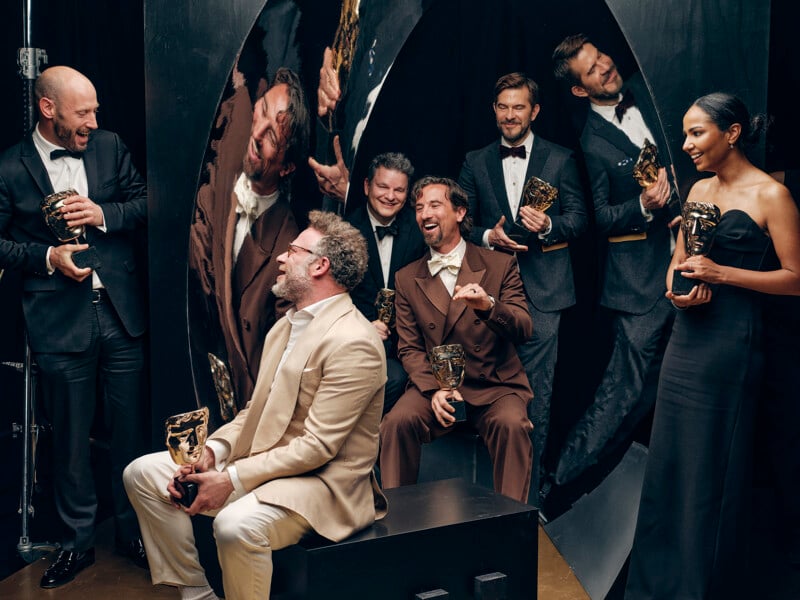
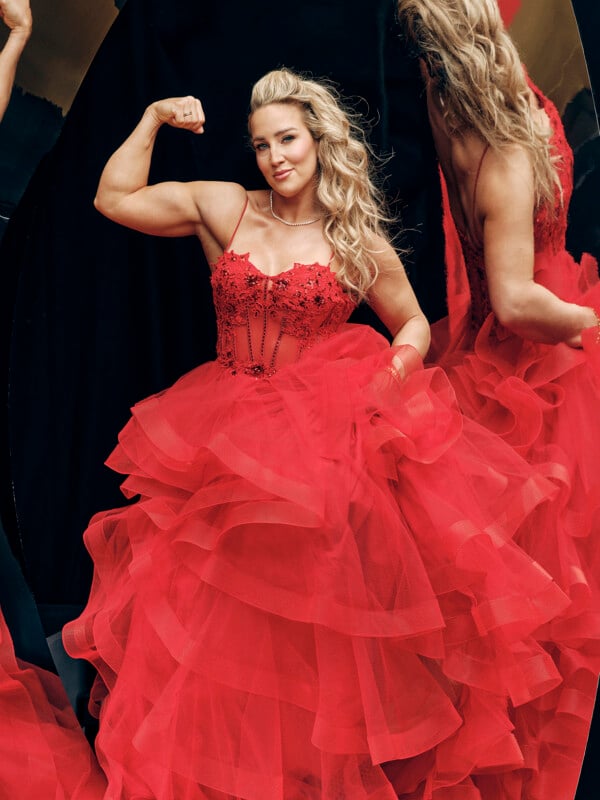
For this year’s BAFTA TV Awards, our set was built around large bent mirrors. They distorted and fragmented the reflection in subtle ways, which felt right for television actors, who spend their careers moving between public identity, private self, character, and performance.
But from a photographic point of view, mirrors are a nightmare. They show everything you do not want to show. Crew. Stands. Cables. The ceiling. The wrong part of the room. Your own body. Someone walking past.
Bent mirrors are even less predictable. A tiny shift in angle can completely change the image. That meant the set had to be designed not only for how it looked, but for how quickly it could survive different bodies, heights, clothing, group sizes, and personalities.
This is something photographers often underestimate. On a high-pressure set, the design has to do some of the directing for you.
We also built sculptural boxes into the set, especially for group portraits. Groups are one of the easiest ways to lose an image. A room full of famous actors can very quickly become visually flat, like a family photo.
You are thinking about height, hierarchy, body language, clothing, negative space, where the award sits, who is connected to whom, and whether the image has any energy. You are doing all of that while people are moving, laughing, talking to each other, being pulled to the next commitment, and someone nearby is counting down the seconds.
The boxes gave us levels. They let us build shape quickly. They stopped everyone standing in one line. In that environment, practical set design is not decoration. It is survival.
One of my favourite moments happened with Stephen Graham after his lead actor win. We began with calm, controlled portraits, probably assuming that the introvert in him would prefer something direct and understated. Then suddenly, something shifted. He stood up holding the award.
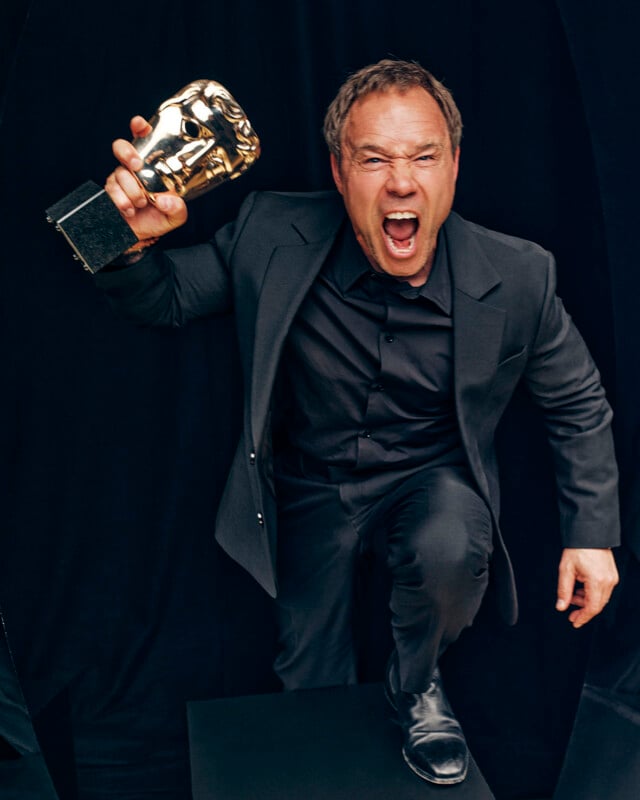
“I’ve just won a f* cup,” he shouted in his Liverpool accent, which felt so familiar after the ten years I spent there at the beginning of my career. “It’s too civilised!” he shouted, roaring like a lion.
It was completely spontaneous. My only thought was whether the focus would hold.
That is the part photographers understand immediately. You can plan the set, the light, the composition, and the mood. But the best frame may arrive in half a second, completely outside the plan, and your job is not to admire it. Your job is to catch it.
That is why the technical side has to become almost invisible. You cannot be wondering whether the light is right when the moment happens. You cannot be stuck inside the menu. You cannot be changing your mind about the focal length. You cannot be mentally checking whether your shutter speed is safe while someone has just given you the only real expression you will get.
Before the subject walks in, everything has to be ready enough that you can concentrate on behaviour. That does not mean the shoot becomes technically easy. It means the technical uncertainty has to be absorbed before the room goes live.
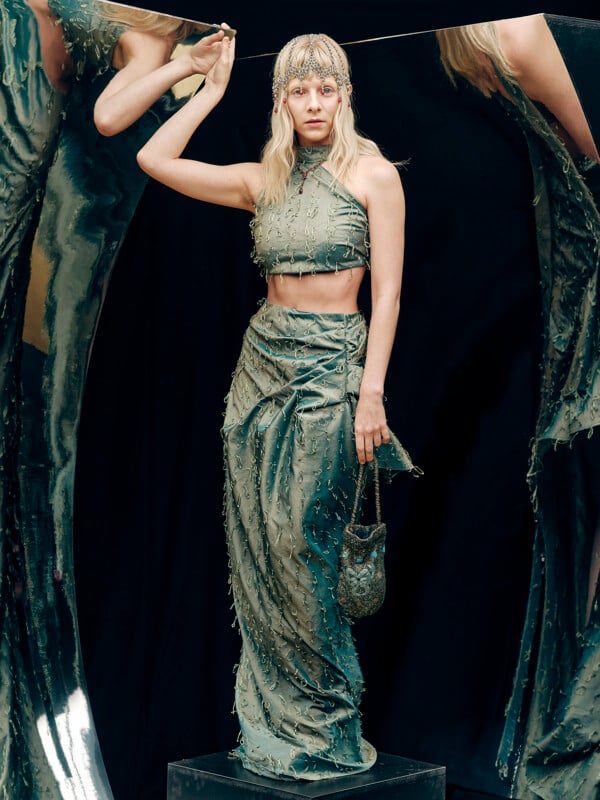
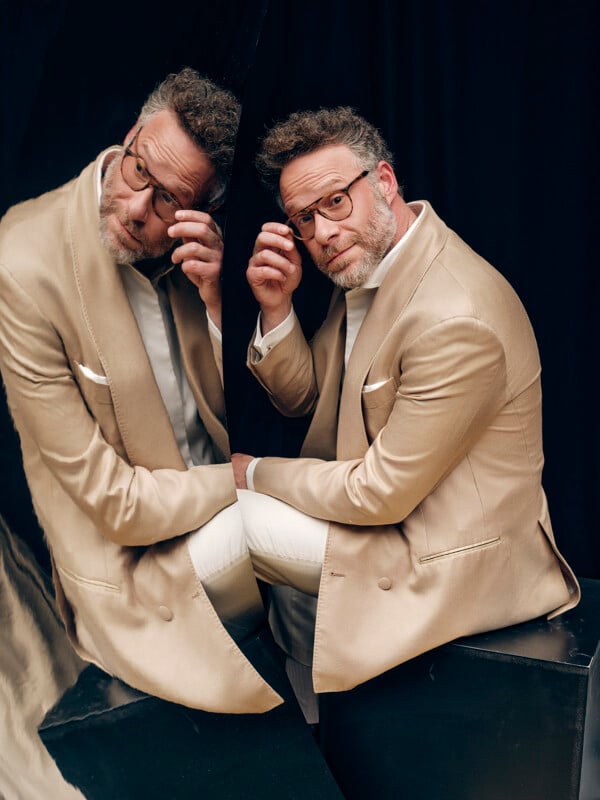
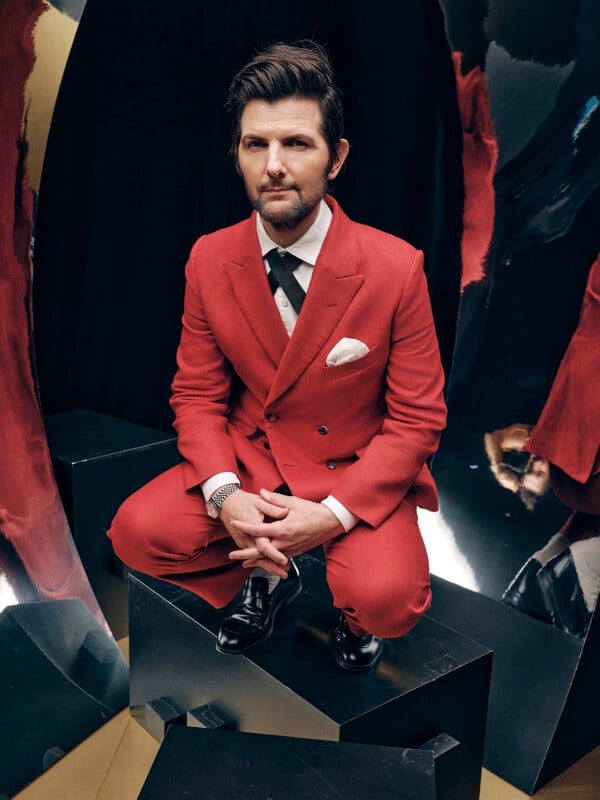
The first test frame is also more important than people think. I almost always show it to the person. Not because I need approval, but because it changes the dynamic. Standing in front of a camera is vulnerable, even when you are famous. When someone sees that the image is working, they stop worrying about whether they look strange and start collaborating.
In a room where you may only have 40 seconds, that trust has to happen almost instantly. But inside that tiny moment is a much bigger process: the set design, the lighting, the mirror angles, the publicists, the countdowns, the emotional state of the winner, the photographer’s decisions, and the split second when something real either appears or it does not.
That is what most people never see. And that is what makes these rooms so addictive.
They are not glamorous in the way people imagine. They are chaotic, technical, psychological, physical, and brutally fast. You leave with your body exhausted and your brain still replaying every frame you almost missed.
But when it works, it works because everything meets in one fraction of a second: the person, the pressure, the light, the set, the instinct.
That is the reality behind a BAFTA portrait. Not a relaxed celebrity shoot. Not a red carpet. Not a controlled editorial day. A room behind a curtain. A winner walking in. Someone counting down. And one chance to make the image.
To follow along with Sane’s BAFTA work and see more photos and videos from this shoot, visit Sane’s Instagram.
Affiliate Disclosure PetaPixel articles may include affiliate links; we may earn a commission if you buy through one.