

The Camera Crew All Wore Scrubs: The Amazing Logistics of Filming ‘The Pitt’
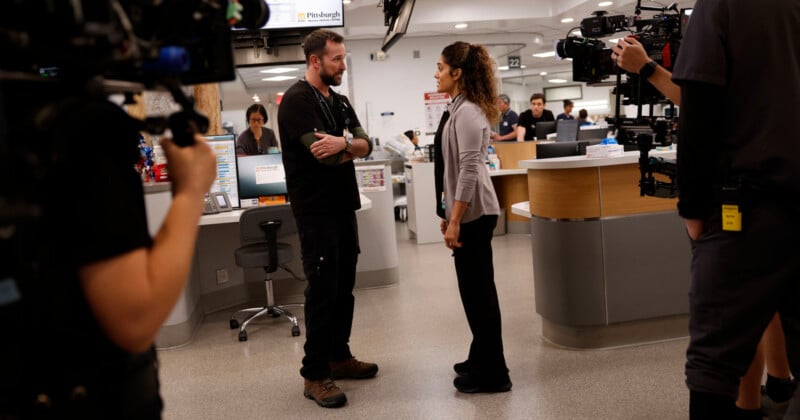
The Pitt on HBO Max is about as immersive as a TV show can be. Set in real time, with each episode representing an hour in the hectic lives of staff working at the fictional Pittsburgh Trauma Medical Center’s emergency room, viewers can get lost in the working (and sometimes personal) lives of Dr. Robby (Noah Wyle) and his crew.
The Director of Photography, Johanna Coelho, tells PetaPixel that while The Pitt is filmed on a set, the realism works because none of the walls or fixed furniture ever moves. That allows the audience to build a mental map of the Emergency Department (ED). “This is challenging in a way,” says Coelho. “But also really helps the visual language to place the camera in places it could only be in a real environment as well.”
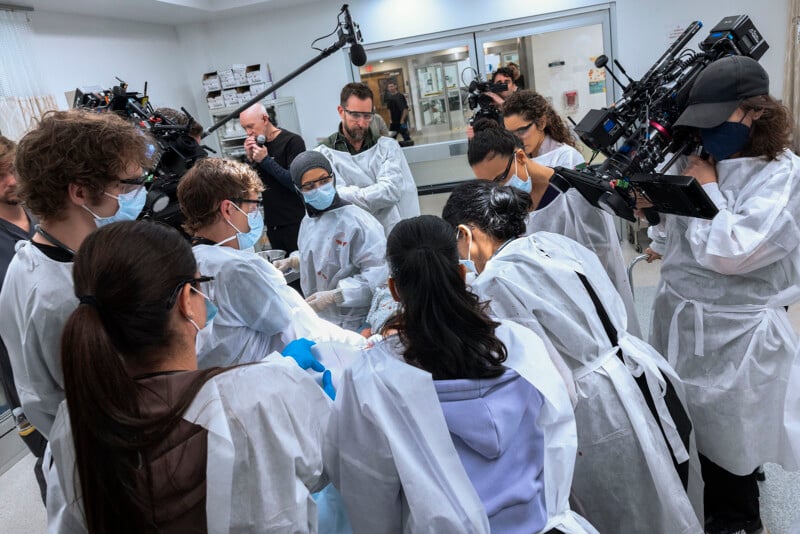
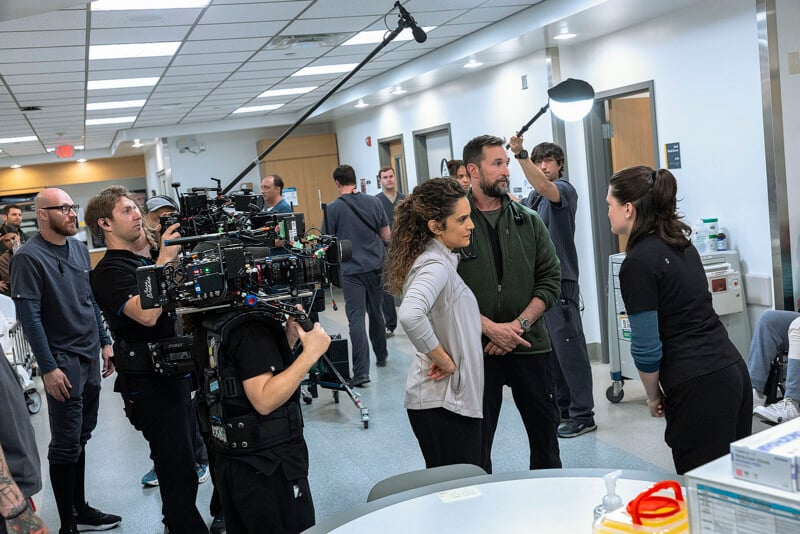
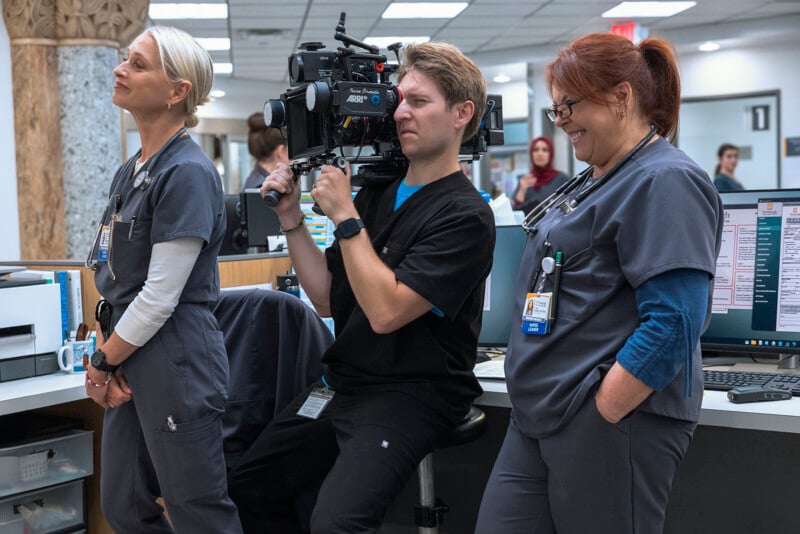
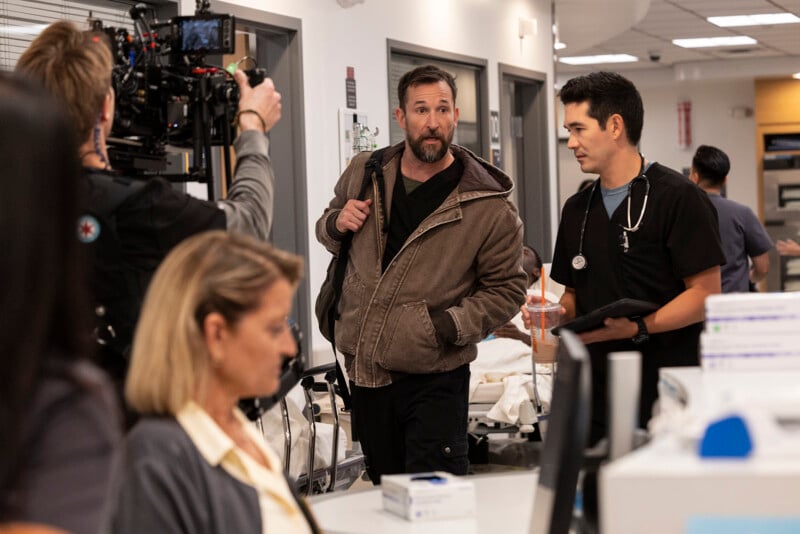
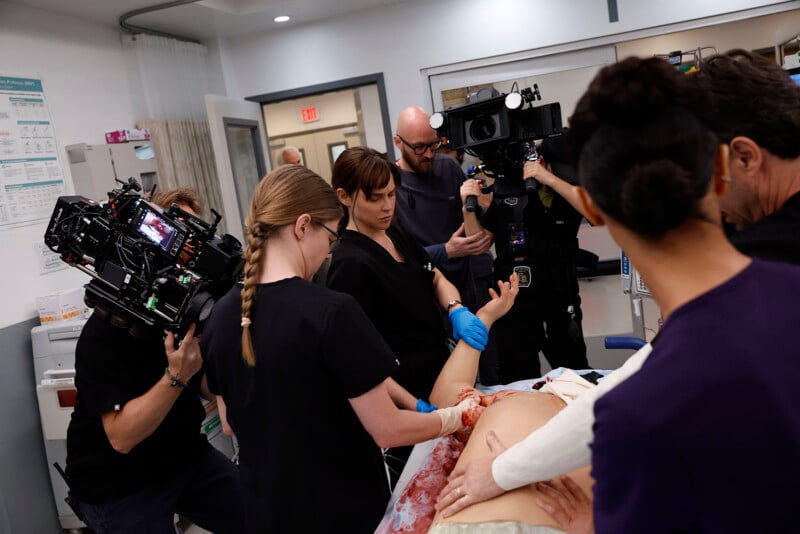
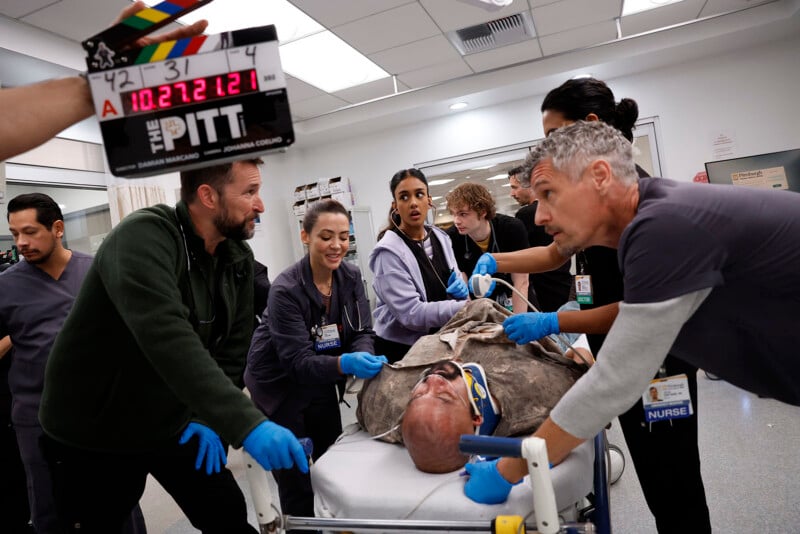
With the acting staff and the film crew — which includes cameras, lighting, and sound — all moving through the same space at the same time, precise choreography is required for every scene and setup.
“To facilitate the choreography and open the space as much as possible, we do not have any lighting or C-stands on our set ground,” explains Coelho. “Therefore, we created custom camera onboard lights to help fill in the eyes of the actors on the go, as well as lights operated on a pole to be as mobile as possible. To help soften our lighting in certain situations, we also 3D printed custom diffusion frames that magnet on the ceiling troffers, as well as diffusion cups for the ceiling cans.”
The set was designed and built by the production designer Nina Ruscio and her team. “I know she did extensive research to make it look as real as possible, while having a layout to tell the story in many layers,” says Coelho.
So much so, in fact, that Ruscio designed the set before the scripts were written. That way, the writers could lay out the story in perfect synergy with the set. “This really helped the continuous aspect of the story and people moving in and out of the rooms,” adds Coelho.
As well as diffusing the lights in the ceiling, the lights carried by the crew were often bounced off the walls and ceilings. This meant finding the perfect paint color.
“Nina and I tested over 50 shades of white to find the perfect one,” says Coelho. “It was important to find a white that would work with every skin tone because of the diversity of our cast.
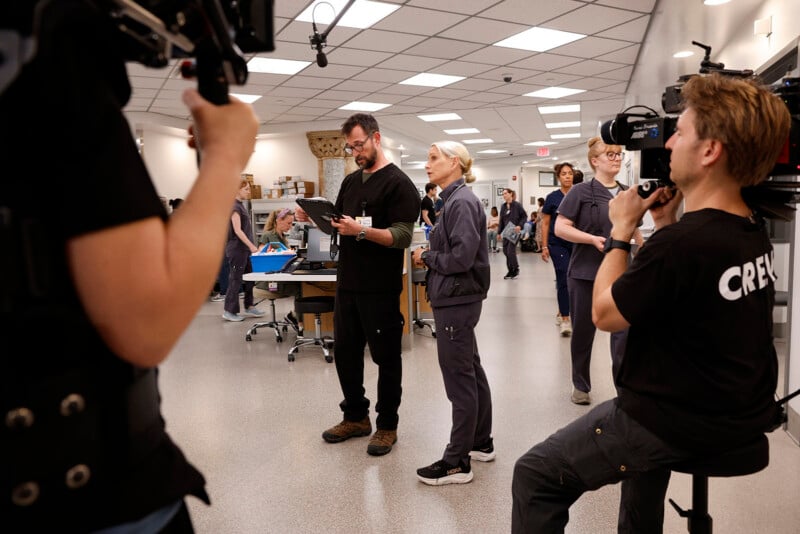
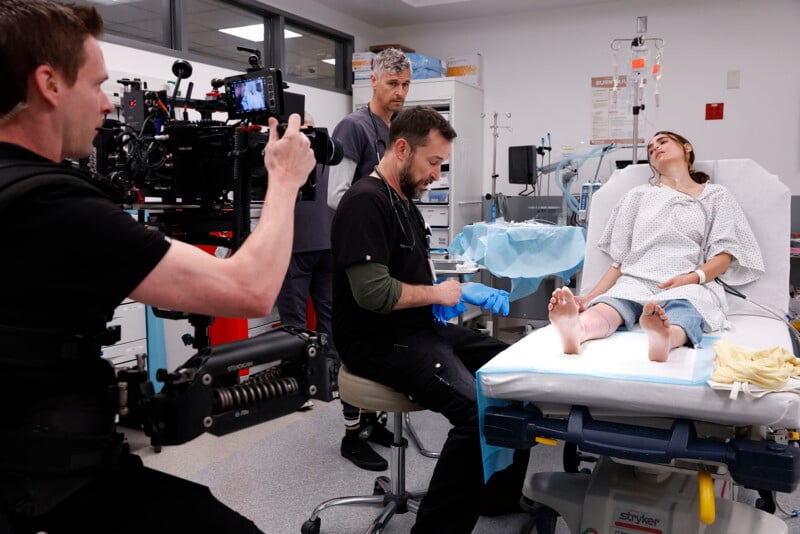
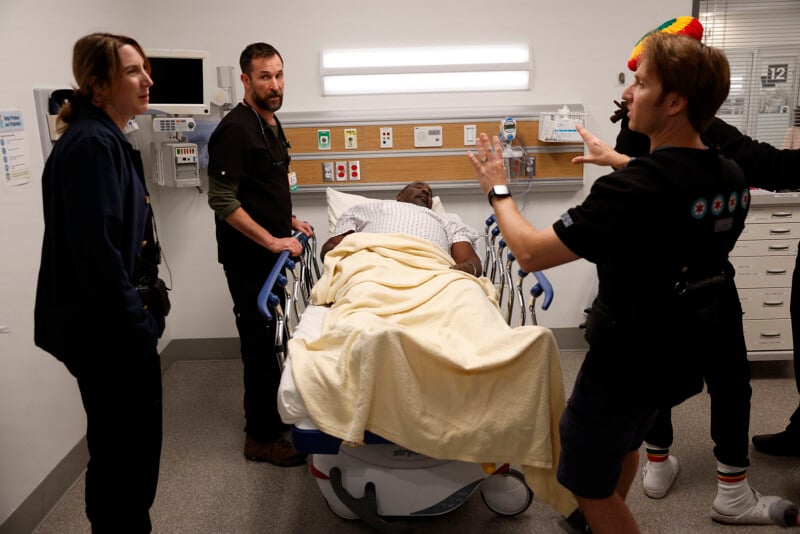
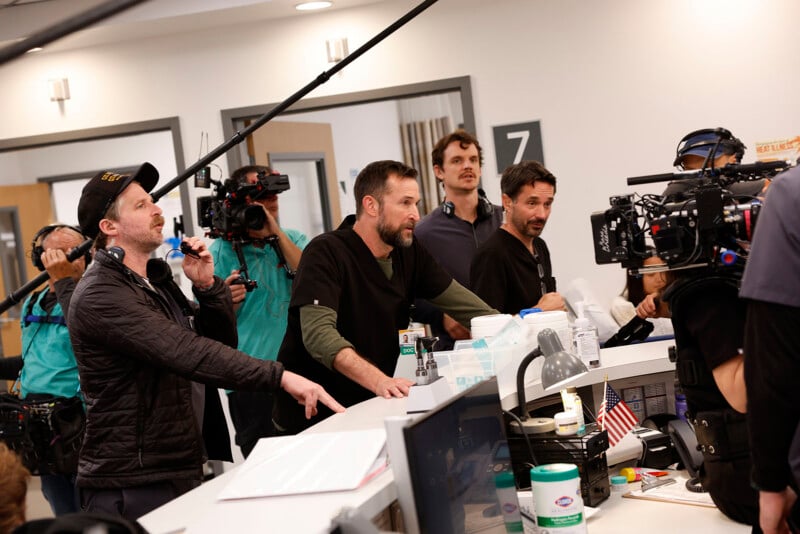
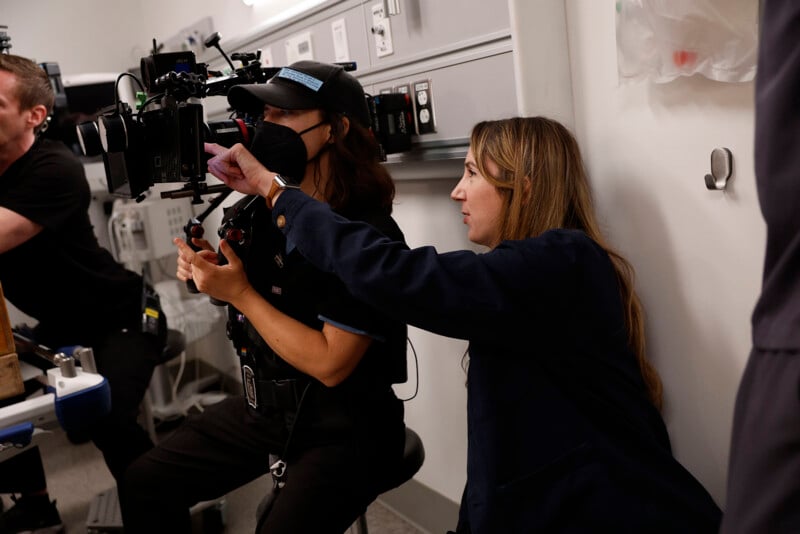
But even with all that planning and choreography, it is hard to keep people out of shots in a busy and intricate environment like the set of The Pitt — especially one that has reflective surfaces. But the production team had a “brilliant” remedy for that: put the camera, lighting, and audio crew in hospital scrubs.
“Our set is made of a lot of glass doors and windows, to allow depth on set and see many layers of the story at the same time, but it does create a lot of reflection issues on set for the crew,” Coelho explains.
“Even though we can gimbal the windows [tilt them slightly] to help the reflections, we run into hard situations sometimes with the way the camera moves, and having the crew wear scrubs gives us the opportunity to have occasional accidental reflections from the crew that would pass as traditional background people.”
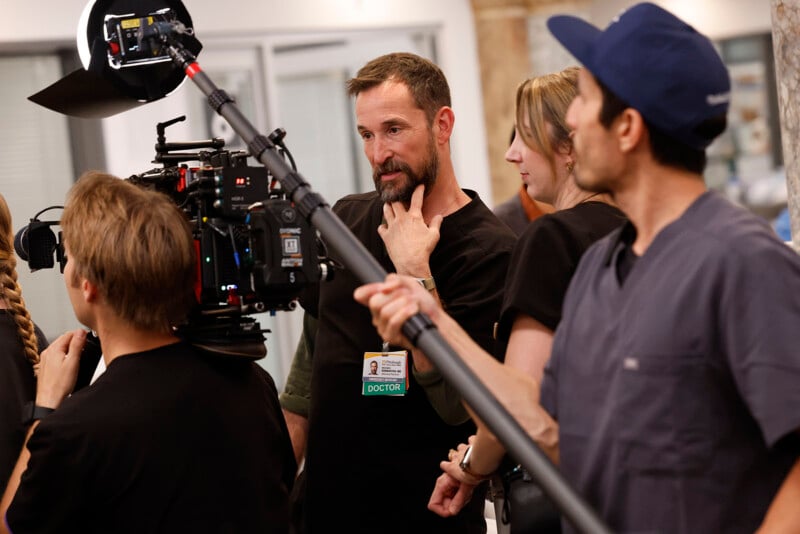
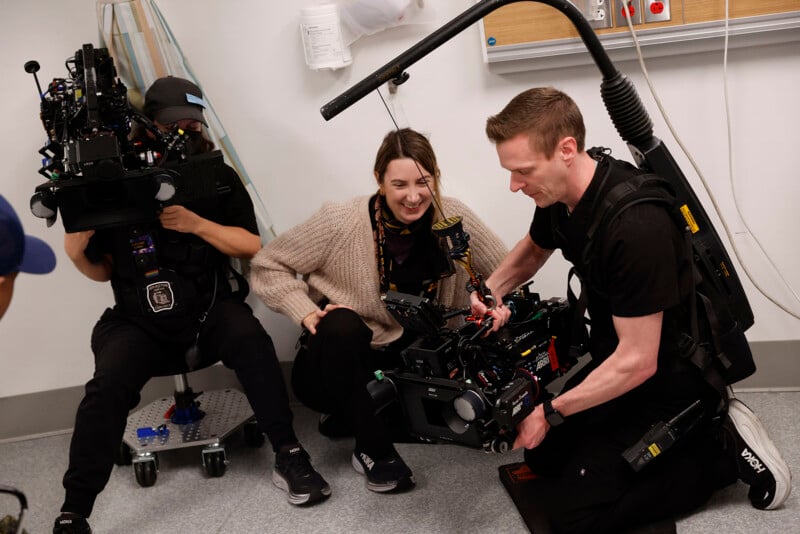
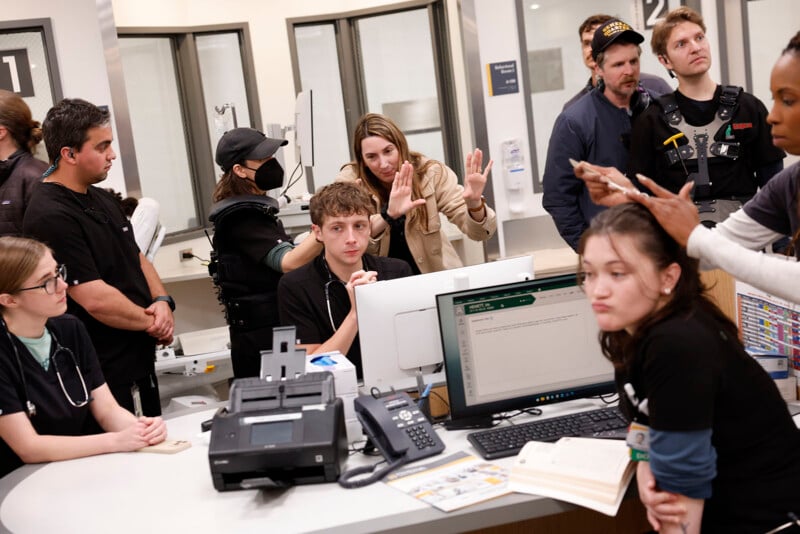
Coelho was born and raised in France and has been the sole Director of Photography for both Seasons 1 and 2 of the award-winning show. She worked closely with executive producer John Wells to develop the visual language of the show, as well as the design and technical departments, so that the camera could move freely throughout the set.
On her Instagram page, Coelho has shared several fascinating behind-the-scenes videos showing the often manic goings on as the actors seamlessly flow through the set.
“We do multiple shots per scene, so they have the opportunity to cut to tell the story in the best dynamic way,” she explains. “Each shot — depending on how long and complicated the choreography is — will have multiple takes as it’s difficult to nail the choreography on the first try.”
“We almost always do a take from the beginning to the end of a scene,” she continues. “Because it’s easier to reset the choreography for everyone that way, and it really helps give you the feeling of continuity in the editing by following that process.”
For cameras, Coelho uses the large-format Arri Alexa Mini LF for both the A and B cameras. This allows her to get close to characters while maintaining a cinematic feeling.
“The large format of the camera helps us achieve that, by giving us a shallower depth of field on a lens that represents the human eye, the closeness to the characters, and the immersion (mostly the 50mm),” Coelho says.
“The compactness and lighter weight of the camera were also a key aspect in our handheld and tight shooting environment. We paired it with the light and cinematic Angenieux Optimo primes and Optimo Ultra compact zoom.”
To see more of Coelho’s work, visit her Instagram and website. The Pitt is streaming now on HBO Max.
Image creditsCourtesy Johanna Coelho
Affiliate Disclosure PetaPixel articles may include affiliate links; we may earn a commission if you buy through one.