Kase’s AF 150mm f/5.6 Reflex Lens Embraces Wacky Donut-Shaped Bokeh
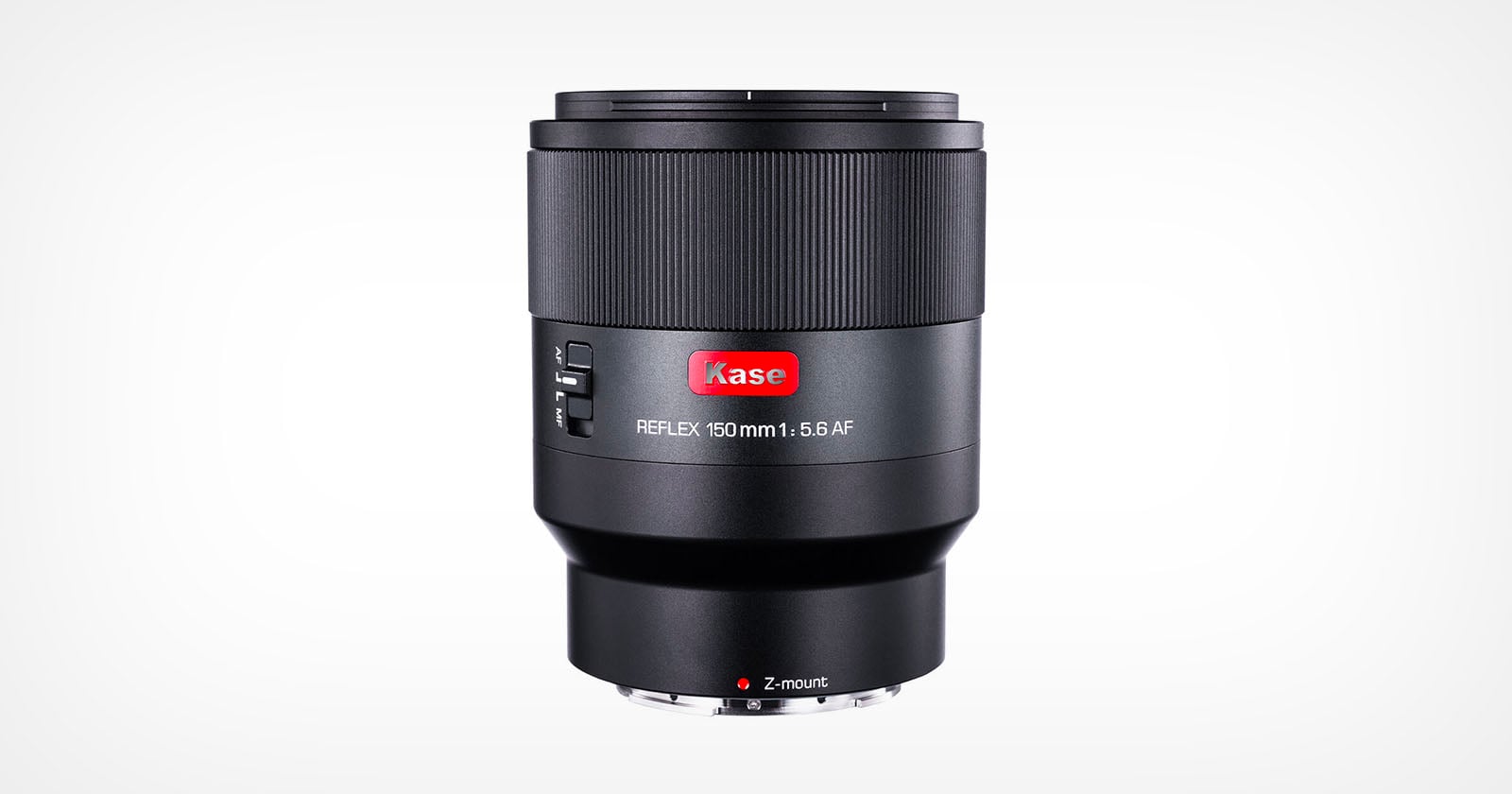
Kase, arguably best known for its filters, also makes lenses. While some of these are normal, like the AF 85mm f/1.4 portrait prime, others are a bit unusual, like the manual focus 200mm f/5.6 reflex (mirror) lens. Kase’s newest lens is yet another reflex prime, but this time it comes equipped with autofocus.
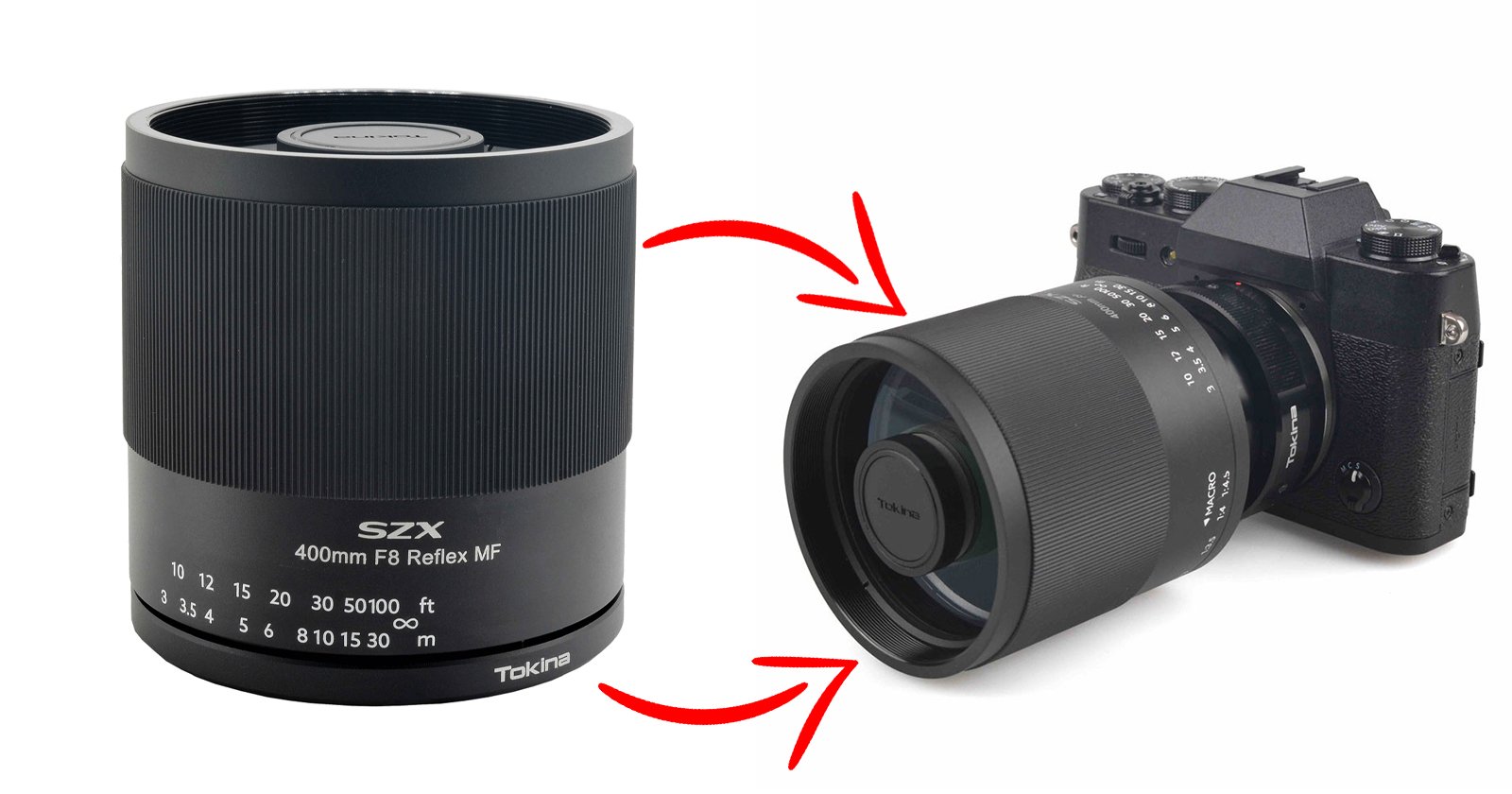
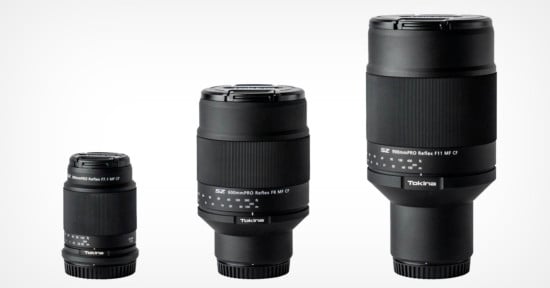
The strange Kase 150mm f/5.6 AF reflex lens made waves when Kase teased it at CP+ earlier this year. It’s extremely unusual for a reflex lens to have autofocus capabilities, for starters, and it’s also odd for a reflex lens to have this short a focal length. While 150mm is squarely in the telephoto category, reflex lenses are often very long, like the Tokina 900mm f/11, for example. The general idea, or at least how most lens makers approach reflex lenses, is to combine a very long focal length with a compact, affordable design. This often comes at the cost of maximum aperture and image quality.
Instead of chasing impossible dreams of great optical performance and a fast aperture, which Kase does with its more traditional lenses, the company is instead leaning heavily into one of the unique aspects of reflex lenses, their donut-shaped bokeh.
Reflex lenses sport a catadioptric design. Catoptric means relating to using reflections or mirrors to focus light, while the “dioptric” refers to using secondary refractive lenses to help create the final image. On the inside of the Kase 150mm f/5.6 Reflex and other mirror lenses, there’s a black circle in the middle. On the back side of this black circle is a mirror that reflects light toward the image circle from the larger mirror at the very back of the lens. Because of how this circle obstructs how light travels through the lens, reflex lenses create donut-shaped bokeh.
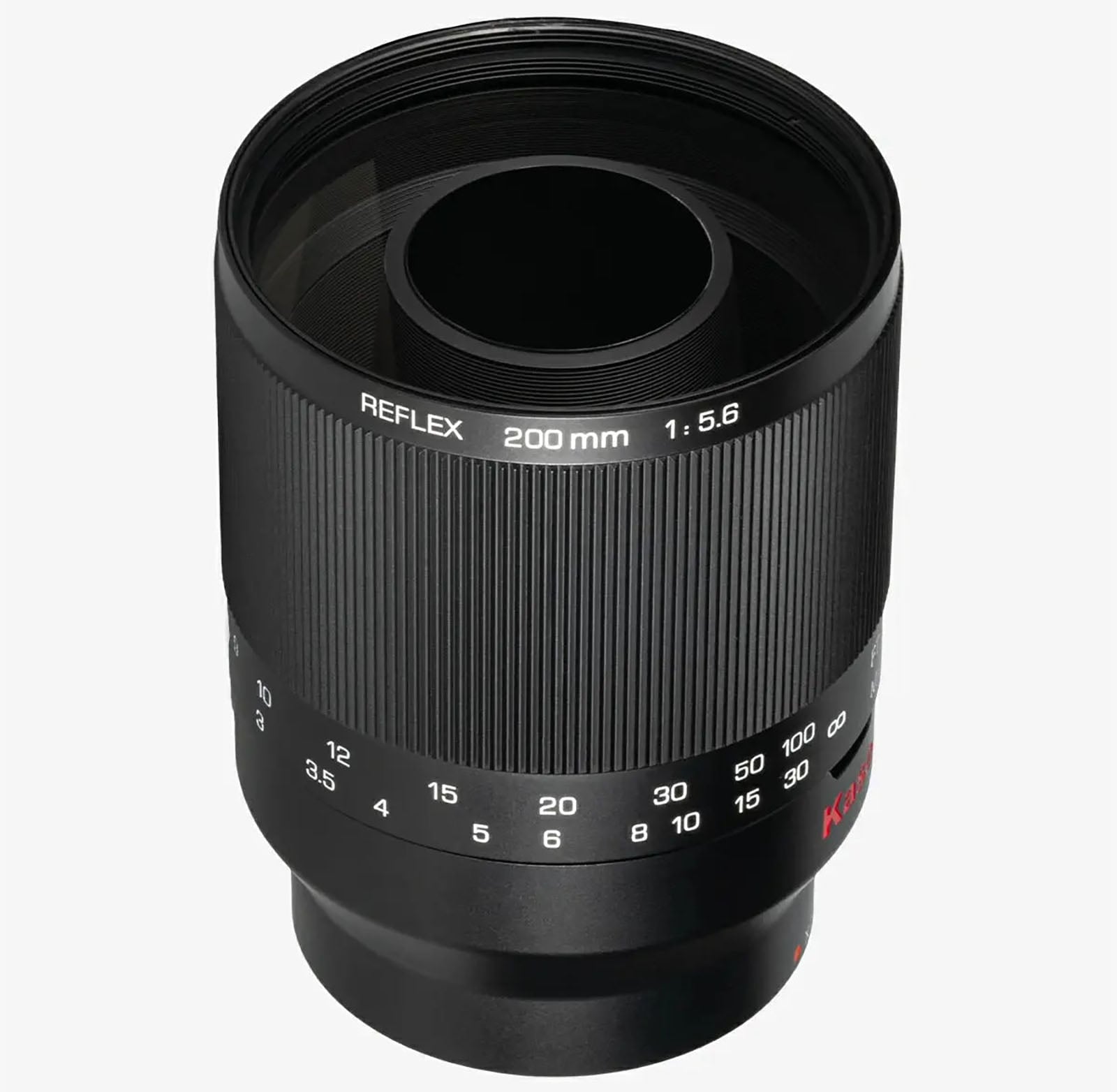
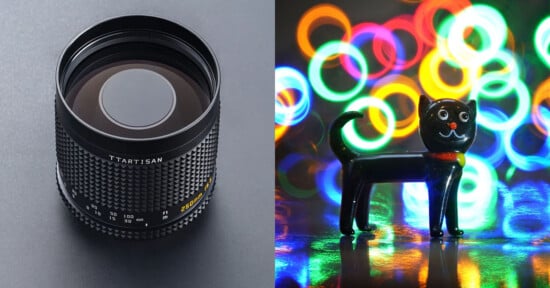
While some photographers consider this a major limitation of reflex lenses, Kase treats it like a feature rather than a bug. This is likely part of why Kase is focusing on more portrait-friendly focal lengths with its recent reflex lenses like 2024’s 200mm f/5.6 and the new AF 150mm f/5.6. The company wants to make donut bokeh cool. TTArtisan barked up this tree a couple of years ago, too.

What nobody in the mirrorless era has done is implement autofocus into a reflex lens. For old Sony DSLR fans, Sony did make a 500mm f/8 reflex lens with autofocus for A-mount SLRs. It was a groundbreaking oddity. The Kase AF 150mm f/5.6 focuses as close as 4.9 feet (1.5 meters), and it has an AF/MF switch on its barrel.
The lens has five elements arranged across four groups, and as is inherent to mirror lenses, no aperture. That means it is a fixed f/5.6 lens. It has a 67mm filter thread and accepts Kase’s magnetic filters. It also has a USB-C port for firmware upgrades.
While Kase has yet to share sample images from the 150mm f/5.6 lens, photos from its 200mm f/5.6 lens can at least illustrate the type of bokeh photographers can expect. Depending on who is asked, it’s either cool and fun or hideously ugly. The company is clearly betting on the former.

Pricing and Availability
While most reflex lenses target very aggressive price points, the new Kase AF lens is actually fairly pricey. It is $649 and available to preorder now across Nikon Z, Sony E, and Canon EF mounts. Yes, Canon EF. Since this is a full-frame lens with autofocus, it is not allowed on Canon EOS RF-mount cameras. This is probably also why it’s not available for Hasselblad XCD mount, unlike the 200mm f/5.6 manual focus lens. While there’s no word on any specific restrictions on third-party autofocus lenses on Hasselblad cameras, none exist.
The Kase 150mm f/5.6 AF is also coming to Fujifilm GFX medium-format cameras, but the G-mount version is instead $799.
B&H says all four versions will begin shipping on May 29.
Image creditsKase. Sample photos are from the Kase 200mm f/5.6 Reflex lens, not the new 150mm f/5.6 AF Reflex lens.
Affiliate Disclosure PetaPixel articles may include affiliate links; we may earn a commission if you buy through one.