Even Tech Reviewers Don’t Think Smartphones Can Replace Cameras
In his review of the new Oppo Find X9 Ultra, famous tech YouTuber and enthusiastic photographer Marques Brownlee (MKBHD) not only evaluates Oppo’s latest slab phone, but he also waxes poetic about mobile photography and smartphone cameras in general, arguing that no matter how good phones get, they won’t replace dedicated cameras for hardcore photographers. He’s right, and it’s refreshing to hear someone in the broader tech space say so.
There’s no question that the Oppo Find X9 Ultra and many other top-of-the-line smartphones offer incredible camera features and performance. As PetaPixel has explained time and again, the latest smartphones can take great, high-quality photos. It’s not even just the flagship phones that have improved by leaps and bounds, either.
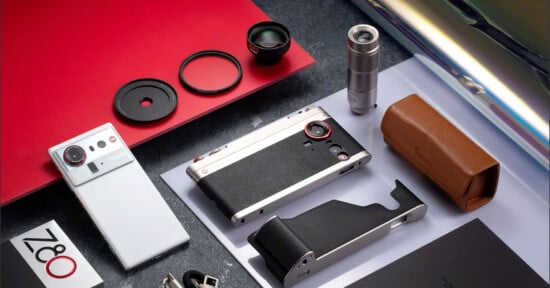
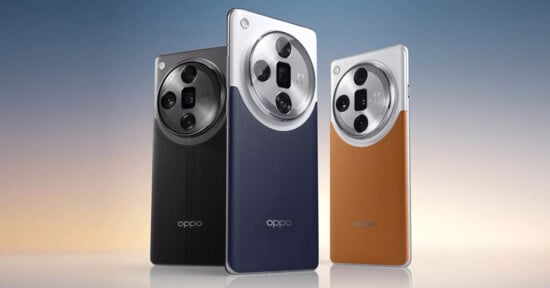
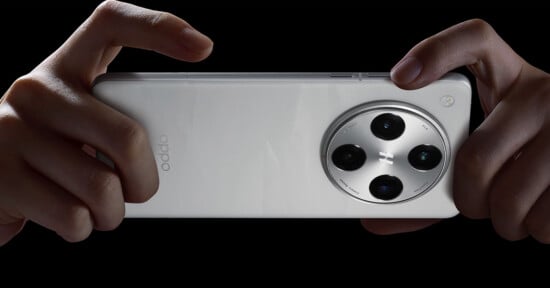
Take the Oppo Find X9 Ultra, for example. It has a 200-megapixel main camera with the largest 200-megapixel sensor seen yet on a phone. It has a 200-megapixel telephoto camera with another large sensor. Then there’s another telephoto, this time a 50-megapixel one, and a 50-megapixel ultrawide camera. That’s just the hardware. There is also a robust Hasselblad partnership, fancy processing, a lot of computational tools, and even a dedicated photography kit that gives the phone a grip with physical camera controls. As Brownlee says, it has one of the most impressive sets of specs and features on paper he’s ever seen. The Oppo Find X9 Ultra is a technical tour de force, and it’s awesome.
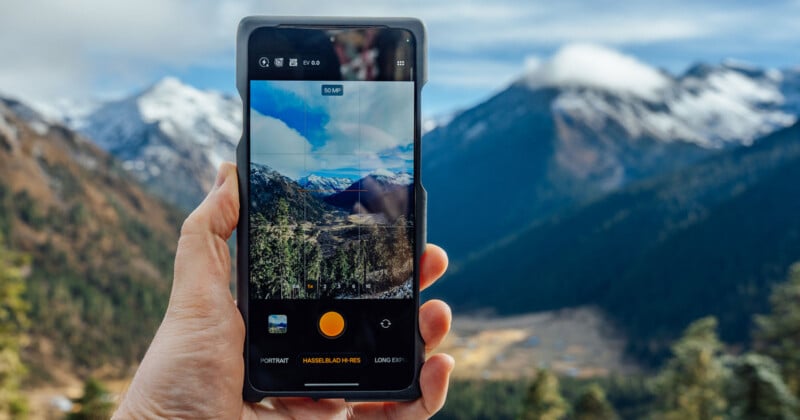
“This is a great camera system,” Brownlee says. “Any shot you’re thinking of getting, you can probably get it, and it’ll come out really good.”
He touts the phone’s versatility, but notes that it is a different thing altogether than being as good as a “real camera.”


“The whole point of an entire smartphone camera system is to be the most capable, versatile, convenient camera possible. No matter where you are, no matter what situation you’re in. This computer is going to try its absolute hardest to not let you take a bad photo or video,” he says.
While that’s great, and useful to nearly everyone, there is a meaningful difference between a smartphone’s camera system making it very easy to take pretty good photos, and a smartphone being able to take photos that are as good as those possible with a dedicated camera.
“A smartphone will never — I’ll just say it — will never actually replace a high-end professional camera at what it does,” Brownlee says.
He continues, echoing a sentiment PetaPixel‘s Chris Niccolls has said on numerous occasions: there’s no replacement for displacement. There are physical limitations to smartphone camera systems that will indefinitely hold them back.
Computational photography is increasingly closing the gap between the large sensors in dedicated cameras and the relatively small ones in smartphones. The same is true on the optical side. Smartphones cannot have big built-in lenses. They can have add-on lenses, but at that point they’re venturing even farther into the phone that isn’t really a phone territory.
But while the gap is shrinking, it is unlikely ever to close. It isn’t just that smartphones have a real, unbreakable physical limit to how big their camera systems can be, but dedicated cameras are getting better all the time, too. While I think it could successfully argued that the rate of technological innovation is higher with smartphone imaging systems, due in large part to how much bigger and more lucrative the smartphone market is compared to the photography industry, there is still a massive difference between the physics of small Type 1/1.12 sensors like the one in the Oppo Find X9 Ultra and an APS-C, full-frame, or medium format image sensor. Software can close some of the gap, but not all of it. The difference between large interchangeable lenses with wide, fast apertures and tiny smartphone lenses is even greater.
Brownlee explains that, for him, a really great smartphone camera not only takes good-quality photos but also minimizes the room for error for the user, no matter how much experience they have. Good computational photography features make it easier to bring a creative vision to life and reduce the expertise required to get something they’re happy with.
“A great smartphone camera can take a really good photo or video anytime, that’s what we’re chasing,” Brownlee says.
Brownlee busts out a nice metaphor later in his review. Consider the latest Apple iPad Pro, running the latest iPadOS and paired with Apple’s keyboard and trackpad case. It does a really good job of being almost a MacBook. For some users, it may even get all the way there and do what they need. However, it doesn’t come close to replacing a proper, full-fledged laptop for everyone.
A great smartphone may offer more than enough camera for some users, and it may even be good enough for dedicated photographers to use in a pinch. But the latest smartphones are still a long way from matching dedicated cameras in terms of performance, image quality, control, and the overall user experience. Some of these quality gaps are immutable. Smartphones will never have sensors as big as mirrorless cameras, and they will never have lenses with as much high-quality glass. They’ll never offer the same tactility or control, at least not without becoming something that barely resembles a smartphone. There’s no way a phone can match a camera 1:1 without losing what makes it a useful, desirable phone.
On the other hand, the latest full-frame mirrorless cameras will always fall short of the convenience and ease of use of a smartphone. To do so, cameras would have to lose part of what makes them a tool photographers want to use in the first place.
Smartphones and cameras both have their place, and photographers of every type win when both smartphones and “real” cameras continue to improve.
Affiliate Disclosure PetaPixel articles may include affiliate links; we may earn a commission if you buy through one.