
Sony’s Cutting-Edge XYN Spatial Capture Solutions Arrive Very Soon
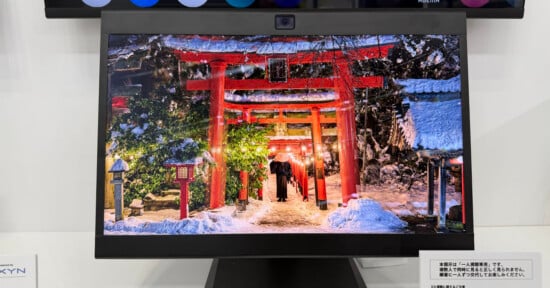
When PetaPixel editor-in-chief Jaron Schneider saw Sony’s cutting-edge XYN immersive display technology at CP+ 2026 in Yokohama, Japan, he described it as being like seeing through an Apple Vision Pro, but without any of the headgear. But XYN goes far beyond a single display device; XYN is an end-to-end spatial capture solution.
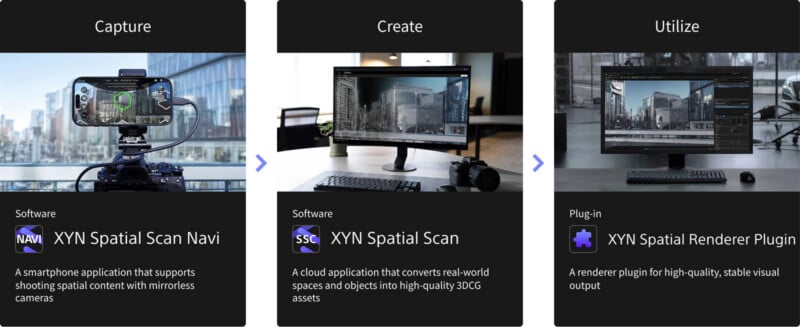
After announcing XYN in January 2025 and showing it off in Japan a couple of months ago, Sony announced today that XYN will officially launch this summer, starting with three software tools: XYN Spatial Scan Navi for smartphones, XYN Spatial Scan on the cloud, and a rendering plugin, XYN Spatial Renderer Plugin. XYN has seemed somewhat conceptual since its first reveal, but it’s a very real technology, and it will be in the hands of actual people in just a few months.
Although the XYN immersive display that Schneider saw firsthand is very cool, it relies on a wide range of other technologies to work. At the heart of XYN is spatial capture and generation of 3DCG assets. While the initial target is virtual production environments, including inside of real-time rendering environments, Sony has more ambitious plans for XYN, including broader adoption in gaming, animation, architecture, manufacturing, and even cultural heritage archiving.
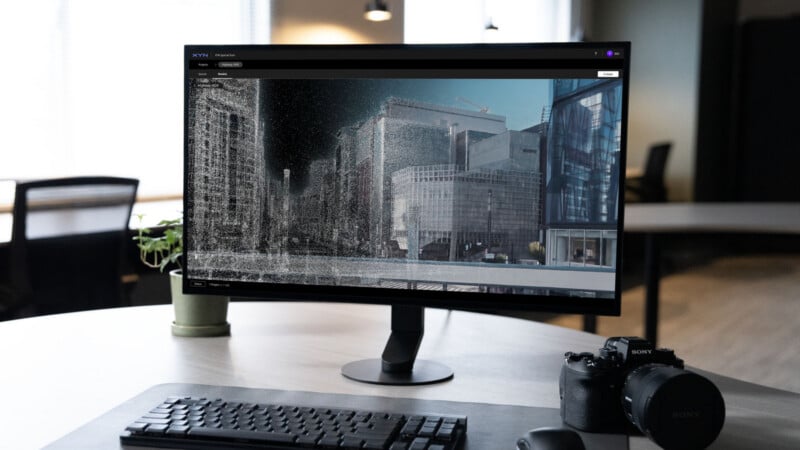
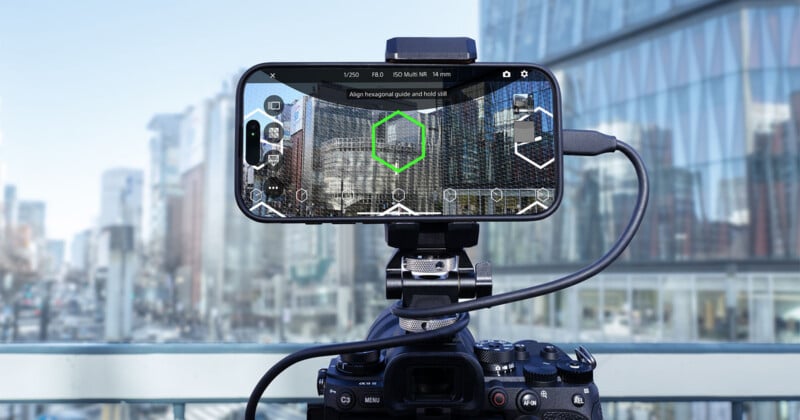
XYN Spatial Scan Navi works with Sony Alpha cameras and a smartphone to visualize and guide the shooting process and position, helping users capture sufficient photographic data from different positions to generate complete, high-quality 3D computer-generated assets of an object. It’s easy to imagine the potential applications for something like this in gaming and animation, as it would help artists create extremely realistic models with relative ease.
On the cultural heritage side, high-resolution cameras are already an essential part of the archival and preservation process in many leading museums, capturing exceptional 2D images of relics before they deteriorate too much. 3D models of these antiquities have unique value as well.
The app also offers a real-time preview of shooting status to minimize missed shots. It can automatically integrate with the connected Sony Alpha camera to dial in the appropriate settings, even for those without specialized photographic knowledge.
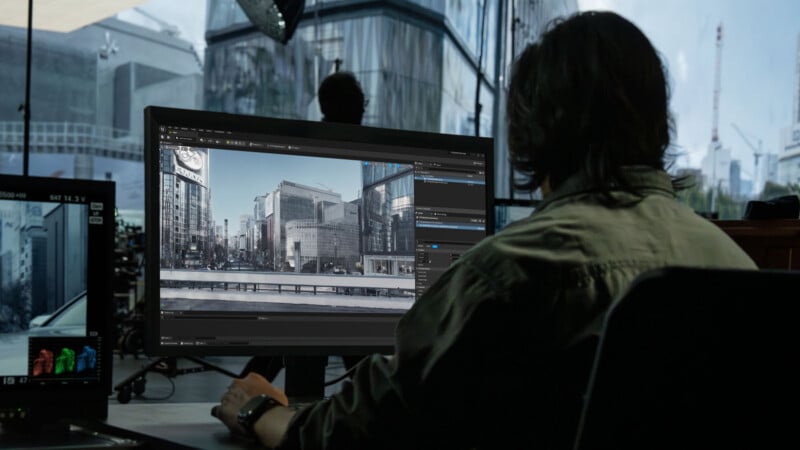
XYN Spatial Scan for the cloud is mostly designed for XYN’s virtual production applications. It uses proprietary algorithms to generate production-quality 3DCG assets, including algorithms to remove reflections and gloss. It creates HDR-ready assets, too. The XYN Spatial Renderer Plugin performs many of these same tasks at a higher level.
The XYN spatial capture solutions outlined above are slated to arrive in the United States this summer, with more applications in the works for later. Although the first release is designed primarily for virtual production environments, Sony has grand plans for XYN.
Sony Alpha cameras, like other modern mirrorless cameras, capture a lot of detail beyond just what is visible in the final 2D images. The phase-detect autofocus systems, for example, are constantly collecting depth data and, with the aid of AI subject detection, information about what the camera sees. It is interesting to see Sony put all that to work with XYN’s spatial capture technology.
Image creditsSony
Affiliate Disclosure PetaPixel articles may include affiliate links; we may earn a commission if you buy through one.