AI Has Made It Absurdly Expensive to Capture and Store Your Photos
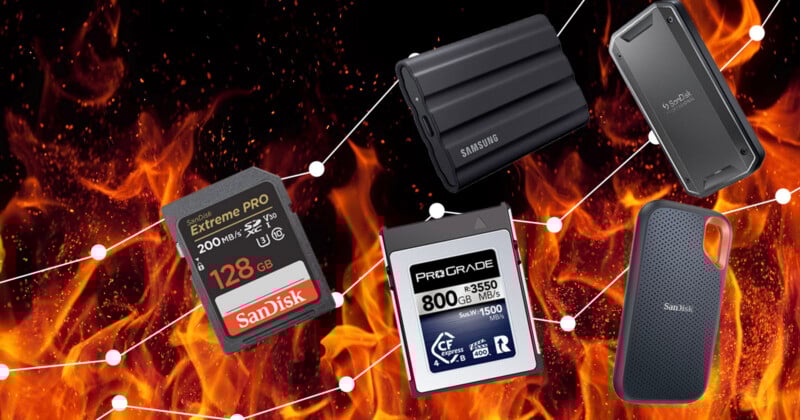
Photographers are starting to see the real-world effects of Big Tech’s bottomless hunger for AI innovation: storage prices haven’t been this high in years.
There is a growing amount of chatter online about the cost of portable SSDs, the most popular way for photographers and videographers to store their photos and videos. I took a look at historical data for some popular SSD models, and it’s pretty bleak: everything is more expensive, but some prices have more than doubled versus just a year or two ago.
While we still don’t recommend SanDisk products, looking at some historical price information still provides valuable information. The 2TB Extreme Portable USB 3.2 SSD has cost as little as $100, but now costs $216. It hasn’t been this high since the surge in demand for computer products back in 2020. The similarly designed SanDisk Portable SSD was even cheaper back in 2023: just $55. Today it costs $135.
SanDisk recently launched a series of bright blue “Creator” products, which includes the 4TB Creator Pro Portable SSD, which in January cost just $266. Today — just about a month later — it costs $589. Finally, SanDisk’s Professional 4TB Thunderbolt 3 Portable SSD used to cost as little as $305. Today it costs $500.
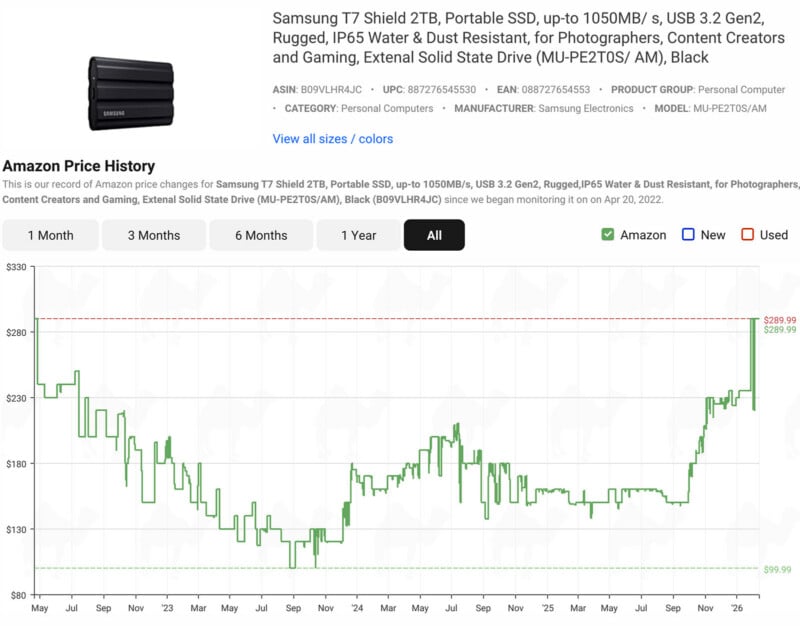
The Samsung T7 Shield might be the most popular compact portable SSD among photographers because the 2TB version was at one point available for just $100. Today, it has reached its highest price ever at $290 — nearly three times as expensive.
SSDs are up, but they’re not the only victims. Even HDDs have gone up in price. A WD Red 12TB HDD for NAS devices used to cost $200 but today costs $300. A Seagate Ironwolf Pro 12TB was also priced at $200 but now costs $300. Everything is more expensive.
It gets worse. Not only are those desktop storage devices more expensive, but memory cards are, too.
A SanDisk Extreme Pro 128GB SD card used to cost $90. Today, it is at its highest price on record at $190. A ProGrade Digital 128GB SD card used to cost $85, but today it is listed for $170. It’s the same story with a Lexar 128GB SD card, which was available for $85 but now costs $170.
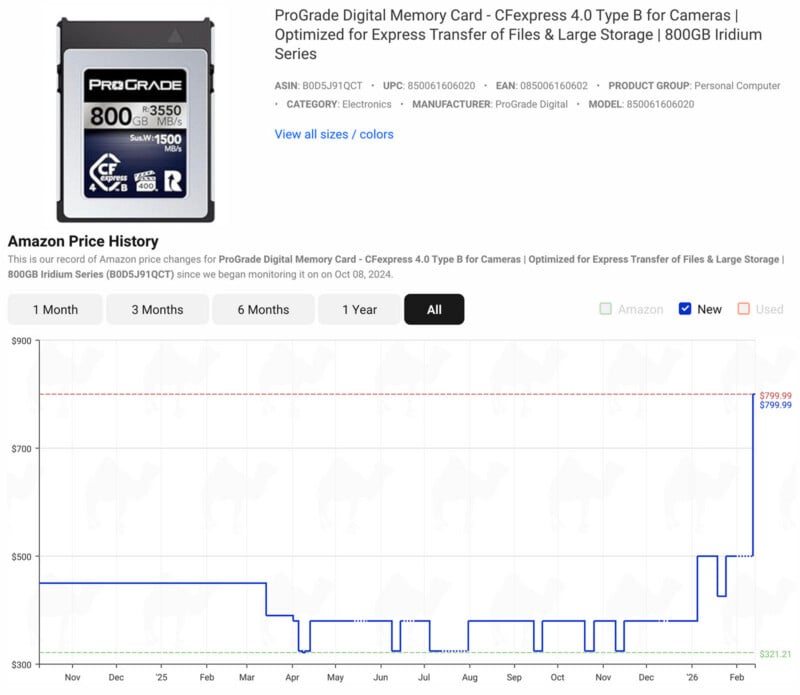
CFexpress cards are also blowing up in price. A Lexar 128GB Cfexpress Type B card used to cost $52. Today it costs $110. That’s not even a high-performance card. At the top-end, ProGrade’s 800GB VPG400 CFexpress Type B card used to cost $322 — which was already pretty expensive — but today costs a whopping $800; that’s the most it’s ever been by far.
The situation is dire and, unfortunately, it’s not going to get better any time soon.
Why SSD and Memory Card Prices Won’t Come Down Anytime Soon
First, the why: the cost of all these memory components is going up because the supply for the actual dies that make up all types of SSDs is finite and being largely consumed by enterprise companies looking to expand AI data centers. These data centers need storage for two reasons: one, they need more data storage to reference and train large language models, and two, they need more RAM to operate. The longer a conversation with an AI chatbot, the more memory is required to access earlier parts of that conversation. The type of memory needed for RAM and SSDs isn’t the same, but these data centers need both, and they’re buying up all the supply.
The demand is so high that Micron exited consumer memory manufacturing entirely last year, killing the Crucial brand and focusing its entire effort on making enterprise storage. On the RAM side, SK Hynix already sold its entire stock for 2026 and Samsung increased its prices by over 100%.
While there are dozens of brands making SSD and RAM products, the actual memory dies come from essentially those three manufacturers. The supply is finite, and none of those companies are planning to expand production because they know the AI bubble will burst at some point, and they don’t want to be left holding the bag when any new manufacturing facilities they might make won’t be done for three years or, as they see it, well after the AI craze is over.
Even when the AI bubble bursts — and it will burst — prices won’t immediately fall. It’ll take years for that to happen since contracts to purchase all these products have already been signed. Just look at the last time computing prices went way up back in 2020 and 2021. Prices did not begin to stabilize for two or three years.
All of the memory needs to be exhausted, the market needs to adjust for any changes, and then maybe prices will start to stabilize. But until then, as demand continues to rise and stock remains difficult to find, it’s more likely that the problem is going to get worse before it gets better.
Image credits: Elements of photo licensed via Depositphotos.