ProGrade Digital Is Going to the Moon With NASA
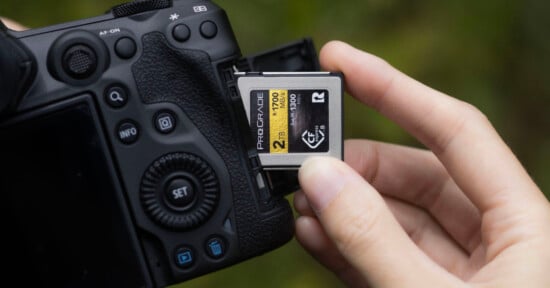
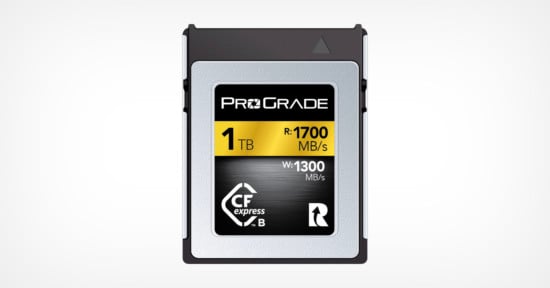
ProGrade Digital, maker of memory cards, storage, and workflow solutions for photographers and other creatives, has entered into a Space Act agreement with the National Aeronautics and Space Administration (NASA) to support the agency’s Artemis Moon missions with ProGrade Digital CFexpress Type B cards and readers.
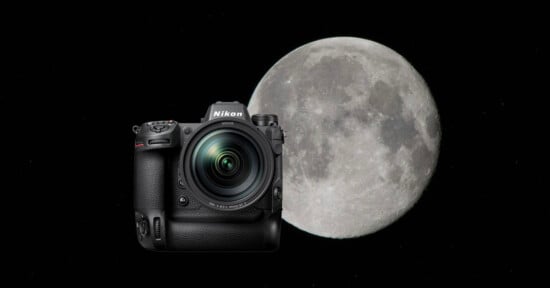
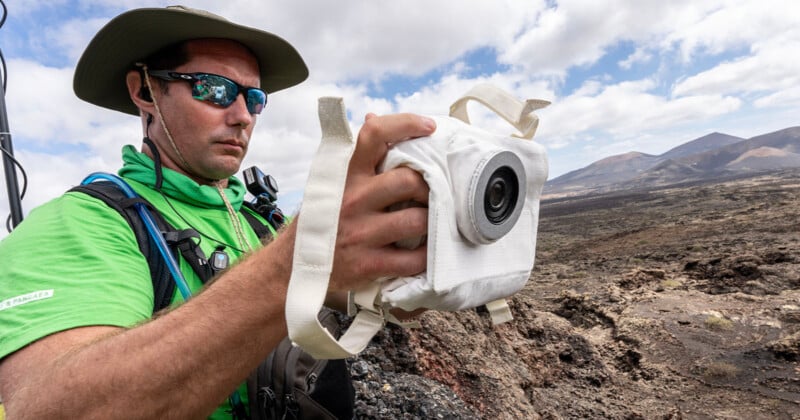
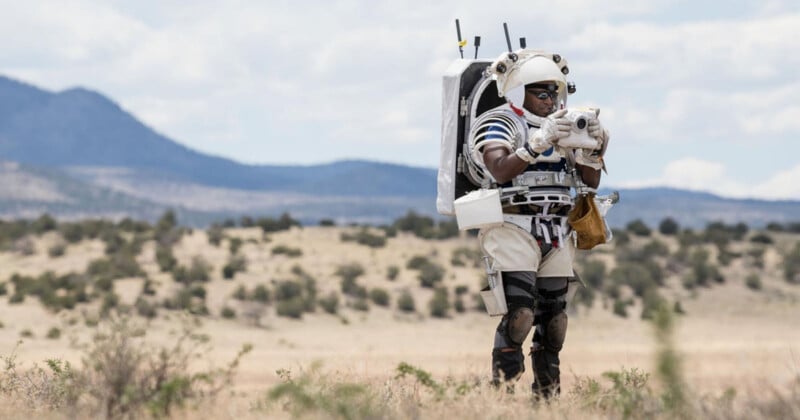
It is well known that NASA and Nikon have a very long partnership that continues to this day with Nikon’s Z-series mirrorless cameras. Nikon even works with NASA on bespoke gear to help astronauts capture better photos in space, like a custom-made thermal blanket headed to the Moon. The Nikon Z9 will form the centerpiece of the NASA Artemis program’s Handheld Universal Lunar Camera (HULC).
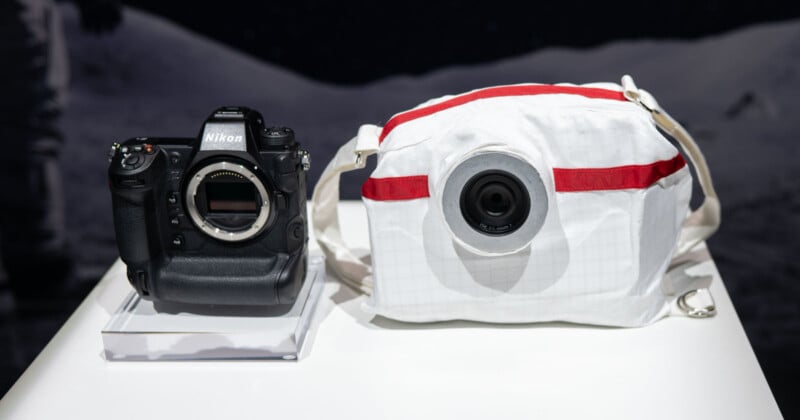
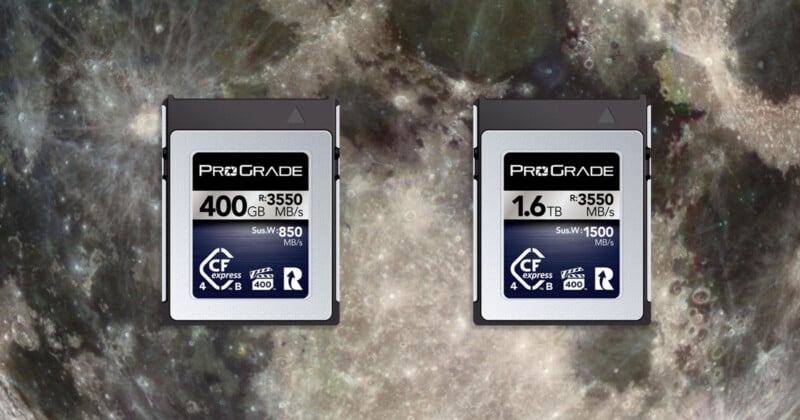
As is well known, at least to Nikon shooters here on Earth, Nikon’s high-end and professional Z cameras, like the Z9, use CFexpress Type B cards to record photos and videos. ProGrade Digital is supporting NASA’s Artemis mission through its CFexpress Type B Iridium series memory cards in 400GB and 1.6TB capacities as well as ProGrade Digital high-speed card readers.
NASA selected ProGrade Digital cards for their ability to deliver sustained high performance and reliable operation in high-radiation environments. ProGrade notes that its cards outperformed the competition in a space-like environment.
Once NASA decided to go with ProGrade cards, the space agency worked with ProGrade Digital for a year and a half to finalize card design and deliverables for the Artemis mission.
“The lunar surface presents very challenging environments for cameras and related storage media,” says Jeremy Meyers, HULC Handheld Universal Lunar Camera COTS hardware lead. “The partnership developed between NASA and ProGrade will help ensure images and video are captured reliably when humanity returns to the Moon.”
“ProGrade Digital is extremely proud to have established a space act with NASA to implement our industry leading CFexpress Type B Iridium memory cards, featuring a CFexpress 4.0 interface and VPG 400, Video Performance Guarantee capability,” adds Wes Brewer, ProGrade Digital founder and CEO.
“Through diligent teamwork between the ProGrade San Jose engineering team, NASA’s Space Systems Department at the Marshall Space Flight Center, and key memory technology supplier — Phison Electronics — we were able to go from sample submission to hardware delivery in just under 18 months,” Brewer says.
During the qualification process, Brewer says NASA put ProGrade’s cards to work in the extreme environmental conditions uniquely encountered in outer space for many hours. The cards passed with flying colors.
“Perhaps the best part of this accomplishment is for our everyday customers, who can now buy memory cards that will be used in the Handheld Universal Lunar Camera during future Artemis missions,” Brewer concludes.

The Artemis II mission is ready to go and scheduled to launch on February 6, 2026. The mission will put humankind back on the Moon for the first time since Apollo 17, over 50 years ago. The mission has been a long time coming. PetaPixel did a feature story with NASA photographer, Josh Valcarcel, who captured the stunning Artemis II crew mission portraits back in early 2023.
Image credits: NASA, Josh Valcarcel, ProGrade Digital, Nikon