Sigma Aizu Primes Review: Breathtaking Falloff and Flare
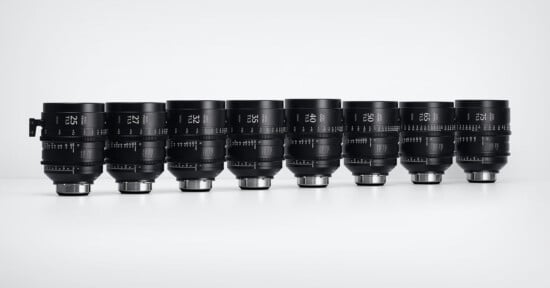
It’s felt like a long six months since Sigma first announced the Aizu Primes (which cost $8,300 each), the company’s new series of full-frame compatible T1.3 cinema lenses. Currently available focal lengths include 25mm, 27mm, 32mm, 35mm, 40mm, 50mm, 65mm, and 75mm. Fortunately, after shooting several projects with them while traveling, I finally have a trio of them at home to do some controlled testing.
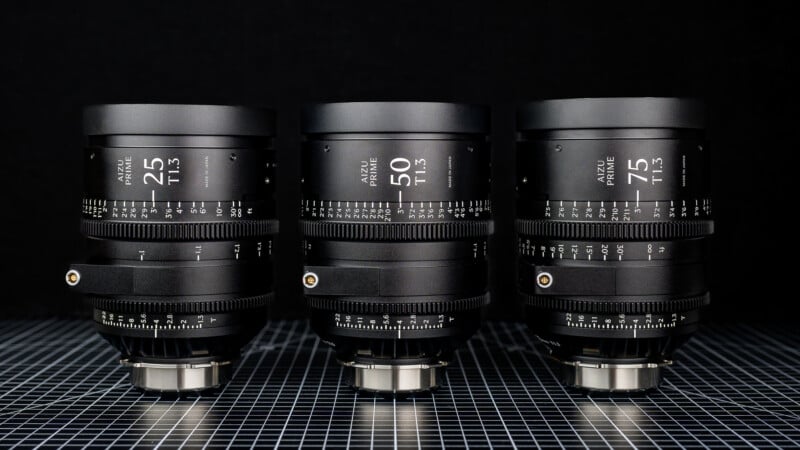
So, between my real-world use and some technical tests, I feel comfortable giving my final thoughts on these compelling optics. I was sent the 25mm, 50mm, and 75mm for lab testing, but have used all of the currently available focal lengths extensively over the course of the last five months.
Sigma Aizu Primes Review: What’s The Big Deal?
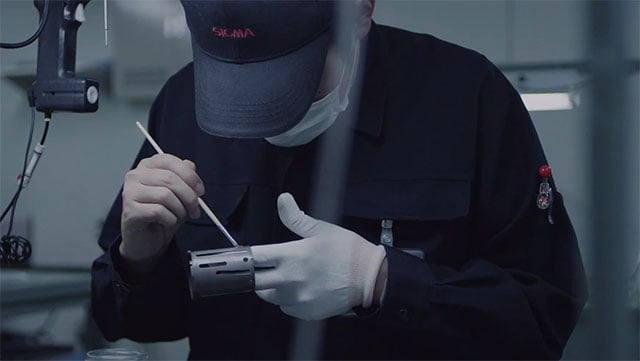
What makes these lenses so special? First of all, they are Sigma’s first lenses designed from the ground up strictly for cinema. Its previous cinema lenses were based on existing Art series lenses originally designed for DSLRs. The Aizu Primes are designed for cinema first, and are available in industry-standard PL mount or Sony E-Mount.

As well, these lenses will cover most cinema and film recording areas. They are optimized for what photographers call “full frame” (but is often referred to as “large-format” in cinema circles), but I have used them on the even larger 44×33 sensor in the Fujifilm GFX Eterna 55. While I saw a hard vignette shooting open gate on the Eterna, the standard 16:9 recording areas were perfectly acceptable. Of course, these lenses can also be used with smaller Super35 sensors.
Sigma Aizu Primes Review: How They Shoot
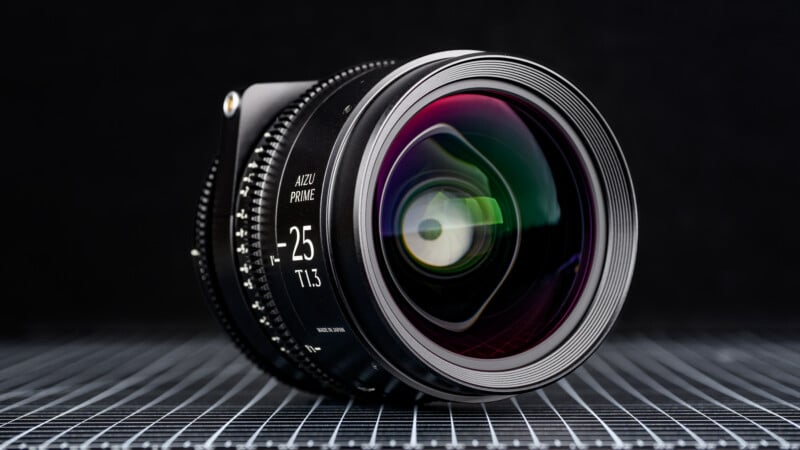
With every lens opening up to T1.3, these were never going to be compact lenses. Each of the currently available options weighs in at around 1.7 kilograms (3.7 lbs.) and feels very substantial, especially when swapping between them. That said, I was surprised to find these lenses manageable to handhold on a Panasonic S1 II on a recent trip to Japan.
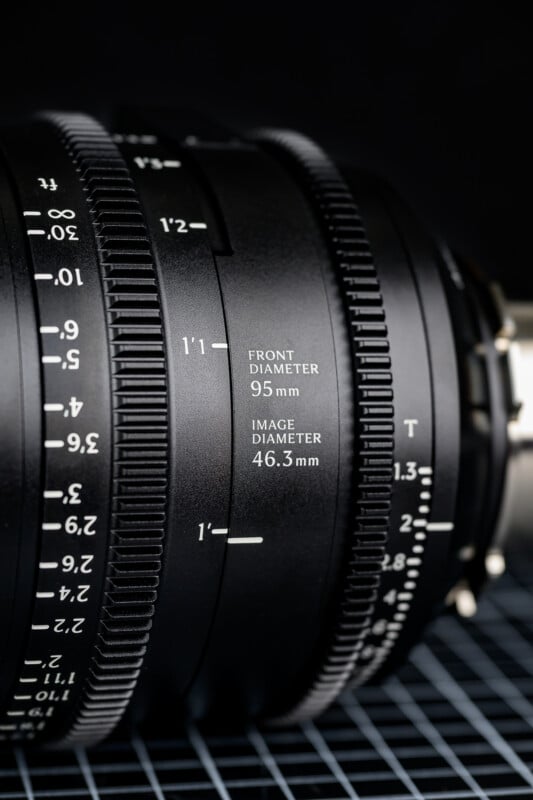
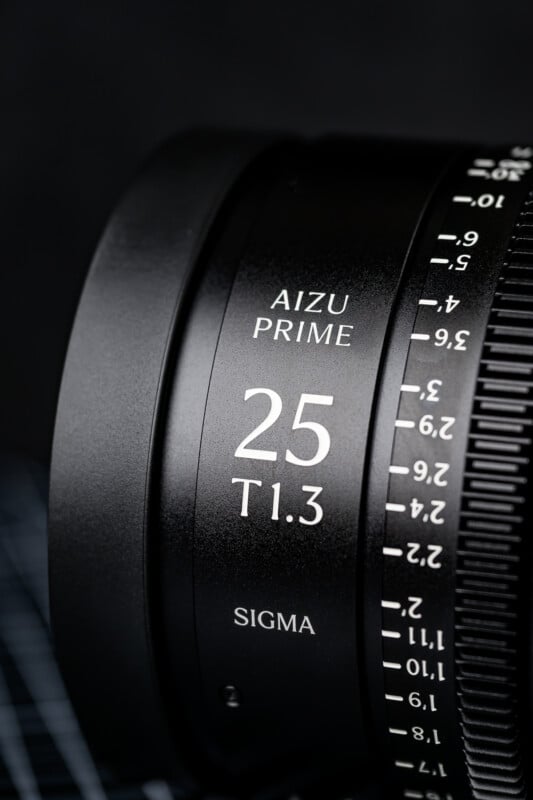
There are no internal filter threads, but each lens has an industry-standard 95mm outer barrel, making it a breeze to attach matte boxes.
After playing with so many budget cinema lenses that feel cheap in the hand, the Aizu Primes are a breath of fresh air. Both the Aperture and focus rings are extremely well-damped and easy to operate by hand or with a follow focus unit. There are contacts on the lens mount and a separate Lemo port for transmitting Zeiss eXtended Data, which encodes metadata for making distortion and vignette corrections in post.
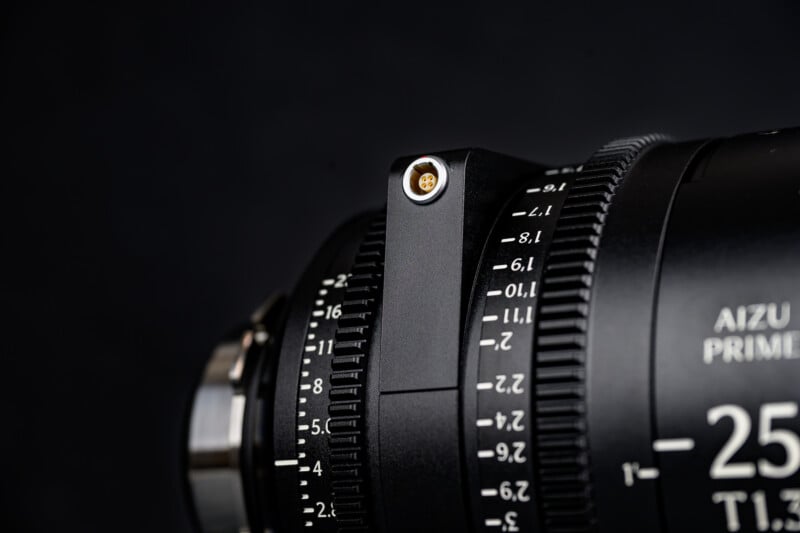
I think it’s worth pointing out that one of the main factors making cinema lenses so valuable is that it’s difficult and expensive to achieve a consistent look across different lenses. I was incredibly impressed with the Aizu primes in this regard. Resolution, contrast, color, and chromatic aberrations were consistent across all tested lenses, so I will not discuss those individually. Filmmakers, rest assured that your aesthetic will not change when swapping between lenses.

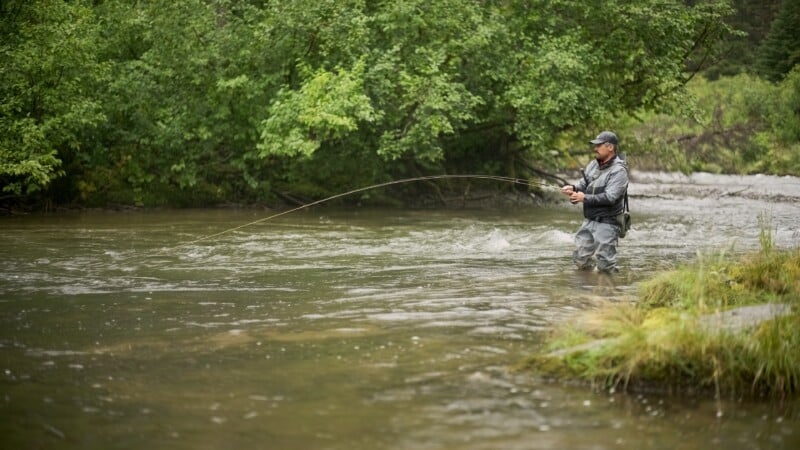
One priority for cinema lenses is to minimize breathing, where the field of view changes as focus shifts between close-up and infinity. It can be distracting if it is too severe. The Sigma Aizu primes acquit themselves well, though not perfectly. The 25mm exhibited the most notable focal length change, with the effect minimizing at longer focal lengths. At normal shooting distances, for example, when pulling focus between two actors a few feet away, this will not be an issue. But for extreme focus pulls, a slight zooming effect will be seen.
Out of focus areas look great, although there is some soap bubble effect when shooting wide open. We also saw significant cat’s eye effect, which doesn’t bother us but is worth pointing out. What is most obvious to us is how clean the bokeh is, which means beautiful bokeh but also fabulous focus fall-off when shooting in real-world situations. Environments that would be typically very visually busy are handled adeptly, rendering a gorgeous scene that catches the breath every time.
These are definitely not macro lenses. With maximum magnification varying from 1:6 to 1:8, you will still want to have a dedicated macro lens in your bag if your production requires some close-up shots.

Flare is another important topic for cinema lenses. We were told by Sigma that they actually designed the Aizu primes to flare a little when struck by bright light sources. I can certainly say that there is a dip in contrast when bright light hits these lenses, with some small ghosts most noticeable on the wide lenses. While this is not a technically perfect result, the flares from these lenses look great to my eye, and very cinematic. If you want to avoid this look, though, a matte box will usually take care of flare.


I was looking forward to seeing the sharpness results from our test charts, and was pleased to see such similar results from the three lenses that we can talk about them as a whole. The tests were shot on the Panasonic S1R II in 2:3 Open Gate. Central sharpness is quite good wide open; however, contrast is definitely low.

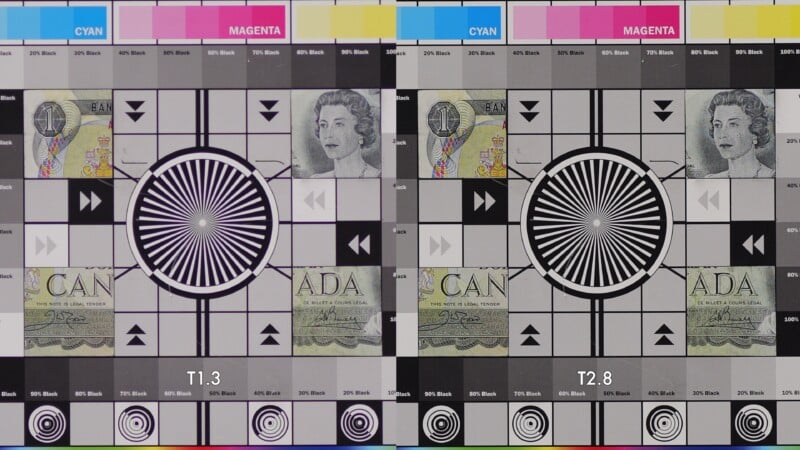
This is not a big drawback, as I can increase contrast in post. Upon stopping the lens down to T2.8, contrast and sharpness are flawless in the center of the image. Looking at the corners, they are quite soft and low contrast, wide open.
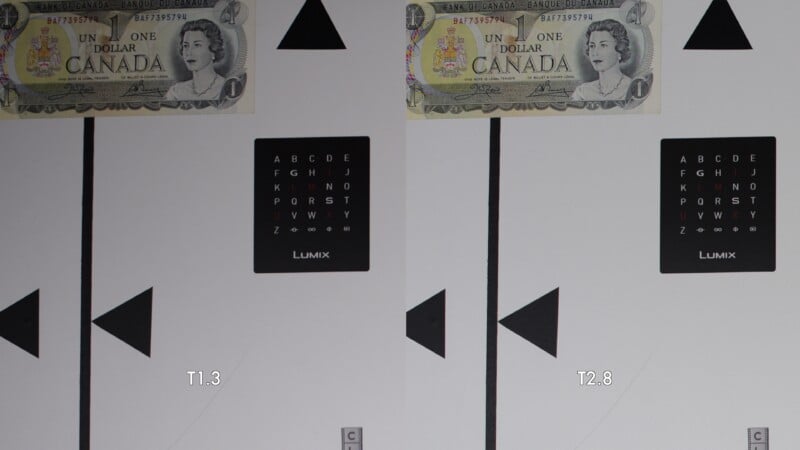
Remember, though, these shots were captured in a 2:3 aspect ratio; in a 16:9 recording, the worst part of the corners will not be seen.
Upon stopping down to T2.8, sharpness and contrast in the corners are excellent. Basically, the only time resolution will be an issue with these lenses is when shooting 8K or higher with a full 36×24 sensor. Otherwise, these lenses can out-resolve any smaller sensor they will be used on.
The biggest optical issue with these lenses is chromatic aberration. Lateral chromatic aberrations, where green and magenta fringing occur in high contrast areas, are present when shooting wide open. Fortunately, this is easily corrected in post. More troubling, however, was a large amount of longitudinal chromatic aberrations (LoCA) where there is a color shift between the in-focus and out-of-focus areas.

This was very apparent when shooting not only our test charts wide open, but also in real-world footage:
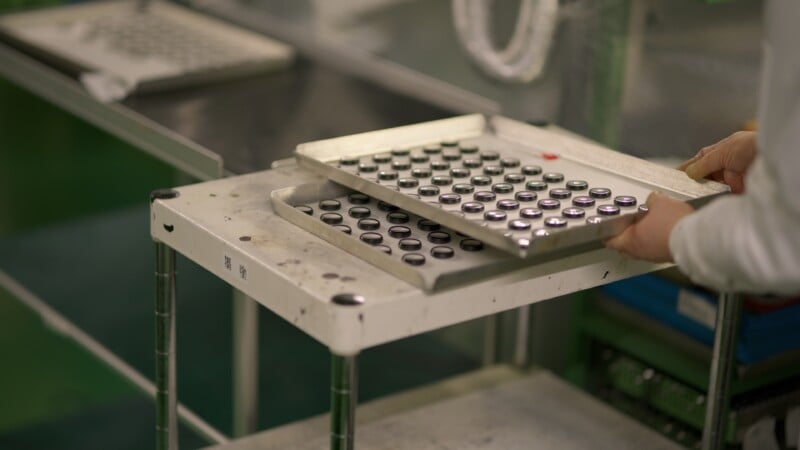
Fortunately, the occurrence of LoCA drops quickly when stopping down; it is quite minor even at T1.8. However, it is something cinematographers need to be aware of.
Impressive Performance, Even More Impressive Price
 Overall, the Aizu Prime lenses have extremely impressive optics considering the ambitious aperture range and sensor coverage. There are drawbacks to be aware of, but I was constantly impressed by the distinct rendering these lenses can achieve.
Sigma says that these lenses are intended to be “clean” optics that can be used on a wide variety of projects. However, I’ve found that there is some distinct charm and personality to the rendering of these lenses; it’s a look I’ve grown very fond of, and that PetaPixel Editor-in-Chief Jaron Schneider regularly gushes about. So while they are clean, they also have character. That’s a rare combination, especially at this price.

Are There Alternatives?
The Aizu primes are not cheap at $8,300 per lens, but they occupy a unique place among cinema glass. There has been a recent deluge of affordable cinematic lenses, but I haven’t seen anything approaching the build quality, fast aperture, and extensive coverage of the Aizu Primes. Looking to an established cinema lens manufacturer, the Zeiss Supreme Primes offer similar coverage with a slightly slower T1.5 aperture, but sell for between $20,000 to $31,000 per lens.
The Aizu Primes offer clear value in comparison.
Should You Buy Them?
If you have the means and need, by all means go ahead! However, I think the more common question will be “Should I rent them?”, and the answer is, absolutely! These are distinctive, outstanding tools that will open new creative doors for cinematographers.