DaVinci Resolve Is First macOS Video Editor to Fully Support Apple Immersive Video
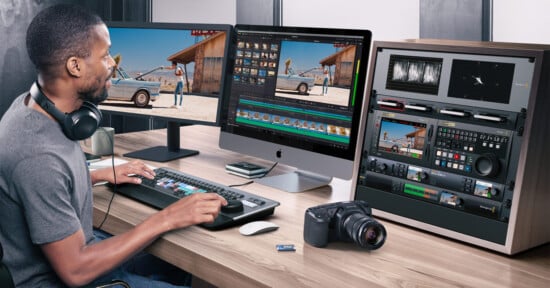
Blackmagic Design released DaVinci Resolve 20.1, introducing full support for Apple Vision Pro immersive video workflows. With this release, DaVinci Resolve becomes the first professional non-linear editor (NLE) to offer a complete end-to-end solution for creating, editing, and delivering Apple Immersive Video content.
Back in April, PetaPixel shared news of the DaVinci Resolve 20 update which delivered over 100 new features, most notably many time-saving solutions powered by artificial intelligence (AI).
Not one to rest on its laurels, today Blackmagic Design has announced the DaVinci Resolve Studio 20.1 update, available for macOS users, which includes tools across editing, color correction, visual effects, audio post-production, and delivery. Most notably, it is designed to support footage captured using the Blackmagic Ursa Cine Immersive camera, and it includes native playback and export options tailored to Apple’s new Vision Pro immersive video format.
Immersive Editing and Viewing Experience
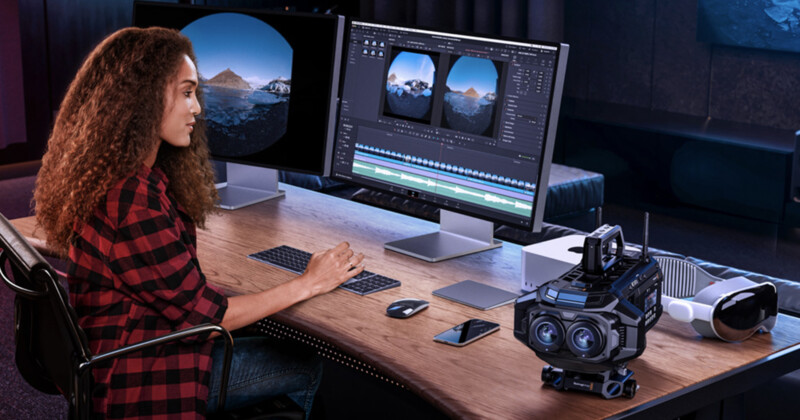
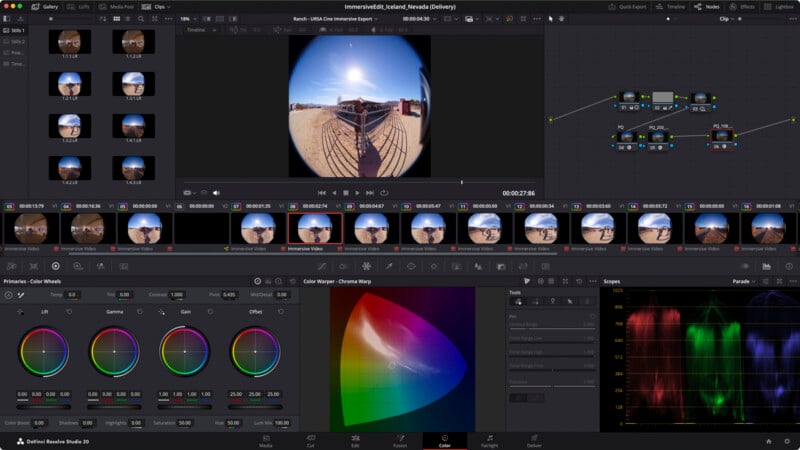
One of the headline features of DaVinci Resolve 20.1 is its new immersive video viewer, which allows editors to preview immersive content directly on a standard 2D monitor with pan, tilt, and roll controls, or stream in real time to the Apple Vision Pro for in-headset viewing. This feature enables immersive editing without leaving the familiar Resolve interface.
Users can treat immersive video files much like traditional media, employing a drag-and-drop workflow in the Edit page. The update also introduces a unique 360º backdrop track, enabling filmmakers to place content around the periphery of the immersive projection area.
Color Grading and Visual Effects for Immersive Media
On the Color page, editors can apply DaVinci Resolve’s full suite of primary grading tools and selected secondary tools to immersive footage. A new 3D Edge Mask feature allows for precise control of the field of view and can help mask out unwanted elements, such as microphones, at the edge of the capture frame.
The Fusion visual effects page has also been updated to support immersive workflows. Users can now create titles and effects that occupy the full field of view or integrate with virtual 3D space. Updates to distortion and patching tools allow users to paint and composite within a flattened lens view before re-projecting to immersive space.
Spatial Audio Support and Fairlight Enhancements
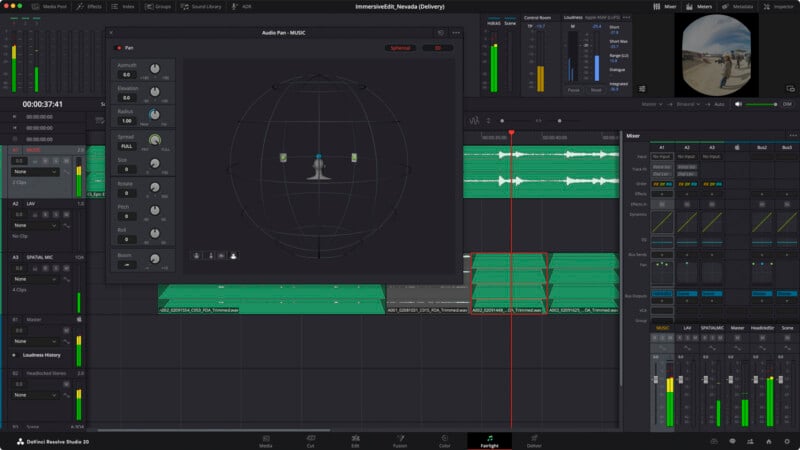
Resolve 20.1 brings full support for Apple Spatial Audio Format (ASAF), allowing for 3D sound design within the Fairlight audio suite. Fairlight now supports up to 7th order Ambisonic busses and object-based sound placement. Editors can position audio sources anywhere in 3D space and simulate realistic acoustic environments. The software also supports head-tracked binaural monitoring when using AirPods.
Streamlined Delivery for Apple Vision Pro
The Media and Deliver pages have been updated to include Apple Immersive Video export presets. Once rendered, files can be dropped into Apple’s Immersive Video Utility for macOS or exported as a ProRes bundle for use with Apple Compressor. These workflows simplify what was previously a complex and fragmented post-production process for immersive video.


AI, Keyframe, and Text Improvements Extend Beyond Immersive
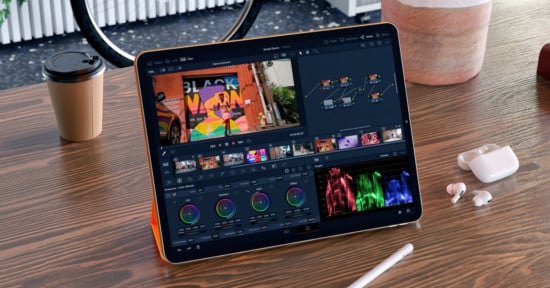
In addition to immersive video support, DaVinci Resolve 20.1 includes updates across its toolset. AI Magic Mask 2 offers enhanced tracking and masking accuracy in the Fusion page. The keyframe editor has been redesigned with improved easing, curve visibility, and new controls for vertical zoom and timeline navigation.
MultiText also sees significant improvements, including character-level formatting, paragraph alignment, and the ability to import and format data-driven text from CSV files. These additions further enhance Resolve’s appeal for motion graphics and data visualization.
Complete Workflow With Ursa Cine Immersive Camera
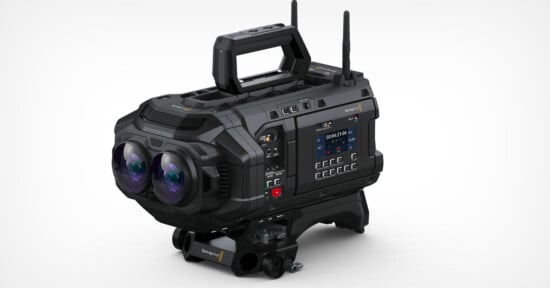
The Ursa Cine Immersive camera, designed in tandem with Apple’s Immersive Video (AIV) format, offers dual 8160 x 7200 sensors and a custom fixed lens system calibrated to capture high-resolution, stereoscopic 3D video at 90 frames per second for shooting AIV for Apple Vision Pro. The camera writes synchronized lens data and video to Blackmagic RAW files, ensuring that metadata remains consistent throughout post-production.
With the Ursa Cine Immersive camera on the capture side and DaVinci Resolve 20.1 on the post-production side, Blackmagic Design now offers the first integrated pipeline for immersive video production.
Pricing and Availability
DaVinci Resolve 20.1 is available now as a free update for existing users, however the immersive features are exclusive to DaVinci Resolve Studio on macOS. Sample Apple Immersive Video clips are also available for download to allow users to test the new workflow.
Image creditsBlackmagic Design
Affiliate Disclosure PetaPixel articles may include affiliate links; we may earn a commission if you buy through one.