November 29, 2011

Jump to articles by year, month, or day.

Year
Month
Day

Year alone opens that year’s archive. Add a month or day to narrow it.

Researchers Create Program That Can Quantify How Fake Photos Are

What if all advertising photos came with a number that revealed the degree to which they were Photoshopped? We might not be very far off, especially with recent advertising controversies and efforts to get "anti-Photoshop laws" passed. Researchers Hany Farid and Eric Kee at Dartmouth have developed a software tool that detects how much fashion and beauty photos have been altered compared to the original image, grading each photo on a scale of 1-5. The program may eventually be used as a tool …

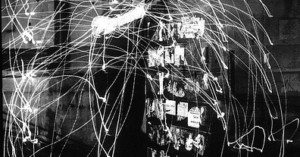
The First Known Light Painting Photos

The first known light painting photographs were made way back in 1914, when Frank and Lillian Moller Gilbreth used small lights and long exposure photos to capture the motion of workers. Subjects ranged from handkerchief folders to bricklayers. The photos weren't meant as art, but were instead made to help develop ways to increase employee output and simplify job tasks.

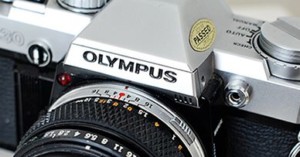
Is This the End of Olympus Cameras?

Olympus has been in the photography game since introducing its first camera back in 1936, but its future as a major player is at risk now that the company is caught up in one of the largest corporate scandals Japan has ever seen. According to Reuters, the company is reviewing its business structure, and there is speculation that it may be forced to sell off assets to survive.

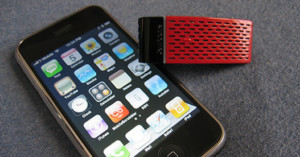
Bluetooth Headsets Double as Wireless Shutter Releases for the iPhone

With the introduction of iOS 5, Apple finally turned the iPhone's volume up button into a shutter button and its headphones into remote shutter releases. However, did you know that many Bluetooth headsets can now be used as wireless shutter releases? As long as your device can wirelessly increase the iPhone's volume (and not just its own) it should work. This means that even Bluetooth keyboards can be used as wireless remotes! …

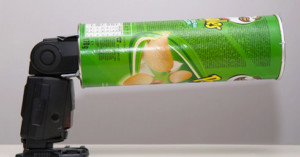
Turn a Pringles Can into a DIY Snoot

If you have a potato chip tube lying around, you can convert the tube into a super simple DIY snoot. All you need to do is cut an opening in the closed end that's the size of your flash head (tip: use some duct tape to prevent it from scratching your flash).