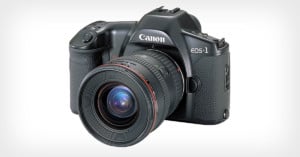
A Look Back at the Canon EOS-1, the First Pro EOS Camera
Announced at a press conference in June 1989 in Bar Harbor, Maine, the Canon EOS-1 was a 35mm SLR meant to be a turning point in professional cameras.
Announced at a press conference in June 1989 in Bar Harbor, Maine, the Canon EOS-1 was a 35mm SLR meant to be a turning point in professional cameras.
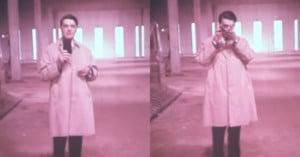
Polaroid founder Edwin Land was a visionary tech titan of his time, and as is common with pioneering entrepreneurs, Land had unusual foresight into where technology was headed. Here's a neat video from 1970 in which Land accurately predicts the coming age of smartphone cameras in everyone's pocket.
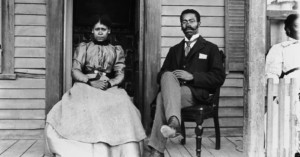
Unstable. Criminal. Impoverished. Absentee fathers. Neglectful mothers. “A tangle of pathology,” as the Moynihan Report, a 1965 study on Black poverty, put it. For decades, the Black family has been denigrated as dysfunctional.
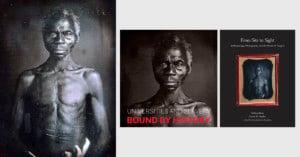
A Massachusetts judge has dismissed a woman's lawsuit claiming that she is the rightful owner of the images of an enslaved father and daughter and not Harvard, the New York Times reports. The judge cites common law that the content of an image cannot be used to claim ownership of that image, regardless of the subject.
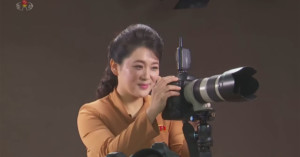
If you've always wanted to learn about the history of the photographic camera as taught by the North Korean government, today's your lucky day! Here's a 15-minute educational video on camera history that was broadcast for children in the "hermit kingdom" (you can turn on English auto-translation in the video's settings).
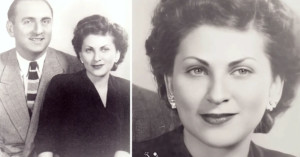
Deep Nostalgia is a new AI that can breathe new life into historical photos by animating people who have long passed. The results are both creepy and fascinating at the same time.
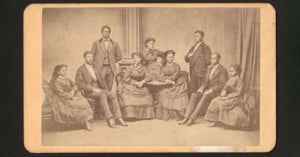
Frederick Douglass is perhaps best known as an abolitionist and intellectual. But he was also the most photographed American of the 19th century. And he encouraged the use of photography to promote social change for Black equality.
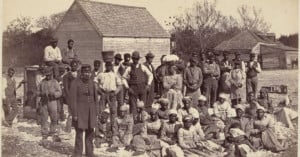
In 1976 while rummaging through an attic of Harvard’s Peabody Museum of Archaeology and Ethnology in search of old museum publications, editorial assistant Lorna Condon opened a drawer in a wooden cabinet. Inside, she found a number of flat leather cases which contained a series of daguerreotypes of partially and fully nude Black people.
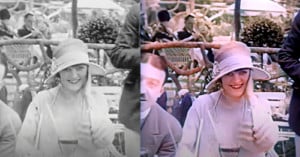
Travel back in time to Paris during the roaring '20s featuring flappers, bobbed hair, and cloche hats in this short 2-minute archival video colorized by Glamourdaze. The video was created using artificial intelligence to restore the footage and add color.
Kodak's modern business strategy is as weird to read as it is to write about. The company has jumped from one strategy to the next in an attempt to stay afloat. This 15-minute video delves into how Kodak went from near film monopoly, to near financial ruin, to pharmaceutical manufacturer.

Photo colorizer and restorer Hint of Time has shared an 8-minute video where he shows his process for not only colorizing an 80-year-old black and white photo, but also brings it to life with subtle animation.

Bokeh is one of the most subjective aspects of photo or video. As Simon's Utak says in this 20-minute discussion on its history and how it is elevating digital photography into art, we as photographers can't even agree how to properly say the word.
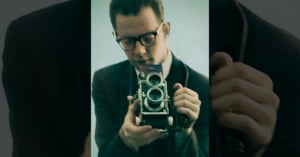
In 2018 with some trepidation I bought my first mirrorless camera, a Nikon Z7. It wasn’t because I thought it was better than the DSLR I had been using but because my old muscles were spasming with the weight of the camera I was using and I hoped that a package a pound lighter would help me keep on working.
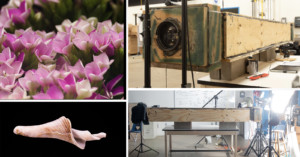
You didn’t ask to learn about bellows extension factors, but we're going to cover it with the most absurd camera that you may ever see!
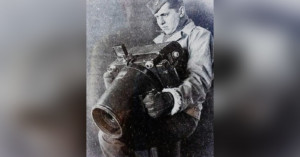
Check out this absolute unit of a camera that was used to do aerial photography during World War II. Mounted on the front of the camera is a massive 2-foot long 610mm f/6 lens.
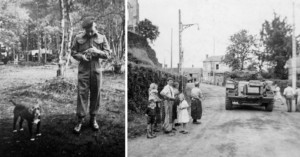
I met a man who owned a ton of his uncle's photos he took during his time in World War II. The images by Kenneth McKenzie start in Vancouver and Banff where they did their training, then all across Europe.
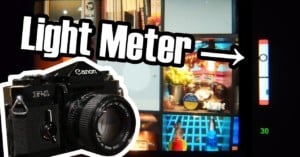
Technology Connections, a YouTube channel that covers a wide array of interesting technology stories, has shared this 28-minute video that explores how the Canon F1 from 1971 works, with special detail focused on the camera's light meter.
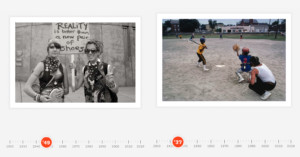
Photographers know better than most: how you edit a photograph can totally chance the perception of that photo for the viewer. But a new online photo history quiz wants to make this explicit, showing how converting a photo to black-and-white can trick us into thinking a photo is much older than it really is.

Photographer Catherine Panebianco—previously featured here—recently published a beautiful new photo project titled No Memory is Ever Alone that pays tribute to her father by using his old slides to bring a piece of his past into her present.
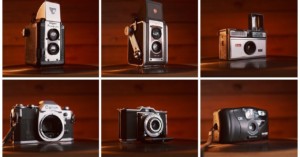
We interrupt this regular news day to bring you a short, oddly satisfying recording of classic camera shutter sounds. Created by photographer Ace Noguera, he wanted to share a showcase of vintage cameras that was both visually and aurally satisfying. Thus was born The Evolution Of Camera Shutter Sounds.
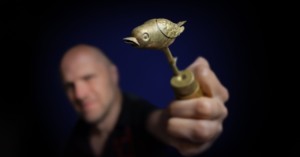
Professional wet plate photographer Markus Hofstätter is obviously fond of historical photography processes. But his latest video doesn't actually involve taking any photos; instead, he's restoring a 140-year-old chirping brass bird that is thought to be the origin of the phrase "watch the birdie."
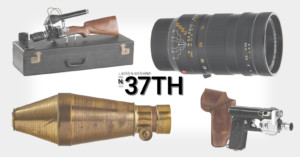
On November 21st, the 37th Annual Leitz Photographica Auction will take place in Vienna and online. And while the full catalog hasn't been published yet, Leica has unveiled a few "highlights" for collectors to drool over between now and the big day.

When you see the term "colorized photo" you probably imagine skilled retouchers working in Photoshop, or perhaps a machine learning algorithm that does that same work automatically. But the original colorized photos were hand-painted prints made from glass plate negatives. And, as Vox explains, the best of these images came out of Japan.
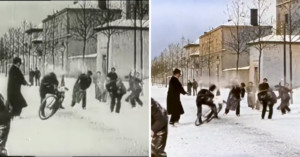
Just a few days before multiple historians went on the record with WIRED to explain why people shouldn't be colorizing old footage and photos, yet another video that does exactly that went viral online. This time, the subject was the iconic film 'Bataille de boules de neige' from 1886.

Colorizing and updating photos and footage from the past is becoming more common and much easier thanks to the advancements of AI. We've shared stories and images of colorized images and videos many times over the past decade, and colorists say it is designed to bring the past forward for a modern audience. However, there are some historians who believe the process is doing more harm than good.
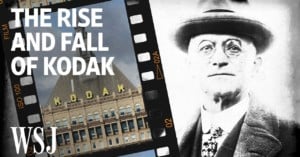
The Wall Street Journal recently released a mini-doc that tells the entire story of Kodak—a story of a once-dominant company that made its name in film, and is now seeking to reinvent itself as a drug company after struggling to adapt to a future they, in fact, helped to bring about.
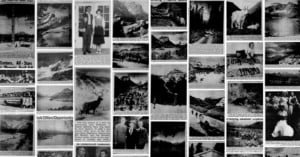
The Library of Congress has created something really cool. It's called the Newspaper Navigator, and it's an AI-powered image search that lets you browse through over 1.5 million newspaper photos from over 16 million pages worth of digitized newspapers published between 1900 and 1963.
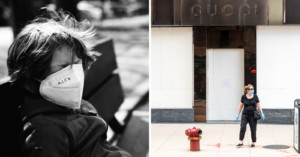
The Library of Congress has invited all Flickr users in the United States to submit photos of "their experiences living through the 2020 coronavirus pandemic." The best images will be added to a special online photo pool and some will be preserved in the LOC's permanent collections.

1940s NYC is a new online interactive map created by NYC-based software engineer Julian Boilen. It's like Google Street View, except every photo taken shows New York City between 1939 and 1941.
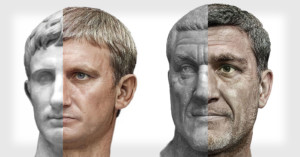
Sculpted busts give us an idea of what ancient Roman emperors looked like, but what if they had posed for photo portraits? That's what designer/cinematographer Daniel Voshart explores using AI and Photoshop in his Roman Emperor Project.
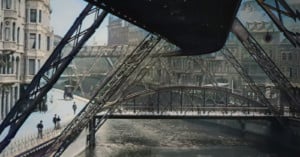
Here's a fascinating 4-minute video that offers a tiny window into what life in one German town was like back in 1902.
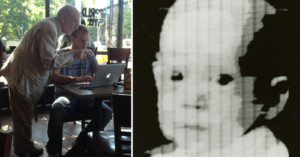
Computer scientist Russell A. Kirsch, the inventor of the pixel and an undisputed pioneer of digital imaging, passed away on Tuesday in his Portland home from complications arising from a form of Alzheimer's disease. He was 91 years old.
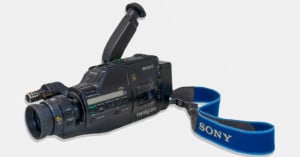
In 1991, four white police officers were caught on camera violently assaulting a black man named Rodney King during an arrest. When the officers were acquitted, that footage ultimately sparked the 1992 Los Angeles Riots; and now, the video camera that captured it is being auctioned off for a starting bid of $225,000.
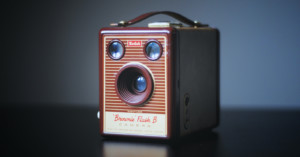
Great Britain's Royal Institution has put together a fascinating "tour through the history of photography." Using his own camera collection as a jumping off point, chemist Andrew Szydlo takes you through a sort of "crash course" on the history of photography in 41 minutes.
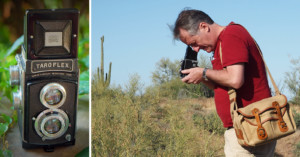
Arizona-based journalist and photographer Jim Headley recently set out on a "mission" to shoot an ultra-rare Japanese twin lens reflex camera called the Taroflex. Only 10 of these cameras are thought to still exist, and Headley is the proud owner of a fully-functioning copy in "excellent condition."
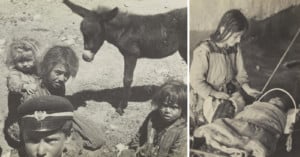
The Cambridge Digital Library recently uploaded a powerful collection of images captured by Albert Eckstein in the 1930s. Eckstein, a German Jewish doctor, was exiled by Hitler and the Nazi party in 1935 and he chose to spend his exile in Turkey helping to fight the scourge of infant mortality in the country's poorest communities.

Portrait photos from over a century ago rarely show subjects smiling, but this 19th century photo is an exception, and it's been going viral online for that reason.
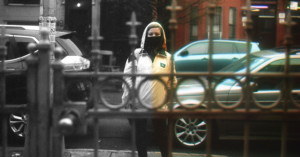
Photographer Jacob Carlson has put together a photography tutorial you don't expect to see in the year 2020. In his latest video, he'll show you how to use the 160-year-old three color process to capture color photos using black & white film.

Photographer Todd Dominey recently inherited a piece of photo history from his parents: an original Polaroid SX-70. This camera sent Dominey down the rabbit hole of instant photography history, as he discovered the story behind this world-shaking camera, and the man who invented it, Edwin Land.

Earlier this week, the British Museum made nearly 2 million high-resolution photographs and images of artifacts within their collection available to the public, allowing you to download and use the images under the Creative Commons BY-NC-SA 4.0 license.