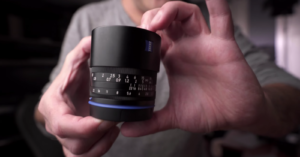
Here’s an interesting video in which street photographer John Free shares a system he’s developed to take the confusion and guesswork out of practicing street photography, called “the five Fs”. He says that contrary to popular belief, it’s not about “seeing”:
It’s not the eyes. Anybody can see that has eyes to see. It’s what we feel and what we get out of the heart that matters. We have to convey a passion. We have to convey an understanding.
The five Fs are: finding, figuring, framing, focusing, and firing.
Last week we reported on how photographers and a magazine are being sued for $300,000 for allegedly breaking a 2,630-year-old statue while photographing it for an assignment. While many people, including us, pointed to it as an example of why carrying liability insurance is a good idea for photographers, a more appropriate question is: does a typical insurance plan even cover something like that? David Walker over at PDN writes that it doesn’t:
And as it turns out, standard liability insurance typically carried by photographers would NOT cover the accidental dropping of, say, a $300,000 Nok figurine on the set. That’s because liability insurance policies typically exclude damage claims “for property of others in the care, custody or control of the insured,” says Scott Taylor of Taylor & Taylor Associates
[...] The Nok figurine, or any other prop or object being photographed as part of the shoot, would almost certainly fall under one of those exclusions. Architectural photographer Peter Aaron says he found out about those exclusions after an assignment some years ago where an assistant mishandled an architect’s model of a skyscraper. “It pancaked,” Aaron says. The architect demanded $5,000 in compensation. Aaron turned to his insurance company. “They said that’s not something we cover,” Aaron says. He had to pay out of pocket (though he negotiated a lower settlement).
So how can you protect yourself against damage to extremely valuable items? You can either purchase third-party property insurance in addition to your liability insurance, or just have the owners move their own valuables.
It might not be very applicable to the vast majority of photographers, but NASA astronaut Captain Alan Pointdexter has written up a fascinating article over on Luminous Landscape in which he shares advice about doing photography in space. Taking photos on the ground is one thing, but imagine using not just the sun, but the earth itself as a source of light. Read more…
Here’s an hour-long live video interview that Photoshelter recently did with Michele Hadlow, senior photo editor over at Forbes Magazine.
Hadlow speaks on how the magazine has managed to continue commissioning high-profile shoots despite cutbacks common across most publications. Michele tells us about the top characteristics all killer portraits must have to get featured, and what photographers need to succeed with both their subjects and clients.
Michele also discusses how Forbes hires photographers, and what up-and-coming photographers can do to get noticed. Having been at the magazine for over 14 years, Michele speaks to over a decade of work in the industry
If you’re ever photographing a baby that’s sitting on anything above ground level, make sure you have a spotter near the baby at all times. This video shows why.
Have trouble figuring out exactly where you need to hammer in a nail when hanging up a picture frame? The Industrial Cottage suggests using toothpaste. Simply dab a small amount onto the end of the picture hook, and gently tap the hook into the wall when you find the desire location for your frame. The mark left by the toothpaste is where you’ll need to put in a nail. Just remember to wipe off the toothpaste from the wall and from the frame when you’re done!
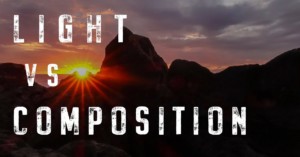
In 9th grade, photographer Joe Edelman was given the assignment of creating 5 separate photos of an egg without moving it. That task became a defining moment in his journey as a photographer, teaching him the importance of learning to “see” light over learning “how” to light.
Photo enthusiast Chris Malcolm needed a better way to aim his 500mm lens at fast moving subjects (e.g. birds in flight), so he upgraded his lens with a DIY sighting aid by attaching a non-magnified red dot sight:
They’re designed to clamp onto a gun sight wedge mount, so some kind of adapter is required. I played with the hot shoe mount, but it was too flexible — the sight needed re-zeroing at every mount, and was easily knocked out of calibration. The degree of precision required to aim the central focus sensor at the target via the dot also made parallax error a problem on the hot shoe. So I decided to mount it directly on the lens. Least parallax error, plus the geometry of the lens barrel and the sight mount naturally lines it up with the lens. To protect the lens barrel I glued the sight clamp to a cardboard tube slightly too small, slit open to provide a sprung grab on the lens body. The slit also handily accommodates the focus hold button on the lens barrel.
Malcolm reports that the site “works amazingly well”, making it “trivially easy to aim the lens at anything very quickly”. Read more…
Here’s a simple tip by photographer Benjamin Von Wong for traveling abroad: you can make recharging your devices overseas a breeze by building a charging station using a single power adapter and your own power strip.
Lee has often worked without a specific project in mind, simply making pictures of what he saw, in order, as Garry Winogrand said, to see what it looked like photographed. This way of working led him to look at his contact sheets (of which there have been an astonishing number) to find out what was there that he might not have expected. His shadow, and more clearly defined versions of himself, turned up with regularity. At some point early on Lee realized that he was making self-portraits along with many other photographs that were defining a new landscape for all of us who saw his work. There is a great lesson in this for photographers of today who dedicate themselves to one project or another, failing to understand that the best work might come from an obsession with the medium rather than the personally oriented choice of what might be done with it. Lee always has a camera with him and is constantly making pictures. How much better the work of today might be if all the young and dedicated photographers took up this habit.
If you’re in a creative rut and can’t think of a “project” idea, don’t worry — just be obsessed with photography itself and constantly be ready to photograph what interests you.