I tried to map the element movement during zoom, and it appears to be highly complex (front and rear moving different distances).

I tried to map the element movement during zoom, and it appears to be highly complex (front and rear moving different distances).
Thus, my final recommendation should be obvious: I can wholeheartedly recommend the lens, if it's really the lens you need, a lens you will use regularly, and you can deal with the longer subject distances you're likely going to be using.
It's video quality is excellent, too.
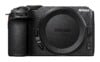
It's actually a very decent camera that takes excellent stills and videos. But so too does the Z50.
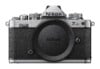
It's a camera that grows on you as you adjust to it. The good news is that the ZR is no slouch in function or performance for still photography and it’s a top performer for video. In the right hands, the ZR is going to produce amazing results.
The Z5II is an exceptionally good update to a long-established favorite camera.
The Tamron 50-400mm f/4.5-6.3 is a very good lens on full frame cameras, a better lens on DX bodies (though heavy). It has a wide focal length range and close focusing abilities that should be attractive to users looking for an all-around telephoto zoom.
The Z6III is the best US$2000-2500 camera Nikon has made in a long time. It’s a class leader product in many categories, which makes it highly competitive with the Canon and Sony choices (both of which are aging).
The 600mm f/6.3 PF VR S sits right in a sweet spot, thus it's not difficult to recommend.
As an all-around safari or travel lens, the 28-400mm f/4-8 VR has flexibility no other lens has while delivering central area results that are pretty darned good.
I used to use the 105mm f/1.4E for portraits on the DSLRs. The 85mm f/1.2 S certainly is a size substitute for it, and it’s just as mammoth on the front of your camera.
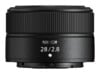
This is a tough lens to recommend. It’s an odd focal length, it handles a bit oddly, it’s not silent, it focus breaths, and it’s higher priced than the other small Nikkor primes.
I was surprised to really like the 17-28mm f/2.8. After all, I’ve got the 14-24mm f/2.8 S already, and that's a gem of a lens. Credit Tamron, and now Nikon, with bringing a basic fast wide angle lens into the modern age.
Nikon's been nailing the Nikkor lineup, producing best-in-class after best-in-class efforts here in the mirrorless world with the various S lenses. The 400mm f/4.5 VR S is no exception.
So what we have here is the new (Nikon) standard for a long telephoto zoom. The 100-400mm f/4.5-5.6 definitely justifies its S-line marking, and I'd tend to argue that its price is therefore justified, as well.
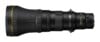
The 400mm f/2.8 S TC VR is the first of the Z-mount exotics.
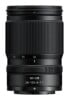
Nikon is now giving us six choices to cover the mid-range focal lengths with zooms (24-50mm, 24-70mm f/2.8 and f/4, 24-120mm f/4, 28-75mm f/2.8, and 24-200mm).
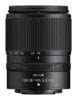
Personally, I don't like the 18-xx zoom choices that Nikon keeps making for DX. The problem is that 18mm isn't particularly wide angle, so you end up with a mid-range zoom that's more telephoto than wide.
Unfortunately, I just can't quite put a "recommended" rating on it: there's just a little too much to watch for in terms of corner performance, particularly when you also have to watch out for field curvature and focus shift.
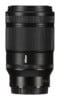
The Z-mount version is a better macro lens than the 105mm f/2.8G, and returns more to Nikon’s original close-up “snap” than that most recent F-mount lens. Even outside of macro the lens performs quite well.
The Z-mount version is a better macro lens than the 105mm f/2.8G, and returns more to Nikon’s original close-up “snap” than that most recent F-mount lens. Even outside of macro the lens performs quite well.
Compared to the F-mount 20mm f/1.8G, there's no question that the Z-mount version is clearly and obviously better, from center to corners, and at all apertures. My F-mount version has been kicked to the curb, where it was picked up by a dealer doing recycling.
Nikon got this just about right. The 24-70mm f/2.8 S is an impressive lens, and speaks to what they can do with the new, less restrictive lens mount.
If Nikon set their sights on producing the best possible all-around camera at an aggressive price, they can consider it mission accomplished.