[I]f you simply want the best APS-C camera that Sony currently offers, the A6500 is clearly the one to get.

[I]f you simply want the best APS-C camera that Sony currently offers, the A6500 is clearly the one to get.
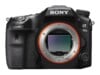
Sony has produced an excellent camera with the A99 II, following on from the excellent work of the original A99.
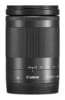
The Canon EF-M 18-150mm f/3.5-6.3 IS STM lens is a good choice for those who want to keep their kit bag light, and want something which offers versatility with a variety of different focal lengths.
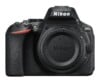
The Nikon D5600 is an incredibly modest update of the 18-month-old D5500, essentially adding Snapbridge connectivity, a deeper handgrip and a handful of other non-essential features that collectively hardly set the world on fire.
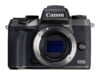
The Canon EOS M5 feels like the first time the company has really taken compact system cameras seriously.
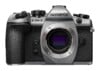
The new Olympus OM-D E-M1 Mark II is a veritable speed demon, offering incredibly fast shooting rates coupled with a much improved auto-focusing system that keeps moving subjects sharp.
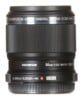
The Olympus M.Zuiko Digital 30mm f/3.5 ED Macro is an outstanding performer in the optical department.
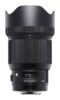
Even so, we can whole-heartedly recommend the new Sigma 85mm F1.4 DG HSM as a brilliant short telephoto prime lens that delivers superb results.
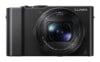
[I]f you can ignore the temptation of the sheer speed of the Sony Cyber-shot DSC-RX100 V and you prefer using the LCD screen for image composition, then the Panasonic Lumix DMC-LX15 is a well-appointed and keenly priced rival to Sony's market leading camera.
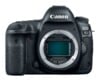
The Canon EOS 5D Mark IV builds on the proven design of its popular 4-year-old predecessor, the 5D Mark III, upgrading just about every aspect of its performance, which all adds up to a much better, yet still familiar, all-round camera for stills and video shooters alike.
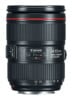
The Canon EF 24-105mm f/4L IS II USM is an excellent standard zoom lens that, as you'd perhaps expect, is much better than the 10-year-old Canon EF 24-105mm f/4L IS USM that it replaces, which incidentally is one of Canon's most popular lenses.
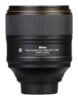
The Nikon AF-S Nikkor 105mm f/1.4E ED is an eye-wateringly expensive short telephoto prime lens that delivers amazing image quality.
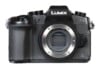
The new Lumix DMC-G80 camera completes the Panasonic range of enthusiast-focused compact system cameras.
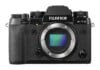
As with the X-Pro2 camera that was released at the start of 2016, Fujifilm have taken an evolutionary, rather than revolutionary approach to the new X-T2.
The Olympus M.ZUIKO Digital ED 300mm f/4 IS Pro is the perfect telephoto partner to the flagship OM-D E-M1 camera, forming a fast, well-built, relatively light-weight and fully-weather-proof system that delivers excellent image quality without breaking your back.
The Canon EF-M 28mm f/3.5 Macro IS STM is a very capable macro lens with a standout magnification of 1.2x and those innovative built-in LED lights.
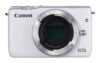
The Canon EOS M10 has a lot more in common with the original EOS M from 2012 than last year's more enthusiast-focused EOS M3, sharing the same 18 megapixel sensor and simplified control layout as Canon's first compact system camera.
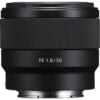
This lens has been a long time coming for full-frame E-mount cameras, and it certainly makes a welcome addition to Sony’s lens line-up if you’re in the market for a fast, well-priced standard prime that offers excellent image quality.
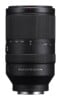
The Sony FE 70-300mm f/4.5-5.6 G OSS makes a solid case for itself by offering a useful focal range incorporating the longest reach of any E-mount lens, and all in a relatively compact package.
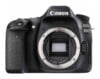
The Canon EOS 80D builds on the big leap forward that its predecessor made principally by adding continuous autofocusing for live view stills shooting and upgrading the image sensor and focusing/metering systems.
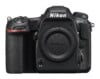
We were kept waiting a long time for the Nikon D500, but boy does it seem like it was worth the wait.
This lens is small and lightweight considering the zoom range on offer, making it well suited to life as a walk-around lens.
Pentax DSLR owners have had to wait what seems like a lifetime for a full-frame camera, but thankfully the new K-1 doesn't disappoint.
Leica is good at making niche cameras, and it’s done it again here with the X-U.