Fujifilm XF 14mm f/2.8 R 83/100
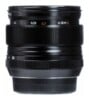
The XF 14mm F2.8 R is a solid, well-made lens that sports traditional aperture and manual focus rings.

The XF 14mm F2.8 R is a solid, well-made lens that sports traditional aperture and manual focus rings.
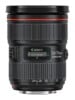
The EF 24-70mm f/2.8L II USM is a near-flawless lens with optics that come very close to matching a set of top-quality primes.
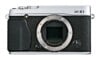
The Fujifilm X-E1 is a fine camera, and a pleasure to use. Fujifilm's recent improvements to focusing, both manual and automatic, make a real difference to performance, the built-in EVF is excellent, and the enthusiast-friendly ergonomics are addictive.
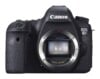
The EOS 6D doesn't offer the depth of features that its best competitors can, but it combines very good image quality, impressive high-ISO performance and class-leading low-light autofocus ability (with the central AF point) as well as impressive built-in Wi-Fi and GPS features.
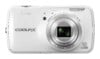
The Nikon S800c is an interesting hybrid of connected mobile device and traditional compact camera.
The Sigma 35mm F1.4 DG HSM is a truly excellent lens, that performs as well in the field as its superb lab test results suggest.
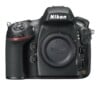
The Nikon D600 brings full frame functionality to the masses, along with dual SD card slots and 100% viewfinder coverage.
The Canon EOS 650D combines very good image quality with easy access to shooting parameters and extensive manual control.
The Sony Alpha NEX-F3 is one of the best entry-level mirrorless cameras on the market.
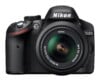
The Nikon D3200 is a no-nonsense, u2018traditional styleu2019 entry-level DSLR that is a solid performer on all levels. It doesn't offer much in terms of innovative features, but comes with the highest pixel-count in its class and good image quality across the ISO range.
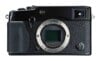
The X-Pro1 marks Fujifilm's entry into the high-end mirrorless interchangeable-lens market, and combines excellent image quality with fluid handling.
Expanded video capabilities hold appeal for those who need to produce both stills and video while on assignment.
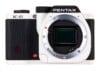
The Pentax K-01 is a bit of an odd duck. [...] Photo quality is among the best out there, but other cameras offer better AF performance and more compact/usable designs.
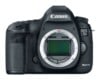
The 5D Mark III is in almost every aspect a better camera than its predecessor and an extremely enjoyable photographic tool.
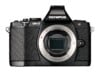
The Olympus OM-D E-M5 is certainly the most capable Micro Four Thirds camera we've reviewed and arguably the most likeable mirrorless model yet.
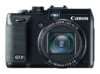
The G1 X is an excellent camera for some but not for everyone. The camera gives you great image quality and a versatile zoom range in a small package without the need to carry a stack of lenses.
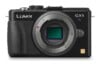
The GX1 packages external camera control points and a class-leading touchscreen interface in a classically-styled small form factor that produces the best image quality we've yet seen from a Micro Four Thirds camera.
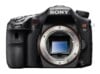
The A77 is a well-designed camera which spans the mid-range and semi-professional categories.
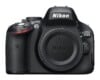
The D5100 sits just above the D3100 in Nikon's product lineup, and as such, it combines its younger sibling's ease of use with a slightly more advanced feature set.
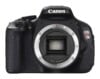
The latest model in Canon's popular Rebel series is very much the camera that the range's history leads us to expect: well featured, well-designed and competitively priced.
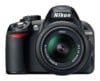
With the addition of video and live view, Nikon has given its entry-level DSLR all the features its predecessor seemed to be missing.
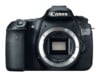
The 60D is probably best understood as a 'super Rebel.' It's a more comfortable, more flexible, and faster-to-use version of Canon's justly popular entry-level DSLRs.
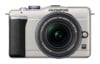
Olympus adds point-and-shootability to its retro mirrorless PEN range. A vast array of custom options don't undermine its out-of-the-box capability. Only compact-camera-like controls and build prevent it being a PEN for everyone.
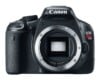
In terms of both still and video capture, the 550D is currently the best camera of its type on the market.