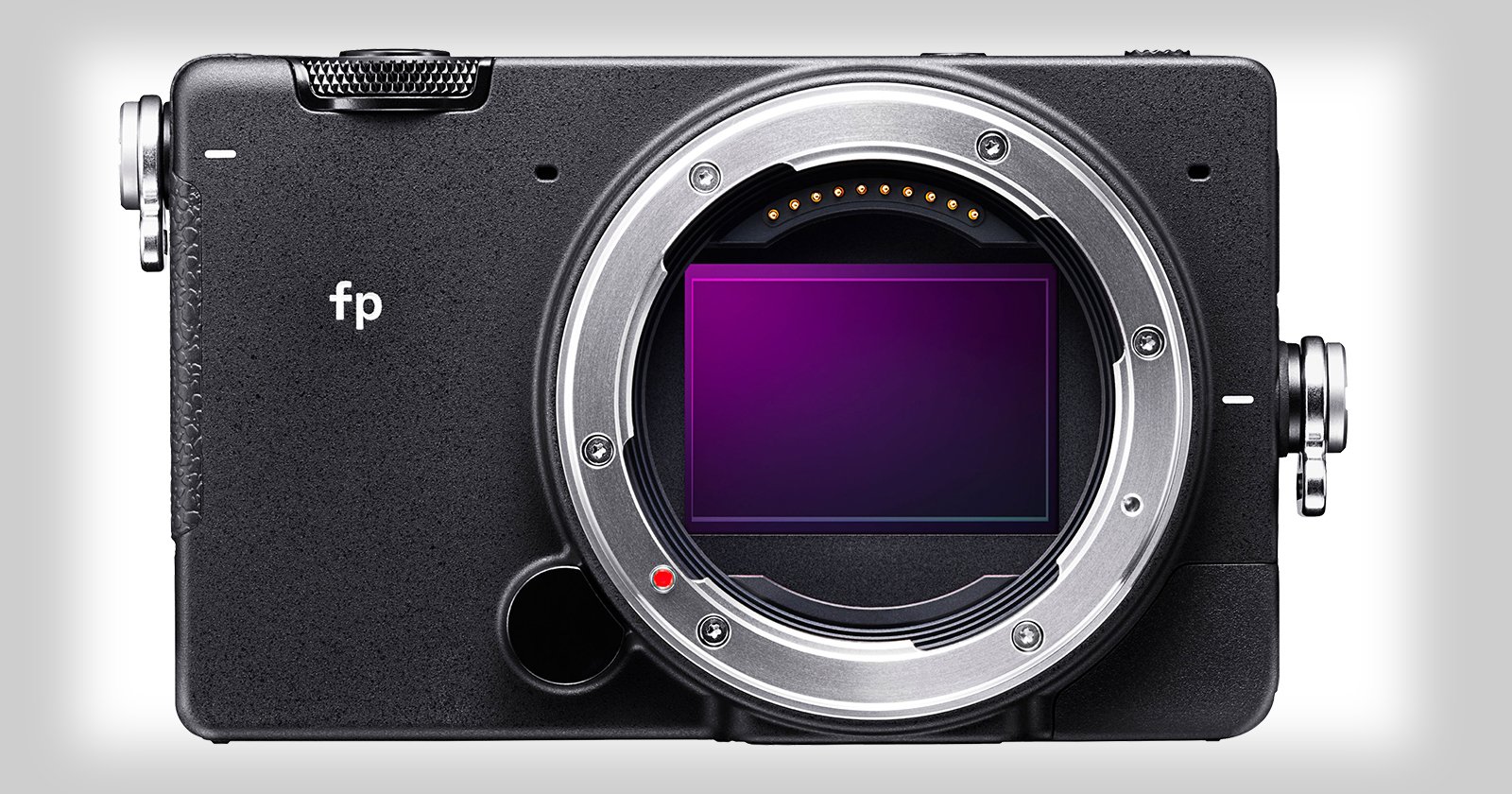
Sigma Says the Compact, Modular FP2 Is the Ultimate Hybrid Camera
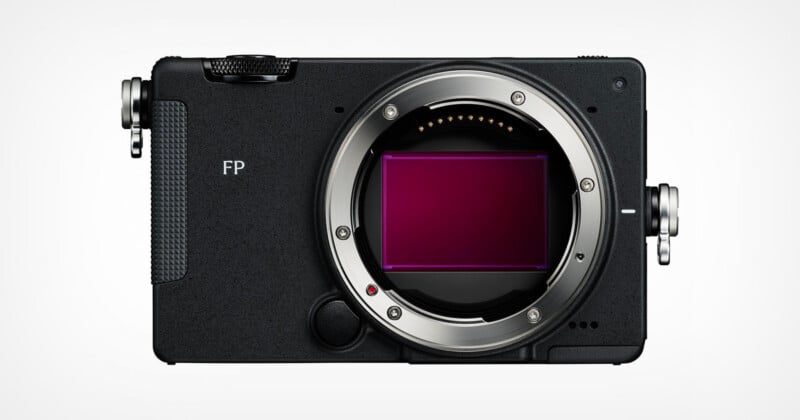
It’s been a long time since Sigma announced the fp, billed as the world’s smallest full-frame mirrorless camera. Much has changed in the industry since 2019, and now the Sigma FP2 is here with a fresh style to its model name and some new tricks up its sleeve. What hasn’t changed, though, is the megapixel count and the ultra-compact design.
“The Sigma FP2 is a direct reflection of our unwavering commitment to optical excellence and our passion for meaningful engineering innovation,” says Mark Amir-Hamzeh, President of Sigma Corporation of America.
“We listened closely to the feedback from our creative community — vloggers, podcasters, photographers, and filmmakers alike — to deliver an compromised hybrid tool built to handle the future of multi-platform storytelling,” Amir-Hamzeh continues.
The Sigma FP2 Has a Classically-Inspired Modular Design
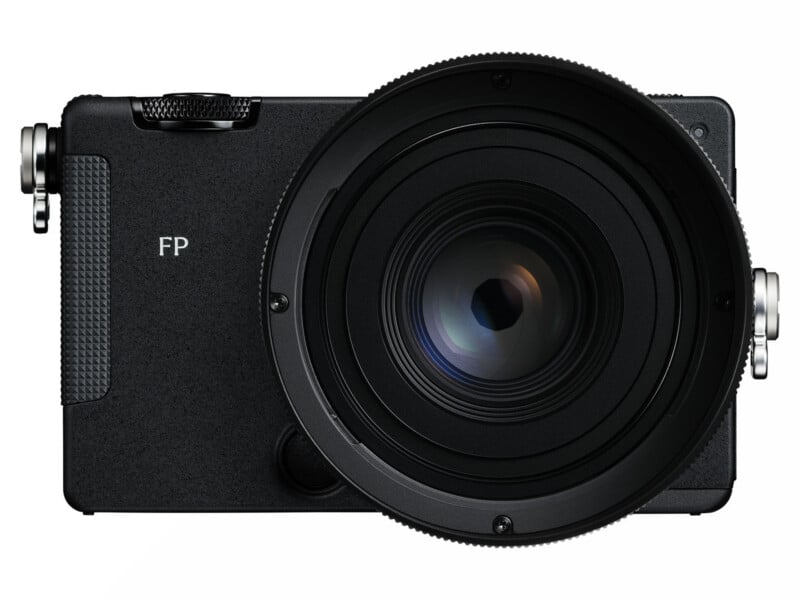
Sigma is keeping its modular camera dream very much alive with the FP2. Like its predecessor, the FP2 has a brick-like shape. Nearly the entire height of the camera is taken up by the L-Mount, with relatively little space to either side of it.
The FP2 is approximately 112.8 x 69.9 x 41.8 millimeters (4.4 x 2.8 x 1.6 inches). It weighs 460 grams (16.2 ounces) with its battery and an SD card inserted.
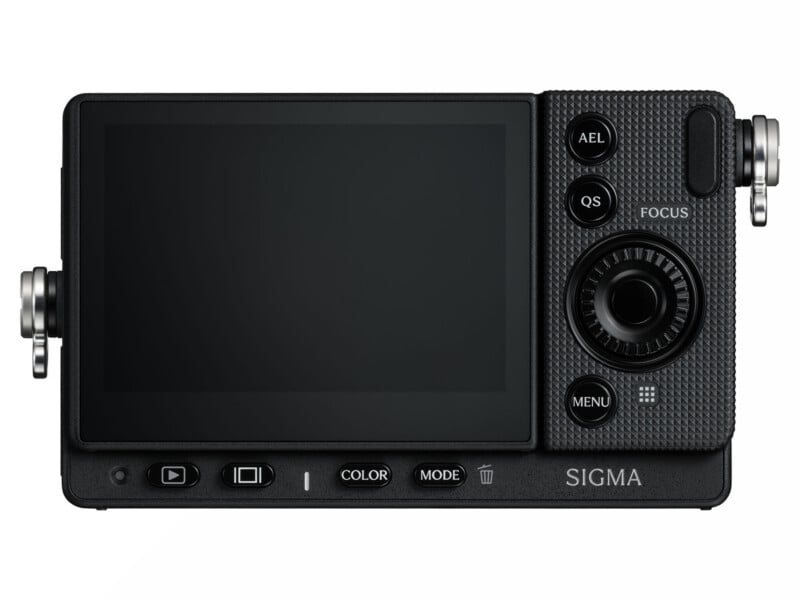
The back of the camera, likewise, looks similar to the original fp released in 2019. The button layout is nearly identical, although Sigma has ditched the Tone button below the display. The camera still has the same top deck, meaning that there are only two command dials, and no traditional rear one.
On the topic of the screen, there’s a huge change here. The Sigma fp had a fixed rear touchscreen, while the FP2 moves to a tilting panel. It is 3.15 inches diagonally and has approximately 2.1 million dots. It’s the same specs as before, but the ability to tilt the screen up and down is a significant usability change. Moving the screen also exposes vent fins on the back of the camera, which help keep it cool during video recording — more on that later.

The Sigma FP2 has a slightly different overall look than before, too. Beyond employing Sigma’s new branding and typeface, the FP2 also has a diamond-knurled texture across much of its back and a little bit of its front. This replaces the more traditional leatherette covering on the original fp.
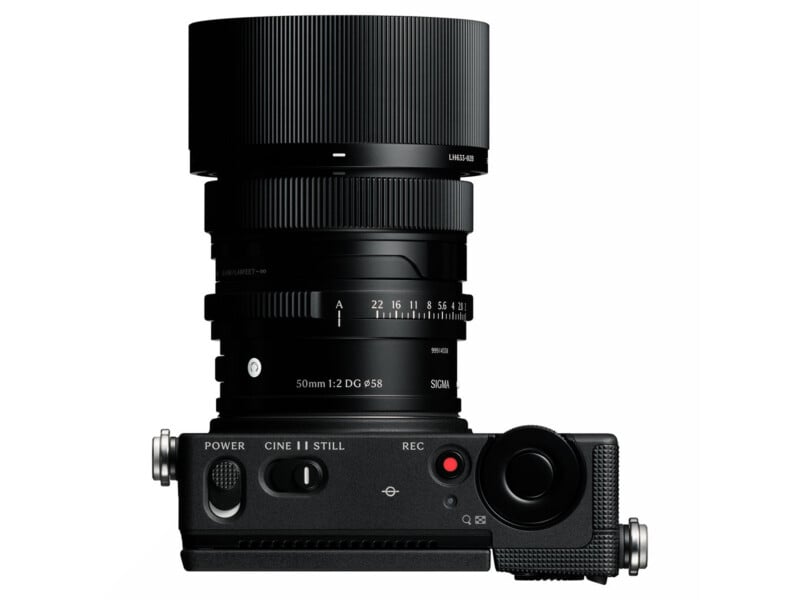
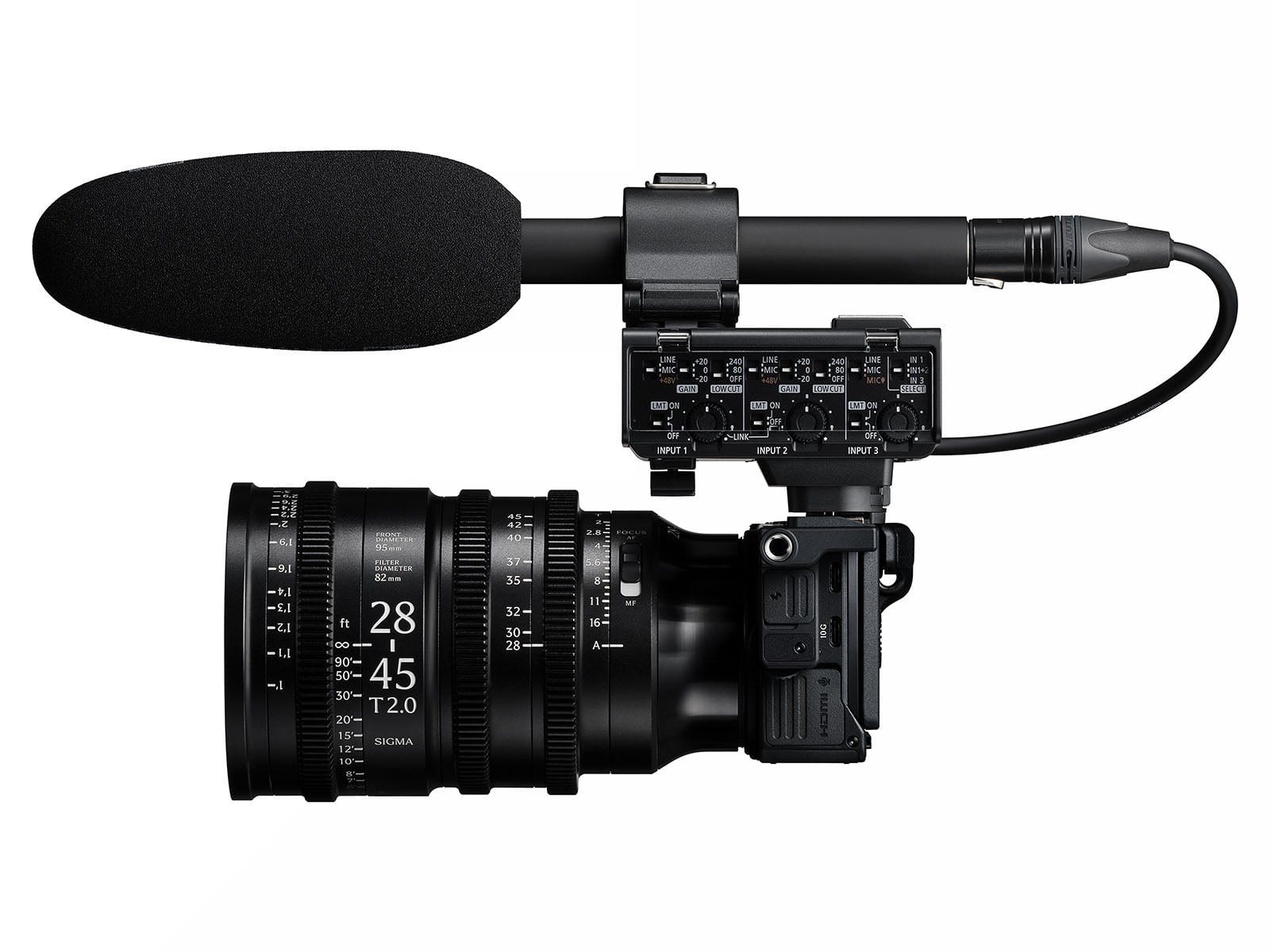
The Sigma FP2, as a hybrid camera designed for both photographers and videographers, has an expansive physical interface. There are two USB-C ports, one of which is a USB 3.2 port, a full-size HDMI Type A port, a timecode terminal that doubles as an external mic port, and standard 1/4-20 inch ports on three sides, including one on the bottom.
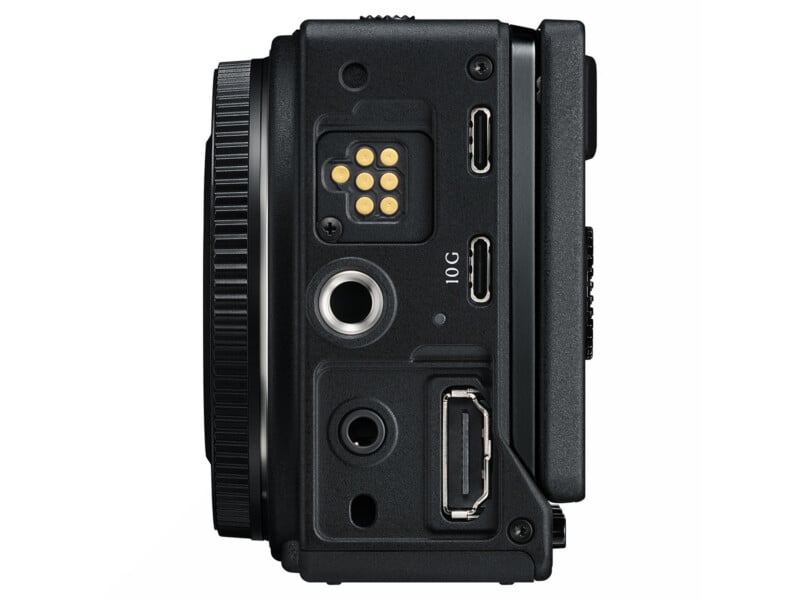
As mentioned, modularity is key.
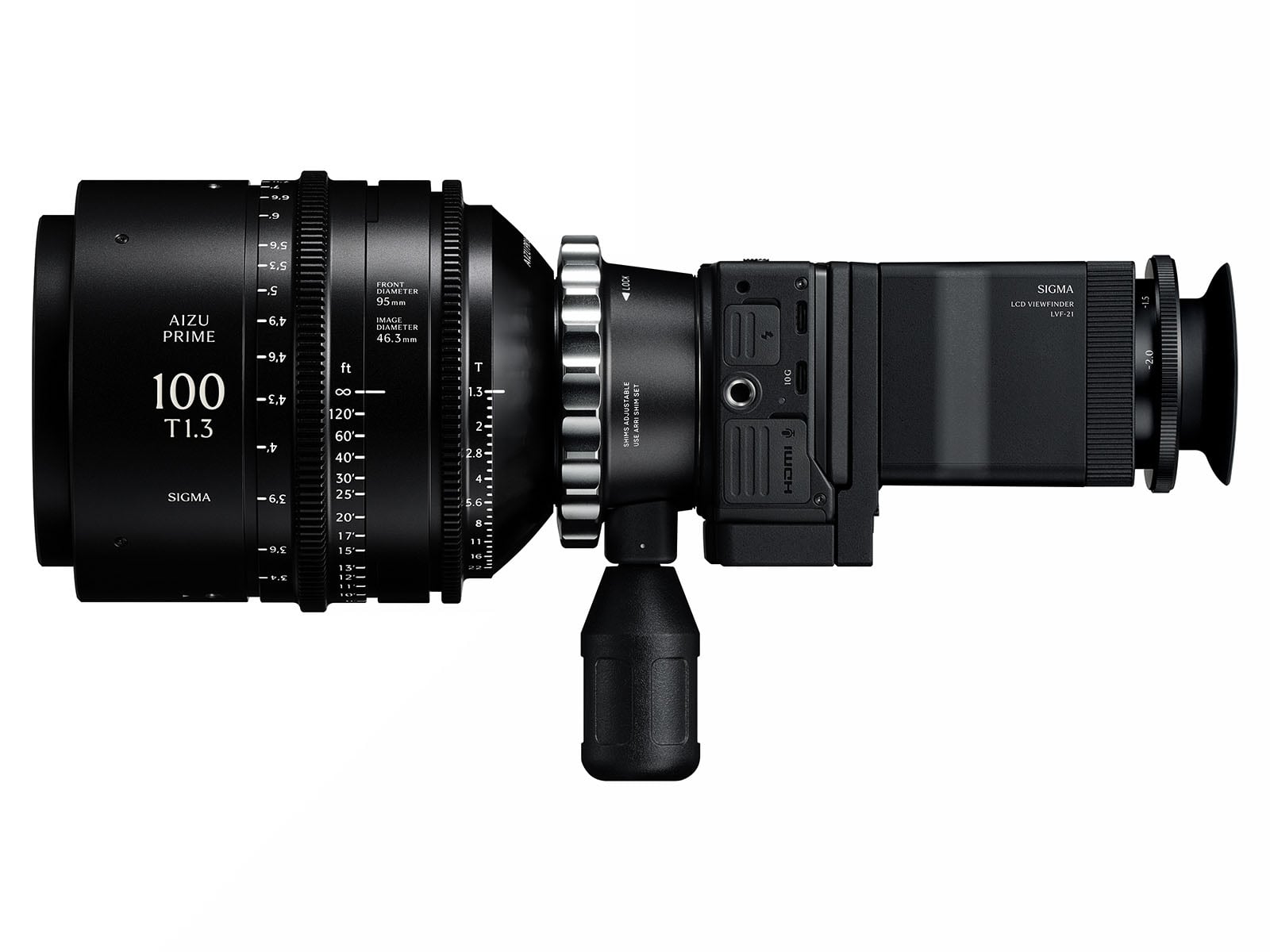
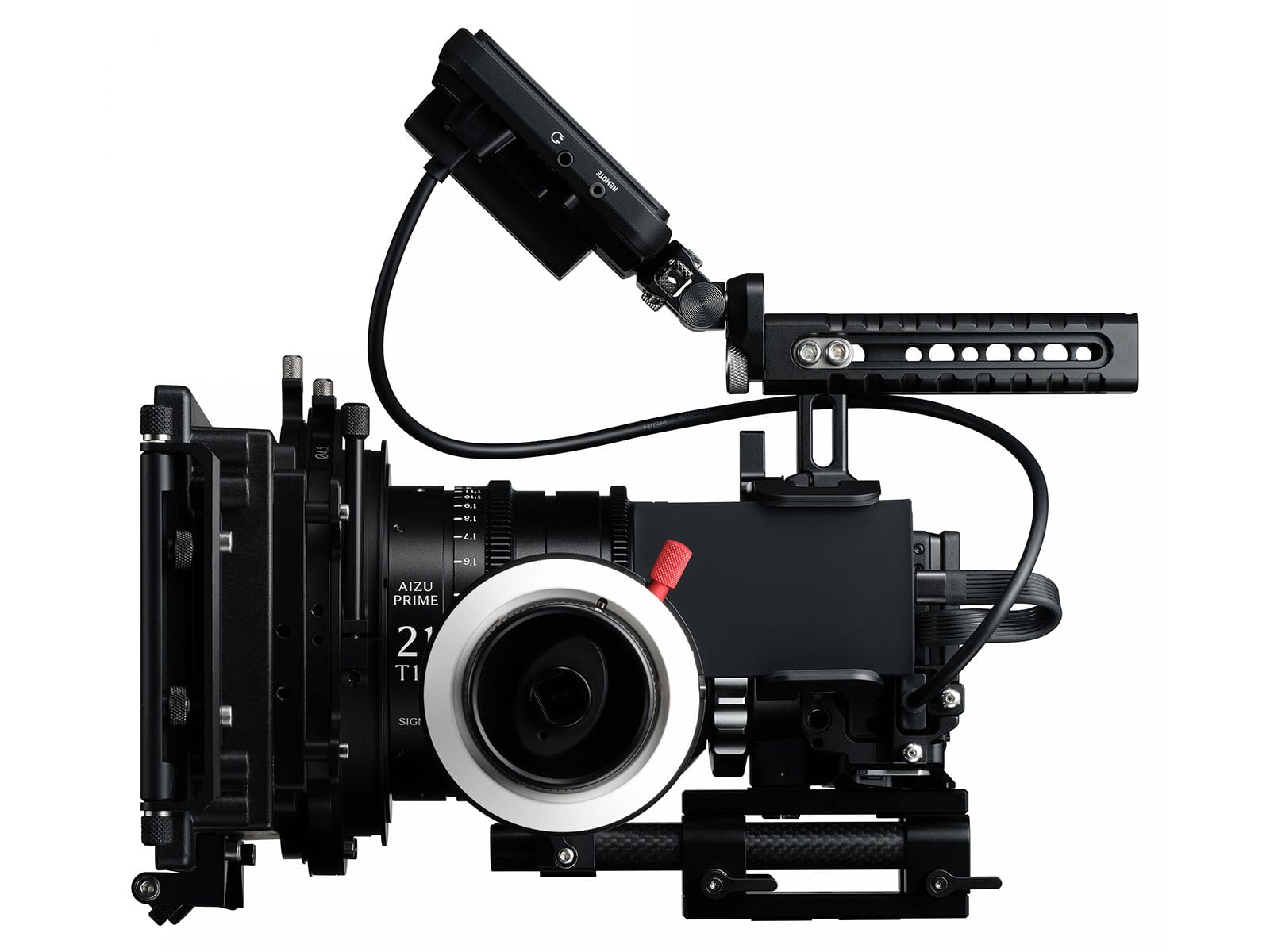
“You can strip it down to a bare, pocketable-street-photography box adapted with vintage glass for a unique look,” Sigma says of the FP2. “Or build it up into a heavy-duty production rig with cine lenses, matte boxes, and wireless monitors.”
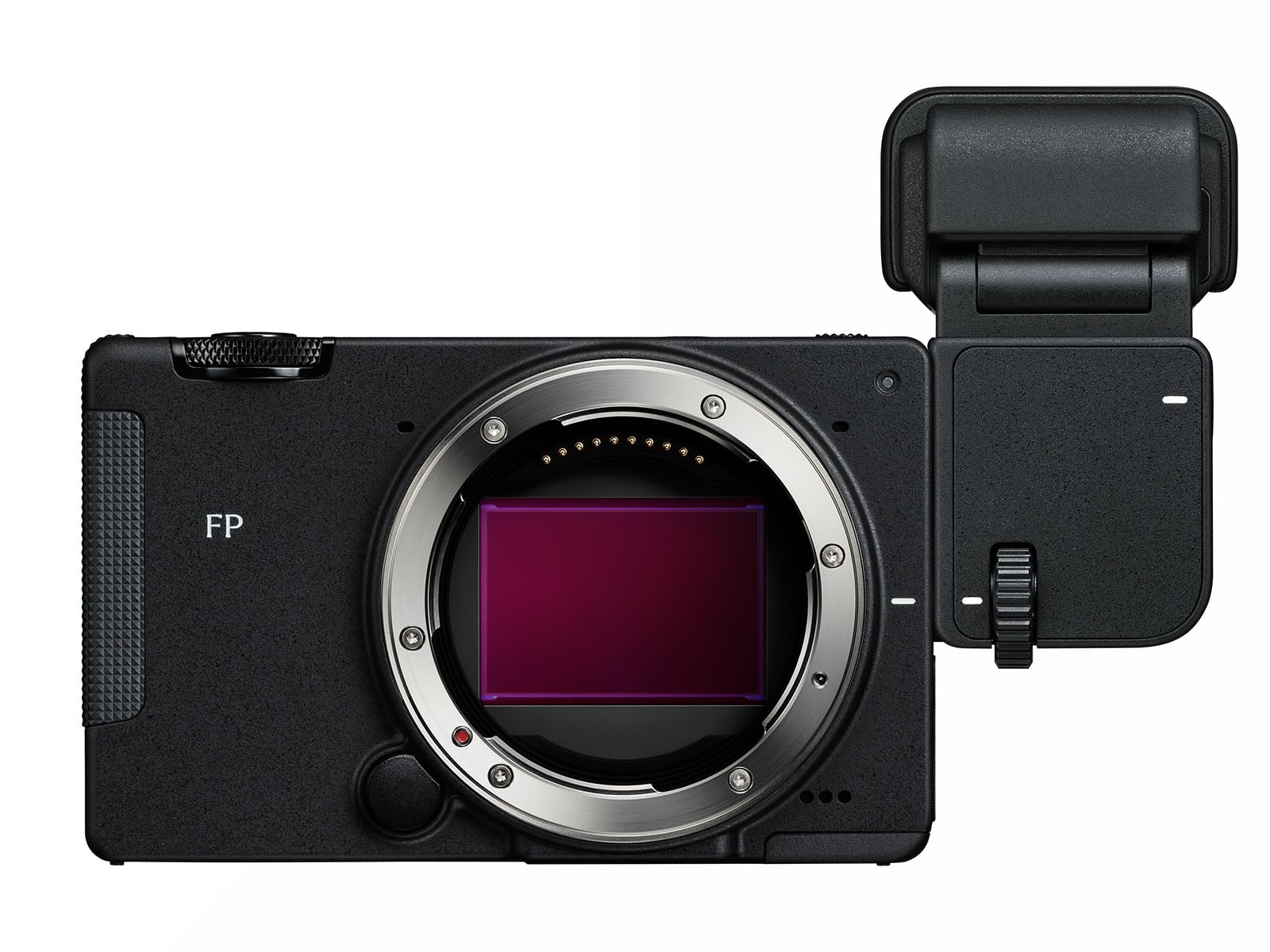
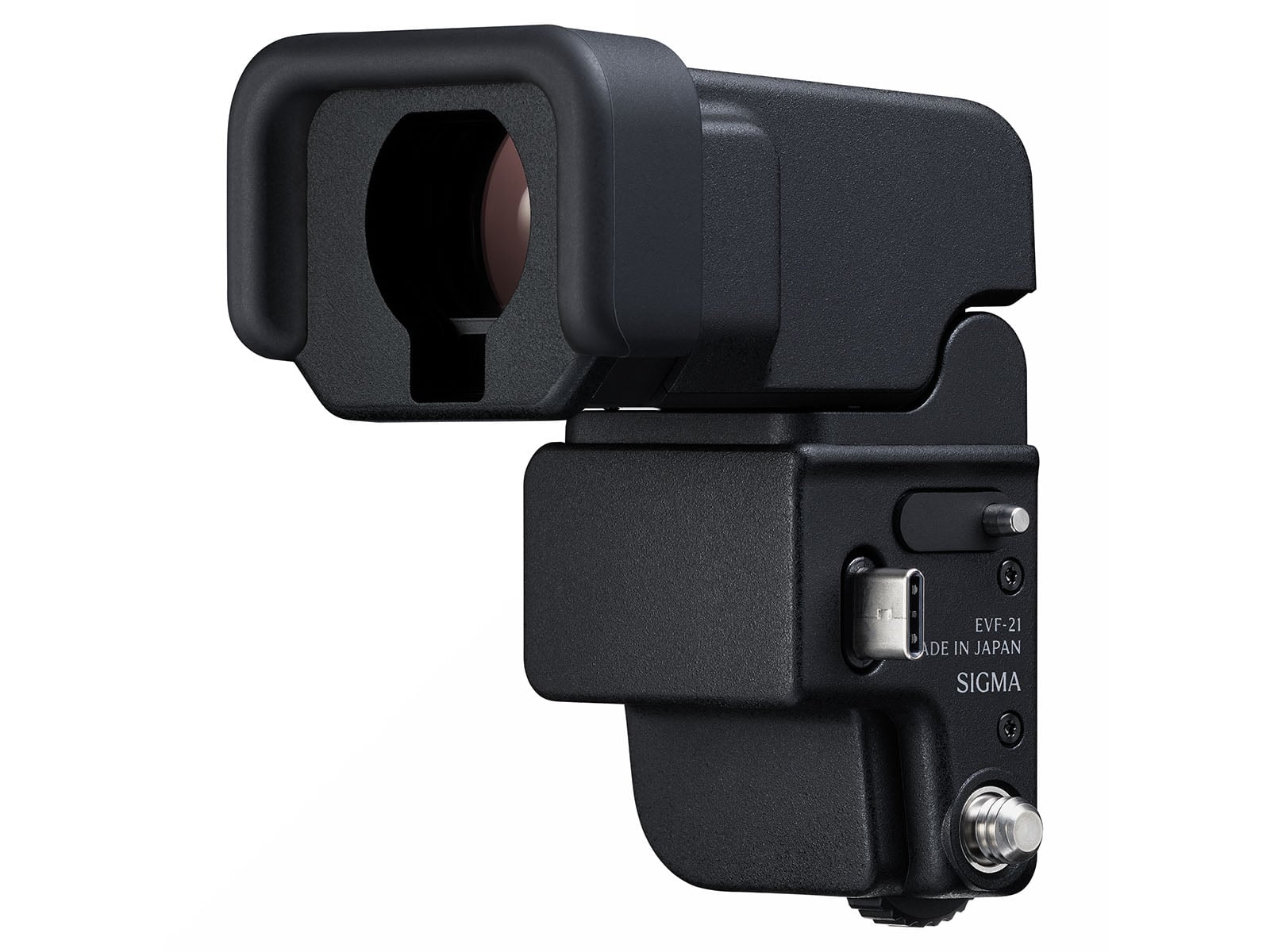
Arguably the biggest decision people will have to make about how the FP2 looks and operates concerns the optional external electronic viewfinder. The new EVF-21 has a 5.76-million-dot OLED with 0.88x magnification. It can tilt up to 90° as well. It attaches to the camera via a side USB port rather than to a hot shoe. This makes a lot of sense because the FP2, like the fp, doesn’t have a hot shoe.
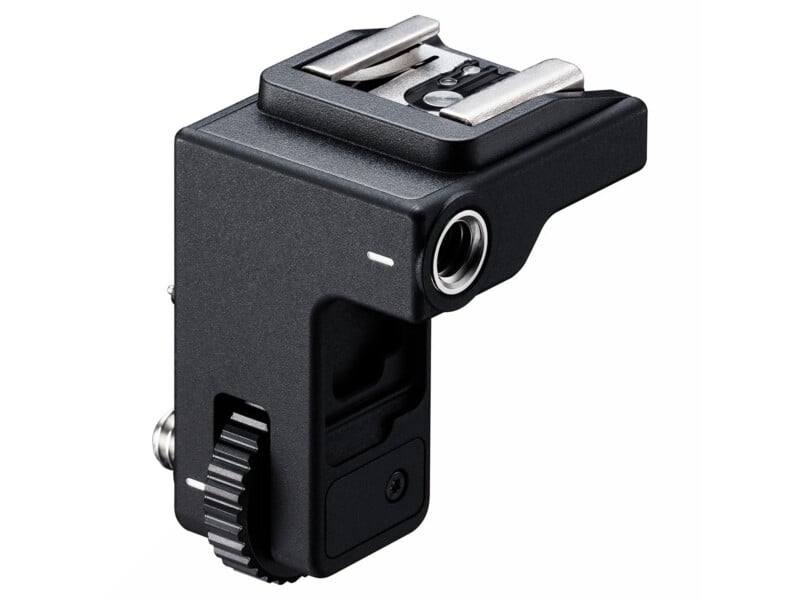
The FP2 can support a hot shoe, though, by virtue of the HU-21 Hot Shoe attachment. It just doesn’t come built-in.
There’s another thing the FP2 lacks that could be a deal breaker for some users. The FP2 doesn’t have in-body image stabilization (IBIS). Presumably there’s no room for it inside the compact form factor.
Sigma FP2 Photo and Video Features
It also doesn’t have a shutter, either, by the way. This is an electronic shutter-only camera, as before, but the image sensor is new and much faster. Instead of a typical, run-of-the-mill 24-megapixel BSI-CMOS sensor, which PetaPixel‘s Jordan Drake refers to as “that sensor,” the FP2 opts for a relatively new and impressive 24.5-megapixel partially stacked full-frame sensor. It’s similar on paper to the sensor found in the Panasonic S5 II(X) and Nikon Z6 III, although it is not possible to see if it’s precisely the same exact sensor or not. It probably is.
This partially stacked CMOS sensor has faster readout and thus less rolling shutter than the older, slower fp, which should prove beneficial for photographic applications and especially video.
The FP2’s native ISO ranges from 100 to 102,400 for stills and movie recording. It can expand down to ISO 6 for stills. The electronic shutter speed ranges from 30 seconds to 1/25,600, plus bulb (up to five minutes). Maximum flash sync speed is 1/50s without a crop. However, again, the camera’s hot shoe unit is an optional accessory.
On the photo side of things, the FP2 has Sigma’s latest hybrid autofocus system with AI-assisted subject tracking (Human / Dog + Cat + Bird, with Eye AF). It can shoot at up to 20 frames per second in both JPEG and RAW (DNG), with a DNG buffer up to 180 frames at full speed.
The FP2 has a wide range of Color Modes built-in, including options like Rich, Warm Gold, Teal & Orange, Sunset Red, and more.
There are a lot of compelling video features on offer, as Sigma promises that the FP2 is really a true hybrid camera, built to be equally performant for both photo and video applications.
A highlight feature is 6K Open Gate recording at up to 60p. The camera supports native 4Kp60 recording at full width and 4Kp120 with a crop. The FP2 records log footage. There’s also ProRes RAW HQ and ProRes RAW recording at up to 4Kp48 and 6Kp29.97.
When paired with the new HU-21 Hot Shoe Unit, the camera supports 32-bit float audio recording.
The Sigma FP2 has 70GB of internal storage plus a UHS-II SD card slot. It has a new battery that shares its form factor with the original. The new battery promises about 30% longer battery life than before. It is rated for 370 shots or 130 minutes of video recording.
Pricing and Availability
The Sigma FP2 will launch on November 11. The body only is $2,199, while a kit with the EVF is $2,749.
Image creditsSigma
Affiliate Disclosure PetaPixel articles may include affiliate links; we may earn a commission if you buy through one.