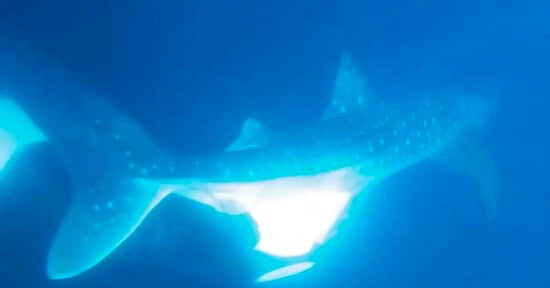
Fisherman Captures Incredible Drone Footage of Huge Whale Feeding
Consumer drones and cameras have revolutionized and democratized wildlife photography. Once the preserve of an elite band of photographers, the humble fisherman is now capable of recording something extraordinary.
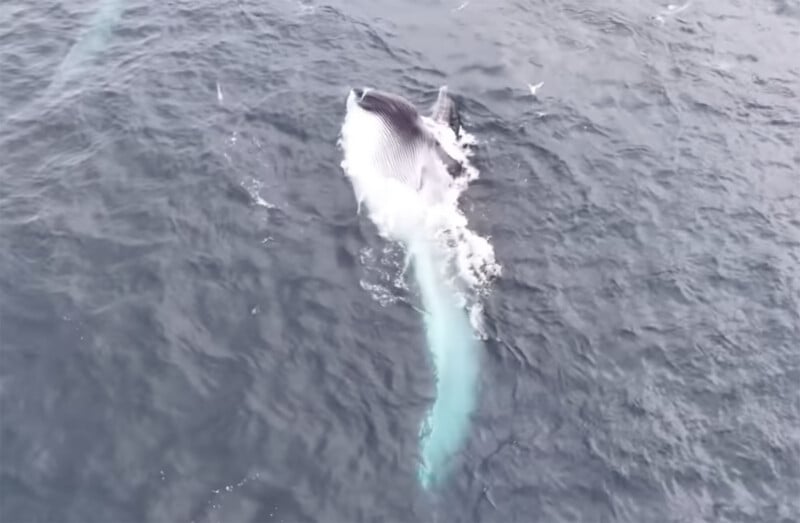
Case in point: Rhys Morgan, an oil refinery worker from Wales and keen fisherman, captured remarkable footage of the second largest whale species in the world, the fin whale, lunge feeding in the Celtic Sea.
“I’ve always got the drone on the boat now,” he tells The Guardian. “I bought one last year and I keep it with me any time I go out now, just in case.”
“We launched it off the back of the boat and went and had a look,” he continues. “Everyone got really excited.”
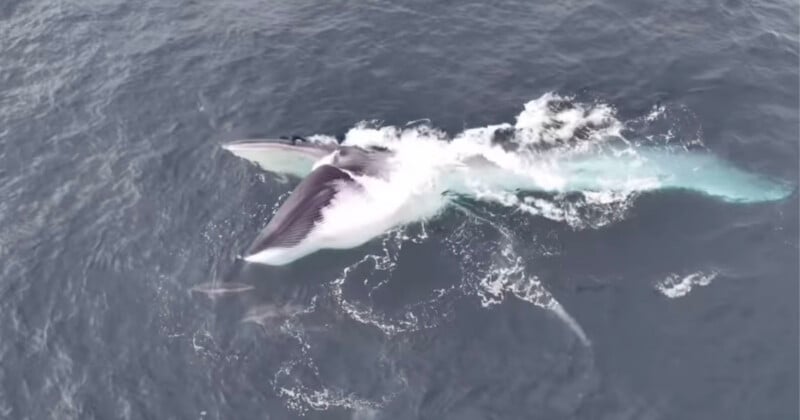
Fin whales use expandable throat pleats to consume 18,000 gallons of water and krill. They can be over 78 feet long and weigh up to 77 U.S. tons.
Little is known about fin whales, including their migration patterns, although it is thought they prefer cooler waters.
“It can be hard to appreciate the size at a distance,” says Morgan. “When they pop up nearer the boat, you really do feel small out there.”
Morgan adds that after capturing the video of the fin whale feeding, he uploaded it to social media where he thought “it might get a couple of hundred likes or something like that.”
“Suddenly I’m over 100,000 views and climbing, nearly 2,000 likes, yeah, it’s taken off,” he says.
“At the time, I didn’t realize it would go as far as it did. I didn’t think anything would come of it. But there are people tagging government ministers in the comments, highlighting what’s going on in Iceland at the moment and trying to raise awareness of the fin whales being hunted in Iceland. So there is awareness being brought about from that, which is a nice unintended consequence of this.”
Dr. Marianna Chimienti, a lecturer in marine top predator ecology at Bangor University, tells the BBC that what Morgan experienced was a “rare and fortunate encounter.”
“It is normal that the fin whale comes and feeds at the surface, as it is part of the species’ foraging strategy, but being in the coastal water is quite spectacular,” she adds. “In theory, they should have migrated.”
Affiliate Disclosure PetaPixel articles may include affiliate links; we may earn a commission if you buy through one.