That Satellite Photo of ‘Amelia Earhart’s Plane’ Turned Out to Be a Tree

Pictures can be deceiving. A group of researchers discovered this firsthand after making a long journey to a remote Pacific island in search of Amelia Earhart’s lost airplane.
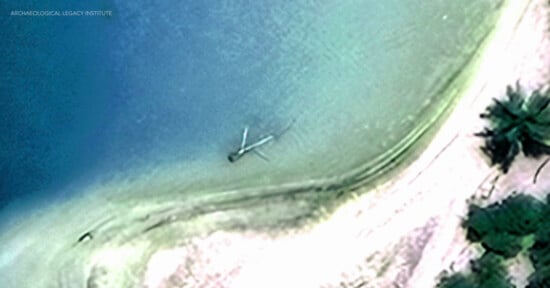
The “Taraia Object,” submerged in a lagoon off the island of Nikumaroro, looked vaguely like an airplane in a satellite photo. But a team from Purdue University and the Archaeological Legacy Institute that ventured all the way there found that it was just a tree.

“Unfortunately, we weren’t able to find that smoking gun,” says Steve Schultz of Purdue University, per The Guardian.
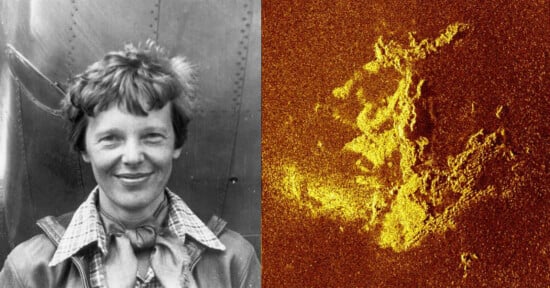
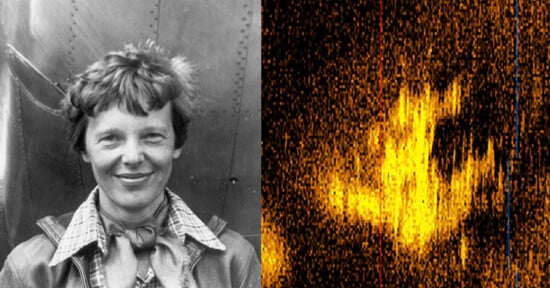
Amelia Earhart, along with her navigator Fred Noonan, disappeared in 1937 as she was attempting to become the first female pilot to circumnavigate the globe.
Despite a massive search and rescue operation, Earhart was never found, nor was the Lockheed Electra 10-E she was piloting.
90 years later and people are still looking for her. This latest expedition included a six-day boat journey from Kiribati to the uninhabited atoll.
Not only was the voyage delayed by inclement weather, but the crew was forced to sleep offshore because of giant coconut crabs that have been known to feed on human flesh.

The mission was sparked by the satellite photo. Purdue University confirms in a statement that the image was a “visual anomaly” that’s “likely a collection of large trees deposited along the peninsula’s sandspit.”
Richard Pettigrew from the Archaeological Legacy Institute had suspected there was a metallic glint in the water around Nikumaroro.
“The fragment’s reflective surface, long associated with the idea that the object was a metallic substance, was due to its carbonate veneer. Other items found by the team were similarly coated with a shiny concretized amalgam of coral sand,” Purdue University says.
“While we know this is disappointing to many, including us, this mission adds a new chapter in the quest to find the ultimate answer to the mystery of what happened to Earhart during her attempt to circumnavigate the globe nearly nine decades ago.”
Affiliate Disclosure PetaPixel articles may include affiliate links; we may earn a commission if you buy through one.