Sony’s Omnidirectional Mic Captures Spatial Audio Into Your Smartphone
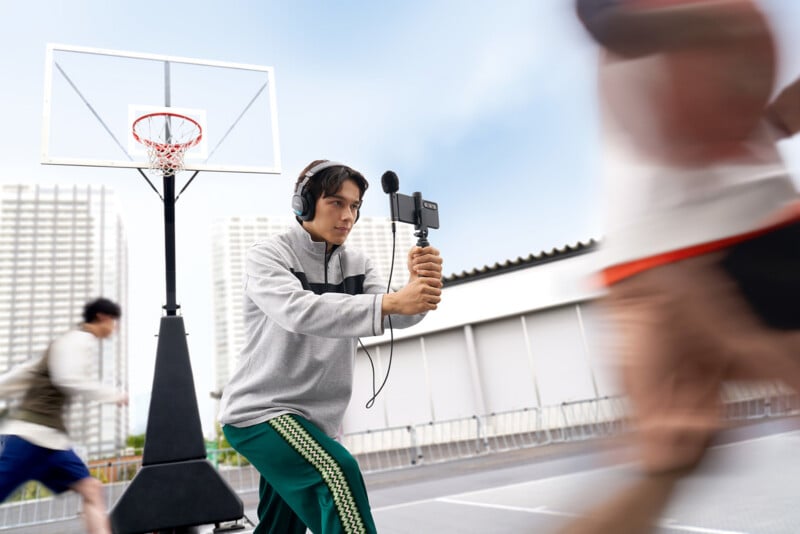
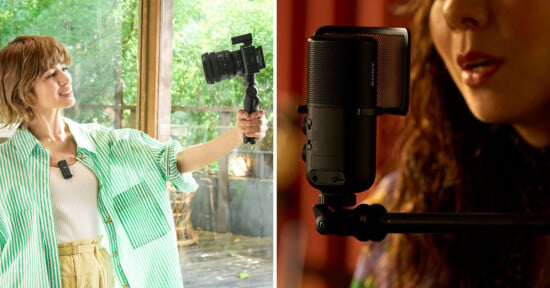
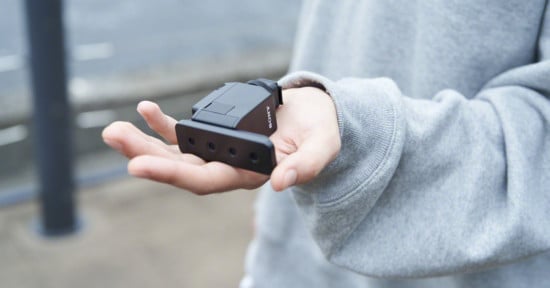
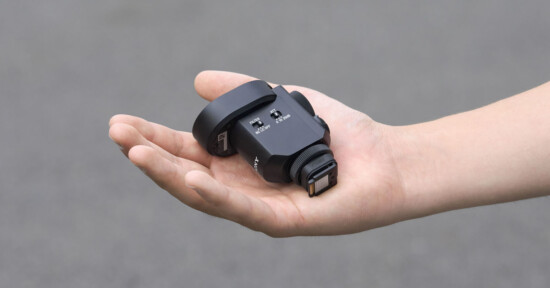
Sony has announced the ECM-AX10, a spatial audio microphone designed for content creators that is the world’s first to be certified by Eclipsa Audio. The mic uses omnidirectional capsules to capture sound that Sony says feels “more natural, immersive, and true to the moment.”
“Sony’s newly developed spherical microphone module uses four omnidirectional microphone capsules to support Ambisonics recording, helping capture sound from all directions,” the company says. “With advanced spatial audio processing, creators can bring through the atmosphere, direction, and distance of a place, from street performances and festivals to sports, travel content, and behind-the-scenes moments, so viewers feel closer to the action.”

Eclipsa Audio certification means that the ECM-AX10 is compliant with spatial audio encoding requirements based on IAMF standards, and Sony’s mic is the first to nab this certification. Practically speaking, it doesn’t necessarily mean much to the end user, but it does show that Sony is serious about the compatibility of the audio captured using the new microphone.
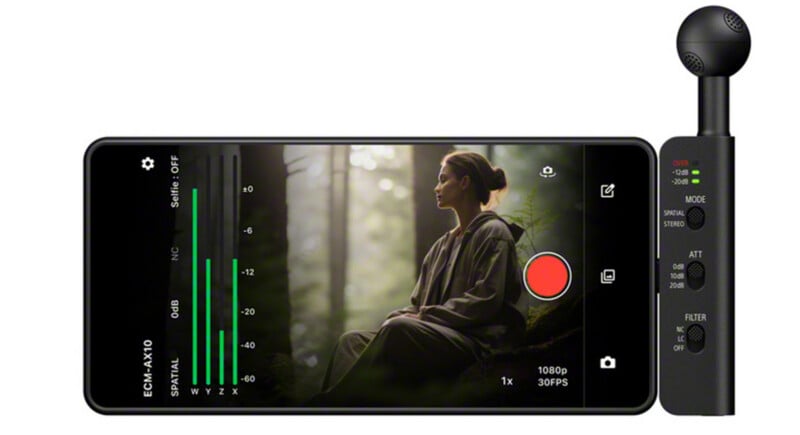
The mic is designed to easily attach to both Apple and Android smartphones and gives three ways to capture sound: Ambisonics recording for spatial audio production, binaural recording for an immersive headphone experience, and stereo recording for everyday videos and social content.

“Ambisonics” is a recording type that works with Sony’s Spatial Audio Video Tool app, which allows users to publish using the Eclipsa Audio format, which is supported by YouTube. Binaural uses Sony’s proprietary spatial audio technology (which is also used for 360 Reality Audio) to capture audio that is optimized for listening on headphones with three-dimensional sound support. Finally, stereo recording is the more traditional and most versatile format that works with just about everything.

“To help ensure the ECM-AX10 delivers an authentic and immersive listening experience, Sony Electronics worked with Sony PCL, a Sony Group company with extensive expertise in planning and producing content and spatial experiences. Leveraging the knowledge it has developed through post-production, where video and audio are refined into their final form, Sony PCL supported the sound quality tuning of the microphone,” Sony says.
Sony is particularly proud of the technology and capability of the microphone, but it remains to be seen if that will resonate with the target audience of users, which looks to be those aged 25 to 35 who capture and share content mainly with mobile devices. Words like “binaural,” “ambisonics,” and “Eclipsa” aren’t exactly in the modern parlance.
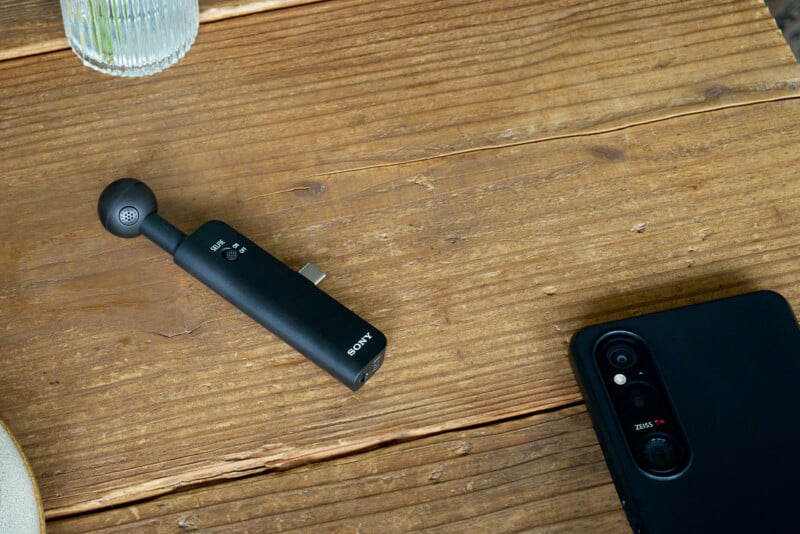
The Sony ECM-AX10 is available for $250.
Affiliate Disclosure PetaPixel articles may include affiliate links; we may earn a commission if you buy through one.