The RugOne Xsnap 7 Pro Is Both a Smartphone and an Action Camera
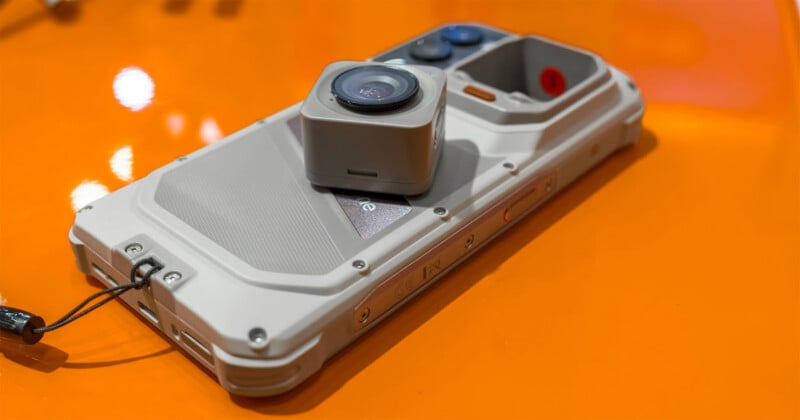
The RugOne Xsnap 7 Pro is unlike any other smartphone you’ll come across because it has an action camera that snaps off its body. Unveiled at IFA 2026 in Berlin last month and released this month, it arrives as an adventure-oriented sub-brand of Ulefone, known for making rugged phones.
The Xsnap 7 Pro’s ruggedness extends to its small detachable action camera, which you can wear, mount, or hand off entirely, while the main phone keeps shooting on its own. It’s an ambitious attempt at something truly novel, which is probably why it begins on Kickstarter with an early-bird price of €799, with global retail availability planned for October at a suggested price of $999.
The Idea Behind a Phone That Splits in Two
Action cameras from various brands, including the Insta360 Go series, DJI Osmo Nano, and even the Dreame Leaptic Cube, continue to experiment with separating the camera from the body. Doing it on a working phone feels pretty strange at first, but this isn’t a concept; it’s a finished product on the eve of launch.
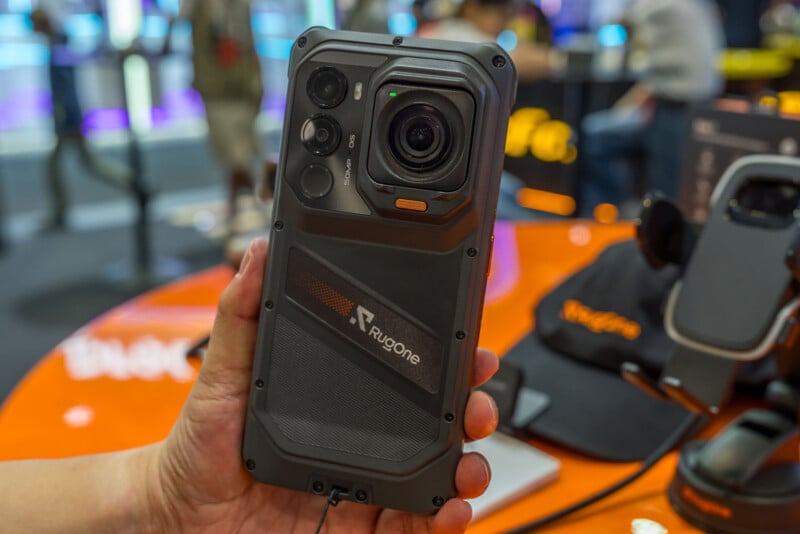
It’s also unconventional by most smartphone standards, since it looks like a phone with a thick, rugged case. Measuring 6.79 x 3.29 x 0.75 inches (172.5 x 83.4 x 19.1 mm) and weighing 477 grams (with camera attached), this is the opposite of sleek and svelte. The cube-shaped camera module sits flush in a recess on the back of the Xsnap 7 Pro and weighs 39 grams on its own, with a strong magnet that slips into the pocket on the rear, where it also recharges.
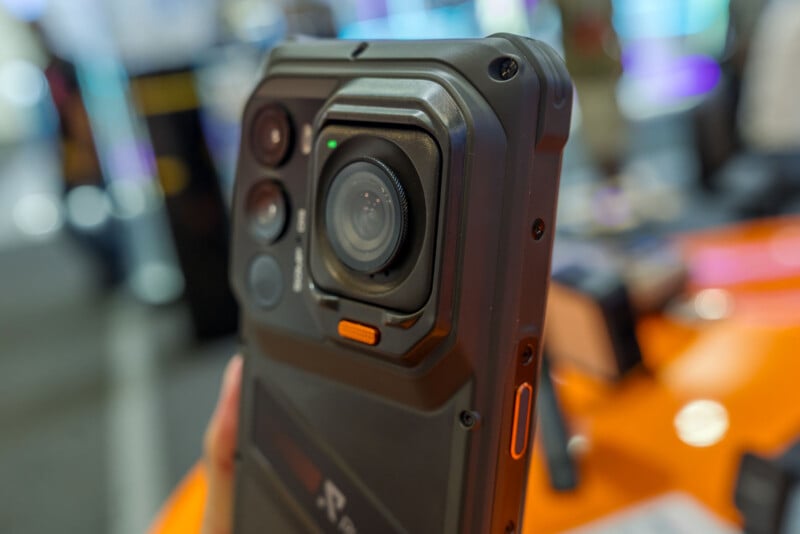
Pulling it out requires grabbing the camera by the lens and using a decent amount of force. That protruding lens is actually a lens cap that unscrews and can be replaced. There aren’t any filtered versions of these covers yet, but RugOne is considering them going forward. Making them replaceable makes sense since they’re designed to take some punishment, but if they ever scratch or crack, a simple swap takes care of it.
RugOne says the camera has a wireless range of up to 50 meters paired with the phone and the Xsnap Go app. That means a rider can start recording, clip the camera to a helmet, and control start, stop, and mode changes from the phone screen without touching the module itself.
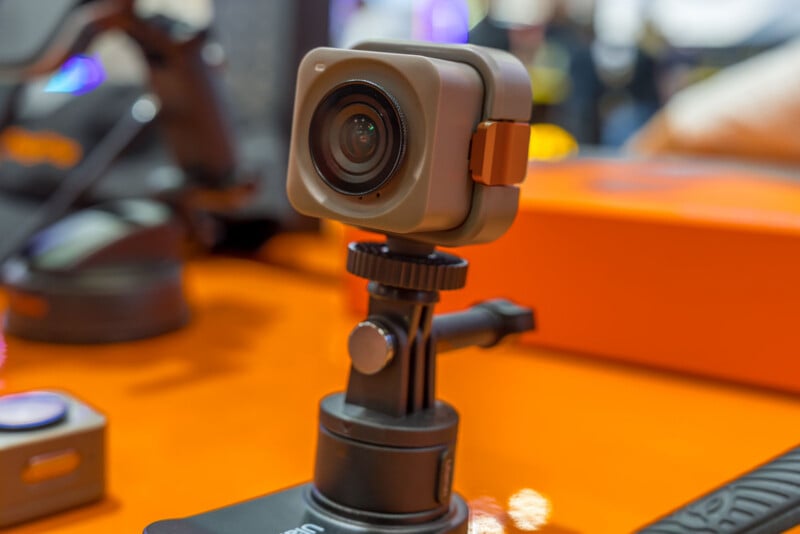
A big part of the value proposition is that this camera can act a lot like an action camera from other brands. Clip it to a helmet, chest harness, bike mount, or RugOne’s magnetic pendant accessory, and it stays stable through a dual-locking mechanism with physical latches, not magnets alone. But the rear magnets also make it easy to attach to a metal surface if you’re trying to capture something on the fly.
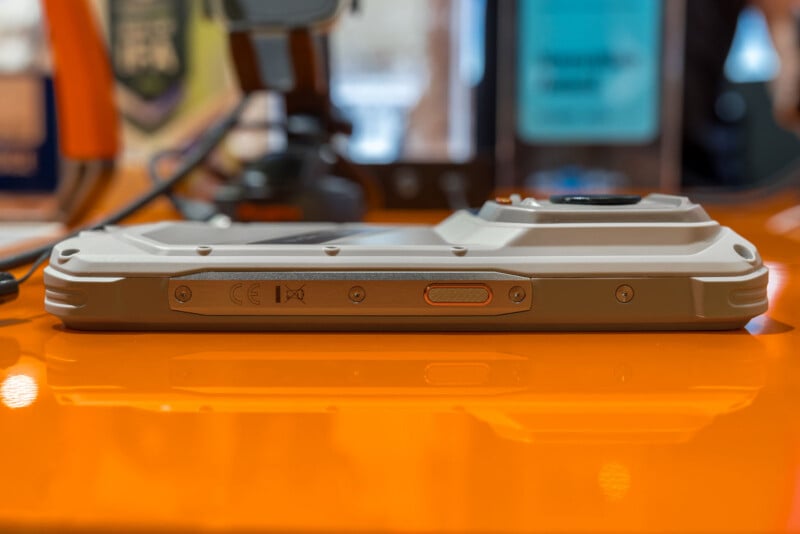
It also doesn’t need separate waterproof housing with IP68 and IP69K dust and water resistance, but RugOne rates it for five meters of submersion on its own, so you can dunk it and capture shallow underwater shots without a case, though a charging dock and a protective lens cap ship in the box for storage between uses. The fine print notes water protection may not be permanent and may decrease over time with wear and tear. Plus, the warranty doesn’t cover liquid damage, either.
What the Detachable Module Actually Shoots
As novel as this setup may be, the Xsnap 7 Pro is more modest when it comes to the imaging hardware inside the pop-off camera. It records at up to 2.7K resolution at 30fps, with a 133-degree field of view — so wider than a typical smartphone’s ultra-wide camera, yet not quite as wide as a full action cam fisheye. It uses a Type 1/2.7 image sensor, a more dated size common in older action cameras rather than in current flagship phones. RugOne reps say it can take still photos, including with an HDR Photo mode, but it’s tuned more for video.
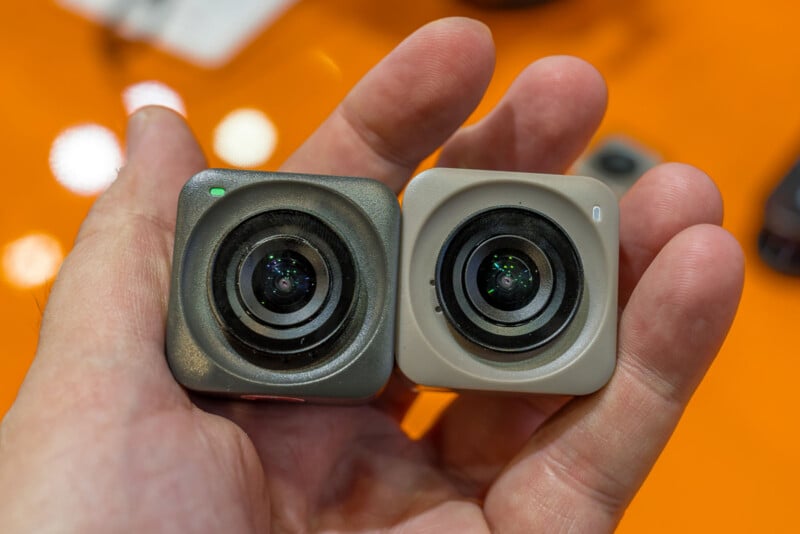
RugOne built a software layer on top of all this to support the camera. SteadyX electronic stabilization helps keep things smooth, though it comes with an in-sensor crop; Horizon Lock keeps the frame level when the camera tilts or twists, and timelapse features add some variety.
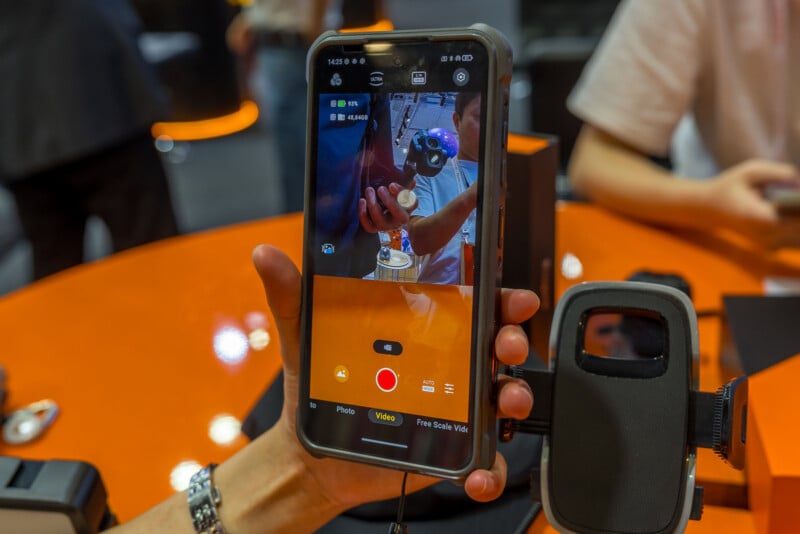
When detached, the separate camera can run for up to 40 minutes of continuous shooting, storing the footage on 64GB of built-in memory. The camera module has no microSD card slot, but the phone does.
The phone also has a monstrous 9,300mAh battery that can recharge the camera module roughly 20 times over, which RugOne suggests is enough for about 800 minutes of total recording time across a multi-day trip without access to an outlet.
The Phone’s Other Cameras
The Xsnap 7 Pro has a wider camera array, starting with the 50-megapixel main wide camera that uses a Type 1/1.57 Samsung Isocell GN9 sensor with OIS. While not the biggest or best sensor, the size sits closer to an upper mid-range phone compared to the smaller sensors typically found in rugged phones.
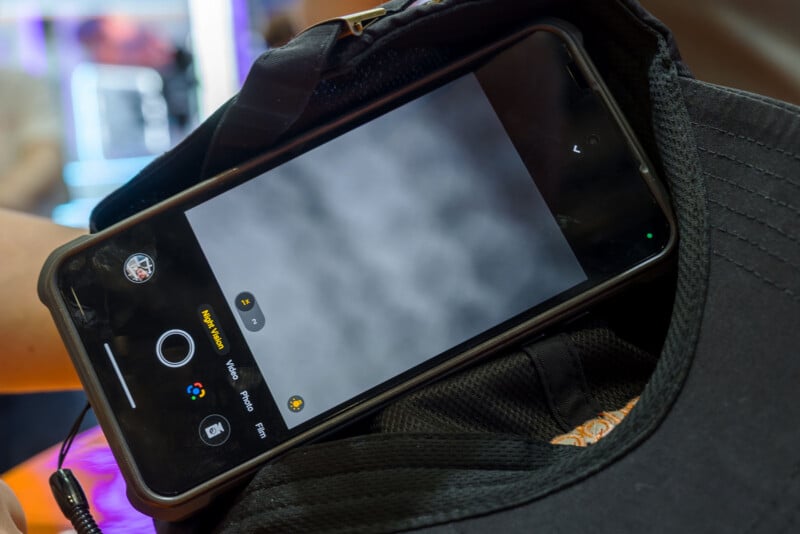
RugOne also includes a 64-megapixel infrared night-vision sensor, likely an OmniVision OV64B1B, backed by dedicated infrared LEDs rather than the phone’s regular flash. It’s a true IR-assisted camera designed to produce a visible image in conditions with no ambient light at all, and based on the brief demo I saw, it looks a lot like a night-vision security camera or wildlife trail cam. The brand leans hard into this camera as a way to “master total darkness” for anyone hiking, camping, or working after sunset who wants situational awareness more than a polished photograph.
Because it depends on active infrared illumination rather than passive light gathering, its effective range and image quality will likely depend heavily on how strong the onboard IR LEDs are, something that’s hard to gauge without fully testing it.
The Rest of the Xsnap 7 Pro
The phone has a nice 6.67-inch AMOLED display running at 1.5K resolution (exact pixel resolution unconfirmed) and a 120Hz refresh rate, plus Gorilla Glass Victus protection. It runs on MediaTek’s Dimensity 8400, a solid level below a flagship chipset that should be able to handle 4K-adjacent video encoding and the app-based control of the detachable module. It comes with 12GB of RAM and 512GB of storage, plus a 9,300mAh battery.
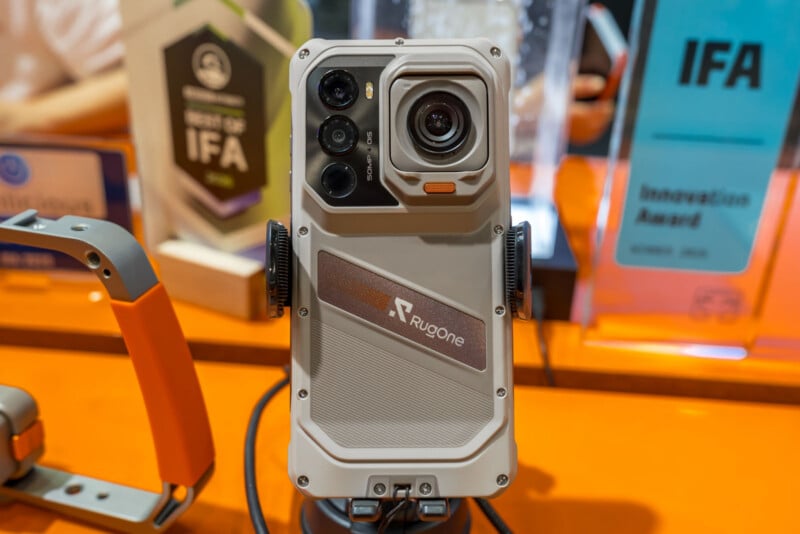
On top of the dust and water resistance, there’s MIL-STD-810H shock certification, with RugOne claiming it’s also shockproof from 1.5 meters. The phone ships with Android 16 and, as a global release, will include Google Mobile Services. It’s not entirely clear how, or if, the camera system will work with Google Gemini or another voice control. RugOne hasn’t revealed any way of doing that.
The RugOne Xsnap 7 Pro tries to hit two birds with one stone by combining a phone with an action cam. That pairing comes with trade-offs that begin and end with its sheer size, but the idea behind it is certainly a head-turner one way or another.
While limited to 2.7K footage and a small sensor, the Xsnap 7 Pro seems to make it possible to get a shot from a helmet or bike mount without carrying a second device. It’s a question of how durable and reliable this duo will be in the field with repeated use and outdoor abuse once units start shipping this month.