Special Feature
Two Photographers Spent a Year Planning the Perfect Eclipse Photo and Success Came Down to 30 Seconds
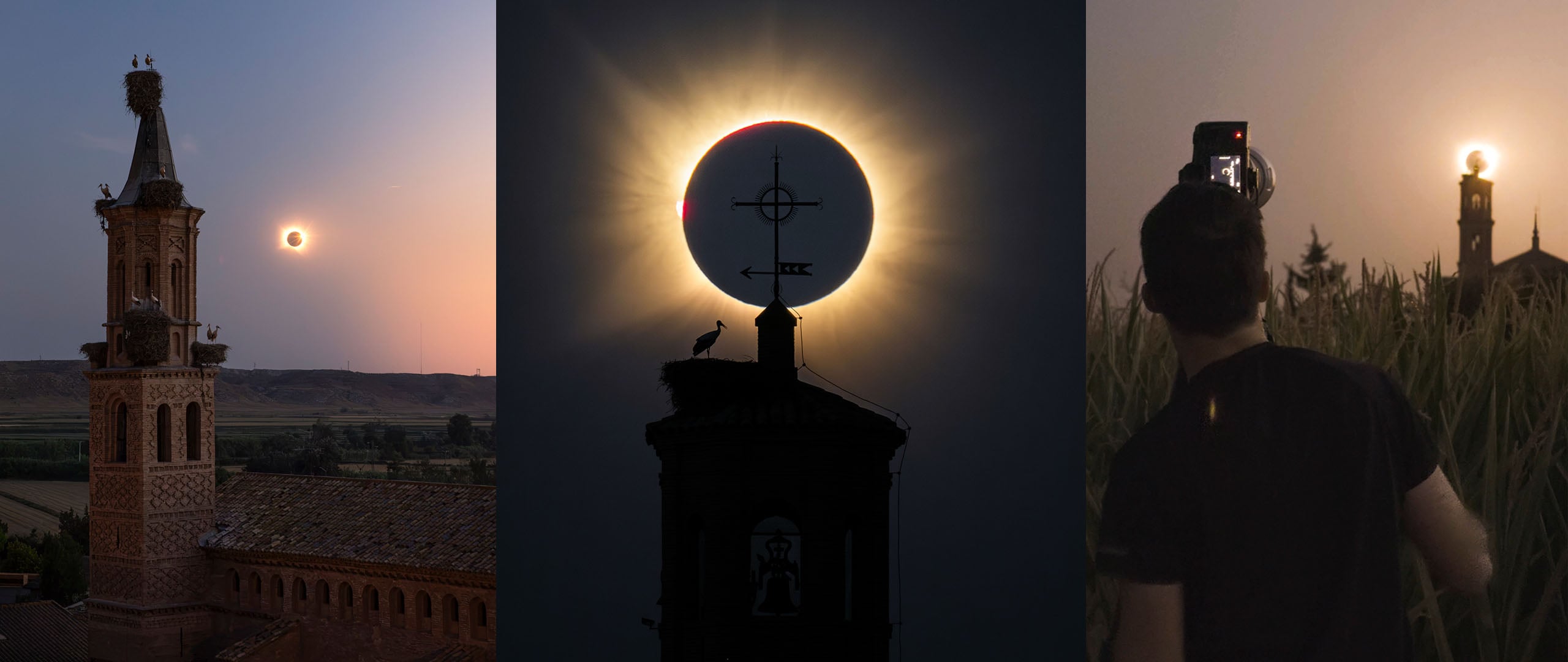
Canadian photographer Liron Gertsman and Texas-based bird photographer Tobias Yoder traveled together to Spain to try and pull off a total solar eclipse photo years in the making. Their success came down to the wire.
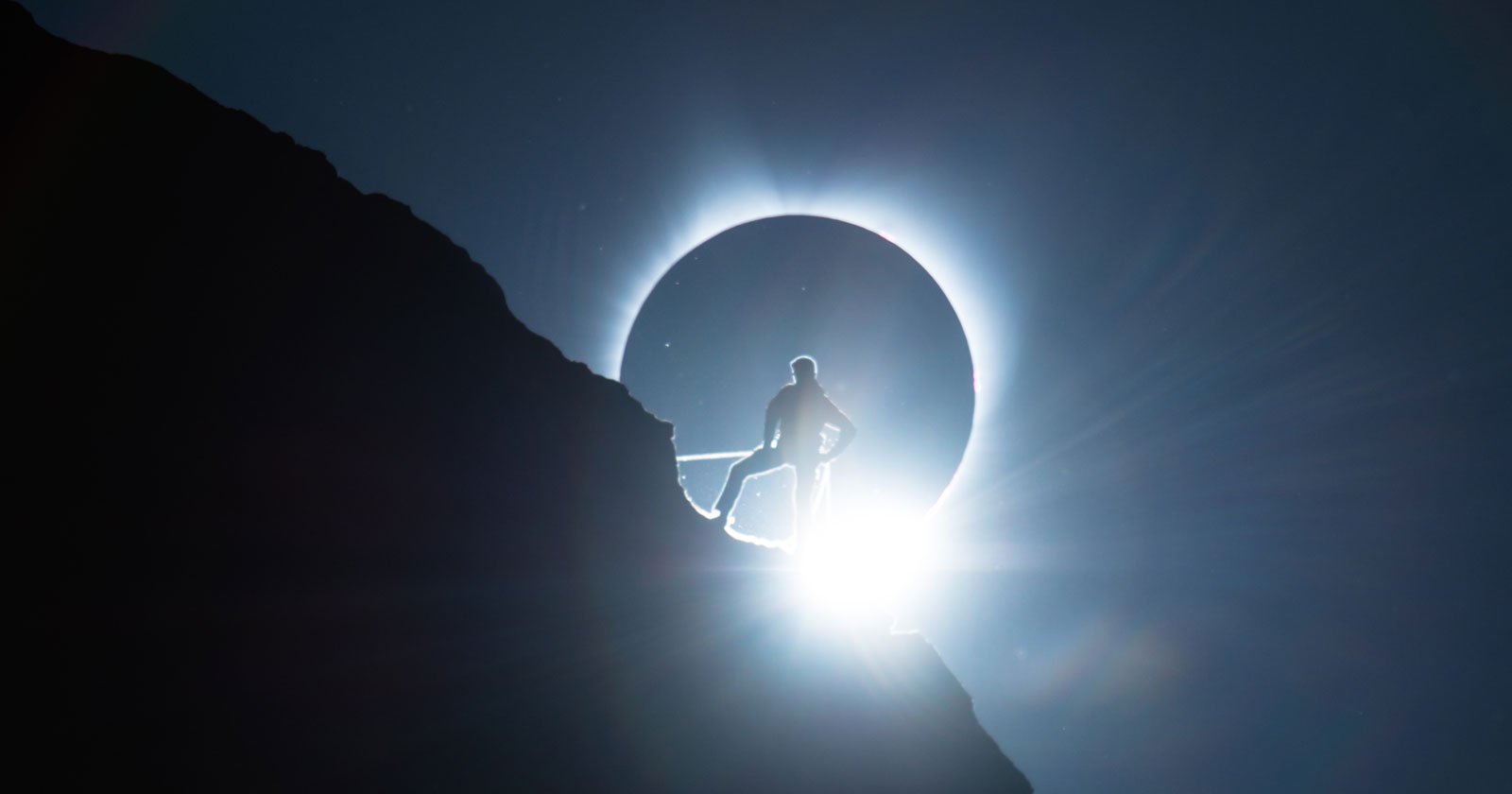
It wasn’t Gertsman’s or Yoder’s first foray combining their love of bird photography with a total solar eclipse, either. In 2024, Gertsman delivered the award-winning photo, The Frigatebird and the Diamond Ring, which he discussed with PetaPixel following the eclipse. During that same total solar eclipse, thousands of miles away, Yoder coincidentally captured a similar shot.
Eclipse Buds Become Photography Friends
While the two photographers had exchanged a few messages on social media before the 2024 total solar eclipse, they didn’t know each other well. After seeing each other’s eclipse photos, though, they knew they should team up for the next big one in Spain.
“Me and Liron, we both shot birds with eclipses in 2024, and it was the next day that we were like, ‘We should do something together in the future,'” Yoder recalls to PetaPixel. “We were like, ‘Alright, say in 2026, let’s do it.'”
Within a couple of days following the total solar eclipse on April 8, 2024, Gertsman and Yoder were officially photography friends, and the gears were turning about what they were going to do together in 2026.
Photography is typically a solo endeavor, and cooperation between photographers, especially professionals in the same genre, is rare. But the experience of working together was fantastic for Gertsman and Yoder alike.
“As far as I’m aware, we’re the only two bird photographers to have done that [eclipse shot] in 2024,” Yoder says. “We both knew what it takes. We knew that we’re on the same wavelength. It was just a natural progression [to work together].”
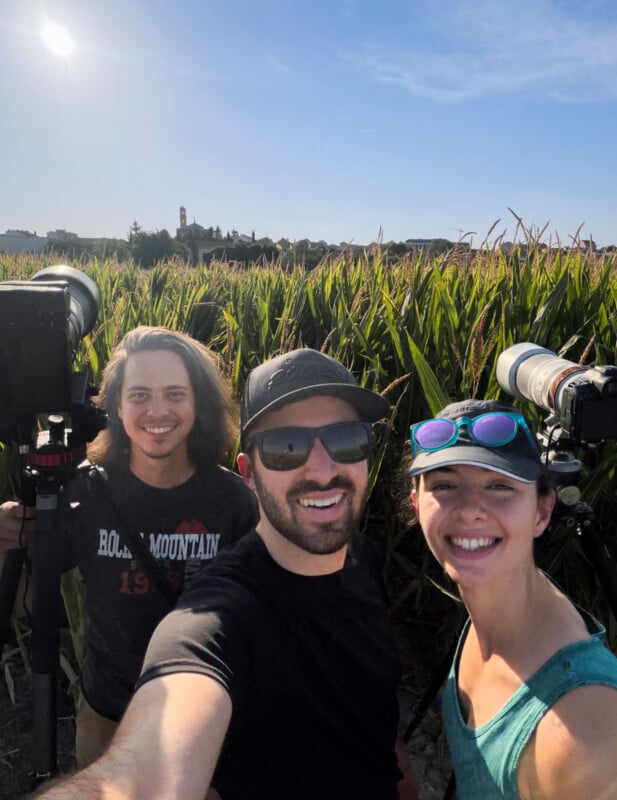
“He’s a really great photographer,” Gertsman tells PetaPixel of Yoder. “We both got a shot [in 2024] and became friends through this eclipse-chasing phenomenon after that.”
Since 2024, Gertsman and Yoder have gone on multiple other photography trips together, including to the Pacific Northwest and Hawaii.
During those trips and many other times between, Gertsman and Yoder have been planning the total solar eclipse shot in Spain that they, fortunately, completely knocked out of the park. But that success, which undoubtedly required a bit of luck, also required a huge amount of planning.
“Tobias and I have been doing research for literally a year, maybe more,” Gertsman says. “The main thing we were doing was looking at maps of Spain and online databases for wildlife and birds to pin the locations of as many stork nests as we possibly could in the path of totality of the eclipse.”
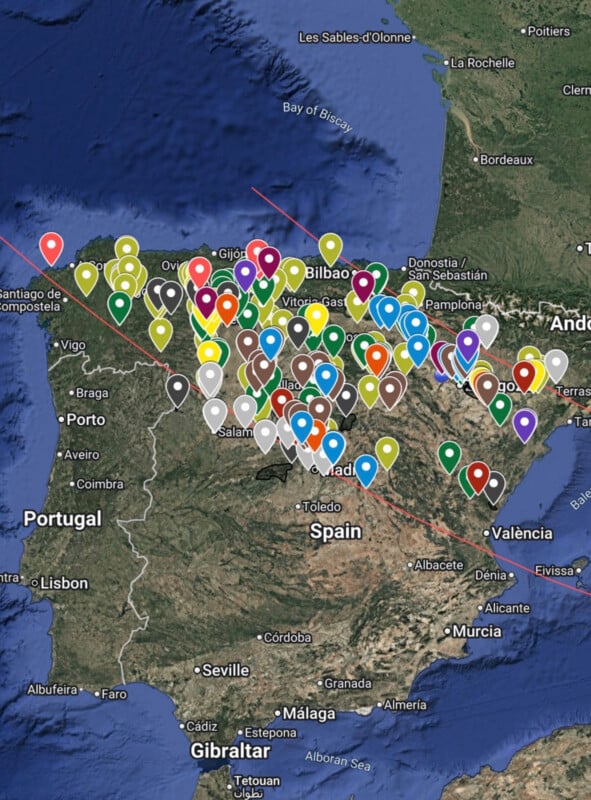
The duo pinned hundreds, if not thousands, of nests — mostly storks, but other nesting birds as well.
The white stork (Ciconia coconia) was the photographers’ primary target, as Spain is very well known for its stork population. The country is home to the largest breeding population in Europe, with over 50,000 breeding pairs. They are an iconic bird in the Spanish skies, and their nests dot the country’s landscape.
Church bell towers and castle towers are also iconic in Spain, so Gertsman and Yoder knew they wanted to combine storks with towers.
But finding the right stork and the perfect tower was no easy feat.
The photographers arrived in Spain over a week before the total solar eclipse, rented cars, and set off in opposite directions to scout all the potential locations they had spent a year identifying.
“We split up and each took half of the map, and then we just drove nest to nest,” Gertsman explains. “Checking for one, does it align with the eclipse nicely and is there somewhere we can stand that would align with the eclipse? And two, are there storks present?”
The stork question is more complicated than it seems. It’s one thing for storks to have lived at a nest during peak breeding season, but it’s another thing for them to still be around now. It’s also another matter whether they are in their nest during the eclipse, which happened around 8:30 PM local time.
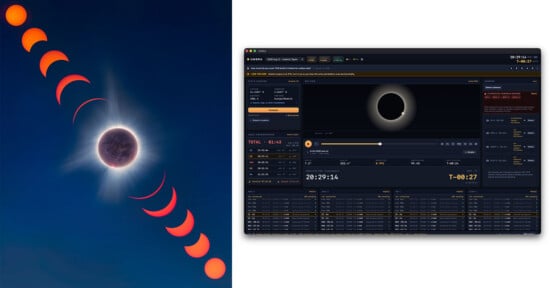
Both Gertsman and Yoder used a web app that Yoder built himself to help scout locations. The photographer has a background in software development, so he could create a tool he could use out in the field. Compared to something like PhotoPills, which Gertsman and Yoder also use, Yoder’s custom app lets him zoom in more and get a virtual Sun and eclipse to scale in the frame.
“I can get more exact compositions lined up,” Yoder says.
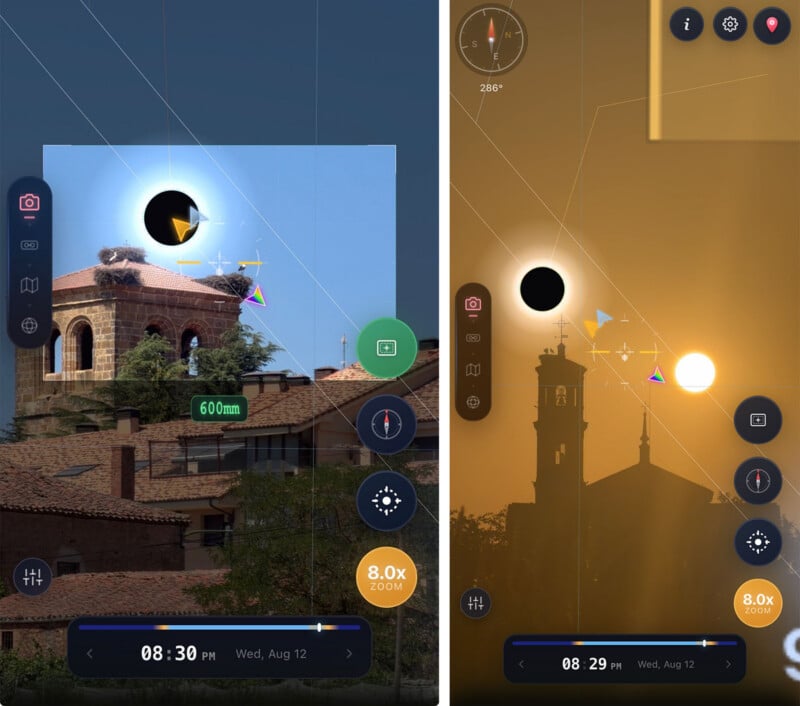
After finding the spot the duo ultimately settled on for their eclipse photos on Google, Yoder showed up to check the alignment and found it was basically perfect.
When checking his composition and the size of the Sun in his app, Yoder quickly realized that it was “gonna be good.”
He sent the photo through to Gertsman, who swiftly agreed it was the spot.
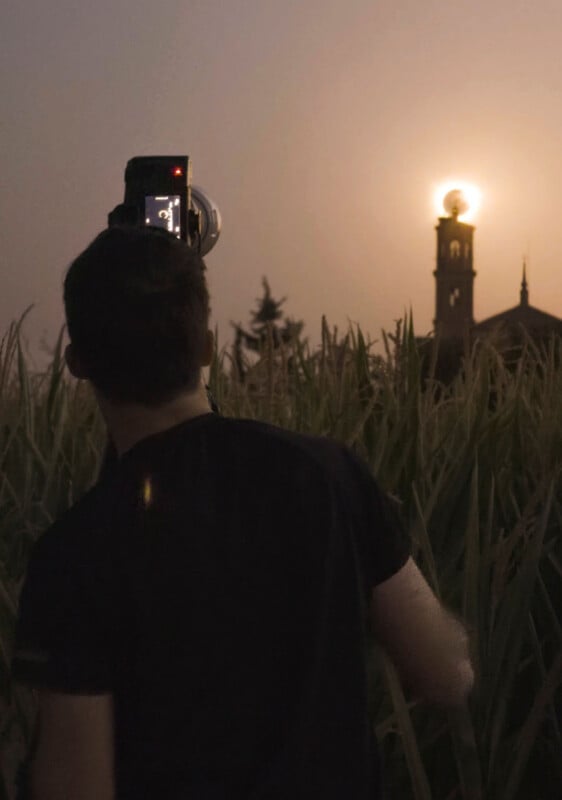
“The alignment was perfect,” Gertsman says. “It wasn’t just that it was a tall church belltower with a stork nest, but the church was perfectly aligned.”
As both photographers say, it’s hard enough to find a belltower in a good location for the eclipse at the right height, in an accessible area with a good background. Then, add that they needed an active stork nest with a bird likely to be there during the eclipse, and the complications compounded.
Of the hundreds, maybe thousands of possible locations, not very many had any promise at all to the photographers when they were actually there on the ground in Spain. A proverbial needle in a haystack, if the haystack was spread across hundreds of miles of Spanish landscape.
“Almost all of the other similar bell towers and things of that sort were not perfectly at a profile like that,” Yoder says.
“And just because of how good it was, don’t think either of us ever had any doubt that this was the place we wanted to try,” Gertsman adds.
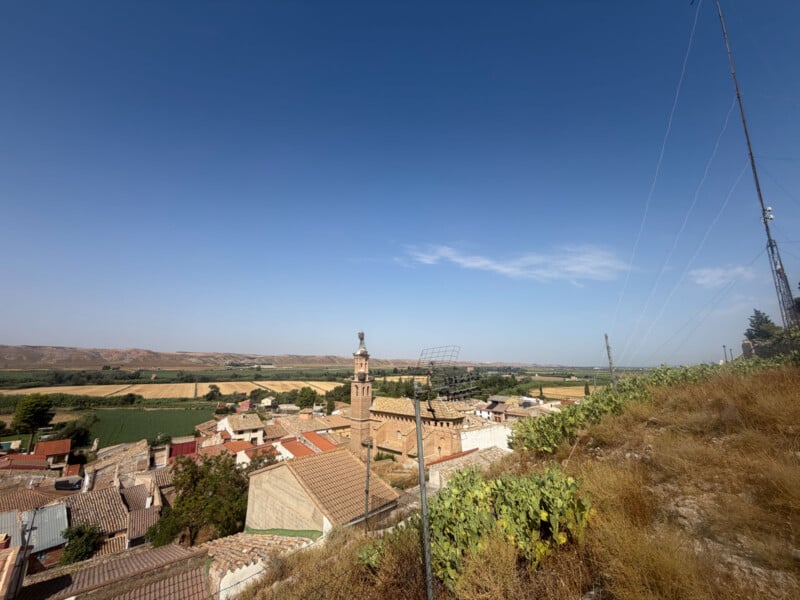
The photographers had identified potential backup spots in the event the weather didn’t look promising, and knew of areas with more stork nests that would give them a better chance of getting a bird in the frame. However, the priority location was so good they decided they would take the risk and live with the results.
“We were willing to take a riskier position for this one, mostly because we’ve done it before and we wanted to set the bar high,” Gertsman says. Tobias and I had talked a lot about this topic. Over the past two years, we’ve done a lot of photo trips together, and we always kind of succeed.
An optimistic Gertsman was comfortable with the risk and knew that even if things didn’t work out as he wanted, he would have had a good trip and a good experience in Spain with his girlfriend, Victoria, and his photography friend, Tobias.
“I was going to enjoy an eclipse regardless of what happened photographically,” he adds.
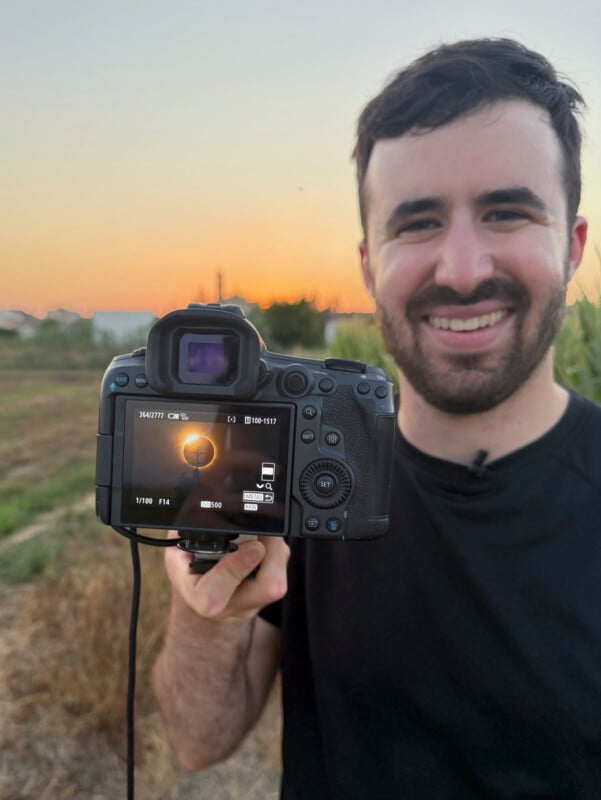
However, he says that when you’re so focused on the vision, and it seems like it isn’t going to happen, it’s a very unpleasant feeling.
“I was still grateful we were there. I was willing to accept failure, but I was certainly not looking forward to it.”
Yoder laughs that he “probably had more optimism than I had any right to have.”
A Literal Last Minute Success
While it’s easy for the photographers to feel so good about their shots after the fact — their plans all worked out perfectly — it was dramatic up until the very last moment.
Despite over a year of planning and countless hours of research, work, and scouting, many factors were still outside their control.
They had the perfect location, which they knew would look good during the total solar eclipse, but they didn’t know whether the weather would cooperate. They also didn’t know if the stork would actually be there at the right time.
After choosing their location, Gertsman and Yoder visited the stork nest three nights before the total solar eclipse. Two of those three times, the stork was nestled in its roost before 8:30 PM, the time of the eclipse. One time, however, it was late.
Gertsman was pretty sure that because the partial solar eclipse would darken the skies, the stork was probably more likely to arrive earlier during the big event than too late. Yoder, as he admits, was more optimistic than he should have been.
But in the minutes before totality, the bird was nowhere to be seen.
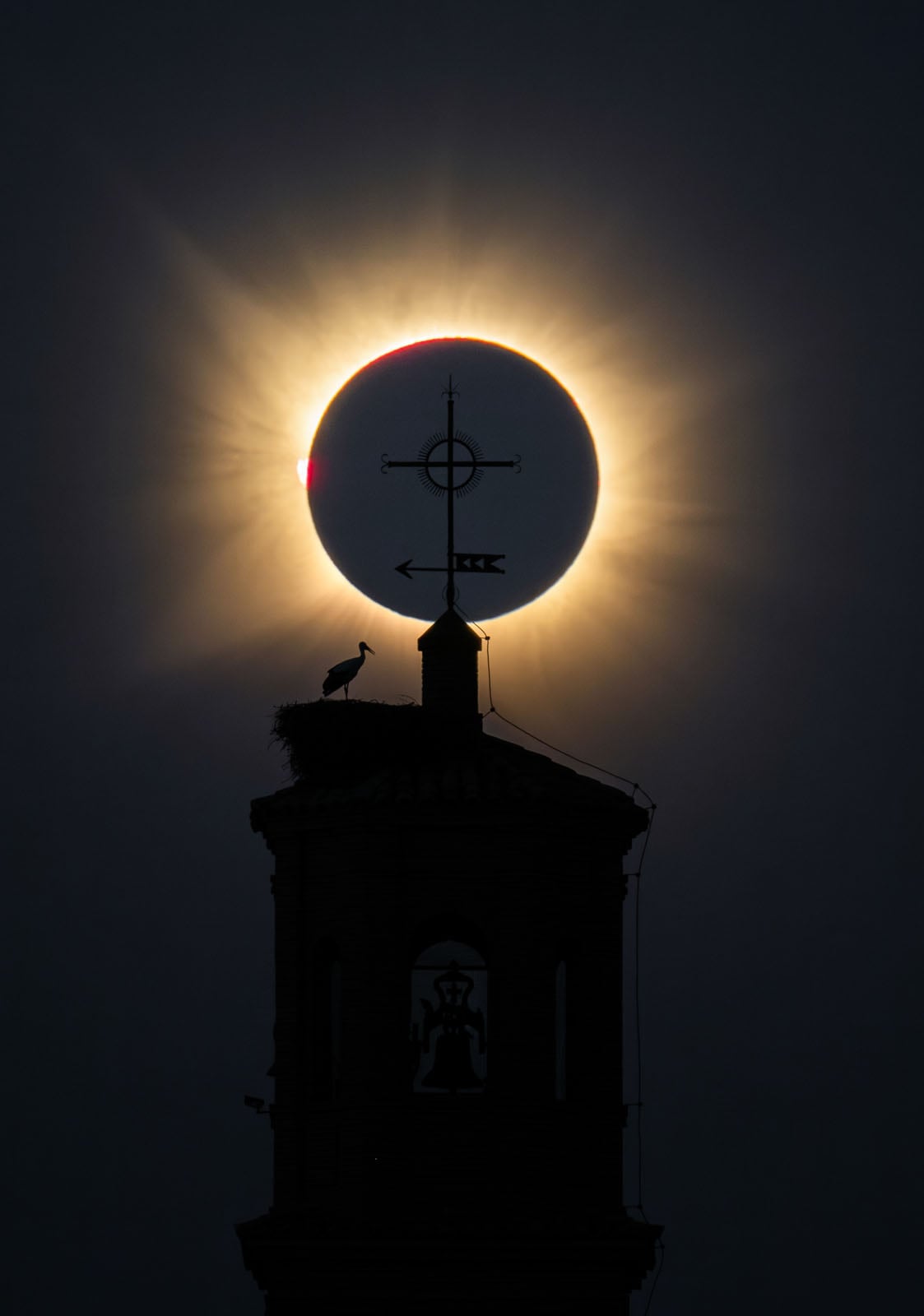
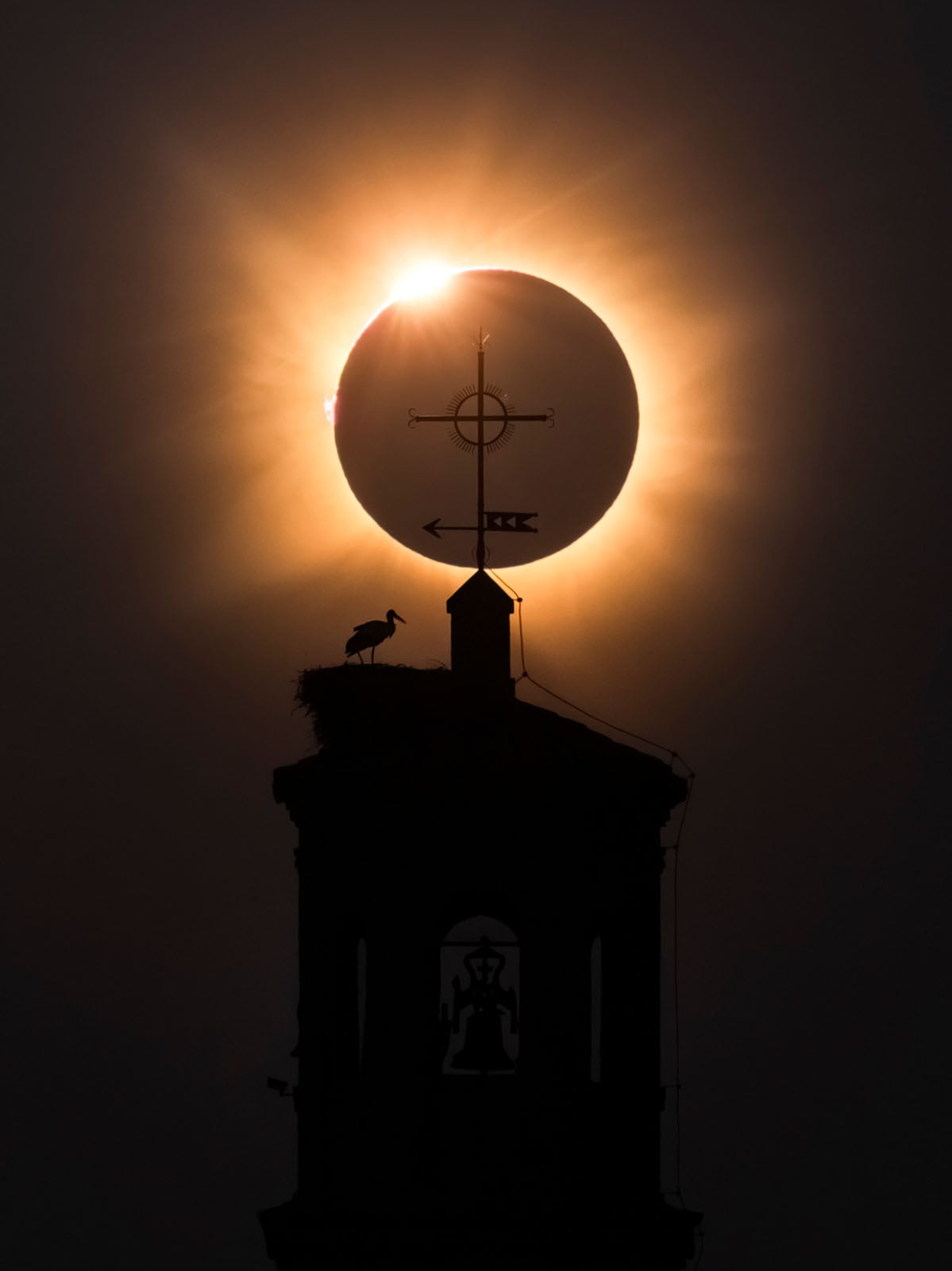
“We spotted the bird flying in about 90 seconds before totality,” Gertsman says. “It landed on its nest about 30 seconds before totality.”
All of the photographers’ plans could hardly have been closer to falling apart at the last second.
“Two minutes out, I was starting to feel really iffy,” Yoder says. “But I really did believe with how dark it was getting, surely, the bird would return to its nest. I mean, it has to. That’s where it sleeps, right?”
“It just felt like it had to be on its way. But we don’t know where it is.
“Once we were just a couple of minutes out and our bird was nowhere to be seen, I started thinking, ‘Okay, we probably flew too close to the Sun here. This isn’t going to happen.'”
But then they saw it off in the distance and thought it must be their bird. It was coming straight toward the tower.
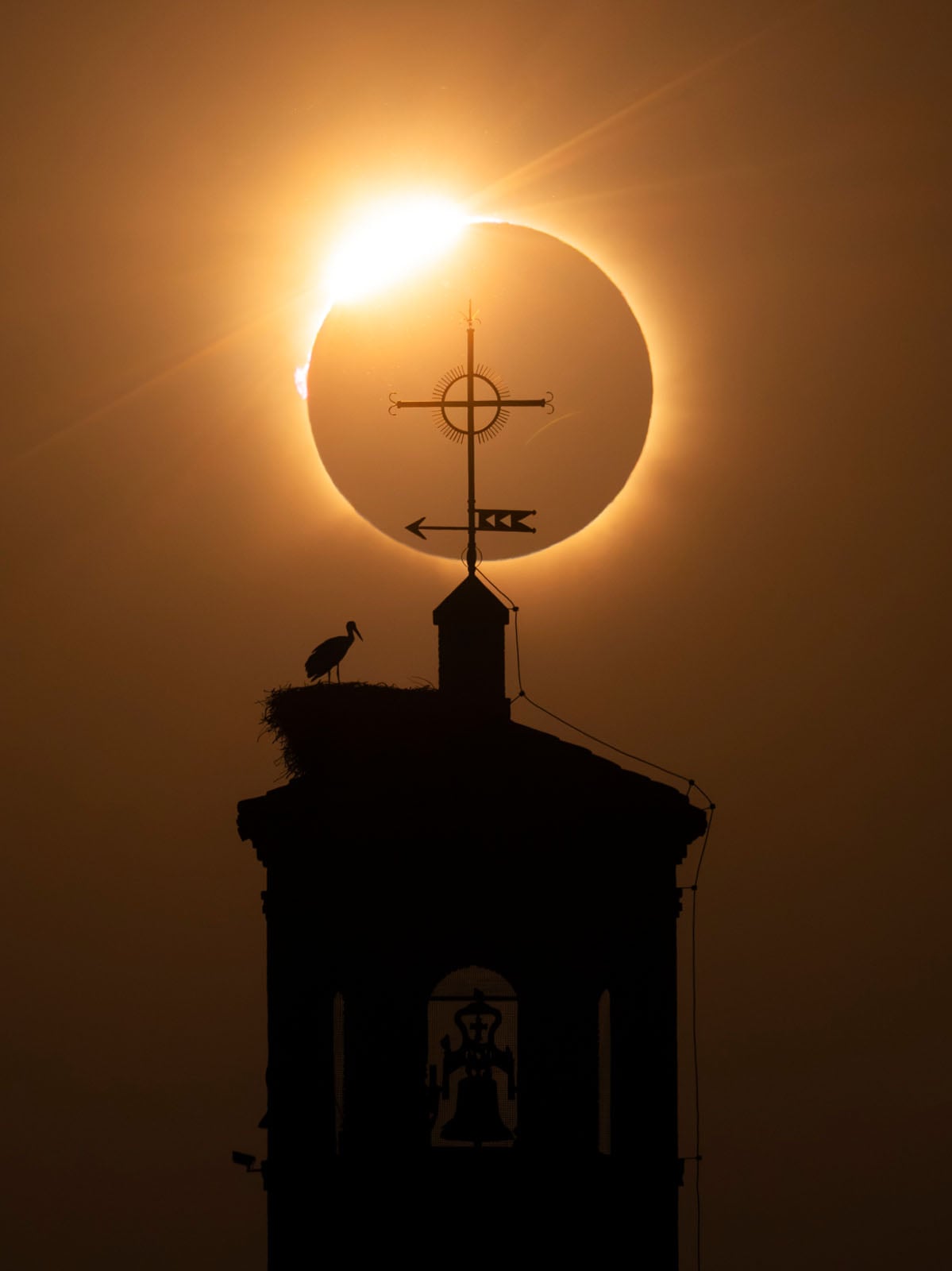
“It was definitely stressful. I’d be lying if I said I didn’t have a knot in my stomach,” Yoder says. “By the time it landed, we could already see the outline of the corona. I mean, it was that close. It was crazy!”
“We decided that if it’s not cutting it close, we’re probably not setting the bar high enough for these really ambitious photos,” Gertsman says. “It finally felt like we set the bar at a spot where it was tough to clear. It was a real challenge.”
Kinda-Sorta Backup Plans
While Gertsman and Yoder fully committed to their primary photo location for the solar eclipse, they weren’t totally screwed if things went sour.
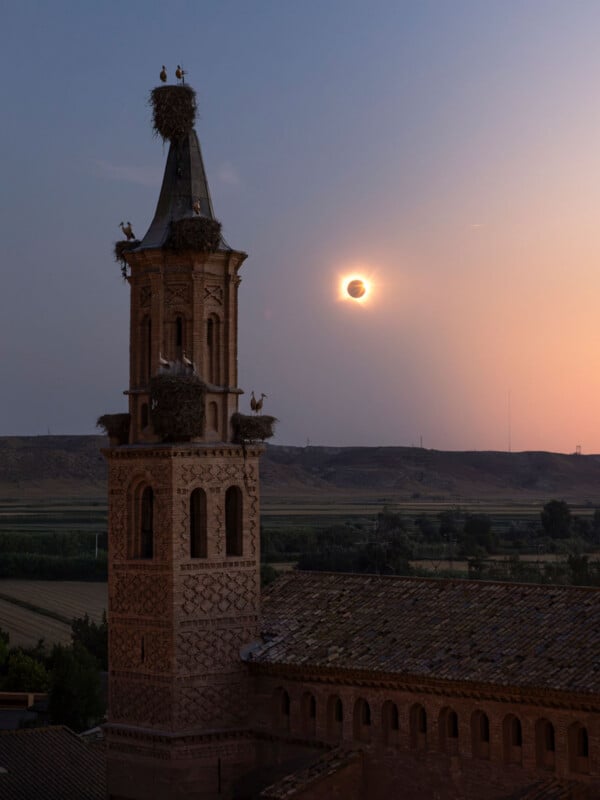
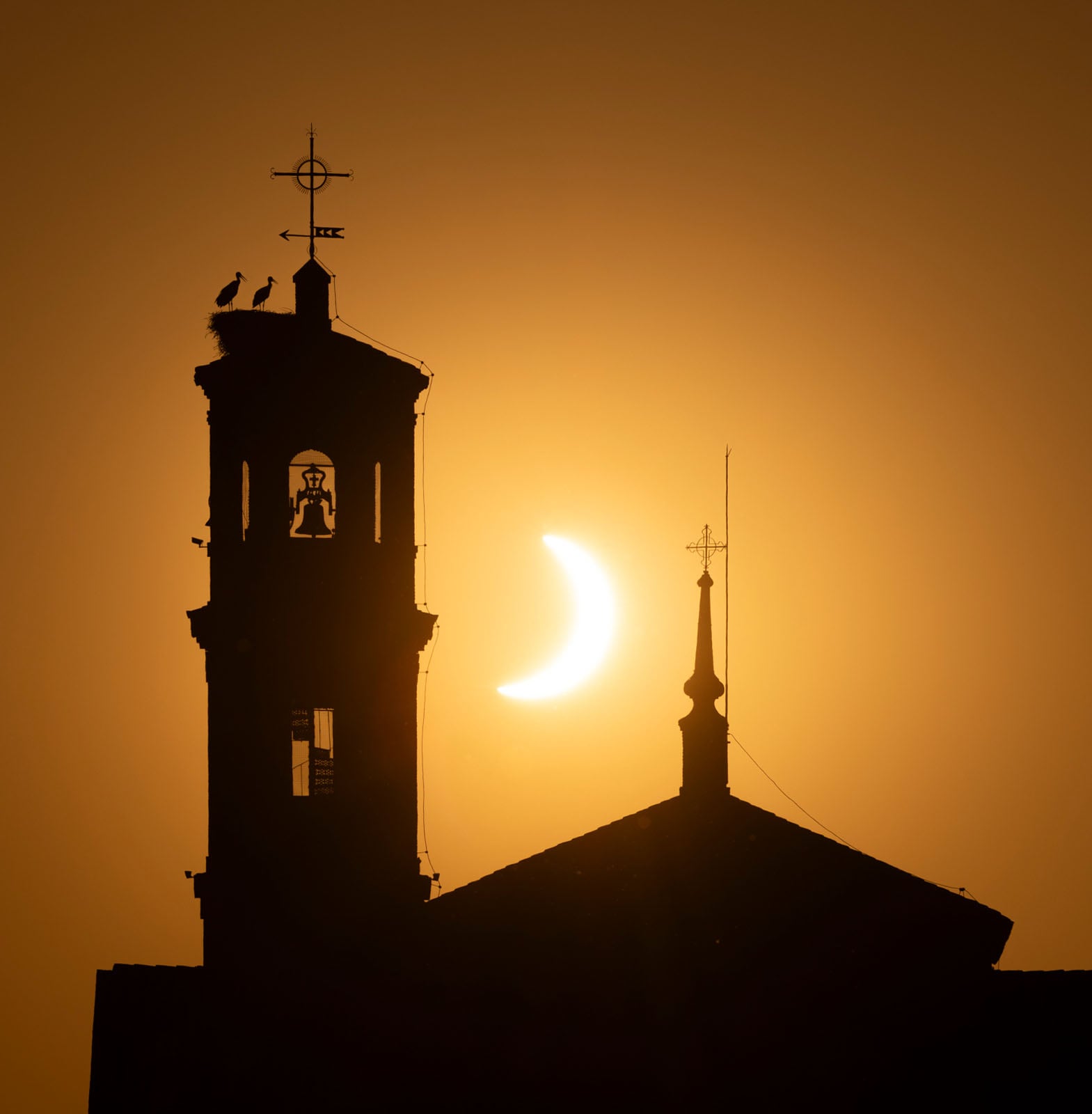
After arriving in Spain, they were discussing potential locations and scouted one with lots of stork nests that could work for a wide-angle shot. While their goal was a telephoto shot of a tower with a stork, they thought a scene about a hundred miles away would be nice, too.
The photographers set out on a mission at a used camera store, grabbed some older Nikon DSLR cameras with built-in intervalometers, and set them up at a backup site, hidden in some bushes and covered with fabric.
As it turns out, these backup cameras worked well and did capture some really nice shots. While Yoder hasn’t processed his B photos, Gertsman has and shared the one below.
“I was a little afraid of leaving expensive camera equipment unattended,” Gertsman laughs. “But I also wanted a second camera with me in case something happened with my main camera.”
So Gertsman bought a used Nikon D610 with a kit lens, ensuring he could keep his Canon EOS R5 II and R5 cameras with him at all times.
“We programmed them to start shooting about 15 minutes before the eclipse to start taking bracketed photos every five seconds or so. The cameras worked as intended, which was great.
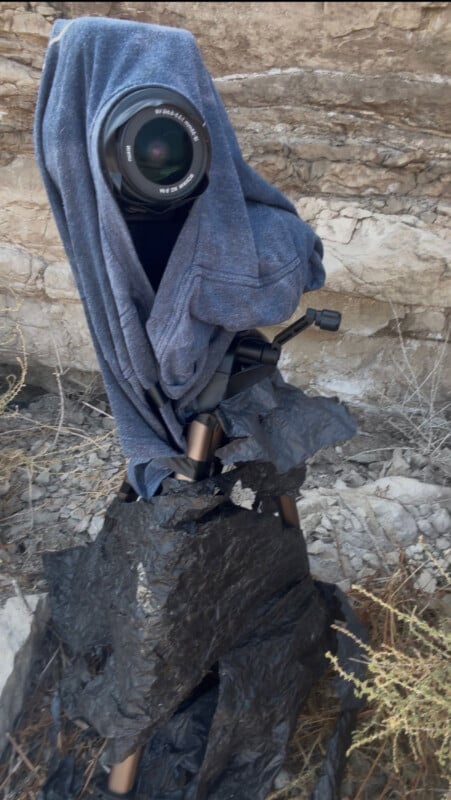
“They also didn’t get stolen. We didn’t think they would. We hid them pretty well. But yeah, it worked out.”
Speaking of equipment, Gertsman used his Canon EOS R5 II with his RF 100-500mm f/4.5-7.1 L IS USM lens for the total solar eclipse, shooting right near 500mm.
“The Canon R5 II is a better camera than the Canon R5, but there’s a couple things that it’s not quite as good at. And one of those things is the Canon R5 actually performs slightly better in low light, like during an eclipse,” Gertsman says. “However, it also doesn’t shoot in full 14-bit color with its electronic shutter.”
Gertsman wanted to use the electronic shutter during the eclipse to eliminate any risk of shutter shock during continuous shooting, so he used the R5 II to get better electronic-shutter image quality.
Yoder is a Nikon man himself, and used his Nikon Z8 with the Nikkor Z 180-600mm f/5.6-6.3 VR at 500mm as well.
Both photographers are extremely experienced with their equipment, which they each credit for their success during a chaotic event like a total solar eclipse.
Even with all that planning and practice, the moment itself goes by very fast. Totality was just 76 seconds, and it flew by.
“It goes by so fast. Even though we had done rehearsals with timers, to measure exactly how long everything would take, it felt like it went by three times faster,” Yoder says.
“We repositioned a few times during totality,” Gertsman says. “When you’re shooting at 500mm, the Sun moves quickly in your frame.”
The photographers had even practiced their side-by-side maneuvers, swapping spots to keep things lined up in their viewfinders.
“One of us is lined up shooting, and then while they’re shooting, the next one of us kind of goes to their other shoulder, and then by the time they’re not lined up, the next person is lined up and shooting, and then while you’re shooting, the other person goes around to your other shoulder. So that way we maximize the amount of time between the two of us that we would be perfectly aligned with the church,” Gertsman says.
“And we practiced this dozens and dozens of times beforehand, but one thing I think we didn’t quite anticipate is that during the eclipse, it got so dark that it actually became quite hard to see whether or not you were centered with the church in the eclipse.”
“It was so much of a blur, and I was really focused on the shots,” Yoder says. “It almost feels like a dream thinking back on the eclipse.
“It would have been nice to have a little bit more time to just take it in.”
A Magical Moment Born From Over a Year of Planning and Seconds of Luck
Ultimately, the planning, scouting, and, importantly, gambles all paid off for Liron Gertsman and Tobias Yoder last week in Spain. The Spanish eclipse dream shot they had in mind came true.
“It was a lot of work. It was a lot of fun,” Gertsman says. “There are no words to describe how spectacular a total solar eclipse is, and how special it is to see your plan come to fruition.”
For Yoder, he says that if he hadn’t lived the eclipse experience he did, with the stork showing up just seconds before totality, he’d write it off as cheesy fiction.
“For me, much of the magic in art and photography lies in what feels just beyond my understanding and control, and for that reason, the shots that barely happened are my favorites.”
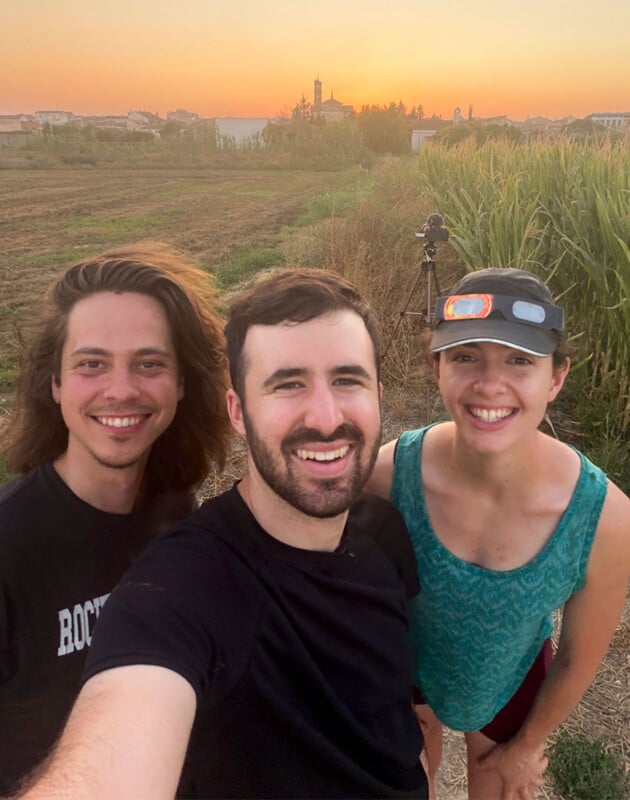
Image creditsLiron Gertsman and Tobias Yoder
Affiliate Disclosure PetaPixel articles may include affiliate links; we may earn a commission if you buy through one.