Heads Up, Photographers, the Perseids Meteor Shower Peaks Tonight
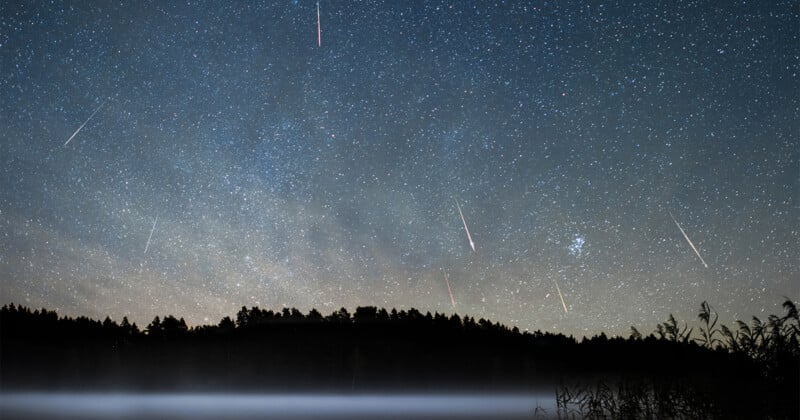
Although fortunate photographers in a narrow swath of Europe are being treated to a total solar eclipse today, everyone in the Northern Hemisphere (and the very northern part of the Southern Hemisphere) can enjoy the annual Perseids Meteor Shower right now. The meteor shower peaks tonight.
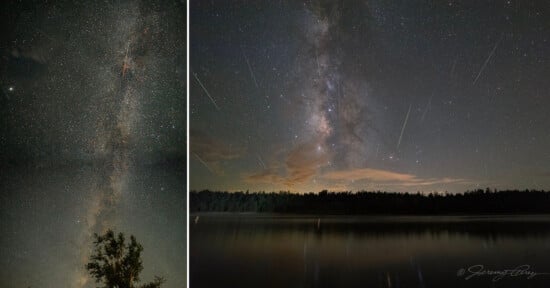
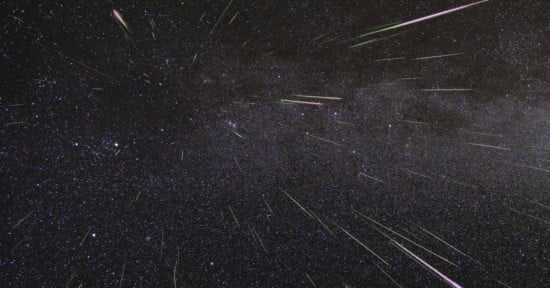
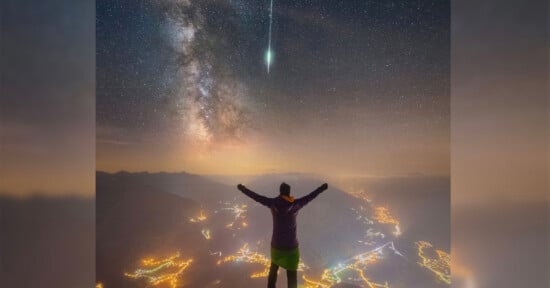
As photographers like Josh Dury have expertly shown over the past few years, the Perseids can be extremely photogenic.
While PetaPixel‘s guide to photographing meteor showers is 10 years old now, its lessons remain as applicable as ever.
“Photographing a meteor shower is more like photographing a time-lapse than traditional still photos. You can never anticipate where or when a meteor is going to streak across the sky,” wrote photographer Thomas O’Brien. “In order to catch them, you have to set up and take as many photos as you can throughout the night with a wide angle lens on the camera. If you leave the camera in the same position, you can use the resulting images for a short time-lapse clip in addition to the still images you can capture.”
O’Brien adds that it’s important to find a very dark area, bring a sturdy tripod, and use a remote release, whether that’s a cable release or a smartphone app with wireless control.
PhotoPills just published a detailed guide about photographing meteor showers in 2026, recommending that photographers really think about the overall scene for their photo, not just the meteors in the sky. The expansive guide has lots of tips for planning photos, finding the best location, setting up the camera, and even ideas for what types of photos people can try to capture.
Finding dark, clear skies is an essential component of good meteor shower photos. As NASA explains, under dark skies, viewers can see up to 100 meteors per hour during peak Perseids. These meteors are traveling an average of 37 miles (nearly 60 kilometers) every second, so the longer the shutter is open, the better a photographer’s odds of capturing a meteor streaking across the night sky.
While peak meteor conditions are tonight, August 12, and early tomorrow morning, the Perseid Meteor Shower lasts until August 24. There are plenty more opportunities to see them, even if the conditions in your area aren’t optimal tonight.
Image creditsHeader photo by Arnas Goldberg, licensed via Creative Commons CC BY 3.0
Affiliate Disclosure PetaPixel articles may include affiliate links; we may earn a commission if you buy through one.