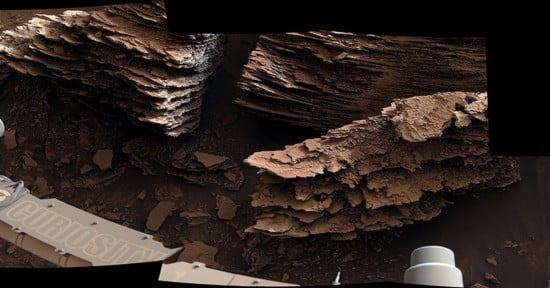
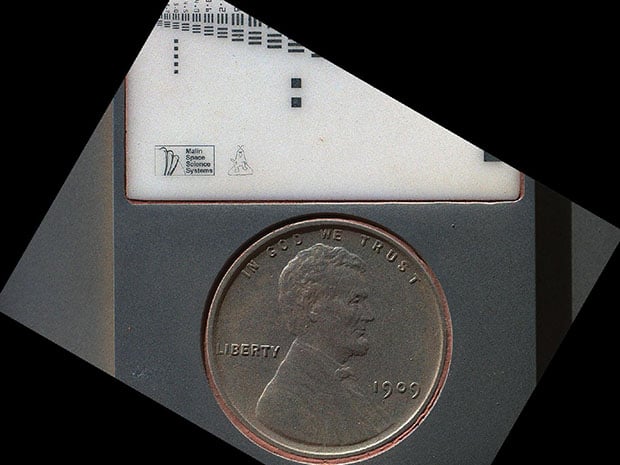
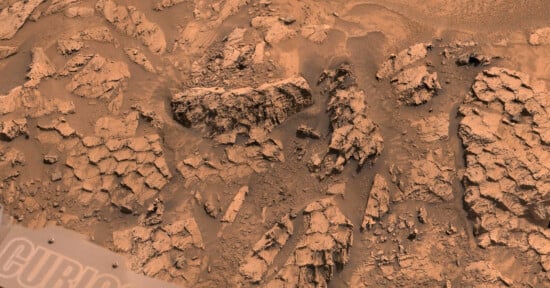
Curiosity Photographs a ‘Sea of Polygons’ on Mars
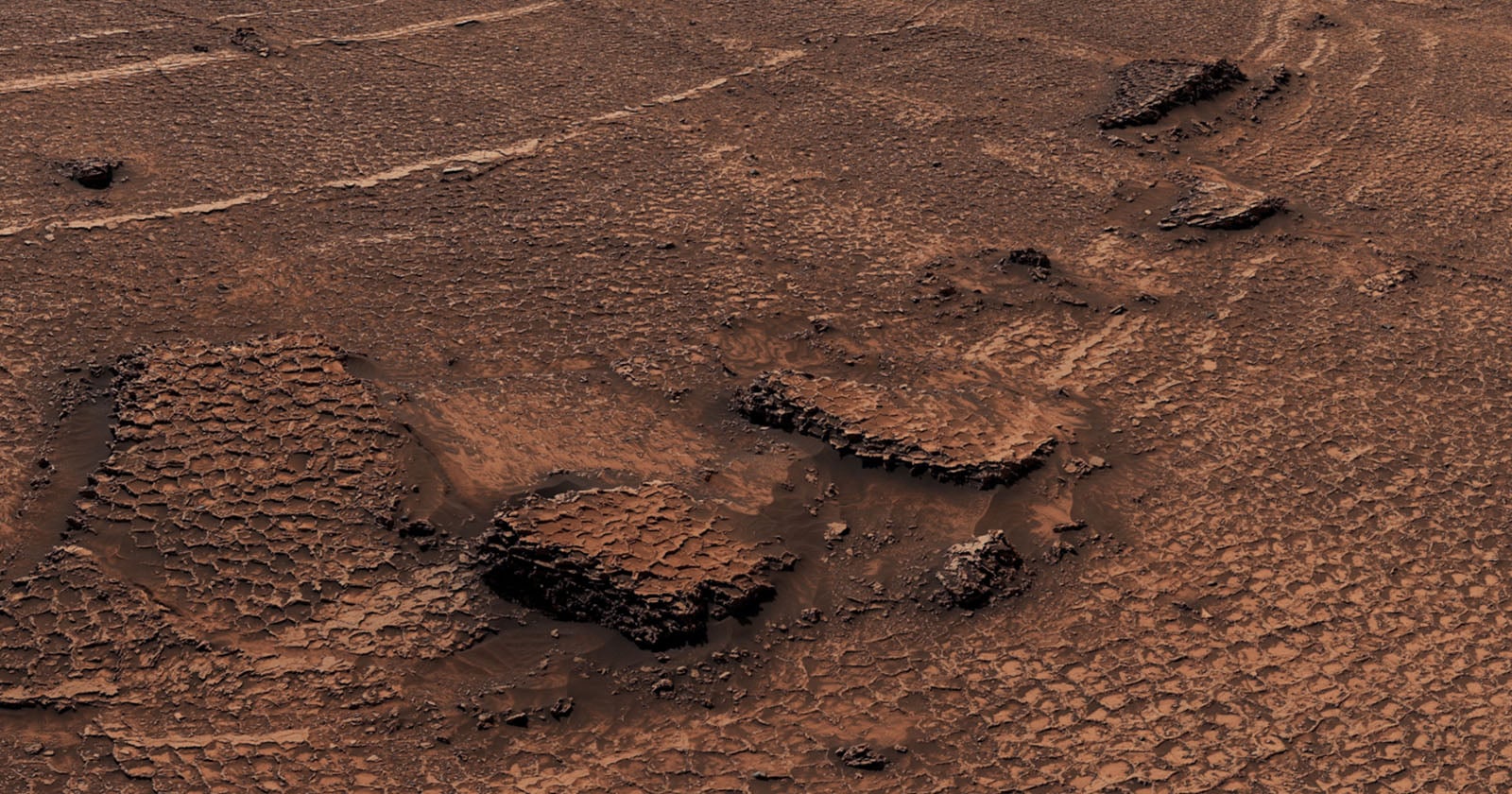
While NASA’s Curiosity Mars rover routinely finds interesting-looking rocks, including ones that looked like dragon scales just a few months ago, its latest discovery in “Valle Grande” shows honeycomb-like rocks at a never-before-seen scale.
Curiosity captured a 360-degree panorama on June 19 and 20, the 4,930th and 4,931st days of its mission on Mars, showing polygonal fractures across the Red Planet’s surface “as far as the rover can see.” As NASA’s Jet Propulsion Laboratory (JPL) explains, the polygonal shapes even extend around a 20-foot-tall butte, nicknamed “Miraflores.”
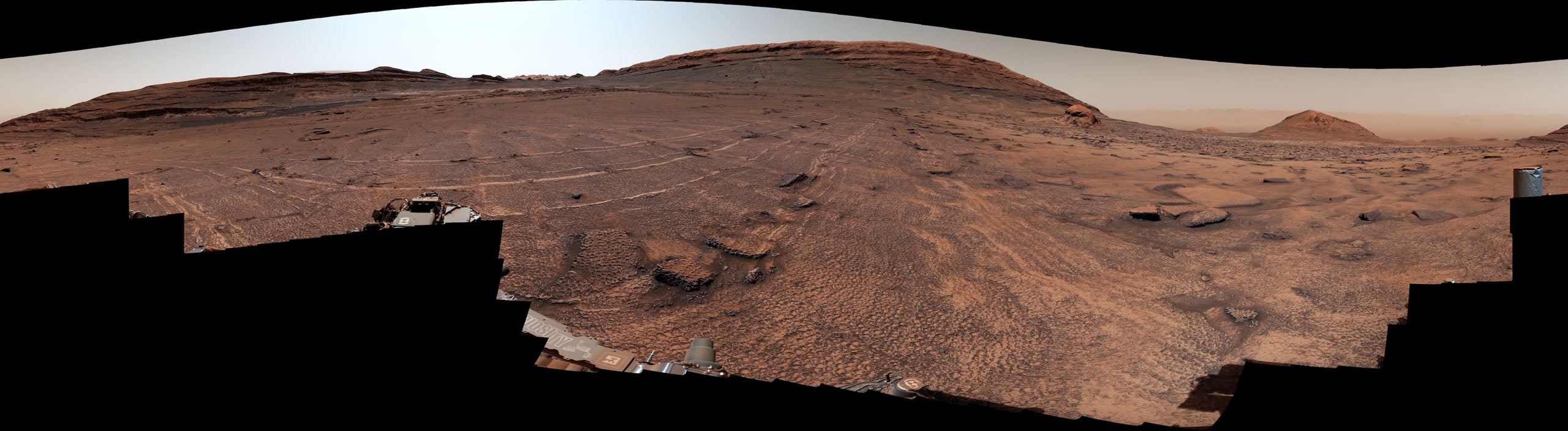
“We’ve seen a lot of fascinating landscapes through Curiosity’s eyes, but this sea of polygons took our breath away,” says Ashwin Vasavada, Curiosity mission project scientist from NASA JPL. “We measured their shapes and chemistry carefully and are hopeful there are clues in the data as to how these features formed.”
NASA says there are many different ways that these sorts of honeycomb textures can form, including cycles of warm and cold temperatures that affect how water is forced out of buried sediment.
“These newly discovered polygons are among the many surprises Curiosity has trundled across since landing on Mars 14 years ago, on Aug. 5, 2012,” NASA writes. “Besides sulfur crystals, shiny meteorites, and other interesting geologic features, the rover has made major discoveries about the ancient Martian environment — most importantly, that it had the water, chemistry, and nutrients to support microbial life.”
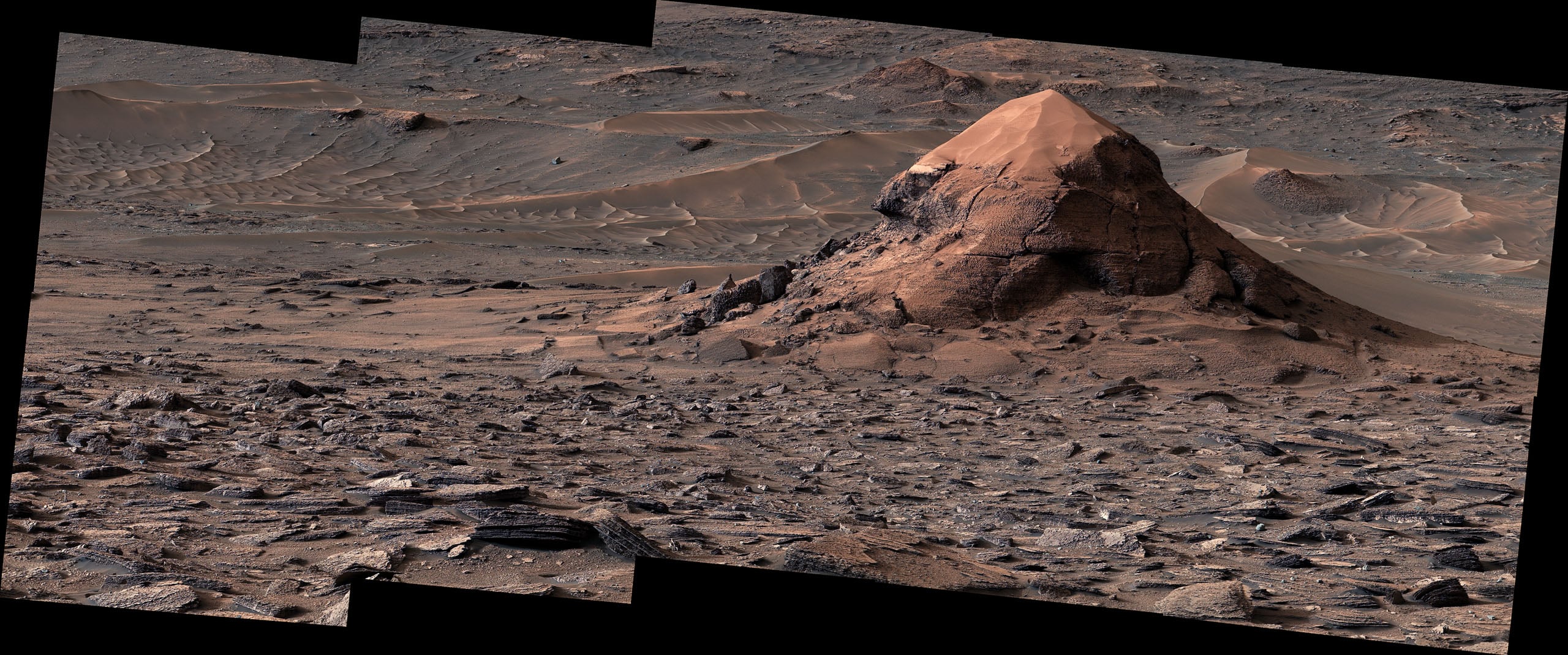
Scientists note that billions of years ago, there were lakes and streams across the lower foothills of Mount Sharp, the three-mile-tall mountain that Curiosity has been steadily climbing for about 12 years. Given that Curiosity’s top speed on favorable terrain is about 0.1 miles per hour, or 1.5 inches per second, it’s easy to imagine how long a mountainous climb has taken.
While it’s not possible yet to say whether the carbon-based molecules Curiosity has found on Mars, which are believed to be the precursors to RNA and DNA, were caused by biologic or geologic processes, the planet-trotting rover has shown that ancient Mars could have supported life. It’s quite the discovery, although as far as beauty goes, Curiosity’s newest landscape photo is perhaps its most spectacular work yet.
Image creditsNASA/JPL-Caltech/MSSS
Affiliate Disclosure PetaPixel articles may include affiliate links; we may earn a commission if you buy through one.