Artemis II’s Nikon Z9 Was Way More Important for Science Than Expected
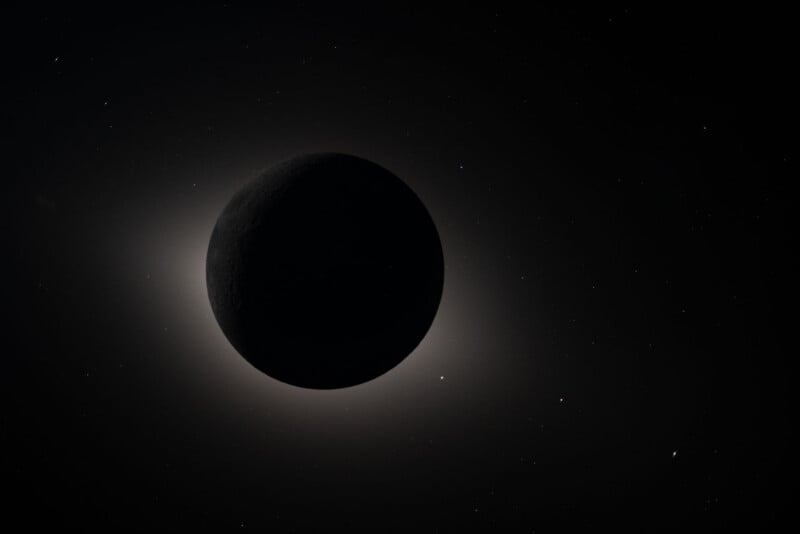
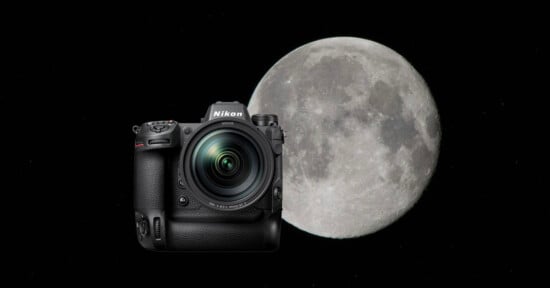
Researchers at Tokyo City University just published a new paper in The Astrophysical Journal Letters based on photos the Artemis II astronauts captured in space during their lunar flyby using the Nikon Z9. The researchers analyzed the solar corona images captured by the Artemis II astronauts, yielding new insights into the Sun’s coronal structure and demonstrating the value of taking cameras into space.
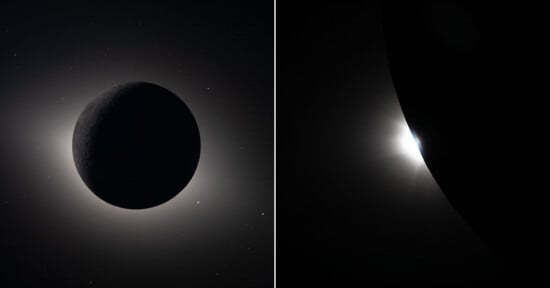
“We investigated the structure of the optical F-corona, i.e., inner zodiacal light, using a publicly released wide-field image of a total solar eclipse that was obtained during the Artemis II crewed lunar flyby,” the researchers, Kohji Tsumura and Ko Arimatsu, write. “In this image, the solar disk is fully occulted by the Moon, providing a rare view of diffuse circumsolar emission over a wide angular extent.”
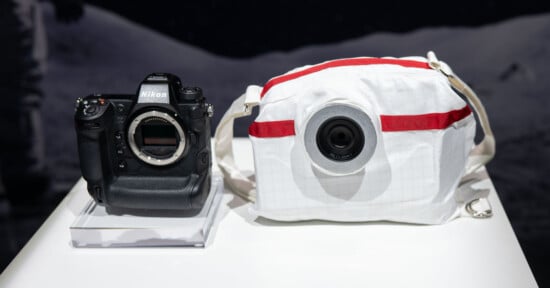
Even though the Nikon Z9 the astronauts took into space was not fully photometrically calibrated for this type of work, the researchers were able to calibrate gamma correction using the luminance values of the background stars. This “stellar calibration” enabled them to perform extremely detailed measurements and analysis of the Sun’s F-corona.
“F” stands for “Fraunhofer,” and the F-corona is the part of the corona that is “caused by dust particles scattering light from the photosphere,” as the University of St. Andrews in the United Kingdom explains.

The F-corona is the brightest part of the corona “from around 1.4 million kilometers onwards from the center of the Sun,” the University of St. Andrews continues.
It’s a particularly interesting part of the solar corona, as its scattered light includes Fraunhofer absorption lines, which explains the name. The F-corona’s light has the same wavelengths as sunlight seen from Earth.
Back to the new scientific research specifically, the researchers are interested in zodiacal light (ZL), which is a “major contributor to the diffuse brightness of the night sky” and is caused by astrophysical sources beyond Earth’s atmosphere. This brightening is actually caused by photospheric light from the Sun being scattered in space by interplanetary dust. Measuring ZL from Earth is challenging due to atmospheric conditions, making space-based observations essential, such as those conducted by the Artemis II astronauts using their Nikon Z9.
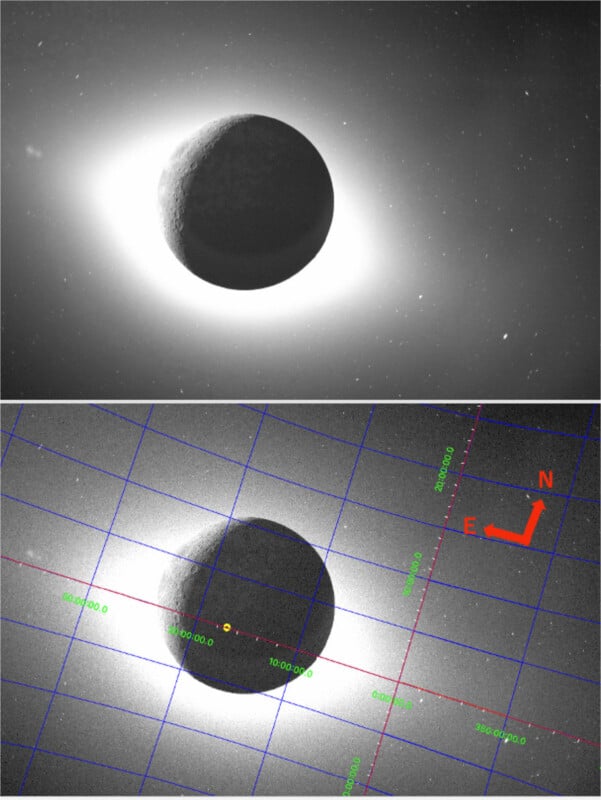
9. The glowing halo around the dark lunar disk corresponds to the F-corona (inner zodiacal light), and numerous stars are visible in the surrounding field. Bottom: the same image with an overlaid ecliptic coordinate grid. The yellow marker indicates the position of the Sun, which has an apparent diameter of and is located behind the Moon.’
Even though the Sun is a relatively close cosmic object that has been extensively studied, much about it remains mysterious, including its corona. Total solar eclipses, like the one the Artemis II astronauts experienced during their lunar flyby, provide an extremely valuable opportunity to better study the Sun.
It’s the same reason why the European Space Agency went through the extremely expensive and arduous process of building spacecraft to create artificial total solar eclipses repeatedly in orbit.
While the Artemis II mission enchanted people back home through a grand sense of adventure and awesome photos, it was, at its core, a scientific mission. A big part of that mission to the Moon was, ironically, studying the Sun.
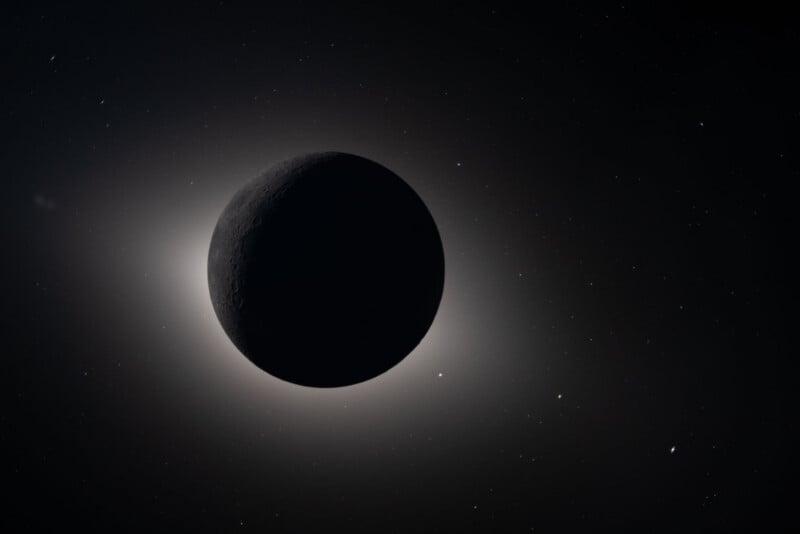
Through studying the Artemis II crew’s photos, Tsumura and Arimatsu were able to measure the F-corona’s shape, size, and intensity. Interestingly, while the Artemis II images are mostly consistent with prior space-based observations, there was a stronger emission concentration observed toward the ecliptic plane. The results also showed a more extended F-corona than expected, based on an existing model, ZodiSURF.
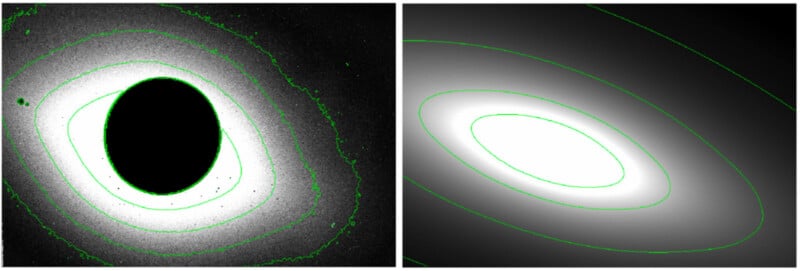
Most importantly, the results largely aligned with expectations and other, more rigorous observations. This is crucial, as it demonstrates the very real potential for astronauts to use consumer cameras to conduct valuable scientific research on the Sun while in space.
“Overall, this study demonstrates that opportunistic observations from crewed lunar missions can provide valuable insights into the structure of the inner zodiacal cloud,” Tsumura and Arimatsu conclude. “These analysis provide an empirical demonstration of the scientific viability of such lunar occultation concepts and can be regarded as a valuable proof of concept supporting future lunar-orbit coronal missions.”
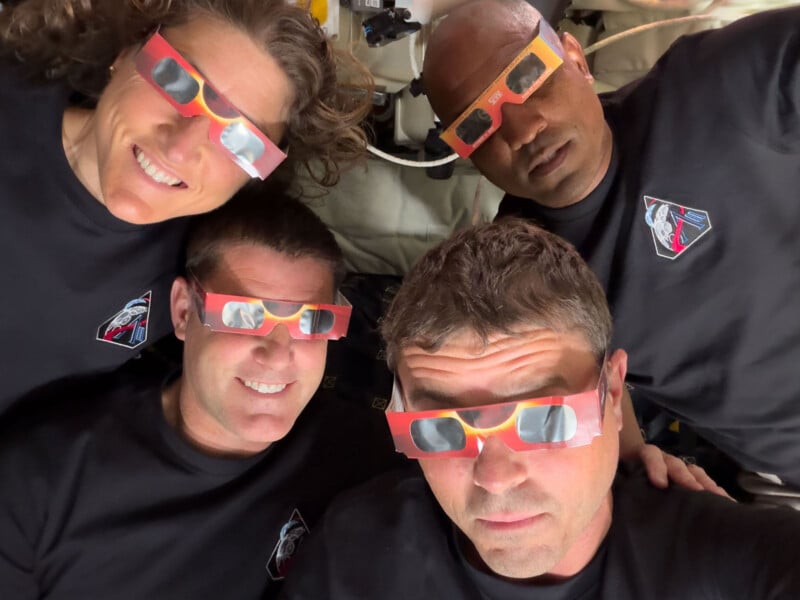
The Nikon Z9 and the Artemis II astronauts, Commander Reid Wiseman, Pilot Victor Glover, and Mission Specialists Christina Koch and Jeremy Hansen, did some real-deal solar science with their Nikon Z9 camera, which is undeniably neat.
It’s also a real feather in Nikon’s cap.
“Seeing the images from the Artemis II mission return to Earth is a profound honor for all of us at Nikon. This latest research from Tokyo City University acts as a powerful reminder of what imaging can make possible when science, exploration, unrelenting effort and human curiosity come together,” Hiroyuki Ikegami, Nikon’s Senior Executive Vice President, General Manager of Imaging Business Group and General Manager of Imaging Business Unit, tells PetaPixel.
“For more than five decades, from Apollo 15 to the Artemis program, Nikon has been privileged to support NASA with cameras and lenses designed for exceptional clarity and reliability in the most demanding environments. The Nikon Z9’s high resolution, expansive dynamic range and outstanding low-light performance are helping crews capture incredible details.

“These images help to advance research and deepen our understanding of space, while continued testing of the Z9 prepares for the vast scientific possibilities of future missions.
“We are proud to play a small role in this historic journey, but the focus rightly belongs to the Artemis crew and the scientists around the world who will use these images and data to expand the boundaries of discovery.”
Image creditsNASA. The Artemis II crew comprises Reid Wiseman, Victor Glover, Christina Koch, and Jeremy Hansen. The research paper discussed in this article is ‘Large-scale Morphology of the Optical F-corona from a Total Solar Eclipse Observation during the Artemis II Lunar Flyby,’ by Kohji Tsumura and Ko Arimatsu. It has been published in The Astrophysical Journal Letters, Volume 1004, Number 1. DOI 10.3847/2041-8213/ae71c8
Affiliate Disclosure PetaPixel articles may include affiliate links; we may earn a commission if you buy through one.