Film Friday: Kodak Portra 800 Is High-Speed, Color Perfection
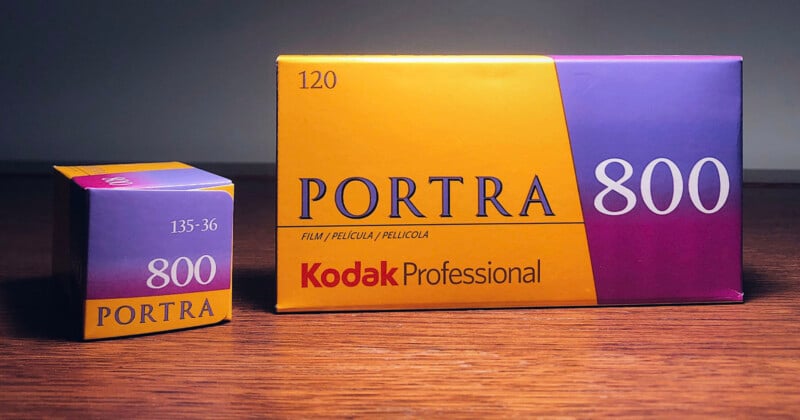
If you were to ask us what the perfect color film is, we’d tell you it is Kodak Portra. Exactly which speed of Portra matters only a little as the whole family of films is pretty amazing.
Because of its incredible qualities the Kodak Portra films have earned a popular reputation over the years and are widely used by film photographers doing everything from weddings, to lifestyle shoots, to landscapes and more than we can think of to list. Sitting at the high speed end of the Portra family, Kodak Portra 800 has established itself as the most versatile of bunch, even if it is a bit grainier.

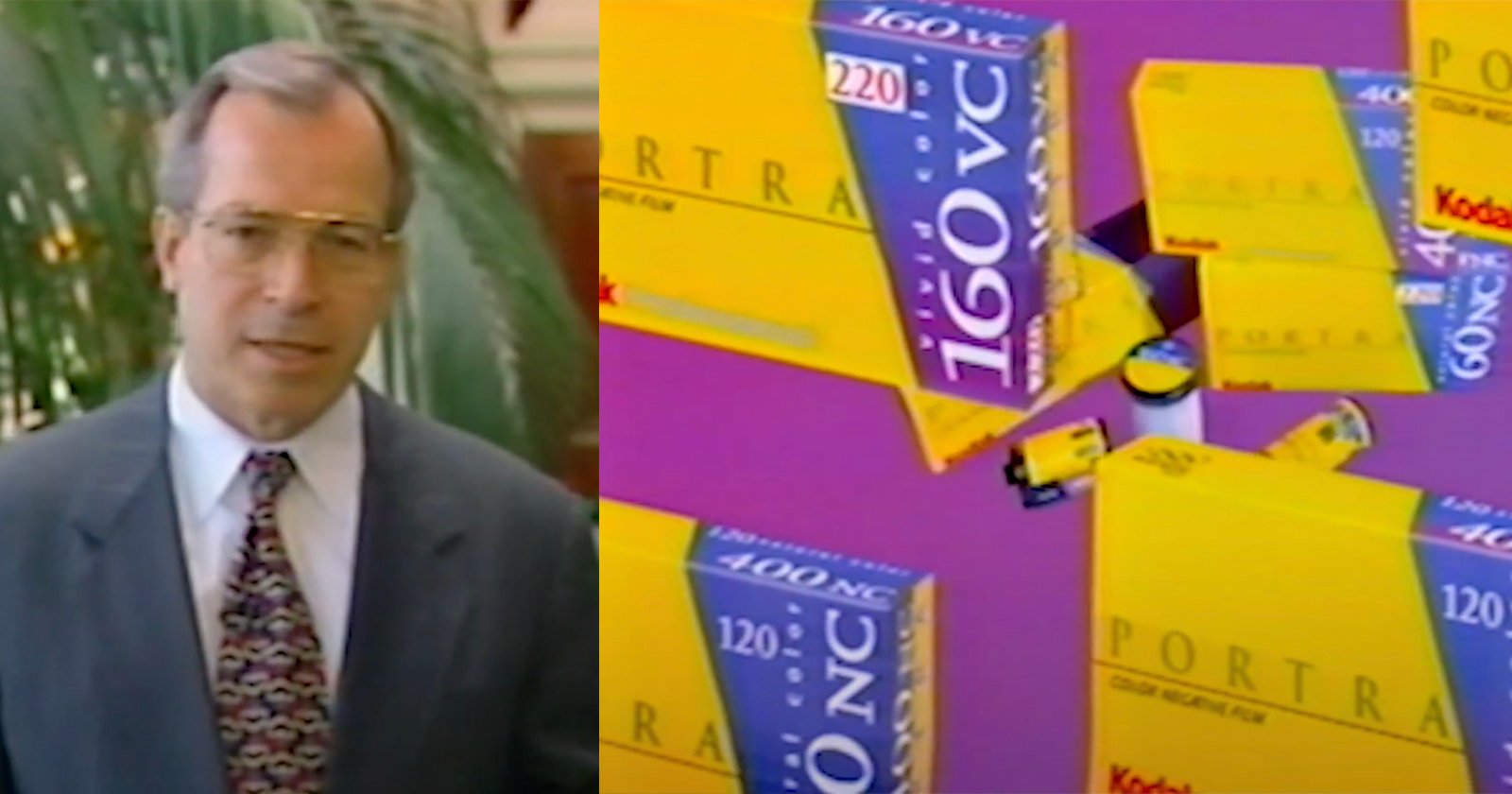
Kodak Portra 800 came into the world in 1998 along with Portra 400 and Portra 160. The three films took over for Kodak’s previous professional color film: Vericolor. Early on Portra 400 and 160 were divided into the NC (natural/neutral color) and VC (vivid color) branches while Portra 800 was just Portra 800. Eventually the Portra line was consolidated in 2010-2011 with the NC and VC versions being combined into single emulsions that split the difference. The new Portra 400 and 160 were less saturated than VC but more so than NC. They were also less contrasty than VC but more so than NC, meanwhile Portra 800 just kept being Portra 800. But while it may not seem like much has changed over the years with Portra 800, it has steadily undergone revisions and improvements just like its slower siblings.

There have been refinements to its grain and sharpness, along with how it responds to scanning. Additionally, Portra 800 has been tweaked to remain consistent with Portra 400 and 160 since Kodak’s goal all along is to make the films interchangeable in terms of their appearance as well as how digital printers and scanners reproduce them. This is one of the first big selling points of Portra 800. You can shoot a roll of it next to a roll of Portra 400. Or you can shoot a roll of Portra 800 in 35 and then in 120. Either way, you can count on the results to enjoy a high level of consistency with one another.

Let’s really get into the meat of the argument for why Portra 800 is a great go-to film: it all revolves around how it handles color. The Portra films in general are optimized to see color in a similar fashion as the human eye. That means Portra 800 will show you the colors that you see. Additionally it is particularly well-suited for recreating nice skin tones, hence the “Portra” name and why this film is THE film for pretty much every analog wedding photographer out there. But it doesn’t just have to be about weddings and portraiture. Kodak Portra 800 can be a great cityscape film, a great landscape film, a great still life film, a great macro film. You name it and if it involves color, this film can do it.


Moving on from color, we suppose we should quickly touch upon Portra 800’s grain. Yes, the film will be grainier than Portra 400, just like that film is grainier than Portra 160. It is one of the immutable laws of film photography: the faster your film gets the grainier it becomes. Having said that, Portra 800 is also not as grainy as you might expect. Take a close look at an image made with Portra 800 and while you can notice the grain, it also isn’t all that overpowering either. Of course, this will become more of an issue if enlarging is your goal, or if you mis-expose the film drastically, but all things being equal we think Portra 800 performs admirably in the grain department.
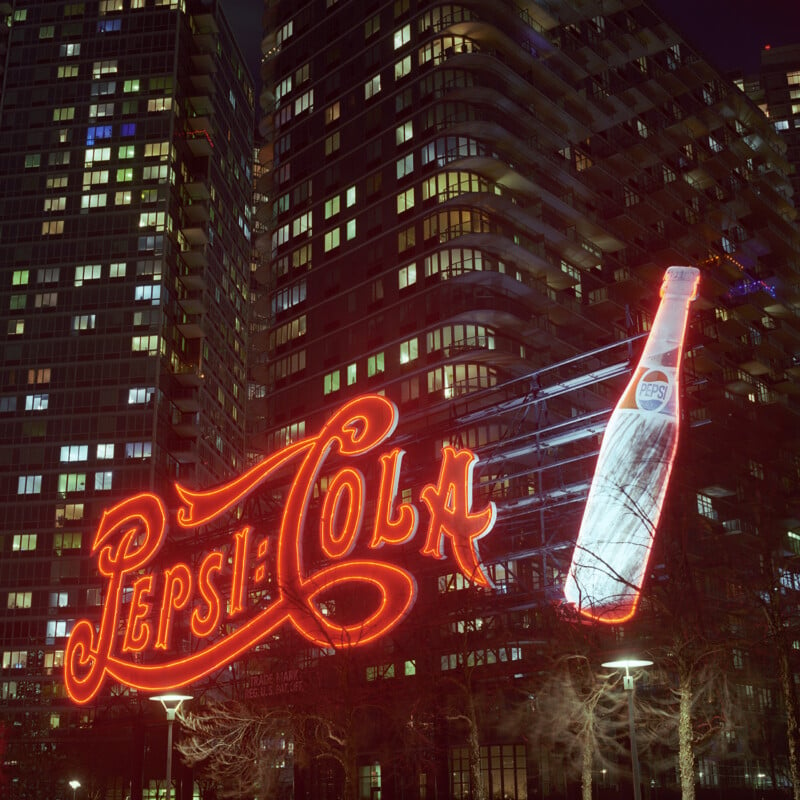
The other side of that coin is all the benefits that extra film speed brings you. You can be wandering the city streets one moment and duck into an open sewer or down into a subway station and suddenly that roll of fine grained ISO 100 film is going to be a bit tricky to use. Not so with Portra 800. It will go anywhere and make getting reasonably good exposures much simpler. If you plan on using a slower lens, such as many zoom lenses or really long telephoto lenses, the extra speed that Portra 800 brings can mean the difference between a sharp image and a shaky image. Keep this in mind specifically if you pick up a nifty mirror lens to play with.
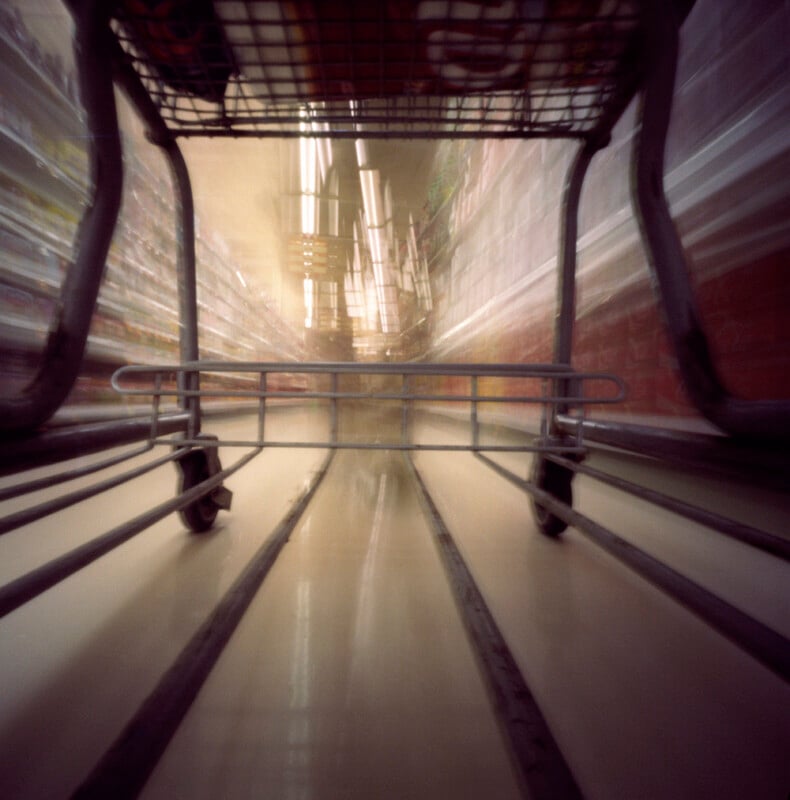
Portra 800 is also a great film for many toy cameras such as the Holga, Diana, or the Lomography Fisheye camera. These cameras are known for underexposing easily and always needing a ton of light. You can help increase the odds of success by feeding them something a bit faster. Finally, while it might seem counter-intuitive, we have loaded our pinhole cameras on occasion with Portra 800, either to shorten daytime exposures enough to make hand-holding somewhat feasible (still going to be blurry but at least recognizably blurry) or to make nighttime exposures possible at all (a pinhole camera loaded with ISO 100 film can easily need two to eight hours at night, ISO 800 can cut this down to exposures of as little as 30 minutes). When thinking about Portra 800 it is wise to keep the versatility that its speed brings in mind.

There isn’t much to say about Portra 800’s contrast and this is because like the other Portra films, it’s contrast level is pretty normal. It is supposed to be. Kodak Portra is meant to have a softer amount of contrast so that it can handle a wider array of situations. Increased contrast brings with it increased saturation and Portra is trying to avoid too much color saturation. While its contrast might be more normal, its latitude is exceptional. Kodak Portra 800 will record a pretty amazing range of detail from shadow to highlights. In fact, Kodak boasts in Portra 800’s data sheet that it is the best in class when it comes to underexposure latitude. We feel like we are just piling on at this point in terms of Portra 800’s benefits.
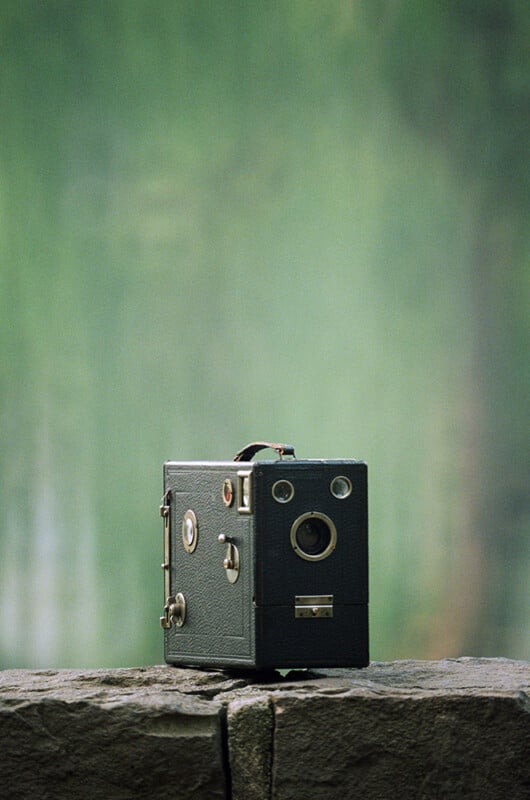
One thing Portra 800 is not great at is reciprocity failure. Ironically, even though as a faster film it is better suited for low light situations, it is not well-suited for doing long exposures in those situations. Even Kodak’s own data sheets give very little information, stating only that exposures longer than 1 second are not recommended and further testing should be done on your own. We would recommend adding about 1 stop of exposure by the time you are up to 10 seconds. Then again, Portra 800 is claimed to have up to 2 stops of underexposure latitude, so maybe it is not that big a deal after all.


We are fond of describing the Kodak Portra films as near perfect as color films get. Portra 800 specifically is no exception to this. It has great color rendition, it has a speed that makes it suitable for most situations, it has fine grain for its relative speed, it is sharp and crisp, it has great latitude, it scans and prints well, it is consistent. It can do whatever you want it to do. It is one of those films that we will miss if Kodak ever discontinues it. So why wait for that to happen? Go use it now and enjoy it!
And if you are new to our Film Friday series and wondering just what the heck it is, well let us quickly tell you. Every week we take a different film in our inventory and give it a feature that includes a full Film Friday review done by us, plenty of sample images and a discount to help entice you to either try it or to stock up. We started this several years ago as a means of getting away from just using the same three to five film stocks and we have since made it a point to feature practically every film we carry, no matter how esoteric. So join us weekly to see a different film and enjoy some analog inspiration!
Hit up Blue Moon Camera and Machine today to get some Portra 800 at a Film Friday Discount!
Image creditsAll photos are individually credited and come courtesy of Blue Moon Camera and Machine.
This story is brought to you by Blue Moon Camera and Machine in Portland, OR. Blue Moon offers film, development services, printing, and even an ever rotating line of film cameras and lenses. PetaPixel Members receive 10% off all lab services with Blue Moon: Join today! This story is also published here.
Affiliate Disclosure PetaPixel articles may include affiliate links; we may earn a commission if you buy through one.