
Despite Being a Member, YoloLiv Isn’t Complying with the Micro Four Thirds Standard
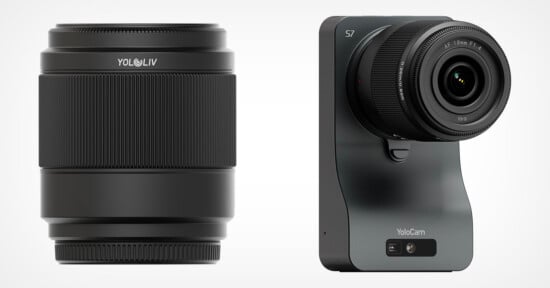
Earlier this year, YoloLiv announced a brand-new Micro Four Thirds lens: the 18mm f/1.4. Not only was this special because new Micro Four Thirds lens releases are rare, it actually filled a need in the format. We were eager to get our hands on it and when we did, we noticed something weird: it didn’t appear to be conforming to the standard.
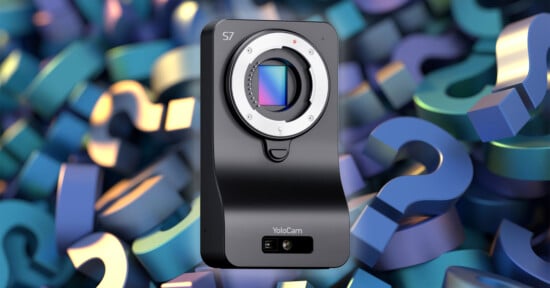
As a bit of background, YoloLiv, officially Hangzhou Zingxi Technology Co., Ltd, joined the Micro Four Thirds System back in October 2023, promising to subsequently introduce compliant products to the market. The company fulfilled on that promise initially with the YoloCam S7, a webcam/streaming camera that uses the Micro Four Thirds mount. At launch, the company suggested users pick up the Panasonic 15mm f/1.7 or 25mm f/1.7 primes for use with it, but in March, it announced its own in-house lens.
The 18mm f/1.4 was not only a good option for YoloLiv’s use on its S7, but it is a focal length that is also underserved on Micro Four Thirds overall. Add to that the extremely aggressive $299 asking price (it is on sale today for $199, which is absurdly cheap), and it looked like an outstanding addition to the format.
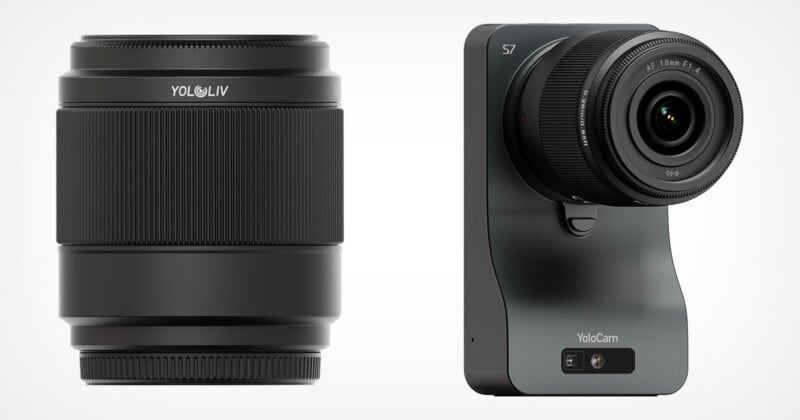
“This launch marks a major milestone for us. It’s not just a new product — it’s the realization of a complete, professional ecosystem, shaped by user feedback at every stage,” YoloLiv said at the time.
There was one red flag PetaPixel noticed at the time of launch, and that was a note from YoloLiv that compatibility was limited to the S7. Now, a hallmark of the Micro Four Thirds system is its compatibility among its products — it is a standard, and all members of the standard must comply with all the rules. For example, using an OM System lens on a Panasonic camera is as easy as just attaching it. While certain features do not always work in every possible instance, there is still basic compatibility across the board that is guaranteed by being a member of the system. So, when PetaPixel saw that note of limited compatibility, it was assumed that meant that not all features would work, but it would still function on a basic level.
That did not end up being the case.
What Exactly Does the Micro Four Thirds Standard Demand?
Micro Four Thirds is an open system, but official members of the Group have to abide by certain rules. As outlined on the Micro Four Thirds website, the “standard defines functional linkage between lenses and digital single-lens cameras and the mounts and image circles suitable for lens design, assuming the 4/3-type image sensor” and “intends to increase your choices by enabling each supporting company to use their originality in lens performance and functionality.”
To that end, “only basic performance, such as AE and AF, is standardized.”
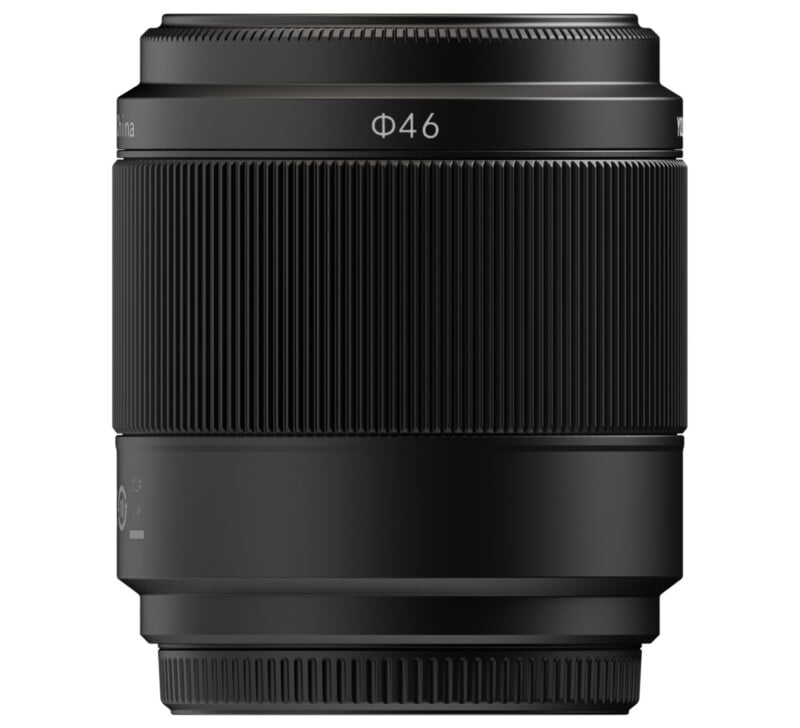
So while not every feature of every camera and lens combination is promised, basic features are required as part of the standard. For example, a lens must connect with any Micro Four Thirds camera and support autofocus in order to be considered in compliance. So, for example, YoloLiv’s S7 works with existing Micro Four Thirds lenses from Panasonic and OM System, which is an expected result of this standard.
YoloLiv Violated the Rules of the Standard
Because the 18mm f/1.4 was such a good addition to the Micro Four Thirds lens lineup, PetaPixel requested a review sample from YoloLiv. The company reiterated that the lens was only compatible with the S7.
“Please note that this 18mm lens is currently designed specifically for the S7. We created it to solve the pain point where many S7 users didn’t have a properly adapted lens,” Zoe from YoloLiv wrote to us in an email. “Down the road, as R&D resources allow, we may explore compatibility with other MFT cameras.”
That sounded very strange to me. “May” explore compatibility? It did not sound to me like doing so was optional, so I responded with the following:
“I am a little confused on the Micro Four Thirds and compatibility situation. While I expect it to work best on the S7, the Micro Four Thirds mount is a standard, meaning if you’re part of the group and you use the mount, it is supposed to work with all cameras who are part of the standard. That’s how Micro Four Thirds was set. You mention compatibility with other MFT cameras being a future thing, but there should be no technical reason it doesn’t work now if you’re abiding by the standard.”
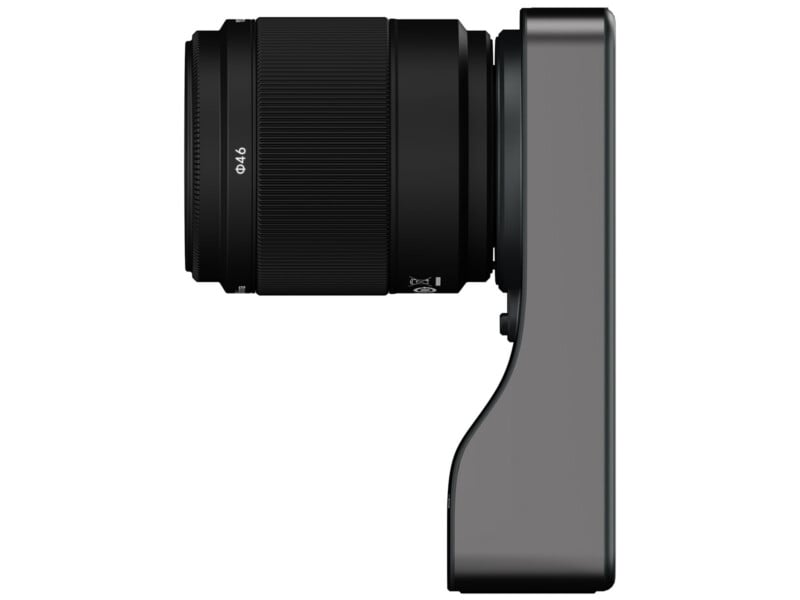
After being confronted with this, YoloLiv agreed to send the lens and amended their response.
“Our lens is fully MFT-certified and follows the standard. It will physically mount onto any MFT camera, and manual focus works just fine. However, autofocus performance across different MFT camera bodies may vary — we’ve fully optimized it for the S7 at this stage, and we’ll need more time to test and fine-tune AF for other MFT cameras (such as Panasonic or OM System models). So compatibility is there, but full AF optimization across the ecosystem will come in future updates,” Zoe said.
That, again, sounded reasonable to me as I was not, at the time, as familiar with the rules of the standard as I am now. However, upon receipt, PetaPixel‘s Jordan Drake noticed that the promised baseline functionality was not happening in practice.
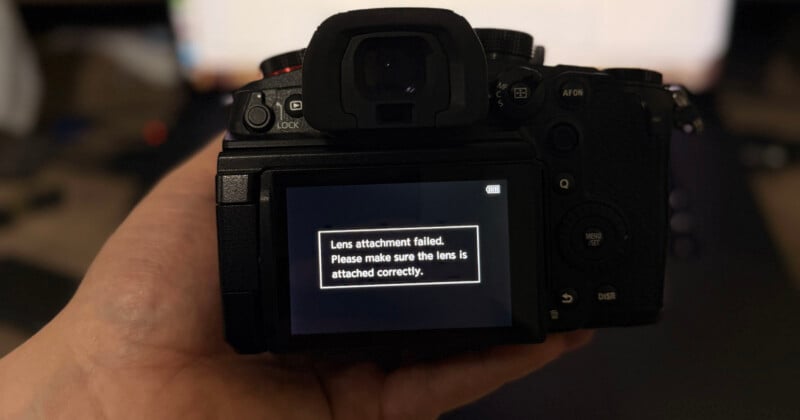
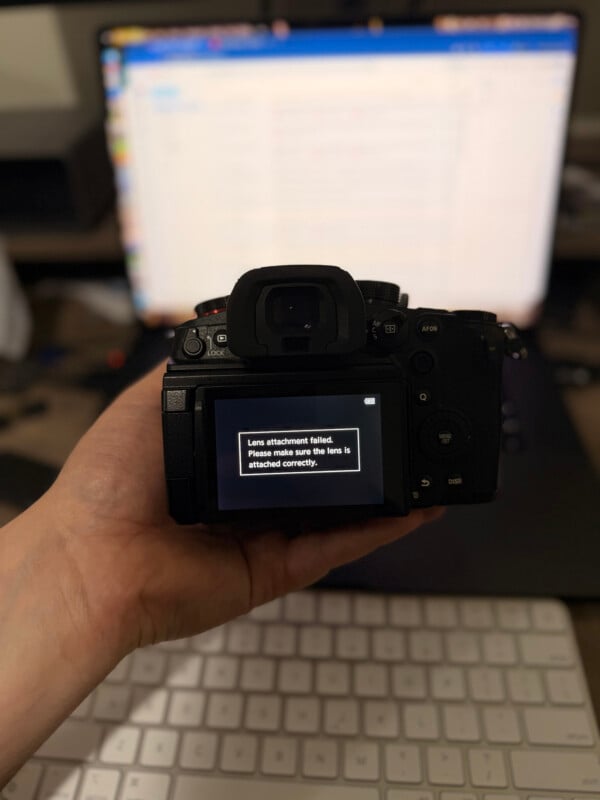
Instead of having limited functionality, which would have been acceptable, Drake found that the lens did not function at all on any camera except YoloLiv’s S7 camera. When attached to an OM System OM-1, a blank screen appears with camera settings. When attached to a Panasonic Lumix GH7, it says it cannot recognize the lens. Neither of these outcomes allows the use of manual focus, as YoloLiv said would be the case.
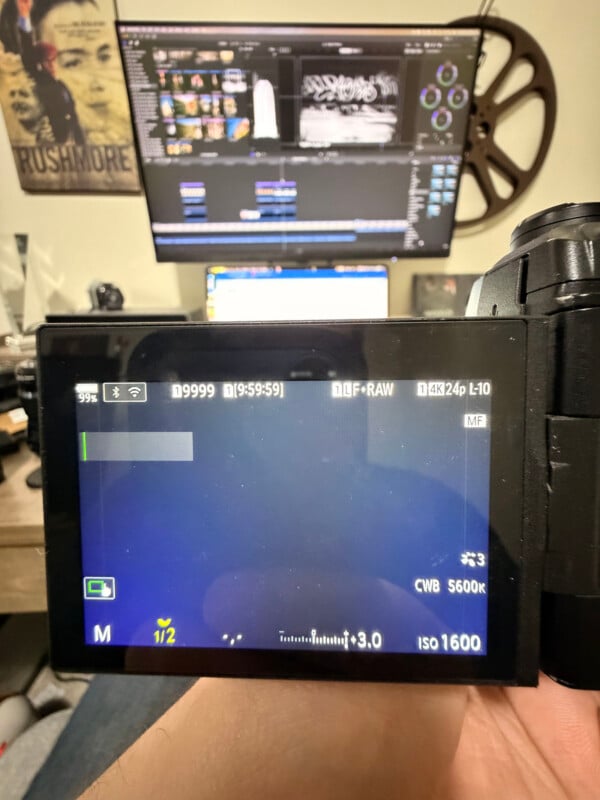
This felt wrong, and that’s what led us to look deeper into what being part of Micro Four Thirds actually promises. After looking over the regulations, we decided it was time to alert the Group to what we believed to be violations of the standard.
“As a general principle, products in the Micro Four Thirds System are developed by each participating company in accordance with the common specifications, including the lens-mount specification, which defines the mechanical, electrical, and communication interfaces between the lens and the camera body. Compatibility is verified by each company based on these specifications,” a Micro Four Thirds representative told us.
“In cases where interoperability-related issues arise, information is shared among the relevant companies, and the situation is reviewed within this framework, with appropriate actions considered as necessary.”
Unfortunately, it seems like Micro Four Thirds is, generally, a self-governing body. The organizations within it police each other when necessary, but typically don’t exhibit high levels of oversight. Still, the Group did take our complaint seriously.
That said, if PetaPixel did not report this issue, it’s unclear how long it would have gone unnoticed by the Group.
YoloLiv is On Notice
This week, about a month after our initial email to the Group, the Micro Four Thirds organization published a notice that YoloLiv was in violation of the standard.
The Four Thirds Office, together with participating member companies, is committed to maintaining compatibility among Micro Four Thirds standard products and providing appropriate information so that customers can use Micro Four Thirds products with confidence.
We have currently confirmed that the YoloLiv 18mm F1.4 lens manufactured by YoloLiv (Hangzhou Xingxi Technology Co., Ltd.) does not operate properly when used with certain Micro Four Thirds compatible devices other than the YoloCam S7.
YoloLiv is currently working on corrective measures toward compliance with the specification. Until such measures are completed, we kindly ask users to use this lens only with devices designated by YoloLiv.
Please also note that YoloLiv has established a dedicated customer support contact for this matter. For inquiries, please contact the following support channel directly.
For now, it’s fair to say that the YoloLiv 18mm f/1.4 is not a Micro Four Thirds lens, despite what the company claims on its website, as it doesn’t comply with the basic requirements of the standard. It may share a mount, but it doesn’t function as Micro Four Thirds lenses must.
Of note, YoloLiv appears to have removed the 18mm f/1.4 from its product list to make it more difficult to purchase it standalone (it is still purchasable bundled with the S7), likely in response to the Micro Four Thirds Group regarding its violation of the standard, but the store page is still accessible with a direct link.
PetaPixel does not recommend considering this product until, at the very least, YoloLiv corrects the issues with compatibility.
Image creditsUnless otherwise noted, images by PetaPixel Staff
Affiliate Disclosure PetaPixel articles may include affiliate links; we may earn a commission if you buy through one.