
Lexar’s D70E Compact SSD Packs 2TB into a Tiny Thumb Drive
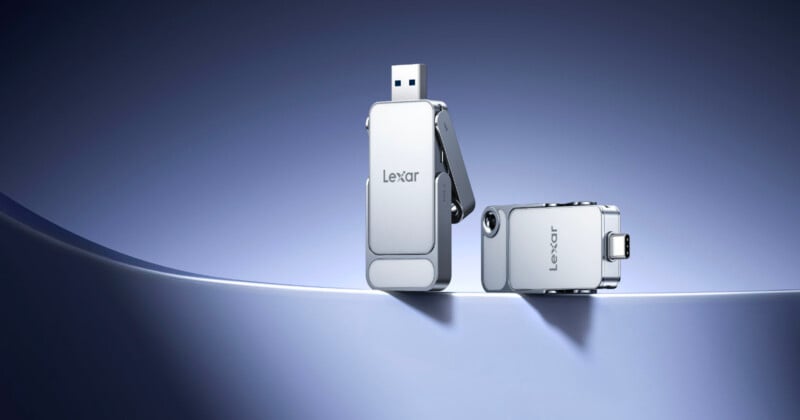
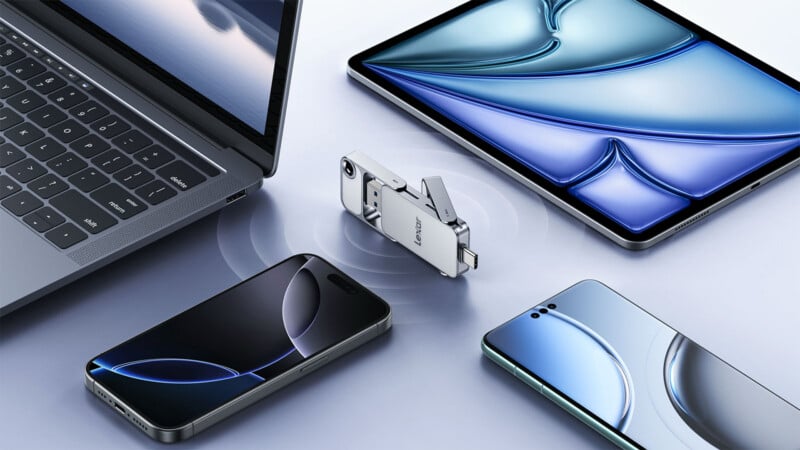
Lexar has announced the D70E, what it calls an external SSD but what most people would refer to as a thumb drive, flash drive, or a jump drive. The tiny storage device has both USB-C and USB-A connectivity and capacity options up to 2TB.
The D70E is described as a highly convenient backup solution made for those on the move. Lexar says that it enables seamless file backup across multiple devices in an ultra-compact, cable-free form factor.
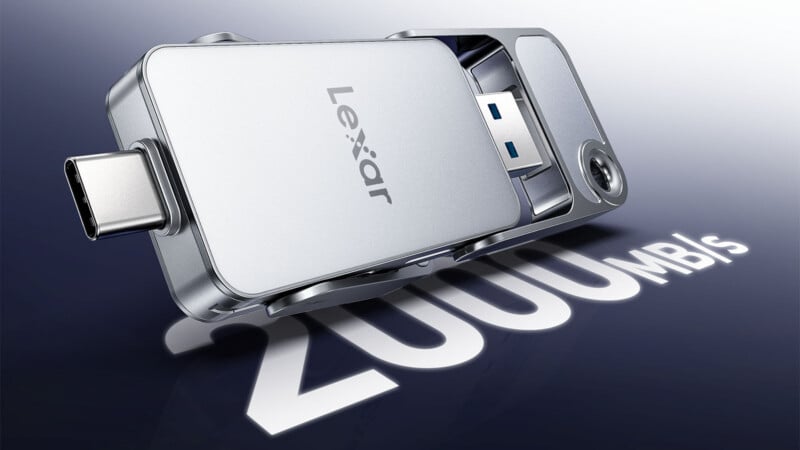
“Designed with portability at its core, the Lexar Dual Drive Portable SSD D70E features an ultra-compact, cable-free design that plugs directly into devices without the need for extra accessories,” Lexar writes. “Small enough to fit in a pocket, it provides a clutter-free and streamlined experience for users who want to create, store, and share content anytime, anywhere. The sleek metal housing includes protective port covers and a built-in lanyard loop, making it ideal for everyday carry.”
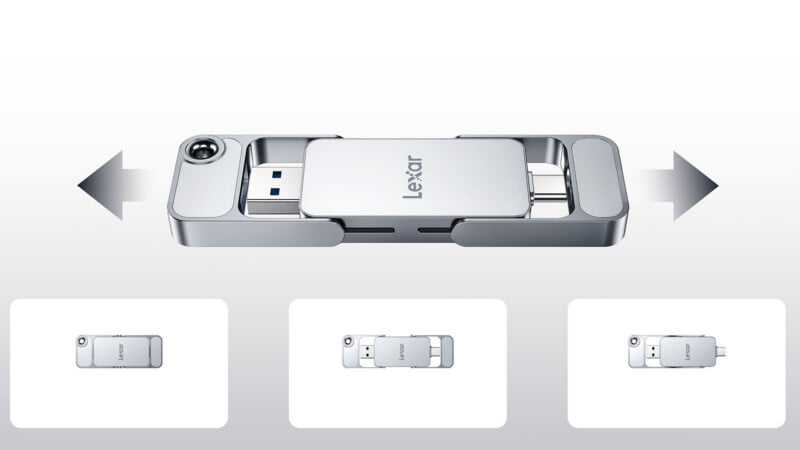
Lexar promises some rather impressive transfer speeds, too. When using the USB-C side, the D70E promises read speeds of up to 2,000 MB/s and write speeds up to 1,800 MB/s, while the USB-A side has read speeds up to 1,000 MB/s and write speeds up to 900 MB/s. The company says it has broad compatibility and will work with Windows PCs, Mac computers, and both iOS and Android devices.
The most stand-out feature of this new thumb drive is the cost, though: it’s very inexpensive. Due to the flash shortage, most SSD memory from SD cards to portable storage devices have skyrocketed in price, with high capacity SSDs typically jumping to well over $1,000. Lexar is only asking $120 for 512GB, $200 for 1TB, and $300 for 2TB, but photographers and videographers should be careful how they use a thumb drive — these types of storage have been historically very cheap for a reason.
Thumb drives are typically very inexpensive because they use far cheaper components that aren’t designed to be accessed with the same regularity as portable SSDs. It is extremely unwise to treat any thumb drive the same as more expensive external drives. PetaPixel strongly cautions against using them as working drives (editing photos or videos directly off the thumb drive) or treating it as a backup solution. It is not uncommon for these drives to fail quickly and without warning when they are subjected to more demanding applications.
However, thumb drives are great for physically delivering files to clients. Sometimes projects, especially video projects, will need to be sent to clients along with all of the source footage which is typically too demanding for cloud storage downloads. In those cases, mailing a thumb drive or a hard drive has been faster than attempting to pull 2TB of video files from Google Drive, Dropbox, Box, or any other cloud solution. Given Lexar’s low asking price, this is probably one of the better options for this specific task.
Image creditsLexar
Affiliate Disclosure PetaPixel articles may include affiliate links; we may earn a commission if you buy through one.