
Photography Lessons From ‘The Lord of the Rings’

Just as Tolkien did in “The Lord of the Rings,” photographers encompass cultural, historical, and personal viewpoints in their work. However, as in that book, a complex interaction exists between the photographer’s intent and the viewer’s interpretation of the image.
Recently, I was driving alone for several hours. To break the monotony of the journey, I took the opportunity to listen to the BBC dramatization of J.R.R. Tolkien’s “The Lord of the Rings.” It’s not a story my wife enjoys, but I do. That difference of opinion has an important parallel in photography.
I first heard it aired on the radio in 1981, but I had read its six books years before and several times since. On the surface, it is a story about the fight between good and evil. That simplistic interpretation of the work is probably how I understood the story when I first picked it up, when I was about ten years old.
The movies, excellent though they were, were limited by their time restraints. Therefore, they concentrated heavily on the story’s good-versus-evil aspect, brushing over some of its deeper interpretations.
Tolkien called it a “fundamentally religious” work. His beliefs heavily influenced it. Key themes include redemptive suffering, divine providence, sacrifice, and theological morality. The story’s topics also include the seductive nature of power and how it corrupts, the destruction of nature by industrialization, war mongering, and the blackmail of innocent parties by a powerful and malevolent regime.
In the books, evil characters attempt to twist the truth by claiming the moral high ground and by denigrating others. Yet, the antagonists, Sauron and Saruman, are just bolstering their own self-interest and using their greed for power to corrupt and mislead others.
Those are all interpretations of the story that the reader can apply. Yet, the author disliked the idea that his books were a direct allegory. That was never his intention. However, Tolkien did point out that the reader can apply the situations in the story to reality.
The same applies to all art, including photography. We can see meanings in photos and apply them to what is happening in the world around us, even if the artist did not intend them.
The Photographer’s Intent and the Viewers’ Interpretation

Every photographer approaches their subject matter through the lens of their own experiences, beliefs, and cultural background. That perspective becomes integral to their photographic stories. They influence everything from subject selection to composition.
However, the photographer’s intention when they pressed the shutter will never be the same as the viewer’s interpretation of the photo.
There are various reasons for that. Firstly, there’s the historical perspective. Images that seemed straightforward when created may take on new meanings over time as cultural contexts shift. Consider, as an extreme example, the photos shot in Nazi Germany during the 1930s. The emotional reactions to the images before, during, and after the Second World War, and across different geographic locations, vary widely. Obviously, the intensity of emotional responses to those photos will also change with the viewer’s ethnicity, religious beliefs, and education.
All photos will vary in meaning similarly, albeit probably to a lesser extent. Consider someone viewing a photo of your family in 100 years. It will have a different meaning to them than it does to you because they won’t have your emotional attachment. Moreover, if you were to share that photo with a stranger, their reaction would again be quite different from yours.
Each viewer brings their own unique experiences, cultural background, and emotional state to their encounter with a photograph. In other words, subjectivity results in a single image communicating different messages to different viewers.
What is more, a single photograph can mean different things to the same viewer at different times because of their continuously changing mood and personal experiences.
Revealing the Hidden Secrets of Familiar Subjects

Many contemporary photographers explore how their personal perspective challenges conventional viewpoints. In doing that, they attempt to reveal hidden aspects of familiar subjects. Street photography is a prime example. Those photographers discover extraordinary moments in ordinary urban life. By adopting unique viewpoints, they reveal the poetry inherent in everyday situations. They can demonstrate how a shift in perspective, whether physical, temporal, or conceptual, transforms a mundane scene into something striking.
Just as an author weaves a story, so too can a photographer weave meaning into their photos. But, no matter how hard the photographer tries, as we have seen, their intent will never align with the viewer’s interpretation of an image.
Nevertheless, the most powerful photographs often work on multiple levels. They offer immediate visual impact and rewards upon deeper contemplation. Then, they might invite viewers to consider not only what is shown but also what is omitted. Alternatively, they could speak about both the moment captured and what happened before and after. These perspectives can add richness and complexity to the photograph.
Our Different Points of View

An experienced photographer intends to tell stories in their photos. That intention could be something simple like “this is a bird of prey in flight.” However, they could want to add an extra layer, such as “look at the beauty and power of this magnificent creature.” Additionally, the bird’s grace may have enchanted the photographer, as well as the shapes it makes as it flies. Or the photo might even be a celebration of the successful reintroduction of a rare species into an environment where it had previously become extinct.
Clearly, the viewer might not know the photographer’s intentions in the photo. In fact, they might have a completely different viewpoint and reject the photographer’s story altogether, even if they are aware of it.
For example, birds of prey are still persecuted, albeit illegally, by landowners and gamekeepers here in the UK. So, their emotional response to that photo of a marsh harrier will be very different from that of someone who has a passion for conservation.
The Emperor’s New Clothes

I have heard some photographers suggest that some viewers fail to read a photograph’s meaning due to a lack of intelligence. That is, of course, snobbery. But it does highlight another problem.
It’s possible that the photographer failed to include a story beyond the very superficial “this is a…”. That could be due to a lack of skill, although it can be intentional. A photo shot for a bird identification book, for example, might be a simple portrait of the creature.
Nevertheless, viewers can feel pressured to find meaning in a photo even if it never existed. Just like the story of the emperor fooled by the “invisible” clothes, peer pressure can make us pretend to see meanings in photos that don’t exist.
Don’t be Fooled
As well as being fooled by peer pressure into reading something into an image that isn’t there, the photographer can deliberately deceive us.

There are several well-known hoaxes in which artists deliberately created bad or meaningless art to expose what they saw as pretension, gullibility, or herd‑thinking within the art establishment. There’s also a tradition of students placing mundane objects in art galleries, including a pineapple, glasses, and a sneaker, to prank the art world.
In photography, it has happened too. For example, Jonas Bendiksen created an entire photo essay about a Macedonian town using computer‑generated images. It was intentionally meaningless as documentary evidence, and he did it as a test of how much critics “see” meaning when primed by context. His hoax fooled editors, critics, and even festival juries before he revealed the deception.
The Subject Isn’t the Photographer
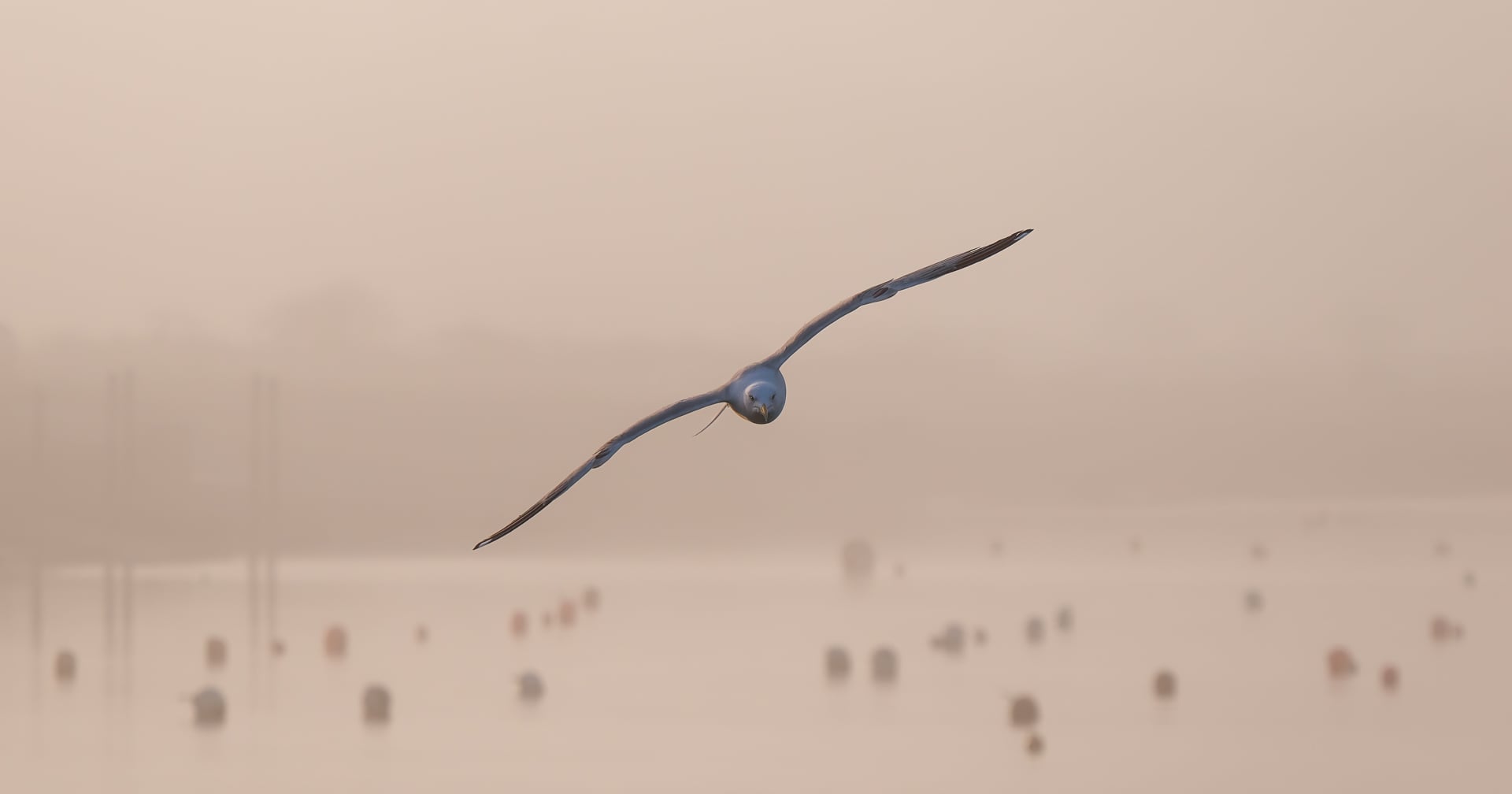
Furthermore, viewers often mistake the subject with the photographer’s beliefs.
Without knowing my belief structure in advance, in the photos of the marsh harrier, no one could tell whether I am pro- or anti-birds-of-prey. Similarly, I could photograph a political protest, some street art, a decaying vehicle, an inadvertently upside-down flag, or anything else that might have some extra meaning. However, without providing any additional information about myself, nobody could tell what I intended by taking the photo.
It’s More Than Just the Story

As I suggested at the start, a photo has technical aspects. All the components that comprise its composition, the exposure settings, and even the selection of the camera system are technical choices that a skilled photographer consciously makes.
Such choices can add to a photo’s story. For example, we may use the camera settings to increase or decrease emphasis on parts of the image. Alternatively, we may make the image brighter or darker. Or we might show or stop movement. All such decisions are the photographer’s subjective choices.
The Problem with Judging Photos

All the rules of photography are a human construct. They are not real; we established them through orthodox conformism. Therefore, if a judge disagrees with our creative choices, then that is subjective, too. Therefore, it’s invalid.
A photographer may choose to reject these artificial norms as part of creating the story of his image. But a judge might not appreciate that decision and see it as a bad technique.
Therefore, by complying with judges’ expectations and staying within those bounds, are we limiting our photography?
Drawing a logical conclusion from the disparity between the photographer’s story and the viewer’s unique perspective raises the question of whether we can ever judge a photo based on its narrative or its technicalities. That is surely a valid rejection of all photographic competitions. The only judgment we can make is whether or not we like the photo.
We Should Celebrate Our Differences

Some viewers might not see the photo’s meanings that the photographer intended. That is most likely due to different life experiences. Meanwhile, others may read more into a photograph than the photographer even considered.
With all that in mind, we must surely accept that every aspect of a photo is subjective. Therefore, it is perfectly valid to bend or reject any of the artificial constraints and rules, no matter the pressure to apply them.
I’ll continue to enjoy “The Lord of the Rings,” and my wife won’t. Furthermore, I’ll celebrate that difference, just as we should when interpreting photos, just as I will continue to appreciate all your photos.
Affiliate Disclosure PetaPixel articles may include affiliate links; we may earn a commission if you buy through one.