Open AI May Be Making a Phone That Moves Away From Apps
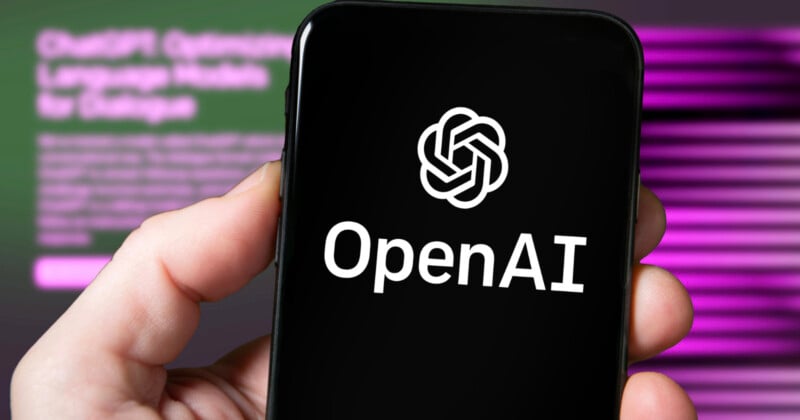
OpenAI may be making a ChatGPT phone with AI agents replacing apps to complete different tasks, according to a new report.
A new note on X from industry analyst Ming-Chi Kuo claims that the AI company might be working on a phone in collaboration with MediaTek, Qualcomm, and Luxshare.
Analyst Ming-Chi Kuo, who has reported on several Apple hardware plans in the past, says that OpenAI would develop a smartphone chip with MediaTek and Qualcomm, with Luxshare acting as a co-design and manufacturing partner. The report comes after the brand confirmed a deal with Broadcom last year to develop custom AI-accelerator technology.
The analyst’s post on X indicates that the device may move away from traditional apps altogether, with AI agents handling tasks directly for the user. At present, platforms run by Apple and Google largely determine which apps are available and what level of system access they are allowed, which can limit functionality. Kuo argues that if OpenAI builds its own smartphone and controls the full hardware and software setup, it could integrate AI more deeply across features without those constraints. He also notes that with ChatGPT approaching one billion weekly users, a widely used consumer device could strengthen OpenAI’s efforts to expand its reach further.
Kuo’s report suggests that smartphone design is where OpenAI believes it could revolutionize how users interact with portable devices. For example, Kuo explains that integrating an AI assistant with a chip from the same company may allow it to redesign software as a stream of behavior, and break away from using individual apps with all functionality handled by a single chatbot.
Kuo says OpenAI’s phone would be built to constantly interpret what a user is doing and adjust in real time. He adds that, by controlling the device itself rather than just providing an app, the company could potentially see more detailed information about user behavior than it would through software alone. The analyst’s report also notes that OpenAI is expected to work on a mixture of small on-device models and cloud models to handle different types of requests and tasks.
Kuo, who works at TF International Securities, says, “The phone needs to continuously understand the user’s context. Power consumption, memory hierarchy management, and basic small-model execution will be key processor design considerations.”
Analyst Ming-Chi Kuo says OpenAI aims to enter mass production in 2028. The analyst says the smartphone’s specifications and its component suppliers are expected to be finalized by the year-end or by the first quarter of 2027.
The report comes after OpenAI Chief Global Affairs Officer Chris Lehane says that the company is on track to announce its first hardware product in the second half of 2026. While the company is not spilling any details, recent reports have suggested that OpenAI’s first device could be a pair of earbuds. According to reports, this device is codenamed “Sweet Pea” and will have a unique design as compared to existing earbuds.
Image creditsHeader photo licensed via Depositphotos.
Affiliate Disclosure PetaPixel articles may include affiliate links; we may earn a commission if you buy through one.