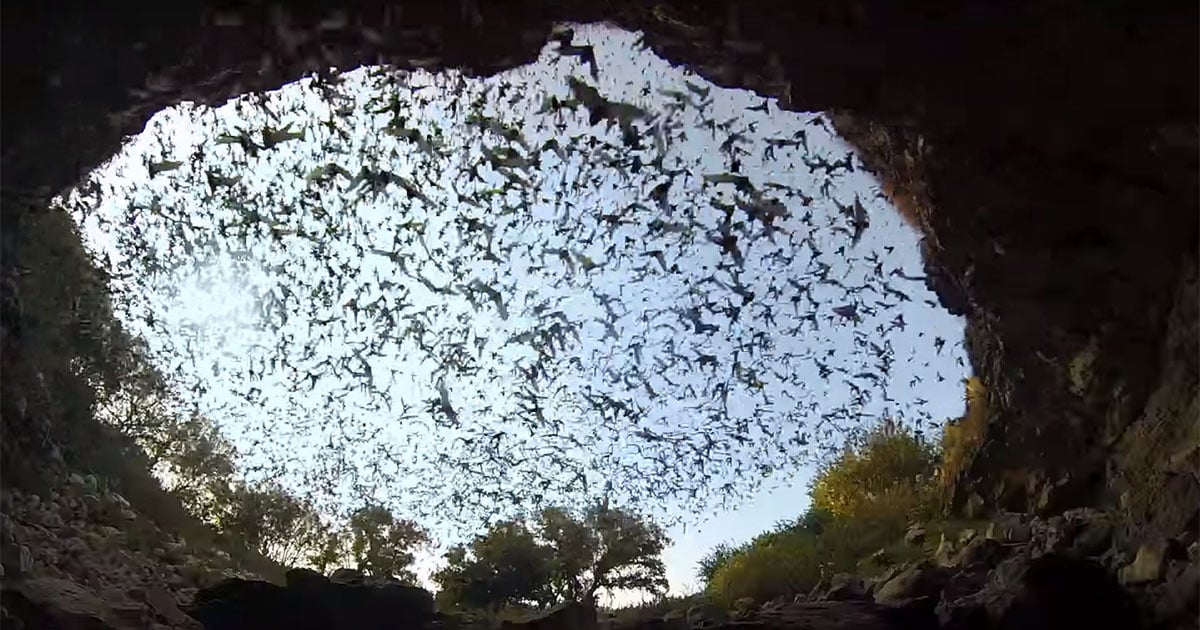
Remote Cameras Capture 10 Different Predators Descending on Bat Cave
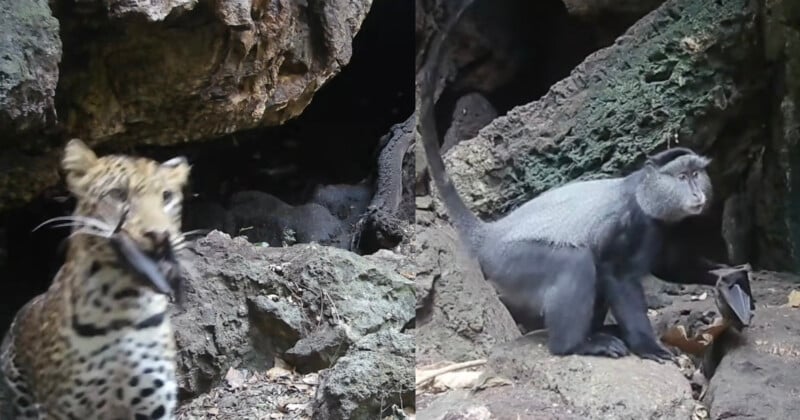
Camera traps captured incredible footage of 10 different predators, including leopards, blue monkeys, and eagles, descending on a bat cave and feasting on the winged mammals.
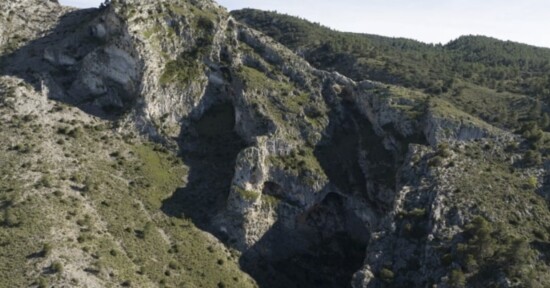
Scientists set up remote cameras outside Python Cave in Queen Elizabeth National Park, Uganda, which is home to around 40,000 Egyptian fruit bats. The cave is known as a reservoir of the Marburg virus, a severe and often fatal disease in humans. Researchers say observing how different species interact with infected bats could help explain how viruses spread between animals and how some species may develop resistance.
According to a report by Nature, the camera traps recorded a wide range of animals approaching the cave to hunt. The footage includes an eagle pinning down a bat with its talons as the winged animal struggles to escape. In another clip, a blue monkey is seen grabbing a bat and carrying it away. An African leopard was also filmed emerging from the cave with a bat in its mouth.
Researchers say the recordings may represent the first documented case of multiple predator species targeting an animal known to carry a deadly filovirus. The footage may also provide the first clear evidence that leopards actively hunt and eat live bats.
“It’s never been seen,” study author Alexander Braczkowski, scientific director of the Kyambura Lion Project in Kampala, tells Nature. “Sometimes he would eat 30, 40 bats in a night.”
The scientists’ findings were published Monday in the journal Current Biology. The cameras also reportedly recorded more than 200 people approaching the cave during the four-month study period. These included tourists, trainees from a local wildlife institute, and school groups. Only one visitor, a tourist, was seen wearing a mask, despite warning signs about the Marburg virus, for which there is currently no approved treatment or vaccine.
“That was the holy crap moment for the whole team,” Braczkowski tells Nature. “It’s not just a bat roost.”
Python Cave has previously been linked to Marburg virus outbreaks. In 2007, an outbreak at Kitaka mine, about 50 kilometers away, was traced to bats that travel between the two locations. Two tourists who visited the cave in 2007 and 2008 were later infected; one of them died.
Image creditsAll photos by Bosco Atukwatse/ VSPT Kyambura Lion Project.
Affiliate Disclosure PetaPixel articles may include affiliate links; we may earn a commission if you buy through one.