
Photographer, Who Captured Pulitzer Prize Winning Image of Assassination Attempt on James Meredith, Dies
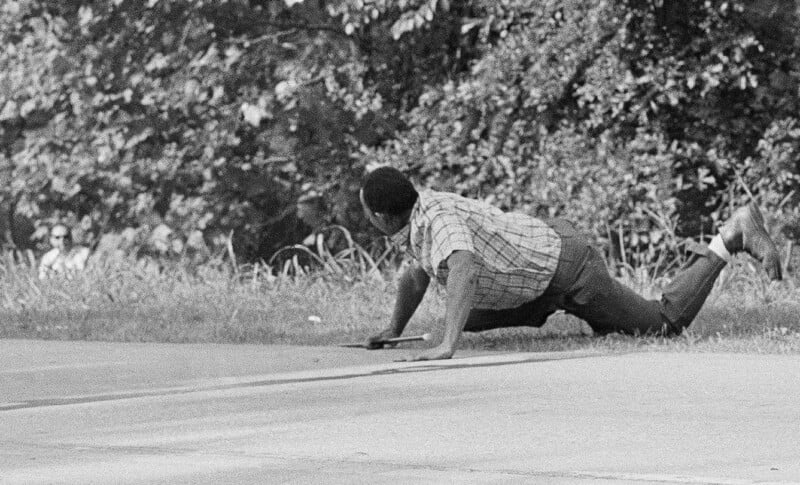
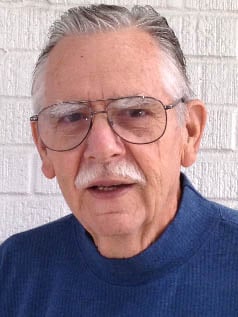
Jack Thornell, the Associated Press photographer whose picture of an assassination attempt on civil rights activist James Meredith in 1966 won a Pulitzer Prize, has died.
Thornell died Thursday at a hospital in the New Orleans suburb of Metairie from complications from kidney disease, his son Jay Thornell confirmed to AP News on Friday. He was 86 years old.
He spent four decades with Associated Press, working from 1964 to 2004 and covering a wide range of assignments, including political figures, natural disasters, and crime scenes. From the start of his career, however, he was closely connected to coverage of the civil rights movement. On his first day at the Associated Press’ New Orleans bureau, he photographed the integration of a school on Mississippi’s Gulf Coast.
Thornell is best known for an image he captured during a 1966 march led by Meredith, the first Black student admitted to the University of Mississippi. Meredith had organized the “March Against Fear” to encourage Black voter registration across the state.
At the time, Thornell, then 26, was assigned to follow the march as it moved along U.S. Highway 51 near Hernando, Mississippi. He and another rival photographer were waiting in parked cars when gunshots rang out. Thornell began taking photos with a Nikon F camera and a 105mm lens, without a motor drive.
“I’m under-lensed, I remember complaining under my breath,” said Thornell, according to a report by Clarion Ledger in 2016. He considered switching lenses but chose not to risk missing the unfolding moment.
“Meredith turns away from the direction of the gunfire and starts crawling towards Sammy and me, putting us directly in the line of fire. We were worried about getting shot,” said Thornell.
As additional shots were fired, Meredith was wounded and fell near the roadside. Thornell continued photographing as the injured activist was taken to an ambulance. At the time, he feared he had missed the most critical image, believing a competing photographer may have captured the gunman.
Instead, Thornell’s photographs were widely published and became defining images of the civil rights era. One shows Meredith wounded and struggling at the edge of the highway. Another, which earned Thornell the Pulitzer Prize, captures Meredith on the ground with his arms extended, his head turned in the direction of the attacker, who is partially visible in the frame.
The images remain difficult to view, reflecting the violence that accompanied efforts to end segregation in the United States. Thornell received the Pulitzer Prize for photography in 1967, one of the highest honors in journalism.
Meredith survived the attack and later recovered. The gunman, Aubrey James Norvell, was arrested at the scene, pleaded guilty, and served 18 months of a five-year prison sentence.
The shooting and the photographs that followed helped reshape the march. Civil rights leaders, including Martin Luther King Jr. and Stokely Carmichael joined together to continue the effort. The march ultimately drew more than 15,000 participants, and during it, Carmichael introduced the slogan “Black Power.”
According to AP News, Thornell also photographed Martin Luther King Jr. on several occasions, including during the 1965 Selma-to-Montgomery march in Alabama and at demonstrations supporting striking sanitation workers in Memphis, Tennessee, in 1968, just days before King was assassinated there.
Affiliate Disclosure PetaPixel articles may include affiliate links; we may earn a commission if you buy through one.