Why Your Black and White Photos Are Emotionally Empty And How to Fix It
I’ve looked at thousands of black and white photographs over the years — both my own and those of others — and I’ve noticed something that nobody talks about enough.
Most of them are technically fine. The exposure is correct. The conversion is clean. The composition follows the rules but something is missing. You look at the image, you register that it exists, and then you move on. It doesn’t stop you. It doesn’t make you feel anything. It is a photograph that is correct in every measurable way and yet completely forgettable.
I spent a long time trying to figure out why.
The answer I eventually arrived at changed the way I make photographs. And it is simpler than I expected.
The Problem Is Not What You Think
Most photographers, when their work is not connecting or resonating, assume the problem is technical. They think they need better gear, better light, better editing software. Or they go looking for more rules; more compositional techniques to learn and more lighting setups to master.
But the problem is almost never technical. Photographers who make technically correct but emotionally empty images already know enough technique. The problem is something else entirely.
Think about it this way. A musician who has mastered their scales can play every note correctly and still make music that leaves you completely cold. The scales are not the music. They are just the foundation. The music comes from somewhere else.
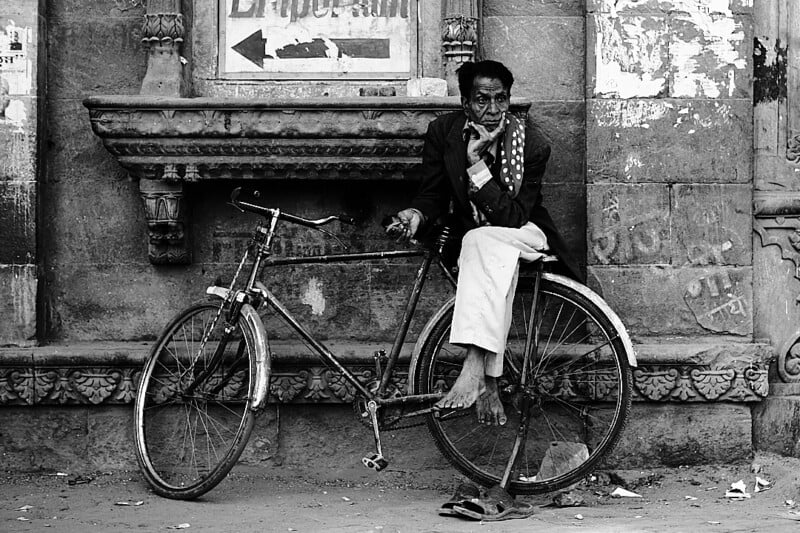
Black and white photography works the same way. Technical competence is the foundation. It is necessary but it is not sufficient. What separates a technically correct photograph from a compelling one is not more technique. It is a framework for using that technique to make something that actually matters.
Three Things Every Compelling Black and White Photograph Shares
After years of studying the photographs that stop me, the ones I find myself thinking about long after I have looked away, I started to see a pattern.
Every single one of them had three qualities working simultaneously. Not independently. Simultaneously.
Light. Composition. Story.
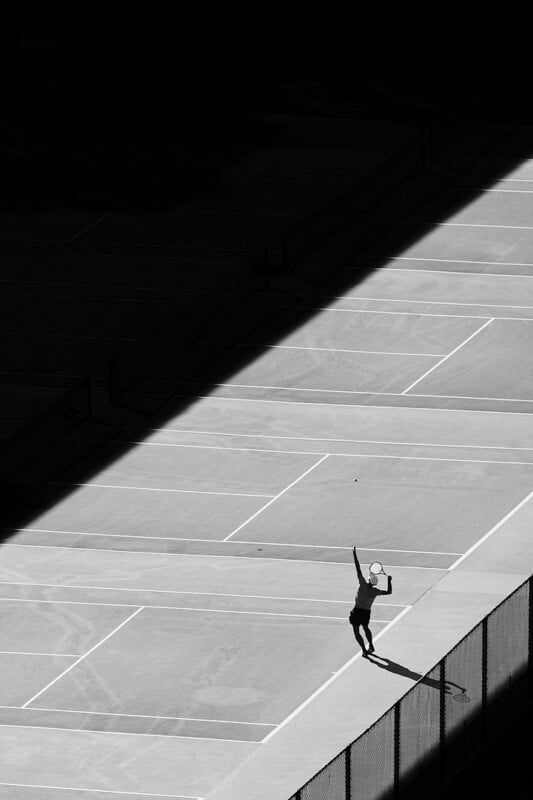
I call it the Monochrome Triangle. I use this term not because it is a complicated system but because it captures something true about how these three things relate to each other. Like the exposure triangle, they are interdependent. Change one and the others shift. Strengthen one and the others have more to work with. Let one fail and the whole image weakens, no matter how strong the other two might be.
This sounds simple. It is simple. But simple is not the same as easy. And understanding it intellectually is very different from feeling it when you are standing in front of a scene with a camera in your hand.
Light Is Not What You Think It Is
Most photographers think about light technically. Is there enough of it? What ISO do I need? Where is the sun?
Monochrome photographers need to think about light differently. In black and white, color is gone so what you have left is tone. The relationship between the brightest point in the frame and the darkest, and everything in between. That relationship is determined entirely by light. Its direction. Its quality. Its intensity.
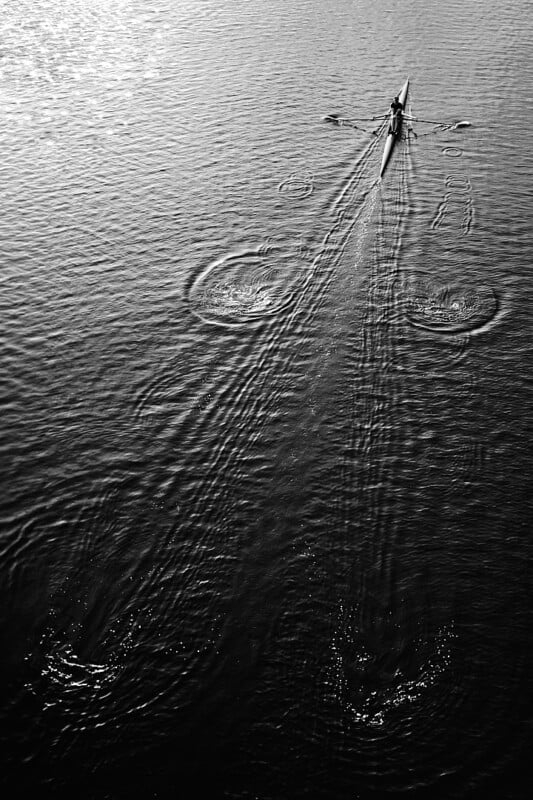
Hard light creates drama. Soft light creates intimacy. Side light reveals texture. Backlight creates silhouette and separation. Each quality of light produces a different emotional response in a black and white image.
The photographer who understands this is not just reacting to the light they happen to find. They are choosing it. Or waiting for it. Or moving around it until it does what the image needs.
But here’s what most photographers miss. Light alone is not enough. You can stand in the most extraordinary light the world has ever produced and still make a photograph that nobody wants to look at, because light without composition is raw material without form.
Composition Is Not a Rule
Every photographer learns the rule of thirds. Divide the frame into a grid, place your subject at one of the intersection points, and your photographs will improve. And they will. That is the frustrating truth about the rule of thirds. It works.
But the rule of thirds is a starting point, not a destination. It is the musical scales that a student practices before they learn to play a song. Necessary, useful, and something you eventually have to move beyond if you want to make work that feels alive rather than merely correct.
Think of the frame not as a neutral container for your subject but as a force field. Every edge exerts a kind of gravitational pull on the elements within it. A subject placed close to an edge feels pulled toward it. A subject placed far from all edges feels anchored and stable. The relationship between subjects and edges, between subjects and the empty space around them, creates the visual energy of the image.
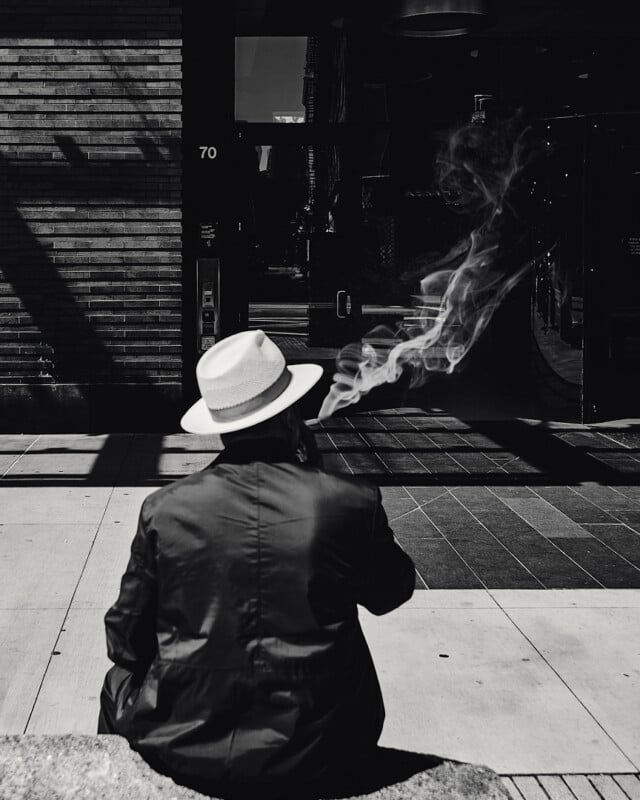
In monochrome, composition carries more weight than it does in color photography. A weak composition in a color photograph can survive on atmosphere. In black and white there is nothing to fall back on. The composition is either working or it’s not.
But here is the same problem again. A perfectly composed frame with nothing worth saying is an exercise in geometry. Beautiful perhaps. But cold. Composition without story is a photograph that you admire for a moment and then forget entirely.
Story Is the Hardest Part
Story is the hardest point of the triangle to define. It’s also the most important.
Story is the reason the photograph exists. It is the quality that makes a stranger stop and look. A woman sitting alone in a cafe, looking out of the window at something we cannot see. A child running through a spray of water on a hot city street. An old building with a single lit window in an otherwise dark facade. None of these are complicated. But each of them contains something human. Something that a viewer can enter and feel.
Story does not require a dramatic subject. The most powerful photographs are almost never about dramatic subjects. What they share is intention. The photographer saw something, decided it mattered, and made deliberate choices to communicate why it mattered to a viewer who was not there.
That decision is story. It’s the photographer’s voice. And it’s what separates a document from a photograph.
How the Triangle Works
Light shapes what composition is possible. The direction and quality of light determines where the shadows fall, how textures are revealed, where the tonal contrast lies. Those things in turn determine what compositions are available to you. You cannot compose around a shadow that does not exist.
Composition in turn determines which story can be told. The frame you build around a scene includes some things and excludes others. It directs the viewer’s eye toward certain elements and away from others. A powerful human moment photographed with a careless composition is a missed opportunity. The same moment framed with intention becomes a photograph that lasts.
And story dictates what light and composition you need to go looking for. The three points are always pulling on each other, always in conversation, always adjusting in response to what the others are doing.
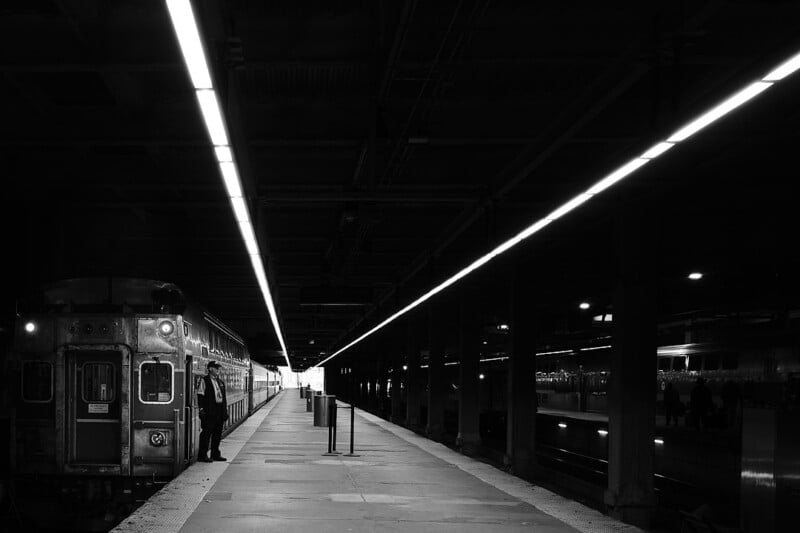
Consider what happens when one point fails. Strong light and a compelling story but careless composition and the eye cannot settle, the impact dissolves. Good composition and a real story but flat directionless light and the image feels lifeless. Perfect light and a beautifully structured frame but nothing to say and the photograph is admired briefly and forgotten.
All three have to be working together, as a system, toward the same end.
The Question to Ask
There is one question that asked honestly before every photograph you make will do more to close the gap between technically correct and genuinely compelling than any technique or any piece of equipment.
Before you press the shutter ask yourself why does this matter.
Not is the exposure right. Not is the composition following the rule of thirds. Why does this matter. What is here that is worth preserving. What will a stranger feel when they look at this image.
The photographs that stop people are the ones where the photographer knew the answer to that question. You can feel it in the image. You can feel the presence of a mind that saw something, understood why it mattered, and made every decision in the frame in service of communicating that understanding.
That presence is what makes a photograph worth looking at.
The triangle is not a technique. It is a way of seeing. And once you start asking those three questions, about the light and the composition and the story, before you press the shutter, you will be surprised how quickly your photographs stop being technically correct and start being something worth looking at.
Affiliate Disclosure PetaPixel articles may include affiliate links; we may earn a commission if you buy through one.