This Forgotten Photographic Invention Was a Short-Lived Game Changer
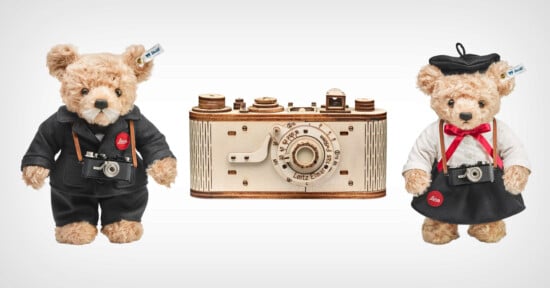
When Leica ushered in the era of 35mm photography over a century ago, it did not immediately offer a coupled rangefinder (that came in 1932). Precise focusing was difficult with early Leica cameras, so other companies filled the void and offered useful accessories to early photographers. A particularly cool, stylish example is the Kühn Flexameter designed for Leica cameras.
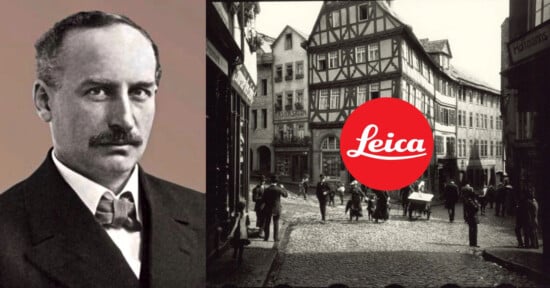
As photographer Mathieu Stern shows, the Flexameter is a brilliantly-engineered camera accessory. Given its heritage, it is little surprise that it was good for its time, considering it was invented 94 years ago. Kühn was formed by husband and wife Kurt Kühn and Elsie Leitz-Kühn, daughter of then-Leica president Ernst Leitz II. Although not the topic of this story, Ernst Leitz II and his daughter, Elsie, were instrumental in organizing the Leica Freedom Train that helped save hundreds of Jews from Nazi persecution in Germany.
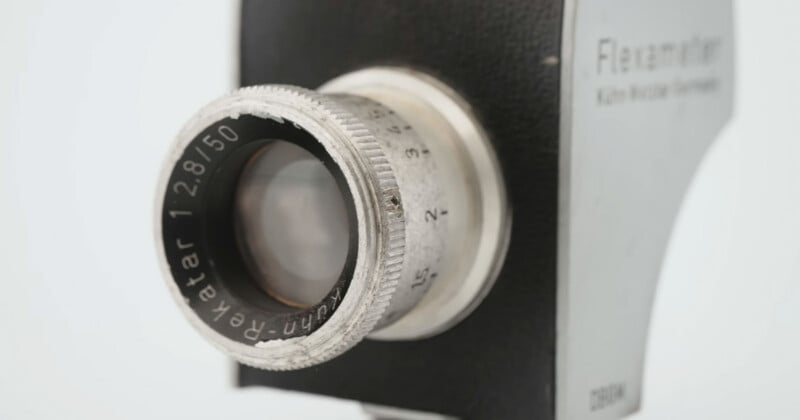
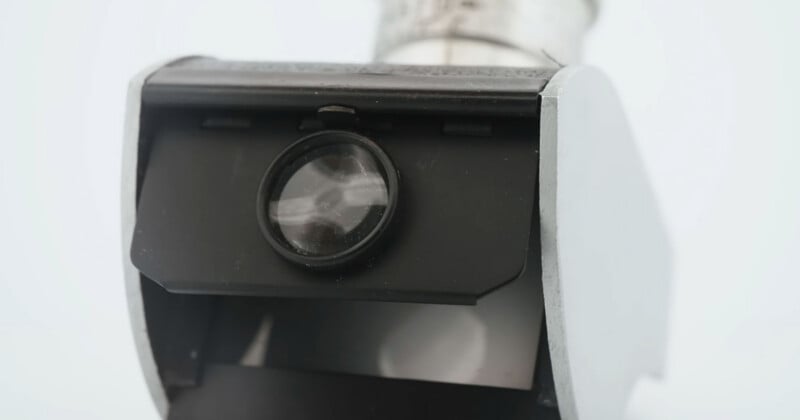
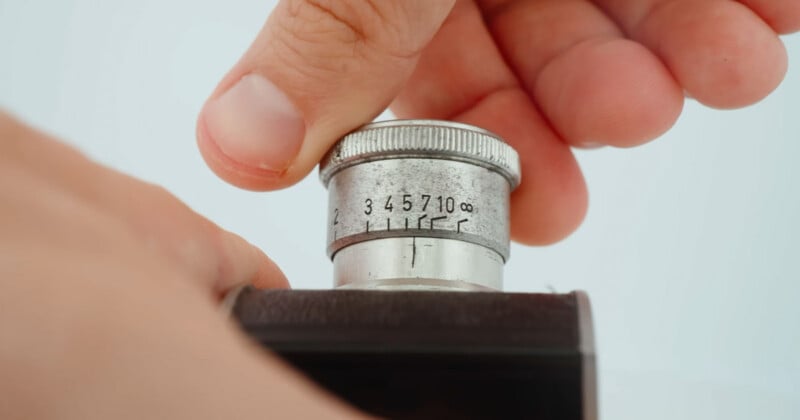
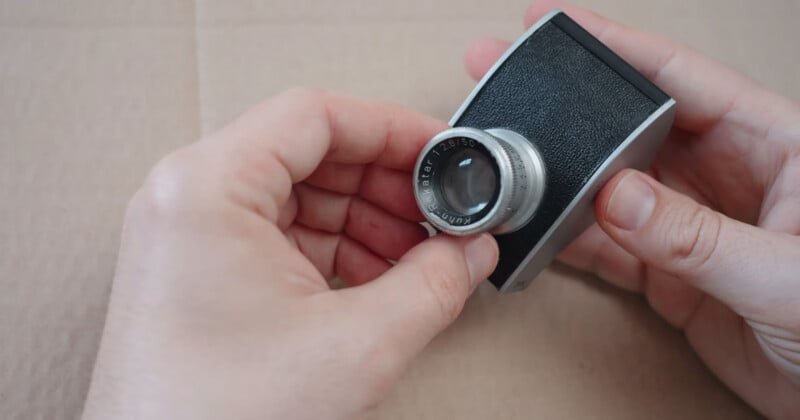
Elsie was also an important figure in the development of the Flexameter. The device was built to answer “one fundamental question,” as Stern puts it: “How do we see exactly what the lens sees?”
What makes the Flexameter very neat and different from other waist-level viewfinder accessories is that it has a focusable lens on the front, providing 1:1 focusing information for the photographer. When the view in the finder is sharp, photographers could manually transfer the distance value from the Flexameter’s lens to the camera’s taking lens.
“This system was perfect for close-up photography and creating subject separation,” Stern says. Although designed for Leica, Stern notes that it actually works on any camera thanks to its universal mount.
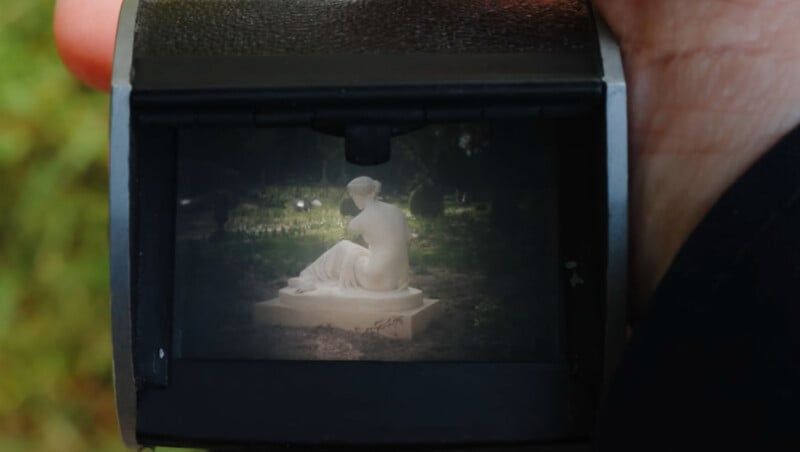
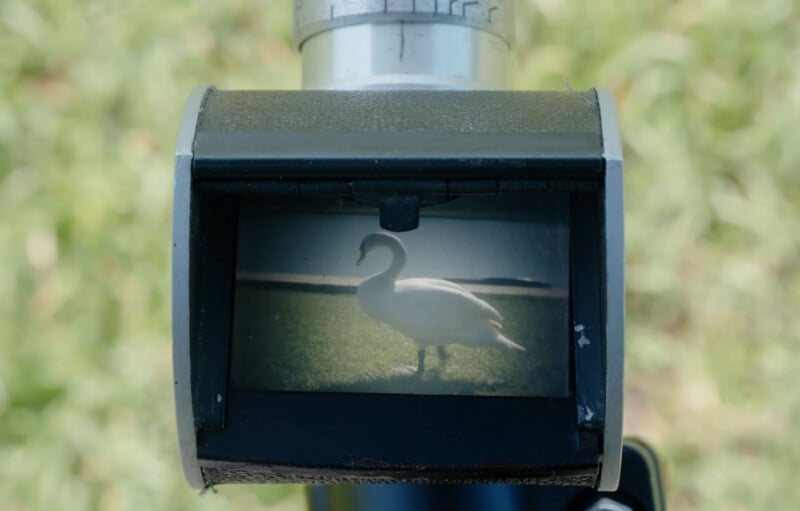
What makes Stern’s new video particularly compelling is that he didn’t just show off the Flexameter and discuss its interesting engineering and history; he rigged up a custom camera setup to clearly film what the Flexameter sees, showing modern viewers what photographers would have seen way back in the 1930s.
Although there is no real need for something like the Flexameter today, it remains an interesting and rare piece of photographic history and a reminder of just how far camera technology has come.
“It went from cutting-edge solution to forgotten relic in just a few short years,” Stern concludes. “It remains one of the most unique and clever accessories in the history of photography.”
Image creditsMathieu Stern (@MathieuStern)
Affiliate Disclosure PetaPixel articles may include affiliate links; we may earn a commission if you buy through one.