100-Year-Old Photographs of Havasupai Tribe That Still Live in the Grand Canyon
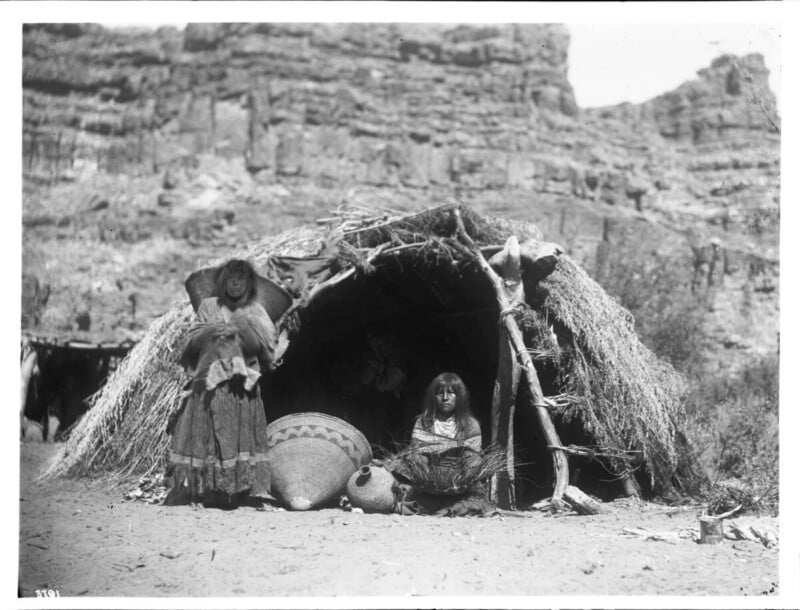
Two women in traditional dress stand and sit outside a thatched hut made of brush in a rocky canyon landscape, surrounded by large woven baskets and pottery.
Two Havasupai women in front of a native dwelling, Havasu Canyon, ca.1899 | James, George Wharton/ University of Southern California – Libraries/California Historical Society

A series of century-old photographs documents the Havasupai, a Native American tribe that has lived in the Grand Canyon region for more than a thousand years.

The Havasupai are one of 11 Native American tribes traditionally connected to the Grand Canyon and are the only tribe that still lives below the canyon’s rim today. For at least a millennium, the tribe has lived primarily in Havasu Canyon, a remote area within the wider Grand Canyon region in what is now the U.S. state of Arizona.
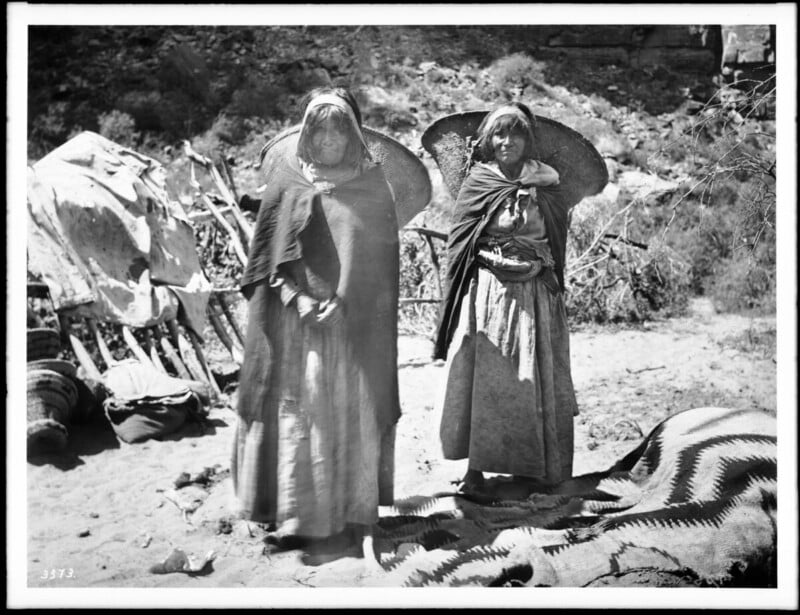
Two Indigenous women stand outdoors wearing long dresses and shawls, each with a large woven basket on their backs. Behind them are makeshift wooden structures and a patterned blanket on the ground.
Two Havasupai women with “Kathaks” on their backs, ca.1900 | Charles C. Pierce /University of Southern California – Libraries/California Historical Society
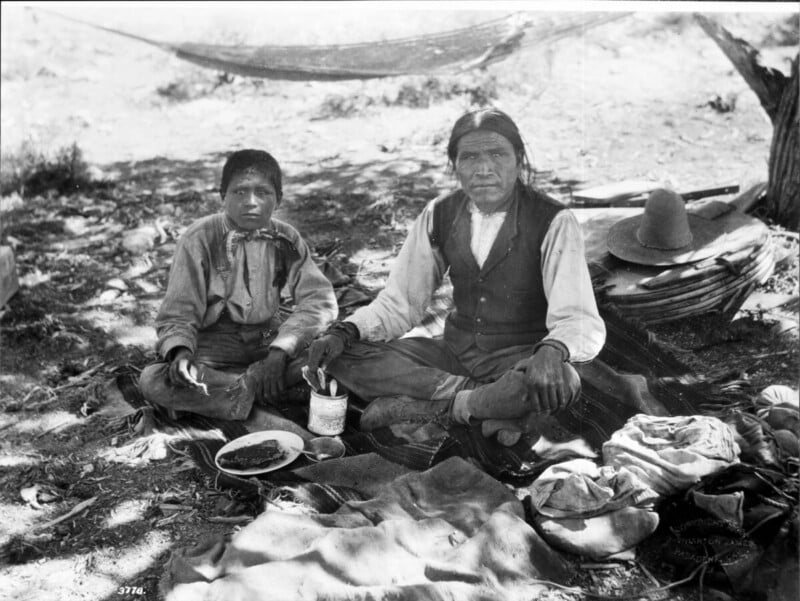
Two Indigenous men sit on the ground outdoors among blankets and supplies, with food dishes in front of them. Trees and a hammock are in the background, with a hat resting nearby.
Havasupai boy with his father, Vesna, eating lunch during a walking trip, ca.1899 | James, George Wharton/ University of Southern California – Libraries/California Historical Society
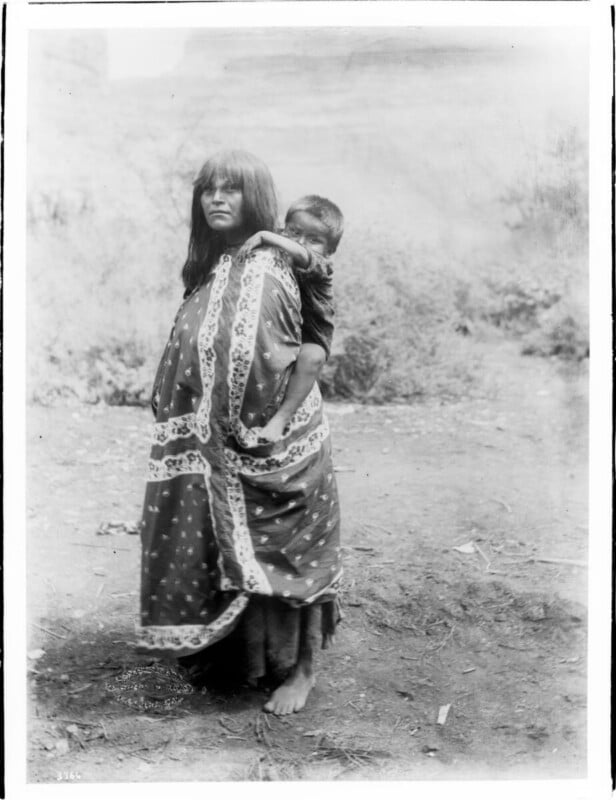
A barefoot woman stands outdoors, wrapped in a patterned blanket, carrying a young child on her back. The child looks over her shoulder, both have straight dark hair. The background is natural and slightly blurred.
Havasupai mother, Pana Mahita, carrying her little boy on her back, ca.1900 | Charles C. Pierce /University of Southern California – Libraries/California Historical Society

The name “Havasupai” translates to “people of the blue-green water,” referring to Havasu Creek, a tributary of the Colorado River known for its distinctive blue-green color. The creek runs through Havasu Canyon and has long been central to the tribe’s way of life.

The Havasupai lived in the canyon long before the arrival of European settlers and before the area became part of a United States national park. Historically, the tribe occupied a much larger territory that included large sections of the Grand Canyon and the surrounding plateau lands.
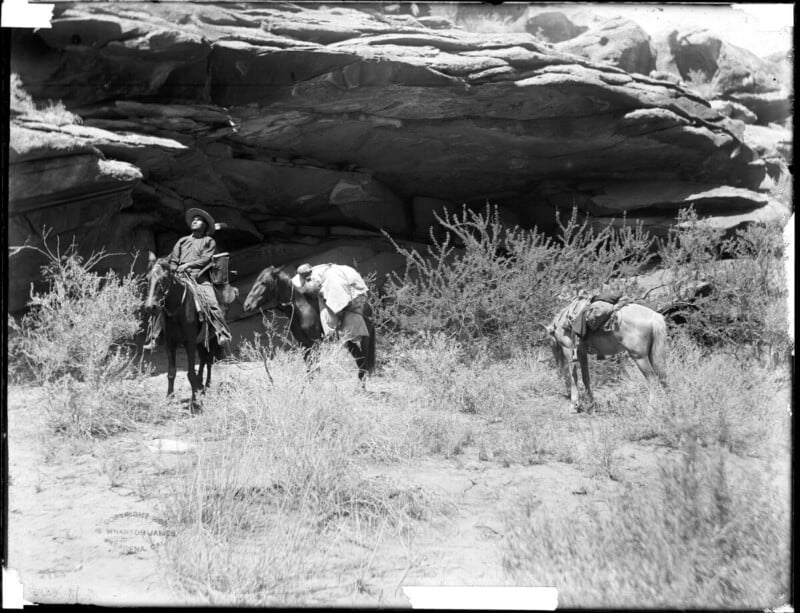
A person in traditional clothing sits on a horse next to two saddled horses in a dry, rocky landscape with large boulders and sparse vegetation.
Havasupai man on horseback, with two pack-horses, standing beneath a cliff overhang, ca.1899 | James, George Wharton/ University of Southern California – Libraries/California Historical Society
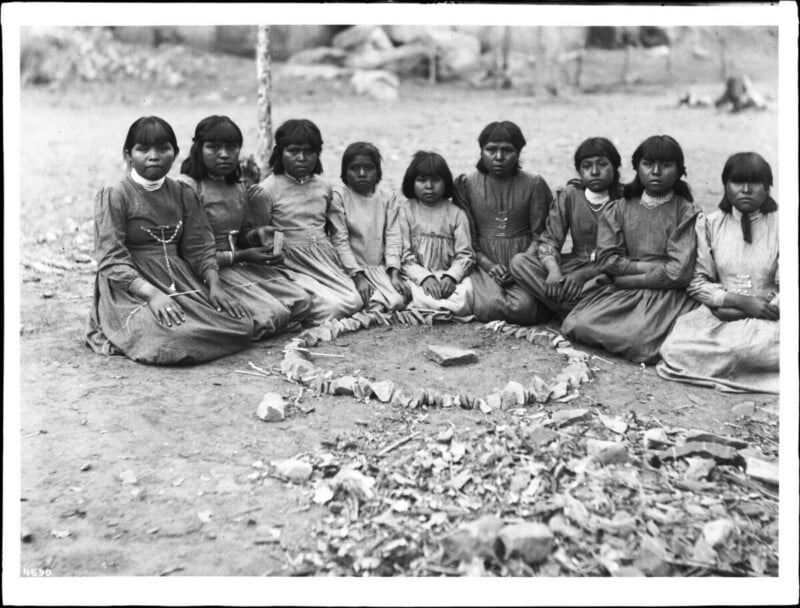
A group of young Native American girls sit in a circle on the ground outside, surrounding a ring of stones with a single stone in the center. They wear long dresses and have straight, dark hair with bangs.
Group of nine Havasupai girls playing “Hue-ta-queech-e-ka,” ca.1898 | James, George Wharton/ University of Southern California – Libraries/California Historical Society
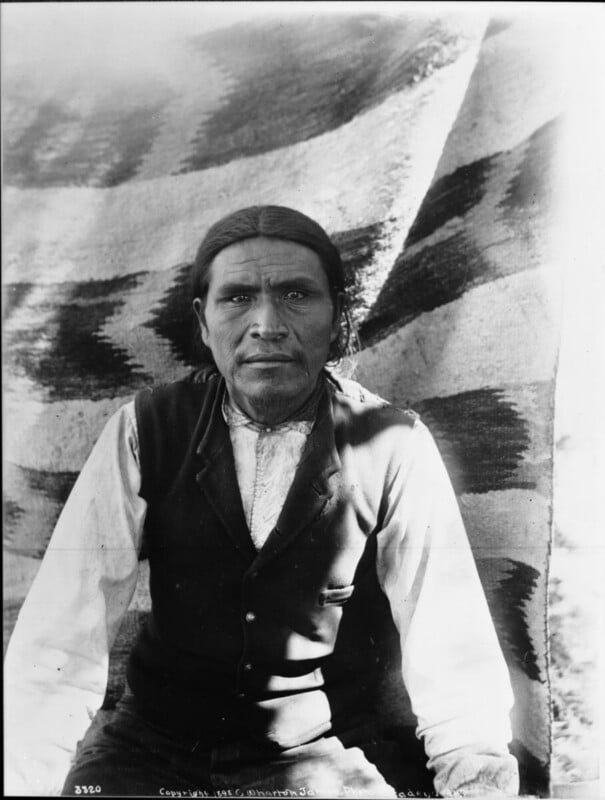
A Native American man with long hair, wearing a vest over a light shirt, sits in front of a patterned blanket hanging as a backdrop. He looks directly at the camera with a serious expression.
Havasupai man, Vesna, a tribal leader, ca.1899 | James, George Wharton/ University of Southern California – Libraries/California Historical Society

The community traditionally followed a seasonal pattern of living. Families moved between the canyon floor and the higher plateaus at different times of the year. Agriculture, hunting, and gathering were central to survival in the desert environment.

During the late 19th century, increasing settlement and the expansion of the U.S. government dramatically reduced the land controlled by the tribe. Their territory was eventually limited to just 518 acres within the canyon, a major loss that disrupted their traditional way of life.
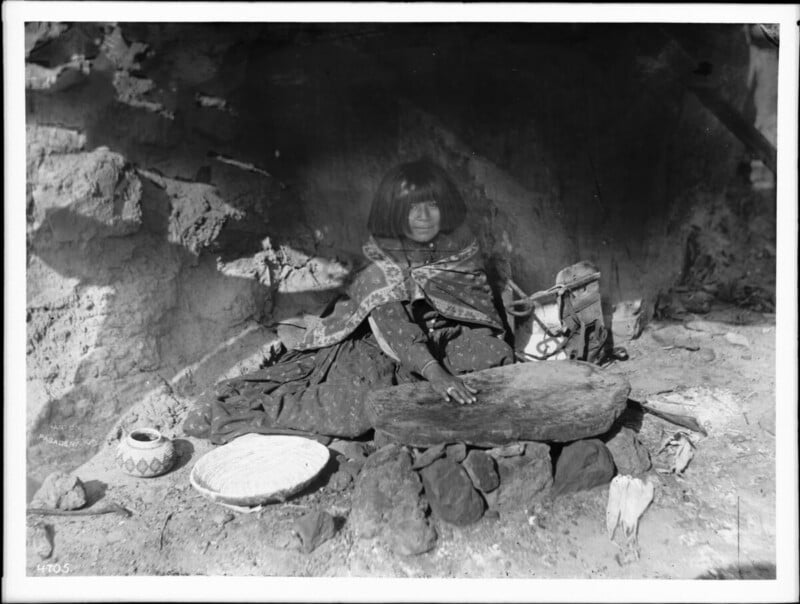
A young Indigenous girl sits on the ground in front of a stone structure, wrapped in a patterned blanket, with baskets and traditional tools arranged around her. She extends her hand over a flat stone in a sunlit outdoor setting.
The Havasupai Uta’s daughter, Tis-wi-a-yar-i, making “piki” (bread), ca.1899 | James, George Wharton/ University of Southern California – Libraries/California Historical Society
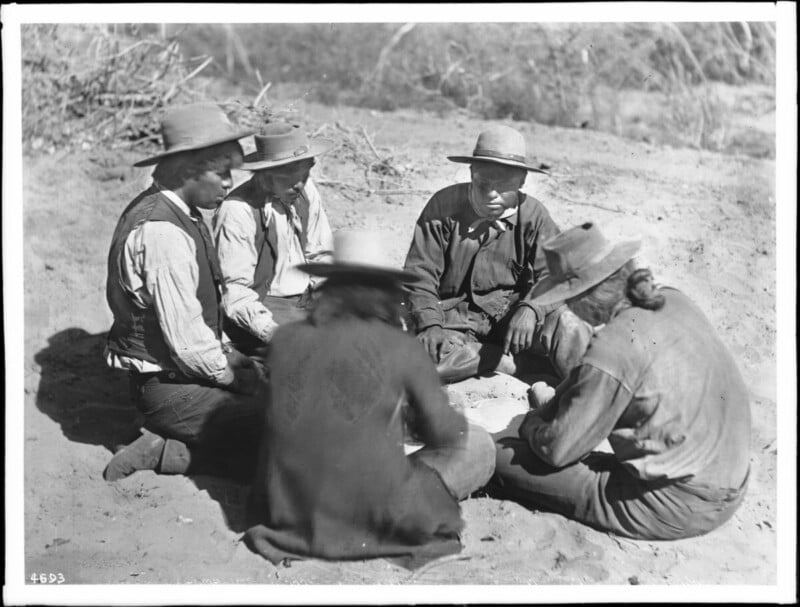
Five people wearing hats and long-sleeved clothing sit in a circle on sandy ground outdoors, appearing to engage in conversation or an activity together. Bushes and dry landscape are visible in the background.
Havasupai men gambling, ca.1900 | James, George Wharton/ University of Southern California – Libraries/California Historical Society
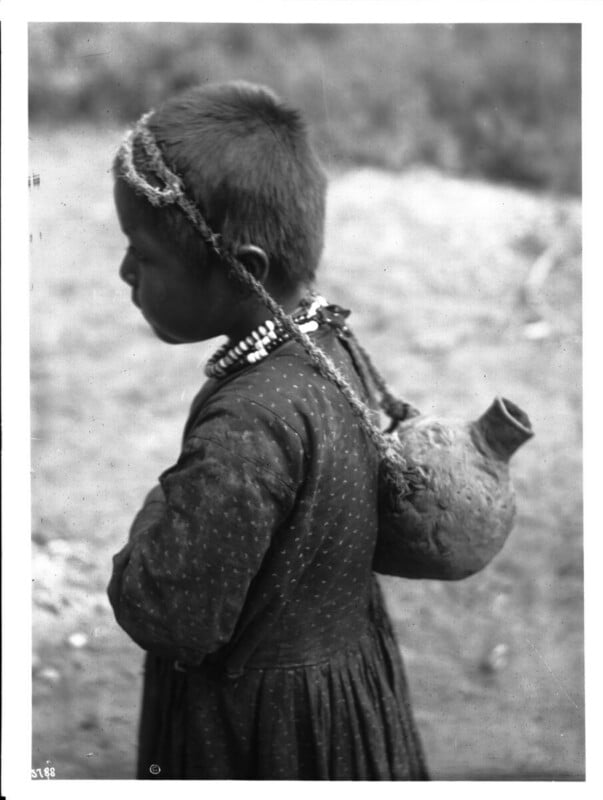
A young child with short hair, wearing a patterned dress and beaded necklace, stands in profile carrying a clay pot tied with string on their back. The background is blurred and outdoors.
Young Havasupai girl, Waluthama’s daughter, carrying an “Olla” or water jug, ca.1899 | James, George Wharton/ University of Southern California – Libraries/California Historical Society
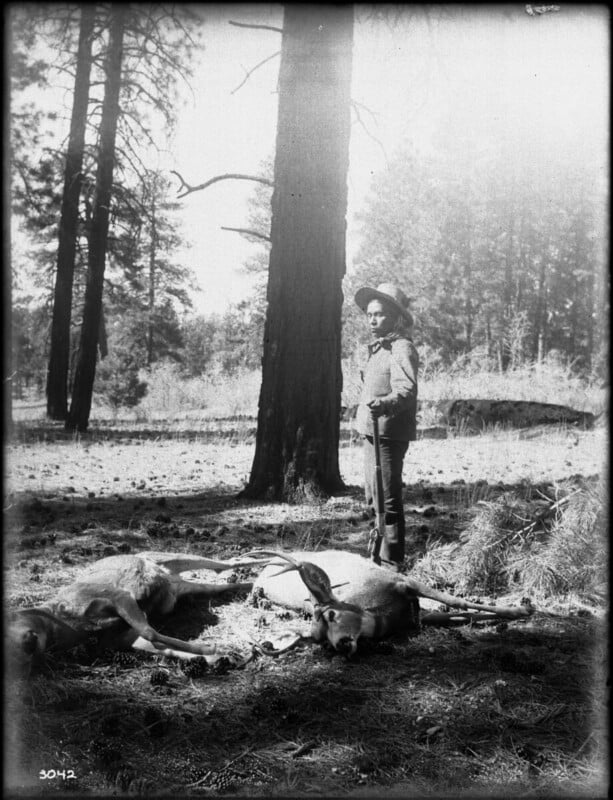
A young person in a hat and boots stands in a forest clearing, holding a rifle, next to two deer lying on the ground. Tall trees and sunlight fill the background.
Portrait of a Havasupai hunter, Chickapanagie, with two slain deer in the forest on the north rim of the Grand Canyon, ca.1900 | Charles C. Pierce /University of Southern California – Libraries/California Historical Society

When Grand Canyon National Park was officially established in 1919, the Havasupai lost further access to their ancestral lands.

Throughout the 20th century, the tribe pursued legal and political efforts to regain some of this territory. After decades of advocacy, the United States Congress passed legislation in 1975 that restored about 185,000 acres to the Havasupai. The restoration is considered one of the most significant land returns to a Native American community in the United States.
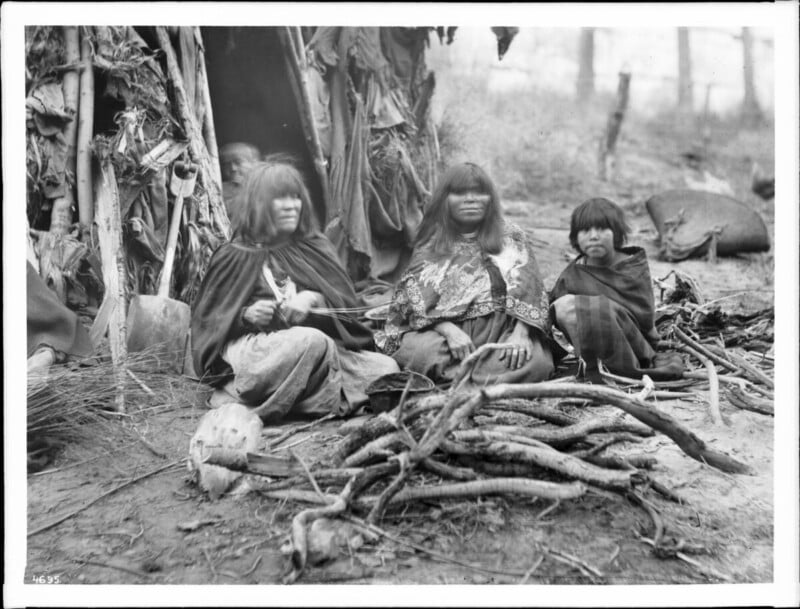
Three Indigenous women and a child sit on the ground near a pile of sticks and branches, in front of a structure made from natural materials. The scene appears outdoors with a blurred natural background.
Two Havasupai women basket makers, ca.1900 | James, George Wharton/ University of Southern California – Libraries/California Historical Society
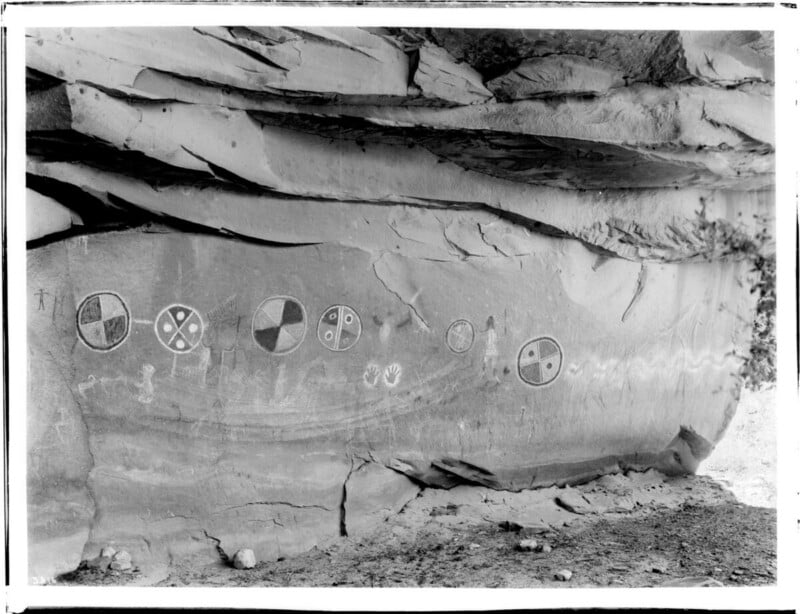
Black and white photo of a rock wall under an overhang, with several circular petroglyphs and other symbols etched and painted onto the stone’s surface. Some circles are divided into segments. Dirt ground below the wall.
Havasupai pictographs on the rocks in Havasu Canyon on the Topocolya Trail, Grand Canyon, ca.1900 | James, George Wharton/ University of Southern California – Libraries/California Historical Society
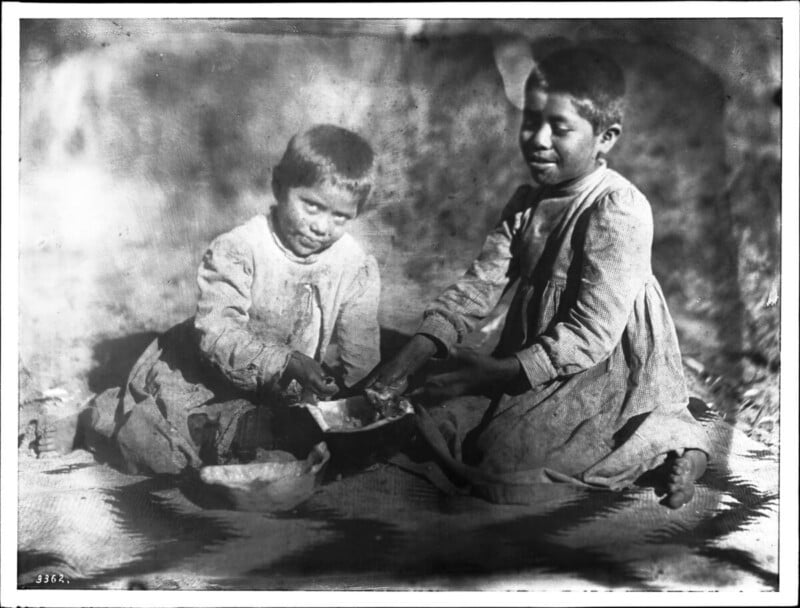
Two young children sit on a patterned blanket, sharing food from a bowl. Both wear simple, worn clothing and appear focused on the meal, with a soft, blurred background behind them.
Two Havasupai children, the daughters of Chickapanagie’s, enjoy a melon, ca.1900 | Charles C. Pierce /University of Southern California – Libraries/California Historical Society
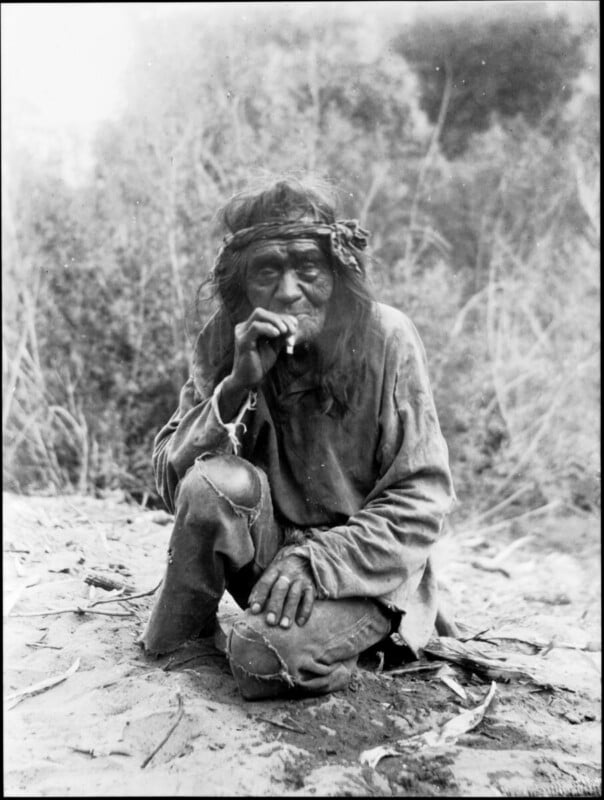
An elderly man with long hair and a headband squats outdoors, dressed in worn clothes. He looks directly at the camera while touching his mouth, surrounded by dense foliage. The photo is in black and white.
Old Havasupai man crouching on the ground, smoking a cigarette, ca.1900 | Charles C. Pierce /University of Southern California – Libraries/California Historical Society

Several of the images of the Havasupai in the early 1900s were taken by an English-born photographer and writer named George Wharton James. Around the turn of the 20th century, while the Havasupai were dealing with these changes to their land and way of life, James began documenting the American Southwest. He initially worked as a Methodist minister in Nevada and southern California. But in 1889, his career collapsed following accusations made during a difficult divorce and a church trial involving allegations of misconduct and fraud. After resigning from the ministry and losing his position within the church, James left California.

He then traveled through the landscapes of Arizona and New Mexico, exploring canyons, deserts, and forests that were still largely unfamiliar to many white Americans at the time. His journeys focused on remote environments and life outside established settlements.
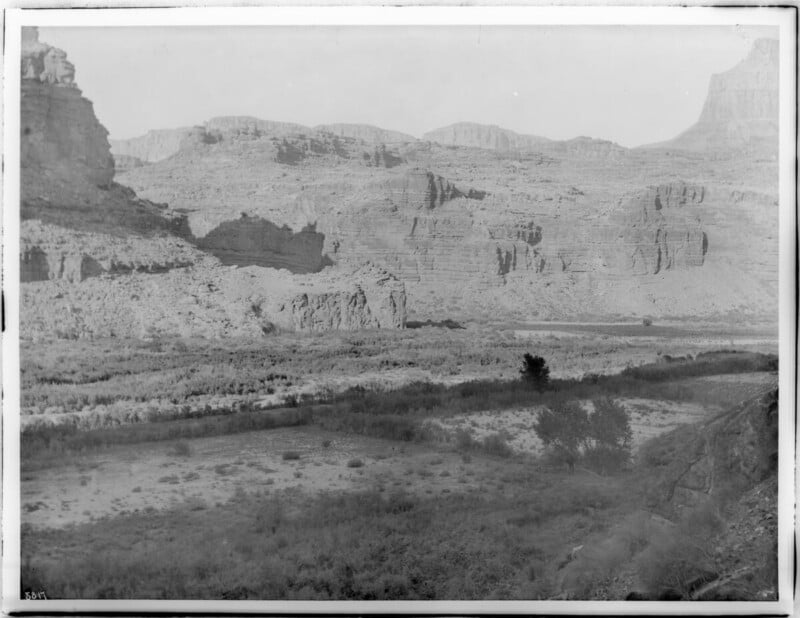
Black and white photo of a vast canyon landscape with layered rock formations, a river running through the middle, and sparse vegetation in the foreground. The scene appears rugged and arid.
Lands farmed by the Havasupai in Havasu Canyon, Grand Canyon, ca.1899 | James, George Wharton/ University of Southern California – Libraries/California Historical Society
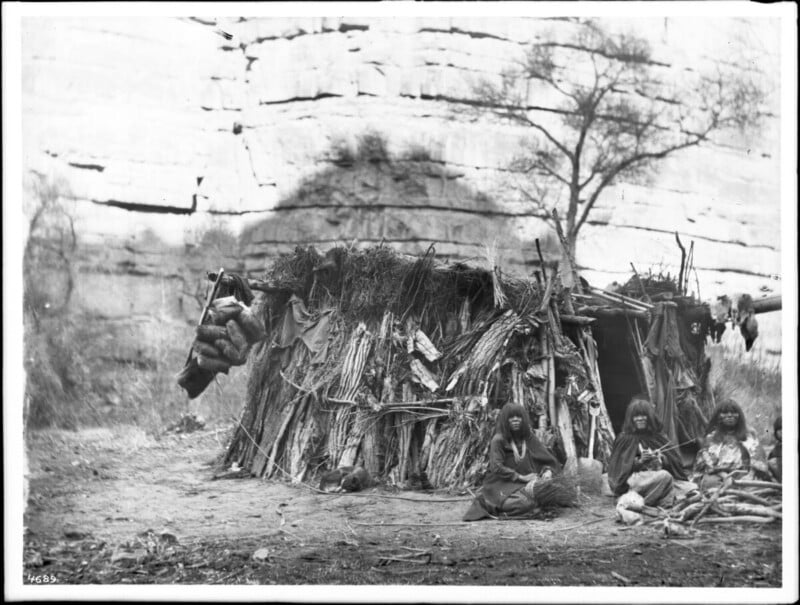
Three people sit in front of a small, rustic shelter made from branches and leaves, set against a rocky cliff. A tree stands nearby, and various objects are scattered on the ground around them.
Havasupai women making baskets in front of a dwelling in Havasu or Cataract Canyon, ca.1900 | James, George Wharton/ University of Southern California – Libraries/California Historical Society

During these travels in the 1890s and early 1900s, James began carrying a camera and photographic equipment with him. He photographed landscapes, settlements, and the people he encountered, while also recording details of his travels in journals and books.

Many of the photographs he produced during this period document the Havasupai and their homeland in and around the Grand Canyon.

At the turn of the 20th century, James compiled an album of images that includes portraits of Havasupai individuals as well as scenes from life in the canyon. The photographs show a range of subjects, including tribal leaders, women weaving baskets, and children living within the community.

According to a piece published by Princeton University, in several of James’ photographs, the subjects look directly toward the lens and appear to have been posed. Other images seem more informal and capture everyday moments. The photographs are also taken at relatively close range, which indicates that the photographer was working at a short distance from the people he documented.

James’ photographs provide a rare visual record of the Havasupai at the beginning of the 20th century, documenting both the community itself and the landscape that has been its home for generations.
Discussion