The Race to Find a Universal ‘No AI’ Logo is On
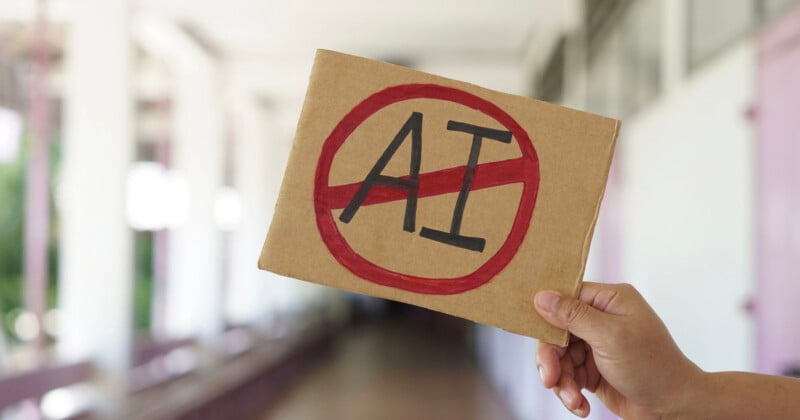
The race is on to find a universal ‘No AI’ logo. However, with competing emblems and varying definitions of artificial intelligence, it’s far from straightforward.
BBC News reports that it found at least eight different initiatives providing labels that say things like, “No AI Was Used” or “Proudly Human.” These different campaigns could cause confusion, says consumer expert Dr. Amna Khan of Manchester Metropolitan University.
“AI is creating significant disruption and competing definitions of what is ‘human-made’ are confusing consumers,” Dr. Khan tells BBC News. “A universal definition is essential to build trust, clarification, and confidence.”
It is increasingly common to see photographers and other creatives stating clearly that they don’t use AI tools; many are writing it on their social media profiles.
It’s happening in other industries too: BBC News notes that publishing house Faber and Faber are adding a “Human Written” stamp on some books, while Books by People is a company vetting authors and checking to see whether they use AI.
“Publishers are grappling with a new landscape where books can be produced in minutes rather than months or years and readers can no longer be sure if a book reflects a human experience or machine imitation,” says Books by People founder Esme Dennys.
Some films have begun adding notices that no AI was used. The 2024 horror film, Heretic, starring Hugh Grant had a disclaimer saying: “No generative AI was used in the making of this film.”
It’s a growing problem for creators who toil away only to be accused of AI. Last week photographer Robert Wilson told PetaPixel about a frustrating ordeal where his brilliant photo shoot had been shot down by sceptics online who falsely believed it was made by AI.
Defining AI
One of the problems is that AI is integrated into so many tools that it’s difficult to know where to draw the line.
“AI is now so ubiquitous and so integrated into different platforms and services, that it’s truly complicated to establish what ‘AI-free’ means,” AI Research Scientist Sasha Luccioni tells BBC News.
“From a technical perspective, it’s hard to implement. I think that AI is a spectrum, and we need more comprehensive certification systems, rather than a binary with AI/AI-free approach.”
Image credits: Header photo licensed via Depositphotos.