Shot of Photographer Looming Over an Owl Highlights Growing Problem
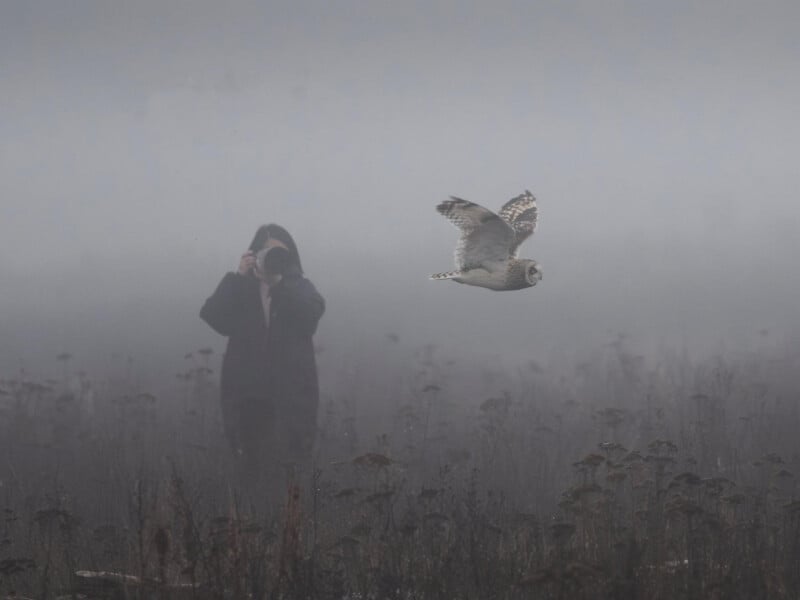
As a warning to others, a Redditor has told a disturbing story of a photographer who chased an owl through a field just so she could get the shot she wanted.
User NeedlesslyMike, a wildlife photographer himself, shared the galling tale to r/Birding and r/M43. He had gone out to shoot stills when he encountered the woman who was “nonstop chasing the bird from one end of the field to the other to get her shots.”
“Over and over,” Mike says. “The bird eventually got tired and sat in a tree, and the woman got super close to get more amazing shots. This is a horrible thing, but the reason may not be immediately clear.”
Mike explains that the short-eared owl the woman was chasing around has a finite amount of energy.
“Most of that energy is spent hunting. When a bird wastes its strength being chased away, it’s using up energy it should be using to hunt,” he explains. “It might miss a meal, making it tired and slow — and easier to be picked off by a predator. Or it may not be able to feed its young.”
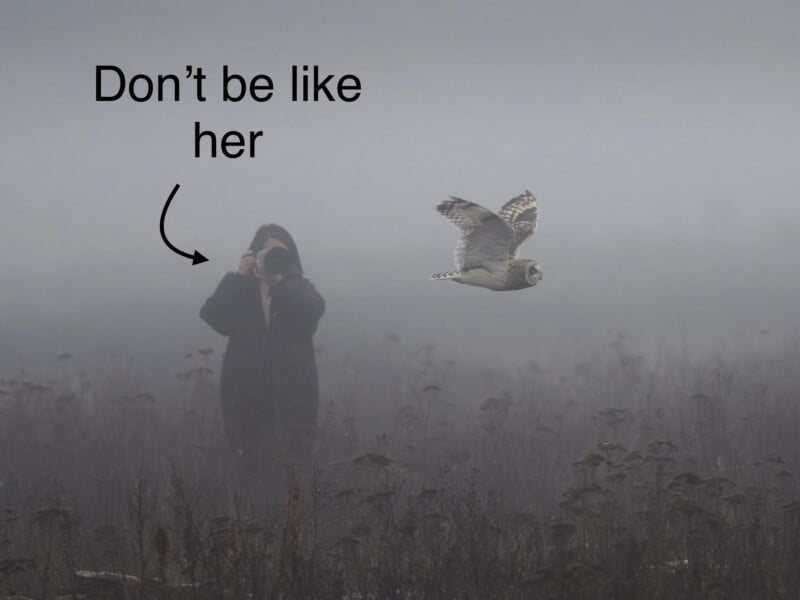
Mike laments the modern phenomenon of taking photographs for social media clout at the expense of the wildlife itself.
“How can anyone look at their own photos and be proud of what they did? ‘See that owl pic on my wall? Yeah, it’s probably dead now because of me. But isn’t that shot cool?'”
Mike says the wayward photographer was told to leave the bird alone. But she simply ignored the sage advice and carried on, despite the protestations of others.
“I have a lot of grace for beginners, because they’re just figuring things out… but you could tell she does this often,” Mike adds. “She even had a buddy who was circling around to flush the owl towards her.”
Mike is using the sad story to highlight the issue. “We often talk about camera lenses and techniques, but photography ethics is just as important when it comes to genres like wildlife photography,” he says. “It seems obvious, but harassing the subject can be extremely harmful to the animal.”
On his post, Mike stresses that the majority of photographers he encounters are perfectly respectful toward wildlife. Nevertheless, he shared a few tips that all wildlife documentarians should follow.
1. If you approach a subject and they become agitated (looking over at you a couple times and acting nervously), back off until they resume their normal behavior,
2. Flushing out animals, baiting them, or use call recordings is off the table. This changes their behavior and they’re typically worse for it. (There is some debate over call recordings, but I personally stay away from it.)
3. Please be extra EXTRA careful around nests or dens.
4. For something like this owl situation, stay on the sidelines of the hunting area and don’t go in the middle of the dang field — your hulking presence is just agitating the subject and scaring prey away.
5. Heed the posted signs about sensitive areas and don’t trespass on people’s private property. I’ve seen this so much, and it’s kind of awful what some photographers do to get their 14 likes on Facebook.
6. Learn about the typical behavior of your subject, either before or after a shoot. I’ve done dumb things without knowing better, and that happens. It’s OK. But you can learn and get better the next time you see a species. Just asking the question, “I wonder why that bird was _____” is a good step.
In October, PetaPixel published a thorough guide to responsibly photographing wildlife. It’s definitely worth a read if you’d like to know more.
Image credits: Photographs by NeedlesslyMike