Aerial Footage Captures Mysterious ‘Fairy Rings’ for First Time
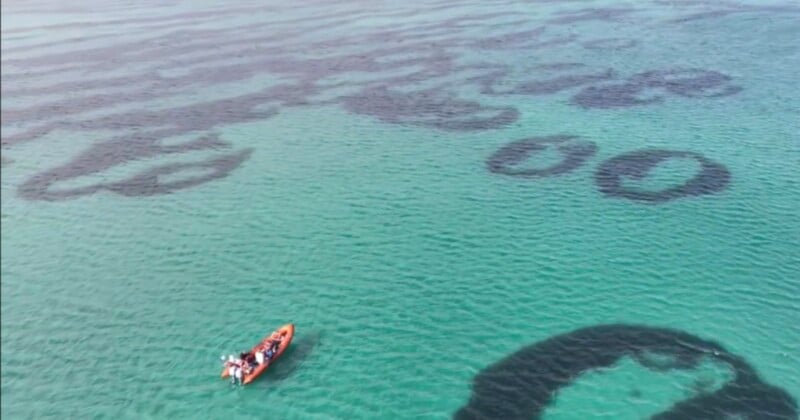
Scientists captured aerial footage of seagrass “fairy circles” — the first time this mysterious natural phenomenon has been filmed in Scotland’s seas.
Marine experts at NatureScot have released aerial footage showing rarely-seen fairy circles in the Sound of Barra in the Scottish Outer Hebrides. According to a new report by NatureScot, these circles are dark blue rings made of seagrass that form naturally in the ocean. However, the formations are seldom observed, and scientists are still unsure how they come about,
“As far as we know, this is the first video of seagrass fairy circles in Scotland’s seas. Our marine monitoring team call them seagrass doughnuts — but whatever you call them, they’re spectacular,” Sarah Cunningham, NatureScot’s Marine Protected Area and Marine Enhancement Manager, says in a statement. “We were delighted when we spotted them and were able to get some aerial video showing them off!”
Seagrass usually grows in dense “meadows” and provides a vital habitat for marine life. Scotland once had extensive seagrass beds, which were so abundant in Orkney that they were used for thatching houses. However, these habitats have suffered major declines in the 20th and 21st centuries due to disease, pollution, poor water quality, coastal development, and dredging. In the 1930s, a wasting disease caused by a marine slime mold led to widespread seagrass loss, and some areas have not yet recovered.
NatureScot’s report notes the historic decline of this crucial habitat but offers hope, showing that seagrass populations can recover when human pressures are reduced and water quality improves.
“Seagrass is a wonder habitat, often likened to the rainforest because of its effect on nature and the climate. The lush meadows it creates are home to an amazing array of wildlife. Their leaves and roots also trap carbon, helping tackle the climate crisis,” Cunningham explains. “Seagrass can also improve water quality, reduce contamination in seafood, and act as the first line of defence along coasts by reducing wave energy, protecting people from the increasing risk of flooding and storms.”
Image credits: Header photo NatureScot/ Chris Nall