A Wildlife Filmmaker Put a Fujifilm GFX100 II in the Path of Bull Elephants
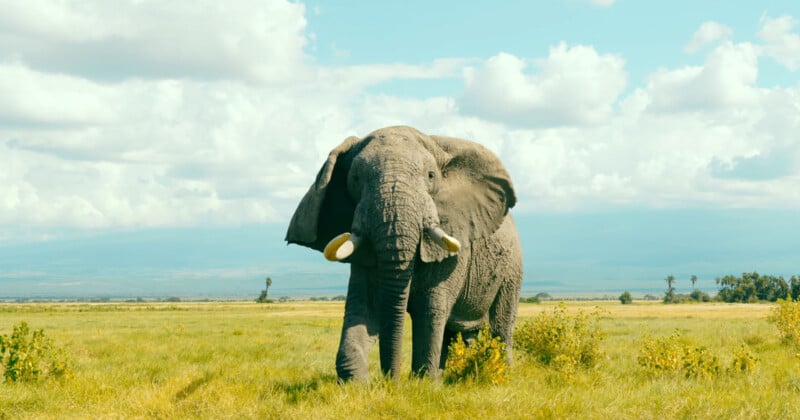
Emmy Award-winning cinematographer Bob Poole loves elephants. He not only loves elephants but is also a world-leading expert in filming them. Filming elephants is surprisingly challenging, and Poole uses every tool in his arsenal to capture their magic in a safe, respectful way.
Fujifilm lenses are a big part of Poole’s kit, including the flexible Fujinon Duvo HK 25-1000mm f/2.8-5, a highly specialized 40x zoom lens for Arri PL mount. Using this lens, alongside other Fujinon zooms, on an Arri Alexa 35, Poole captures stunning images of elephants in a wide array of situations.
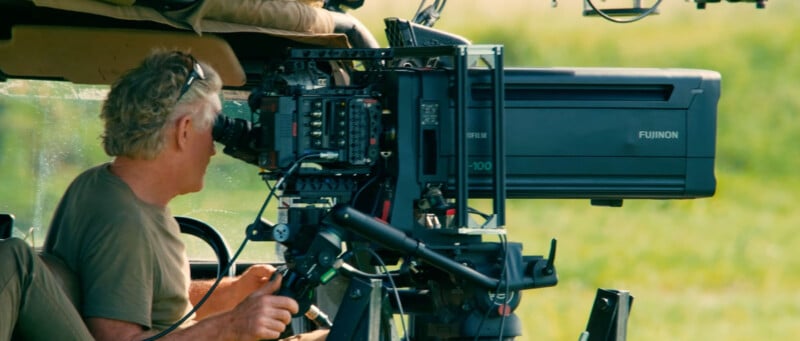
“I have this huge passion for elephants, and it started young,” Poole explains. “It’s never gone away.”
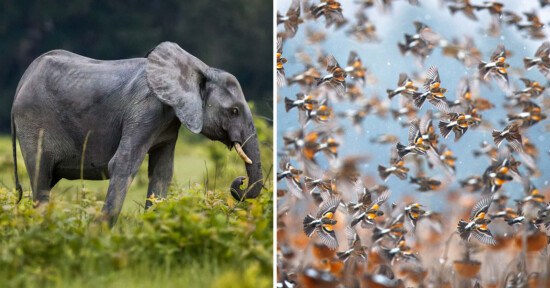
Poole’s latest documentary, “Tusker: Brotherhood of Elephants,” premiered last week on PBS and focuses on the oft-misunderstood bull elephants roaming Africa.
“It’s really about the lives of bull elephants. I don’t feel like their story is really ever told,” Poole says. “All across Africa there are elephants, but there are very few places with 50-year-old bulls. That’s because bulls are the first to get hunted, they’re the first to get poached. They’re so important because the big bulls are the ones that do all the breeding.”
Poole has spent the past decade trying to get people interested in this story that he has long wanted to tell. And now, finally, he gets to tell it.
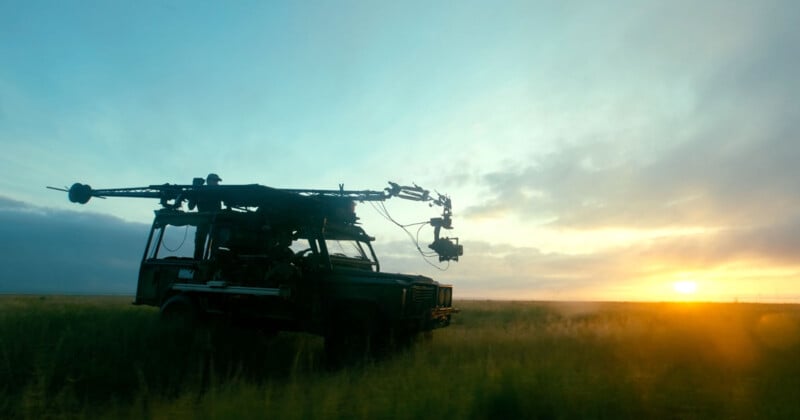
Poole notes that it took a while for the elephants to get comfortable around him and his camera setup, which includes the aforementioned Arri Alexa 55 mounted on a truck. But over time, the elephants felt safer and even came up closer and closer, which meant Poole switched to a more mobile camera kit.
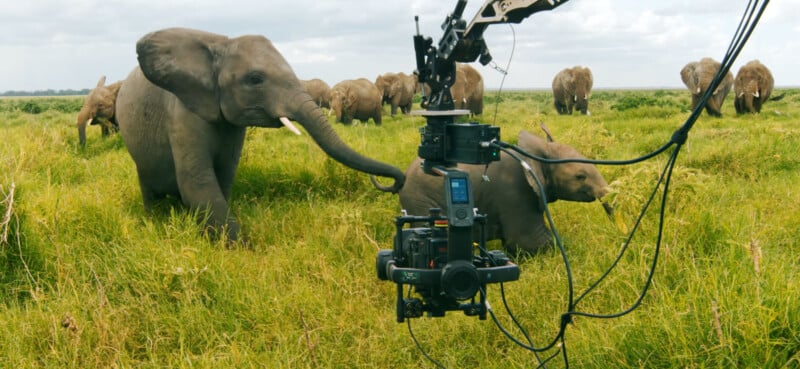
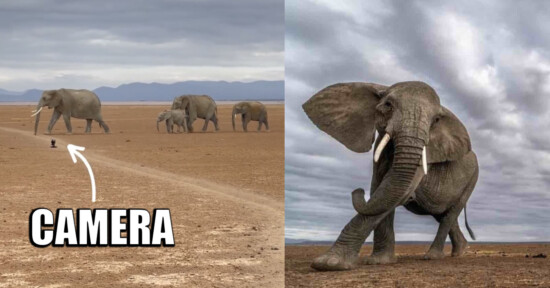
Poole also uses a Fujifilm GFX100 II camera to get much more intimate shots of elephants and put the camera in locations that would otherwise be impossible for a full-size cinema rig. One such example is putting the GFX100 II and a GF 23mm f/4 R LM WR wide-angle prime lens inside a custom-built “elephant-proof” camera cage, essentially a welded-steel enclosure surrounding the camera.
“Fujfilm’s GFX100 II has been instrumental in this film project, getting angles that we would have never been able to achieve using these larger cameras,” Poole says.
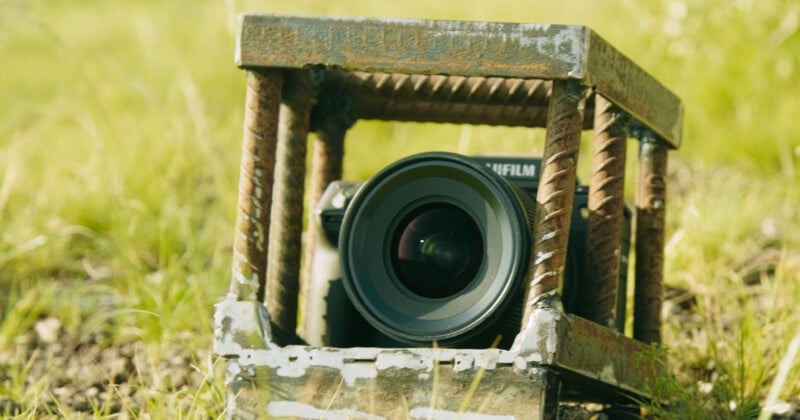
As for the elephant-proof cage, it enables incredible shots.
“We drop it down on a path that the elephants use and get amazing footage and you think, ‘Wow,’ when the elephant’s foot steps right in front of the camera and it pops into focus, all the detail is there, and your larger sensor, all that information, I think it’s going to blow people away,” the award-winning cinematographer says.
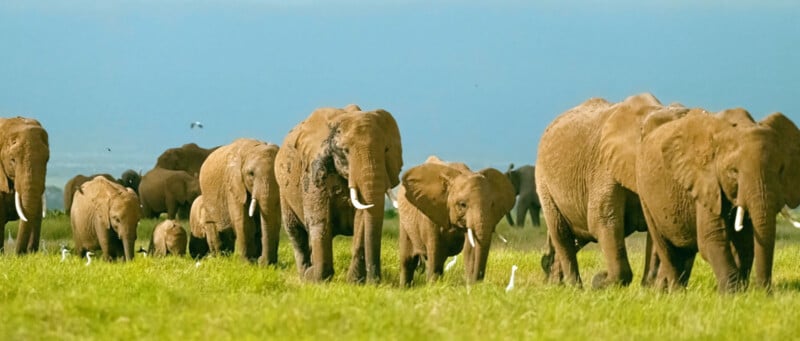
Poole used the GFX100 II for far more than just shots from the ground; it was a massive part of the overall filmmaking process. Poole says that from the get-go, he knew he wanted to have a lot of wide-angle, immersive shots, which meant being adaptable and fluid in the field. Poole used the GFX100 II alongside a series of Fujinon GF lenses, like the GF 32-64mm f/4 R LM WR and the GF 500mm f/5.6 R LM OIS WR.
The GFX100 II was also very valuable for timelapse footage in the documentary. Thanks to the camera’s 100-megapixel files, post-production had the flexibility to move throughout the frame of a timelapse video at any point, easily grabbing 4K resolution crops from the original files.
“I think that’s going to be very powerful,” Poole remarks.
“I love it all,” Poole says of wildlife filmmaking and being in the field with elephants. “But the real pleasure is the moment when you’re actually filming, and everything’s working. And it happens that time literally just stands still, and it’s like everything has come together in one moment, and it’s working, and you’re like, ‘Hallelujah.'”
Image credits: Fujifilm