Returning Prisoner of War in Iconic ‘Burst of Joy’ Photo Dies at 92
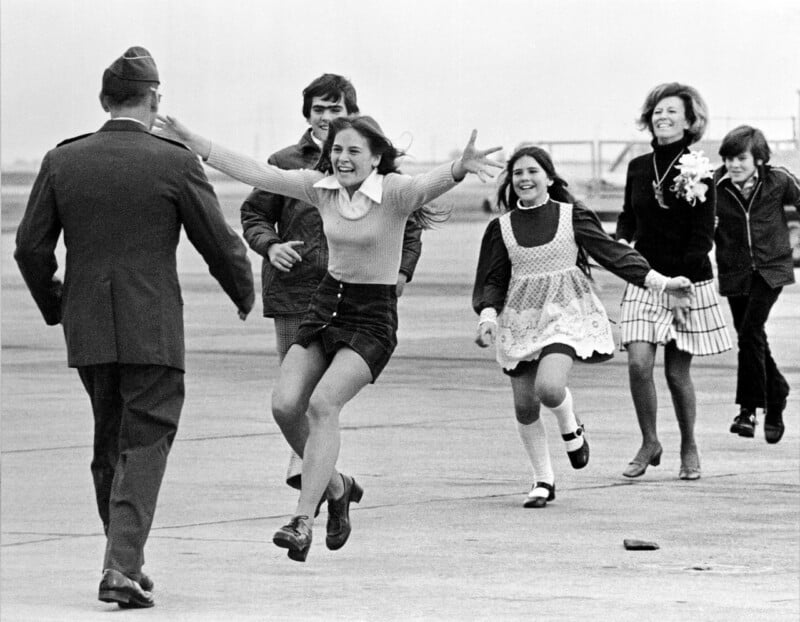
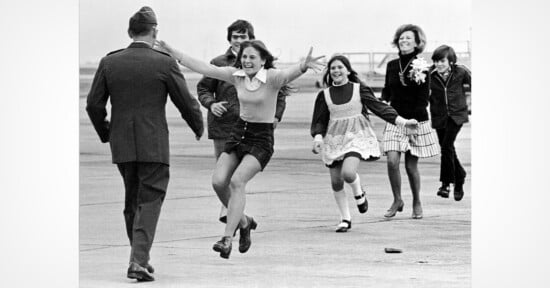
Colonel Robert L. Stirm, the subject of a famous Pulitzer Prize-winning photograph, has died at the age of 92. His return after five years as a POW in North Vietnam was immortalized by Associated Press photographer Slava ‘Sal’ Veder.
The famous photo, known as Burst of Joy, was taken on March 17, 1973, at the Travis Air Force Base in Fairfield, California. It shows Stirm’s daughter, Lorrie, who was 15 when the photo was taken, racing toward her father, arms stretched out, grinning from ear to ear. Both of her feet are off the ground, as his three other children — plus his wife Loretta — run along after her.
Veder, now 99 years old, tells The New York Times that it was overwhelming. “It was a hell of a moment and, in that moment, you are grabbed,” he says.
On assignment for AP, and up against competition in the form of United Press International, Veder hurried to a makeshift darkroom inside a women’s bathroom after the reunions to wire the picture out as quickly as possible.
The photo was published in newspapers across the country and beyond. Veder landed the 1974 Pulitzer Prize for feature photography. Veder has said that because Stirm’s face is hidden, he came to represent “every serviceman who returned to loved ones from Vietnam.”
Darker Side of the Photo
Although the photo is aptly titled Burst of Joy, it masks the family dynamics happening around that time. Just three days earlier, Stirm had been handed a “Dear John” letter from his wife informing him of an affair she had while he was gone and insisting they divorce.
“I have changed drastically — forced into a situation where I finally had to grow up,” Loretta wrote. “Bob, I feel sure that in your heart you know we can’t make it together — and it doesn’t make sense to be unhappy when you can do something about it. Life is too short.”
It made headlines when the pair divorced, but both quickly remarried. Colonel Stirm later told the AP that he hadn’t forgiven his wife for the affair and that although he held several copies of Veder’s photograph, he never displayed one.
“I can’t help but feel ambivalent about it,” Stirm told the Smithsonian in 2005. “I was very pleased to see my children — I loved them all and still do, and I know they had a difficult time — but there was a lot to deal with.”
Affiliate Disclosure PetaPixel articles may include affiliate links; we may earn a commission if you buy through one.