Misleading Photos on Product Packaging are Illegal in Japan
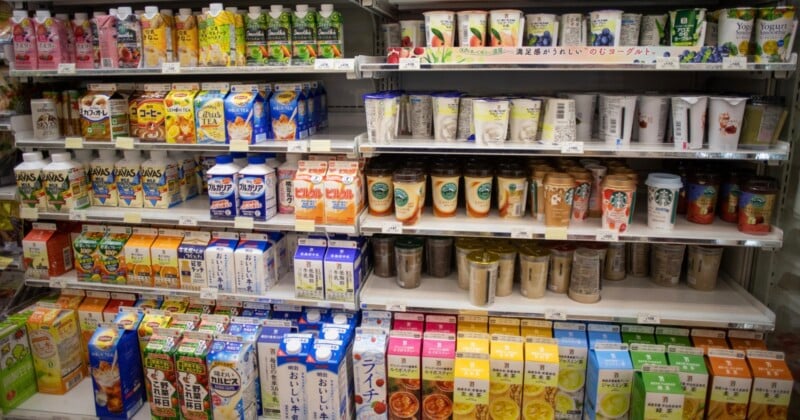
In Japan, it is illegal for companies to use misleading photos on product packaging that make the product look different from what’s actually inside.
Japan enforces some of the world’s toughest packaging regulations. Companies must ensure that the photos on their packaging accurately reflect the actual product, and failing to do so can lead to legal consequences. Any discrepancy between a product’s image and the real item is considered misleading. Even minor exaggeration or embellishment can be treated as a violation.
In Japan, food packaging must show the product exactly as it is even a tiny exaggeration is seen as misleading.
No fake ads.
No chemicals.
No adulteration.
Just pure honesty in every bite. pic.twitter.com/kFKP0n9a1c— Dr. Rajeshwari Iyer (@RajeshwariRW) October 28, 2025
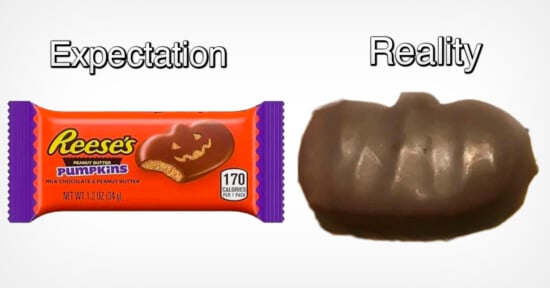
Under Japanese law, photos on product packaging are not decorative and are instead treated as factual claims. If a photograph on a packet of crackers shows toppings arranged in a certain way, the crackers inside must match that presentation. The size, shape, and appearance of the product should closely mirror what is depicted in the image.
Japan’s strict product packaging rules have recently been highlighted in a series of viral videos circulating on social media, with content creators bringing attention to how misleading photos are illegal.
In Japan, food packaging must show the product exactly as it is — even slightly exaggerating the size is considered misleading. pic.twitter.com/46aWNLENie
— Moments that Matter (@_fluxfeeds) October 27, 2025
Explaining the rules in a viral video, content creator Dr. Rajeshwari Iyer says: “Every single product needs to be the same shape, same size, and even the same color [in product photos], otherwise the company would get sued for false marketing.”
The Act Against Unjustifiable Premiums and Misleading Representations (AUPMR) underpins Japan’s rules for honest packaging. This 1962 law, administered by the Consumer Affairs Agency (CAA), prohibits companies from using wording, images, or representations that could mislead consumers about a product’s quality, content, or characteristics. It covers not only explicit claims but also visual impressions. For instance, a photo suggesting more toppings on a food item than are actually present can trigger enforcement.
The rules around beverages containing fruit juice are particularly strict in Japan. Labels must accurately represent the actual juice content: drinks with less than 5% fruit juice may only use cartoon or illustrated fruit. Those with 5% to less than 100% juice may feature a realistic photo or image of a whole, uncut fruit. Only 100% fruit juice can display a realistic photo or image of the fruit sliced open to show the interior.
Product Photos are a ‘Public Promise’ in Japan
In a blog post published in August, Craig Peacock, Chief Advisor at Kujaku Japan Advisory and the Former Western Australian Commissioner for Japan, says that the country’s packaging laws exist to ensure honesty and protect consumers. In a world where product photography on packaging can be “a theatre of exaggeration,” he says Japan’s laws are simply designed around the belief that customers deserve to know what they are purchasing.
“These laws are not designed to trap manufacturers in red tape. They exist to enforce honesty and protect consumers. Packaging in Japan is not just advertising space. It is, in effect, a public promise,” Peacock writes. “When a company declares what is in a box, a bottle, or a pouch, that statement must be true in letter and in spirit.”
“Imagery, wording, and even the symbols used for recycling are subject to the same discipline. The goal is to ensure that consumers are never deceived and that businesses compete on substance, not on marketing sleight of hand,” he adds.
Japan’s strict rules on packaging photos come as similar legal disputes have been rising in the U.S. In recent years, customers have filed multiple lawsuits alleging that fast food chains and food companies exaggerate the size and appearance of their menu items in advertising photos. Earlier this year, a U.S. judge ruled that most reasonable customers “would be vexed” by Burger King’s ad images, which allegedly made the Whopper appear larger than what was actually served.
Image creditsHeader photo licensed via Depositphotos.
Affiliate Disclosure PetaPixel articles may include affiliate links; we may earn a commission if you buy through one.