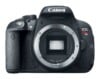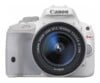
The Canon EOS 100D breaks new ground in that it’s the smallest and lightest DSLR ever made.

The Canon EOS 100D breaks new ground in that it’s the smallest and lightest DSLR ever made.
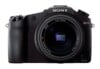
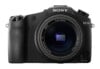
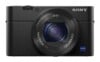
So if you’re happy to meet the high price tag then the RX10 is worth serious consideration as it is probably the best bridge camera we’ve ever tested.
It’s a very polished and refined camera that, while it may not excel in every area, will deliver the good across a range of shooting conditions.
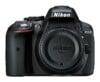
As well as introducing Wi-fi connectivity, Nikon have made some other significant changes to the Nikon D5300 to ensure it’s not merely catering for those who’d demand the latest wireless technology.
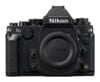
Personally, I see this as a much more natural and logical fit for the Df than the other two available sensors – while the extra resolution may be desired in some situations [...]
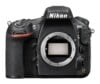
[T]he D810 is a truly welcome upgrade and one of the very best DSLRs on the market.
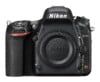
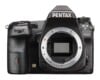
All of these features combine in what could well be one of the most attractive enthusiast DSLRs on the market.
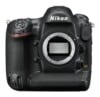
[I]t offers a complete package for the professional.
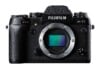
[T]here’s no denying the X-T1’s quality and on the whole it’s one of the best premium CSC’s on the market, reflected in its Gold Award status and a well deserved 93% overall score.
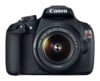
So while it would be nicer to have a higher burst speed and more AF points, these are arguably more important to the advance photographer and as such the 1200D will no doubt prove more than capable for the beginner DSLR photographer.
There is no doubt that the RX10 II is a great bridge camera, and those looking to lighten the load don’t need to look much further than this all-in-one solution.
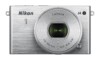
Despite the impressive headline features found on the J4, it’s certainly got its issues.
It’s not without faults, but it represents good value and a superb feature set that you can’t get from other manufacturers.
For such a small camera, the RX100 IV resolves impressive detail from its 1-inch sensor.
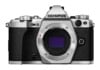
The OM-D E-M5 Mark II picks up where its Mark I predecessor left off, refining the concept of a DSLR-like – and DSLR-lite – CSC to a finely-polished article.
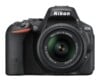
On the whole, the D5500 undoubtedly builds on the performance on its predecessor and is certainly a welcome addition to the manufacturer’s burgeoning DSLR roster.
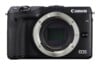
[A]lthough the M3 is a huge improvement on its predecessor it’s up against some serious competition and it’s difficult to claim that it outperforms its closest challengers.
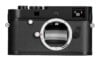
The M Monochrom Typ 246 is the manufacturer’s second model to shoot just black and white, but is it more than an expensive gimmick? Find out in our Leica M Monochrom Typ 246 review.
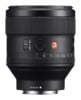
If you own an A7R II and portrait photography is your key subject matter, it is naturally a fine pairing. For everyone else, it is a premium lens at a premium price.
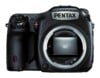
Pentax 645Z Review – The Pentax 645Z is the most affordable medium-format camera on the market, and with a 51.4MP sensor and lack of an anti-alias filter it should be capable of resolving some stunning detail.
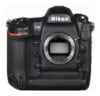
I also think that because of its build quality, a D5 would probably last longer than my D750s.
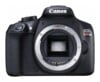
The EOS 1300D is Canon’s latest entry-level DSLR, and slots in as a direct successor to the 1200D that came out in 2014.
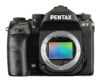
The K-1 isn’t the cheapest way into full-frame photography, nor does it offer the lightweight or small form of some compact system camera rivals. Yet, when you weigh its features against its asking price, it remains a compelling proposition.
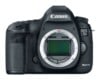
All the weak areas that the MkII suffered from have been ironed out with the MkIII, and there’s now very little to fault it on, and the more you shoot with it, the more you realise what a complete and capable camera the MkIII is.